

 Предпросмотр
 Поделиться
 Поделиться
 Детали произведения

 Скачать
 Похожие работы
 Рентгенография
 Слайд-шоу
 Статистика
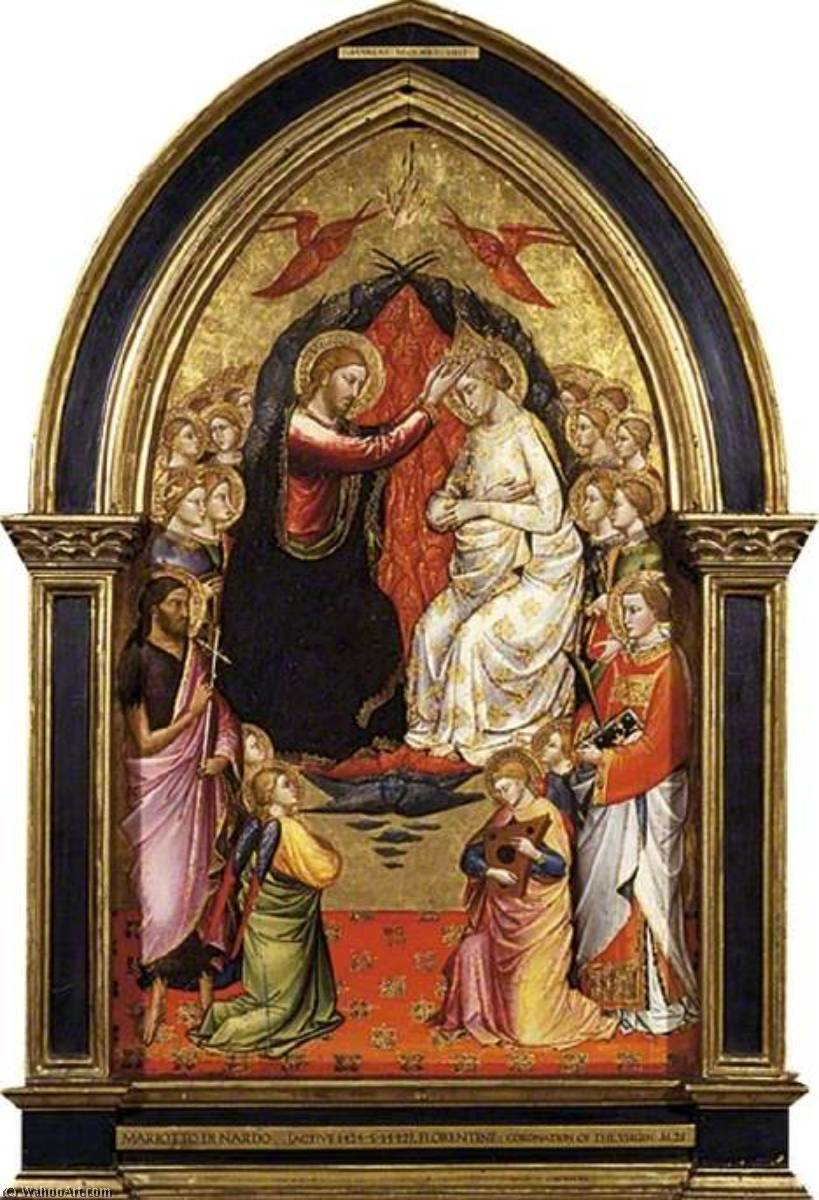
The Coronation of the Virgin
 Oil On Canvas
- WallArt
- Late Gothic Style
 81.0 x 52.0 cm
 Фитцвильямский колледж
 Читать далее
Масляная репродукция ручной работы
Картина маслом на холсте в выбранном вами размере и раме, написанная на заказ нашими художниками. ( Перейти к печати Перейти к цифровым изображениям)




P118B $10

P118H $10

P118W $10

P438Z $10

P508JH $12

P508YH $12

P805H $10

P805Z $10

P919BZ $10

P919G $10

P919XJ $10

P959ZH $10

P968JZ $12

W106C $8

W218G $10

W218JH $8

W218Y $10

W307PJ $10

W316G $10

W316PJ $8

W316Y $10

W398PJ $8

W4111J $10

W500HY $15

W500JH $15

W692G $12

W849H $8

W940BG $15

W953PJ $8




Выберите один из наших стандартных размеров, соответствующих оригинальным пропорциям произведения искусства.

Вы можете указать собственные размеры, чтобы картина идеально вписалась в выбранную раму или пространство. Если выбранный вами размер не соответствует пропорциям оригинала, мы либо обрежем полотно, либо расширим его за счет дополнительных элементов, написанных вручную. Цифровой макет будет отправлен вам на утверждение перед началом производства.
Обратите внимание, что предварительный просмотр на экране не отражает фактическую обрезку или расширение. Только макет точно покажет окончательную композицию.
Хотя доступны индивидуальные размеры, мы рекомендуем выбирать вариант из предопределенного списка, чтобы сохранить исходные пропорции.
После оформления заказа команда ArtsDot.com свяжется с клиентом по электронной почте для уточнения деталей и предоставит предварительный макет
Доставка по всему миру () за 3–4 недели вместо стандартных 5 недель. (13 Сентябрь). Без компромиссов в качестве.

Бесплатная экспресс-доставка по всему миру

Высококачественный льняной холст

Полное страхование доставки

Гарантия возмещения таможенных пошлин

Гарантия точного соответствия цветов

100-дневная политика возврата (только при обнаружении дефектов)

Гарантия возврата 100% средств

Предложение оптовых скидок
 Вариант со стеклом доступен только для размеров менее 110 см

The Coronation of the Virgin
Техника репродукции
Размер репродукции
-


Итоговая стоимость
$ 263
Mariotto di Nardo: Bridging Gothic Splendor and Renaissance Promise
The Coronation of the Virgin by Mariotto di Nardo stands as a pivotal artwork, marking a crucial juncture between the opulent formalism of late Gothic painting and the burgeoning naturalism that would soon dominate the Florentine Renaissance. Executed around 1408, this monumental tempera panel—now housed in The Fitzwilliam Museum—offers a glimpse into an artistic landscape grappling with profound transformations, reflecting both established traditions and nascent explorations of humanist ideals.- Subject Matter: The painting depicts the Virgin Mary enthroned amidst a procession of angels and saints, commemorating her divine coronation – a theme deeply rooted in Marian devotion prevalent throughout medieval Europe.
- Style & Technique: Mariotto’s style embodies the Gothic twilight, characterized by flattened perspectives, stylized drapery, and an emphasis on decorative ornamentation. However, subtle innovations foreshadow the stylistic breakthroughs of artists like Piero della Francesca and Masaccio, hinting at a move towards greater realism and spatial depth.
- Historical Context: Florence during Mariotto’s time was experiencing rapid urbanization and civic pride fueled by papal patronage—particularly evident in the ambitious construction of Brunelleschi's Duomo. Artistic endeavors served as expressions of Florentine identity and spiritual aspiration, mirroring broader cultural currents.
- Symbolism: The coronation itself symbolizes Mary’s exaltation as Queen of Heaven and Mother of God – a central dogma within Christian theology. Angels bearing musical instruments represent divine harmony and praise, underscoring the sanctity of the occasion.
- Emotional Impact: Mariotto's Coronation aims to inspire awe and reverence in the viewer, conveying the profound spiritual significance of Mary’s role as intermediary between God and humanity. The painting’s serene beauty speaks to a timeless fascination with religious iconography and artistic excellence.
Further Exploration
For more information on Mariotto di Nardo and his artistic legacy, consider visiting these resources:Похожие произведения
Биография художника
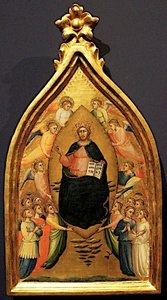
Mariotto di Nardo (1365 - 1424) – Florentine Gothic’s Delicate Innovator
Mariotto di Nardo, a name perhaps less resonant than those of his Renaissance successors, nevertheless occupies a crucial position in the transition between the elegant world of late Gothic painting and the burgeoning naturalism that would define the 15th century. Born in Florence around 1365, Mariotto flourished during a period of immense artistic ferment, working amidst the grandeur of the Duomo, the devotional spaces of Santa Maria Maggiore, and the civic pride embodied by Orsanmichele. His career, spanning from approximately 1394 to 1424, reveals an artist deeply rooted in tradition yet subtly anticipating the innovations that lay ahead. He wasn’t merely a follower of established styles; he was a skilled interpreter and adapter, infusing his work with a distinctive sensibility that captivated his contemporaries and continues to intrigue art historians today. While biographical details remain scarce—the personal life of Mariotto di Nardo remains largely shrouded in mystery—his artistic legacy speaks volumes about the evolving aesthetic landscape of Florence.Family, Apprenticeship, and Early Influences
Mariotto’s lineage placed him firmly within a family of artisans. He was the grandson of Andrea di Cione di Arcangelo – Orcagna – a celebrated sculptor and painter whose monumental works graced both Florence and Pisa. His father, Nardo di Cione, served initially as a stonecutter in Siena and Volterra before establishing himself as a painter, becoming Mariotto’s first teacher. This familial connection to artistic craftsmanship undoubtedly shaped the young Mariotto's early development, instilling in him a respect for technical skill and a keen eye for detail. The influence of Orcagna’s dramatic compositions and refined draftsmanship is subtly discernible in Mariotto’s work, though he would forge his own path. Beyond his immediate family, Mariotto absorbed the stylistic currents prevalent in Florence during his formative years. He demonstrated clear affinities with Spinello Aretino, whose dynamic figures and vibrant color palettes left an indelible mark on his early paintings, as well as Niccolò di Pietro Gerini, another prominent Florentine artist of the time. Later in his career, a gentle influence from Lorenzo Monaco can be observed, particularly in the increased elegance and refinement of his figures.A Prolific Workshop and Diverse Commissions
Mariotto quickly established himself as a highly sought-after painter in Florence. Documents reveal a steady stream of commissions, attesting to his popularity among both public institutions and private patrons. He was actively involved in decorating the Florence Cathedral, though much of this work has unfortunately been lost or obscured over time. His altarpieces were particularly prized, with notable examples created for the chapel of the Madonna della Neve in 1398 and for the cathedral itself around 1402-1404. These commissions demonstrate his mastery of panel painting techniques and his ability to create devotional images that resonated deeply with contemporary audiences. Beyond altarpieces, Mariotto’s versatility extended to fresco decoration, as evidenced by his work at Santa Maria Maggiore and Orsanmichele—two of Florence's most important churches. He also undertook commissions for illuminated manuscripts, a testament to his skill in delicate draftsmanship and refined color application. His workshop was evidently busy and successful; he was a member of both the Physicians and Apothecaries Guild and the Company of Saint Luke, indicating his standing within Florentine society.Stylistic Innovations and Lasting Legacy
Mariotto di Nardo wasn’t simply a replicator of established forms. He introduced subtle yet significant innovations that foreshadowed the artistic developments of the early Renaissance. One notable characteristic of his work is his experimentation with oblique perspective—a technique that created a sense of depth and spatial recession without fully embracing the mathematical rigor of linear perspective. His figures, while still possessing a degree of Gothic elongation, exhibited a newfound nervous energy and emotional intensity. He also favored deserted, rocky landscapes as backdrops for his compositions, adding a dramatic and evocative quality to his scenes. These stylistic choices distinguished him from many of his contemporaries and cemented his place in art history as a transitional figure between the Gothic tradition and the burgeoning naturalism of the Renaissance. His legacy continues to inspire awe and admiration among those who appreciate the beauty and complexity of Florentine Gothic art.- Notable Works: The altarpiece for Santa Maria Maggiore, depicting scenes from the Life of Christ; The Chapel of Madonna della Neve in Florence Cathedral; Frescoes at Orsanmichele.
- Influences: Spinello Aretino and Lorenzo Monaco – Artists who shaped Mariotto’s artistic vision.
Маротто ди Нардо
1365 - 1424 , Италия
Основные сведения
- Artistic Movement Or Style: Флорентинская готика
- Artists Who Influenced This Artist:
- Лоренцо Моника
- Спиньоло Аретино
- Date Of Birth: 1365
- Date Of Death: 1424
- Full Name: Mariotto di Nardo
- Nationality: Итальянский
- Notable Artworks:
- Деплаoration
- Христос при Кресте
- Сцены из жизни Христа
- Place Of Birth: Флоренция
Похожие статьи
Jacob Henricus Maris: A Master of Dutch Atmospheric Realism & the Intimate Landscape
Explore the captivating world of Jacob Henricus Maris, a leading figure of the Dutch Hague School. Discover his atmospheric landscapes, signature brushstrokes & lasting influence on 19th-century art. Learn more at ArtsDot.
Топ-25 шедевров Венецианской биеннале: искусство для вашего дома от ArtsDot
Откройте для себя 25 шедевров Венецианской биеннале! Узнайте истории великих художников, техники и вдохновение за культовыми работами. Репродукции картин высокого качества от ArtsDot.com – искусство для вашего дома. Explore the full collection online!
The Radiant Dusk of Medieval Vision: Exploring Late Gothic Art's Synthesis of Faith, Form & Emotionality (c. 1300-1500)
Explore the exquisite beauty & spiritual depth of Late Gothic art (c. 1300-1500). Discover key artists, symbolism, and its lasting influence on the Renaissance. Expert insights at ArtsDot.
The Shadow of Faith: Exploring Gothic Art's Spiritual Intensity & Architectural Innovation
Explore the spiritual intensity & architectural innovation of Gothic art! Discover the symbolism behind cathedrals, stained glass & master artists like Giotto and Monet. A deep dive into medieval history & artistic expression.

Джотто ди Бондоне: 25 шедевров великого флорентийского мастера | ArtsDot
Погрузитесь в мир Джотто ди Бондоне! 25 величайших шедевров флорентийского мастера – фрески, картины, религиозная живопись. Узнайте историю создания и значение каждой работы. Репродукции картин высокого качества для вашего интерьера на ArtsDot.com