

 Предпросмотр
 Поделиться
 Поделиться
 Детали произведения

 Скачать
 Похожие работы
 Рентгенография
 Слайд-шоу
 Статистика
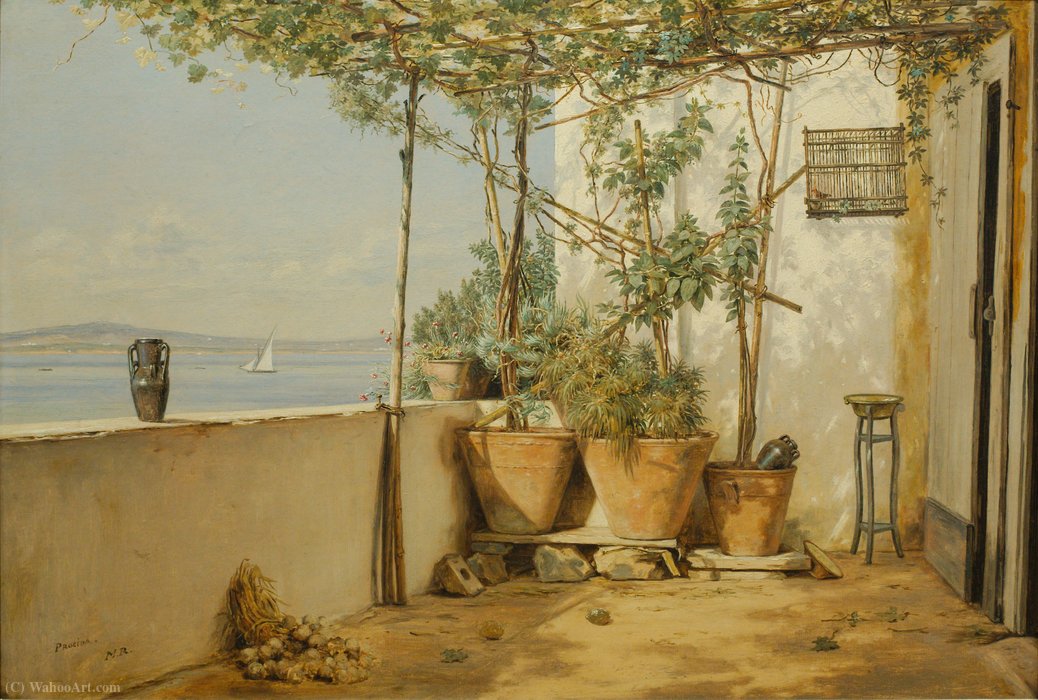
A loggia from Procida
 Читать далее
Масляная репродукция ручной работы
Картина маслом на холсте в выбранном вами размере и раме, написанная на заказ нашими художниками. ( Перейти к печати Перейти к цифровым изображениям)




































Выберите один из наших стандартных размеров, соответствующих оригинальным пропорциям произведения искусства.

Вы можете указать собственные размеры, чтобы картина идеально вписалась в выбранную раму или пространство. Если выбранный вами размер не соответствует пропорциям оригинала, мы либо обрежем полотно, либо расширим его за счет дополнительных элементов, написанных вручную. Цифровой макет будет отправлен вам на утверждение перед началом производства.
Обратите внимание, что предварительный просмотр на экране не отражает фактическую обрезку или расширение. Только макет точно покажет окончательную композицию.
Хотя доступны индивидуальные размеры, мы рекомендуем выбирать вариант из предопределенного списка, чтобы сохранить исходные пропорции.
После оформления заказа команда ArtsDot.com свяжется с клиентом по электронной почте для уточнения деталей и предоставит предварительный макет
Доставка по всему миру () за 3–4 недели вместо стандартных 5 недель. (11 Сентябрь). Без компромиссов в качестве.

Бесплатная экспресс-доставка по всему миру

Высококачественный льняной холст

Полное страхование доставки

Гарантия возмещения таможенных пошлин

Гарантия точного соответствия цветов

100-дневная политика возврата (только при обнаружении дефектов)

Гарантия возврата 100% средств

Предложение оптовых скидок
 Вариант со стеклом доступен только для размеров менее 110 см

A loggia from Procida
Техника репродукции
Размер репродукции
-


Итоговая стоимость
$ 263
Похожие произведения

Биография художника
A Pioneer of Danish Golden Age Painting: Martinus Rørbye
Martinus Christian Wesseltoft Rørbye, born in Drammen, Norway in 1803, stands as a pivotal figure within the radiant constellation of the Danish Golden Age. Though often overshadowed by contemporaries like Eckersberg and Marstrand, Rørbye’s contribution was uniquely defined by his restless spirit and pioneering travels – a characteristic that set him apart and profoundly shaped his artistic vision. He wasn't merely a painter of scenes; he was a chronicler of encounters, a sensitive observer who translated the nuances of diverse cultures and landscapes onto canvas with remarkable skill. His life story is one of dedication to craft interwoven with an insatiable curiosity about the world beyond Denmark’s borders.Early Training and Artistic Foundations
Rørbye's early inclinations didn’t lean towards academic pursuits, yet his artistic talent was evident enough to warrant enrollment at the Royal Danish Academy of Fine Arts in Copenhagen at the age of seventeen, in 1820. There, he fell under the tutelage of two influential masters: Christian August Lorentzen and, more significantly, Christoffer Wilhelm Eckersberg. Eckersberg’s emphasis on meticulous observation of nature and a commitment to realistic detail deeply resonated with Rørbye, forming the bedrock of his artistic methodology. Simultaneously, Lorentzen's masterful use of color broadened Rørbye’s palette and instilled in him an appreciation for atmospheric effects. He quickly distinguished himself at the Academy, earning the small silver medal in 1824 and the large silver medal four years later. While he repeatedly sought the coveted large gold medal, it remained elusive, a testament to his willingness to experiment and deviate from strictly prescribed academic norms. Even during these formative years, hints of his future wanderlust were present; “View from the Artist’s Window,” painted around 1825, subtly foreshadowed his yearning for exploration through its depiction of a caged bird poised between domestic security and the beckoning expanse of the open sea.Journeys and Expanding Horizons
Rørbye was, without question, the most peripatetic of the Danish Golden Age painters. His travels weren’t mere leisurely excursions; they were integral to his artistic development, providing him with a wealth of inspiration and subject matter. He first ventured into Norway in 1830 and again in 1832, journeys that exposed him to landscapes reminiscent of those favored by Johan Christian Dahl and Caspar David Friedrich – artists whose Romantic sensibilities subtly influenced his work. A particularly memorable encounter during these travels was with the celebrated author Hans Christian Andersen; they journeyed together through Jutland, forging a brief but significant artistic companionship. However, it was Rørbye’s 1834 travel scholarship that truly unlocked his potential for international exploration. This allowed him to traverse the Netherlands and France before arriving in Rome, then the vibrant hub of Danish artists centered around the sculptor Bertel Thorvaldsen. From Italy, he ventured further afield, accompanied by architect Michael Gottlieb Bindesbøll, to Greece and even Constantinople – a daring expedition that placed him among the first Scandinavian artists to document the Ottoman Empire. These travels weren’t simply about recording visual impressions; Rørbye meticulously sketched and noted everything from local customs and costumes to architectural details and sweeping vistas, transforming his experiences into a rich tapestry of artistic inspiration.Legacy and Artistic Significance
Upon returning to Copenhagen in 1837, Rørbye brought with him not only a portfolio brimming with exotic studies but also a heightened sense of artistic confidence. His orientalist paintings, imbued with the vibrant colors and captivating scenes he’d witnessed firsthand, captivated the Danish public. He was unanimously elected to the Academy in 1838 based on his Turkish folk scene derived from sketches made near Smyrna. Rørbye's influence extended beyond his immediate circle of contemporaries. He anticipated the Skagen painters – Michael Ancher, Anna Ancher, and P.S. Krøyer – by almost half a century when he first began painting in Skagen, at the northernmost tip of Jutland. His dedication to capturing realistic details, combined with his sensitivity to light and atmosphere, established him as a master of both genre painting and landscape art. Though he died prematurely in 1848, leaving behind an unfinished body of work, Martinus Rørbye’s legacy endures as a testament to the power of travel, observation, and artistic innovation during Denmark's Golden Age. He remains a vital link between the classical traditions of Danish painting and the burgeoning Romanticism that would define much of 19th-century art.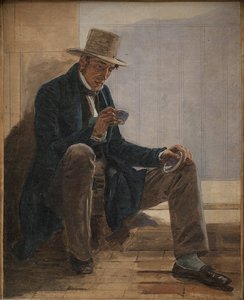
Martinus Christian Wesseltoft Rørbye
1802 - 1848 , Norway
Основные сведения
- Artistic Movement Or Style: Golden Age painting
- Artists Or Movements Influenced By This Artist: ['Skagen Painters']
- Artists Who Influenced This Artist:
- C.A. Lorentzen
- C.W. Eckersberg
- Date Of Birth: May 17, 1803
- Date Of Death: 1848
- Full Name: Martinus Christian Rørbye
- Nationality: Danish
- Notable Artworks:
- Christ Healing the Blind
- View from Artist's Window
- Place Of Birth: Drammen, Norway