


 Предпросмотр
 Поделиться
 Поделиться
 Детали произведения

 Скачать
 Похожие работы
 Рентгенография
 Слайд-шоу
 Статистика
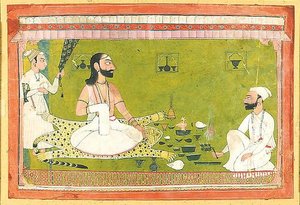
Hanuman Paying Homage to Rama: Folio from a Dasavatara Series
 1700
1700 20.0 x 27.0 cm
 Читать далее
Масляная репродукция ручной работы
Картина маслом на холсте в выбранном вами размере и раме, написанная на заказ нашими художниками. ( Перейти к печати Перейти к цифровым изображениям)

































Выберите один из наших стандартных размеров, соответствующих оригинальным пропорциям произведения искусства.

Вы можете указать собственные размеры, чтобы картина идеально вписалась в выбранную раму или пространство. Если выбранный вами размер не соответствует пропорциям оригинала, мы либо обрежем полотно, либо расширим его за счет дополнительных элементов, написанных вручную. Цифровой макет будет отправлен вам на утверждение перед началом производства.
Обратите внимание, что предварительный просмотр на экране не отражает фактическую обрезку или расширение. Только макет точно покажет окончательную композицию.
Хотя доступны индивидуальные размеры, мы рекомендуем выбирать вариант из предопределенного списка, чтобы сохранить исходные пропорции.
После оформления заказа команда ArtsDot.com свяжется с клиентом по электронной почте для уточнения деталей и предоставит предварительный макет
Доставка по всему миру () за 3–4 недели вместо стандартных 5 недель. (15 Сентябрь). Без компромиссов в качестве.

Бесплатная экспресс-доставка по всему миру

Высококачественный льняной холст

Полное страхование доставки

Гарантия возмещения таможенных пошлин

Гарантия точного соответствия цветов

100-дневная политика возврата (только при обнаружении дефектов)

Гарантия возврата 100% средств

Предложение оптовых скидок
 Вариант со стеклом доступен только для размеров менее 110 см

Hanuman Paying Homage to Rama: Folio from a Dasavatara Series
Техника репродукции
Размер репродукции
-


Итоговая стоимость
$ 263
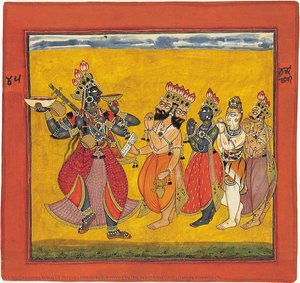
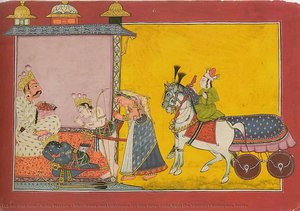
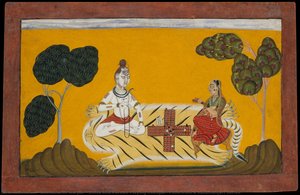
Похожие произведения





Биография художника
The Master of Mankot: A Synthesis of Persian Grace and Indian Devotion
In the twilight of the seventeenth century, a singular artistic voice emerged from the princely state of Mankot, nestled within the rugged beauty of Jammu and Kashmir. Known to history as Meju, or the Master at the Court of Mankot, this painter occupied a unique position in the Indian miniature tradition. Active approximately between 1680 and 1730, Meju served under the patronage of Raja Mahipat Dev, a ruler whose court became a sanctuary for a style that masterfully fused the refined, meticulous elegance of Persian aesthetics with the profound, rhythmic vitality of Hindu iconography. His life and work represent a pivotal moment where the sophisticated techniques of the Mughal-influenced tradition met the deep spiritual currents of bhakti devotion.
The identity of Meju is as much a mystery as it is a triumph of historical detective work. For centuries, his name remained obscured, known only through a single portrait of a local ruler that bore his signature. It was only through the discovery of a discarded letter—used as a lining to strengthen a painting—that historians could definitively link the artist to the village of Mankot in Himachal Pradesh. This serendipitous find revealed a painter who did not merely replicate existing styles but actively transformed them. His early training was undoubtedly steeped in the Persian miniature tradition, characterized by flattened perspectives and luminous, jewel-like colors. Yet, as he matured, Meju began to weave these foreign elements into the fabric of Indian mythological narratives, creating a visual language that felt both otherworldly and deeply rooted in the soil of his homeland.
A Mastery of Space and Symbolic Color
What distinguishes Meju’s oeuvre from his contemporaries is his revolutionary approach to composition and the manipulation of the pictorial plane. While European artists of the era were pursuing linear perspective, Meju utilized multiple vanishing points—a technique inherited from Persian masters—to create a dynamic, layered illusion of depth. He possessed a rare ability to guide the viewer's eye through complex architectural settings, often extending figures or structural elements beyond the physical borders of the frame. This subtle breaking of the composition’s limits suggested an infinite world existing just out of sight, imbuing his sacred scenes with a sense of cosmic scale.
His technical brilliance is perhaps most evident in his use of color and texture to evoke emotion. Meju often employed monochromatic backgrounds, favoring intense shades of olive-green and vibrant yellow-orange, which lent an iconic, almost transcendental quality to his subjects. In his celebrated Dasavatara series, he utilized sparse pictorial details to focus the viewer's attention on the divine essence of the deities. One of his most breathtaking techniques involved the use of suikari—small depressions made with a blunt needle in gold-leafed areas—to capture and reflect light. This tactile manipulation of the painting surface ensured that his works were not merely seen, but experienced as shimmering, living entities.
Legacy of the Sacred Narrative
The true significance of Meju lies in his ability to translate complex theological concepts into accessible, breathtaking imagery. His work spanned a diverse range of subjects, from the intimate portraits of local royalty to the epic struggles found within the Bhagavata Purana and the Ramayana. In his depictions of Krishna, he moved between landscape-format series that captured the playful interactions with the gopis and vertical compositions that emphasized the god's monumental presence. Whether portraying the monkey general Hanuman paying homage to Rama or the majestic descent of Vishnu, Meju eschewed mere narrative illustration in favor of capturing the majesty and dharma of his subjects.
As one of the last great masters of the Mughal-influenced court tradition, Meju’s legacy is a testament to the enduring power of cultural synthesis. His ability to reduce pictorial detail to only what was absolutely necessary for the narrative allowed the spiritual weight of his themes to resonate with unparalleled clarity. Through his innovative use of space, light, and color, the Master at the Court of Mankot ensured that the traditions of the Persian miniature would forever be intertwined with the vibrant, devotional spirit of Indian art, leaving behind a body of work that continues to captivate the modern imagination.
Основные сведения
- Artistic Movement Or Style: Indian & Persian Influenced Painting
- Artists Or Movements Influenced By This Artist: ['Persian Painting']
- Artists Who Influenced This Artist: ['Traditional Indian Painting Techniques']
- Date Of Birth: Mankota, India
- Date Of Death: Living
- Full Name: Master at the Court of Mankot (Meju)
- Nationality: Indian
- Notable Artworks:
- Raja Mahipat Dev of Mankot at Prayer
- Hanuman Paying Homage to Rama: Folio from a Dasavatara Series
- Place Of Birth: India