


 Предпросмотр
 Поделиться
 Поделиться
 Детали произведения

 Скачать
 Похожие работы
 Рентгенография
 Слайд-шоу
 Статистика
The Seven Works of Mercy (detail)


 Читать далее
Масляная репродукция ручной работы
Картина маслом на холсте в выбранном вами размере и раме, написанная на заказ нашими художниками. ( Перейти к печати Перейти к цифровым изображениям)




P118B $10

P118H $10

P118W $10

P438Z $10

P508JH $12

P508YH $12

P805H $10

P805Z $10

P919BZ $10

P919G $10

P919XJ $10

P959ZH $10

P968JZ $12

W106C $8

W218G $10

W218JH $8

W218Y $10

W307PJ $10

W316G $10

W316PJ $8

W316Y $10

W398PJ $8

W4111J $10

W500HY $15

W500JH $15

W692G $12

W849H $8

W940BG $15

W953PJ $8




Выберите один из наших стандартных размеров, соответствующих оригинальным пропорциям произведения искусства.

Вы можете указать собственные размеры, чтобы картина идеально вписалась в выбранную раму или пространство. Если выбранный вами размер не соответствует пропорциям оригинала, мы либо обрежем полотно, либо расширим его за счет дополнительных элементов, написанных вручную. Цифровой макет будет отправлен вам на утверждение перед началом производства.
Обратите внимание, что предварительный просмотр на экране не отражает фактическую обрезку или расширение. Только макет точно покажет окончательную композицию.
Хотя доступны индивидуальные размеры, мы рекомендуем выбирать вариант из предопределенного списка, чтобы сохранить исходные пропорции.
После оформления заказа команда ArtsDot.com свяжется с клиентом по электронной почте для уточнения деталей и предоставит предварительный макет
Доставка по всему миру () за 3–4 недели вместо стандартных 5 недель. (14 Сентябрь). Без компромиссов в качестве.

Бесплатная экспресс-доставка по всему миру

Высококачественный льняной холст

Полное страхование доставки

Гарантия возмещения таможенных пошлин

Гарантия точного соответствия цветов

100-дневная политика возврата (только при обнаружении дефектов)

Гарантия возврата 100% средств

Предложение оптовых скидок
 Вариант со стеклом доступен только для размеров менее 110 см

The Seven Works of Mercy (detail)
Техника репродукции
Размер репродукции
-


Итоговая стоимость
$ 263
A Tapestry of Compassion: The Master of Alkmaar’s Vision
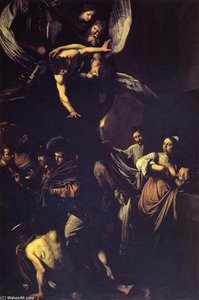
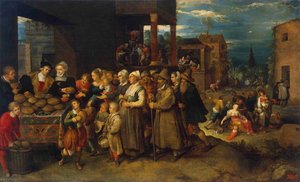
In the quiet, flickering light of the early sixteenth century, a nameless hand—now known to history as the Master of Alkmaar—captured a profound moment of human connection. His detail from The Seven Works of Mercy serves as more than just a religious illustration; it is a vibrant, breathing window into the soul of the Northern Netherlandish Gothic Renaissance. The scene unfolds with an almost cinematic energy, where every brushstroke contributes to a larger narrative of charity and communal duty. As we gaze upon this masterpiece, we are not merely observers of a historical event, but participants in a rhythmic dance of kindness, where the simple act of sharing food or tending to the weary becomes a sacred ritual.
The composition is a masterclass in controlled chaos, a lively tapestry of movement that draws the eye through a labyrinth of benevolent gestures. Within this intricate detail, we find a world populated by men, women, and children, all woven into a singular purpose. The artist utilizes a remarkable sense of depth, placing baskets of sustenance at varying intervals—near the center, to the left, and toward the right edge—to guide our journey through the crowd. Small, intimate details emerge upon closer inspection: the glint of a knife, the weight of a bowl, and even the presence of animals, such as a watchful dog on the far left and cats tucked into the corners, which ground this spiritual scene in the earthy, domestic reality of 1504. This interplay between the divine mandate of mercy and the humble textures of daily life creates a profound emotional resonance.
Technique and the Spirit of the Northern Renaissance
The technique employed by the Master of Alkmaar reflects the meticulous precision characteristic of the Dutch tradition. Every element, from the folds of heavy garments to the delicate features of the faces, is rendered with an almost obsessive attention to detail that speaks to a devotion to both craft and subject. The artist’s ability to balance a crowded, bustling scene without sacrificing clarity is nothing short of extraordinary. Through subtle shifts in light and shadow, the Master breathes life into the textures of wicker baskets, woven fabrics, and organic forms, creating a tactile experience that invites the viewer to reach out and touch the history held within the paint.
For the discerning collector or interior designer, this work offers an unparalleled opportunity to introduce a sense of historical gravity and narrative depth into a space. A high-quality reproduction of this detail does not merely decorate a wall; it anchors a room with a story of enduring human virtue. The piece possesses a unique ability to harmonize with both classical and contemporary settings, providing a sophisticated focal point that sparks conversation and evokes a sense of timelessness. To possess such a work is to hold a fragment of the Netherlandish spirit—a reminder that even in our modern complexity, the fundamental acts of mercy and compassion remain the most beautiful expressions of our shared humanity.
Похожие произведения
Биография художника
The Enigmatic Master of Alkmaar: A Portrait in Faith and Form
The identity of the Master of Alkmaar remains one of art history's most enduring mysteries, a phantom presence etched into the very fabric of Northern Netherlandish tradition. Active primarily during the early sixteenth century, this Dutch painter produced a remarkable body of work characterized by exquisitely detailed religious scenes and meticulously crafted book illustrations. While his name survives only as an artistic pseudonym, his legacy is anchored in the historic heart of Alkmaar, with much of his surviving oeuvre linked to The Regional Archive and the sacred spaces of the church of Saint Lawrence. Despite the lack of biographical certainties, scholars have painstakingly reconstructed a life through stylistic analysis, revealing a figure deeply rooted in the transition from Gothic piety to the burgeoning humanism of the Renaissance.
Little is known of the Master’s formative years, yet traces of his existence suggest a man born around 1480, likely within the thriving maritime atmosphere of Alkmaar itself. His artistic training appears to have been shaped under the tutelage of Jacob Cornelisz van Oosts, a prominent painter of the Alkmaarschool who championed stylistic innovations flowing from Florence and Rome. This profound influence is palpable throughout the Master’s canvases; one can observe a masterful use of perspective and chiaroscuro—techniques borrowed from the giants of the Italian Renaissance, such as Leonardo da Vinci and Michelangelo. Through this synthesis, the artist demonstrated an impressive grasp of humanist principles, blending established Northern conventions with the sophisticated light and shadow of the South.
A Symphony of Color and Devotional Detail
The Master's distinctive style is immediately recognizable by its remarkable precision and a luminous color palette that seems to glow from within. He eschewed the flattened, stylized depictions favored by some of his contemporaries, opting instead for a painstakingly rendered realism. His brush captured the subtle nuances of heavy drapery folds, the delicate textures of skin, and the profound depth of facial expressions. His compositions are often dominated by serene landscapes—frequently viewed through arched windows—which serve to create an atmosphere of contemplative piety, inviting the viewer into a world where the divine and the earthly intersect.
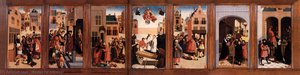
His technical achievements are perhaps most evident in his celebrated religious panels, such as The Seven Works of Mercy (1504). In these works, the artist displays a unique ability to balance narrative complexity with emotional clarity. While some scholars note that certain figures bear the stylistic stamp of Geertgen tot Sint Jans—characterized by bright colors and occasionally exaggerated, caricatured features—the Master’s ability to weave these elements into a cohesive theological message is unparalleled. His work often functions as a visual sermon, where every detail, from a palm frond held by a pilgrim to the specific crest of a donor family, serves a higher narrative purpose.
Legacy and Historical Significance
The historical significance of the Master of Alkmaar lies in his role as a bridge between eras. He stood at the crossroads of the late Middle Ages and the dawn of the modern age, capturing the spiritual intensity of the Gothic period while embracing the structural innovations of the Renaissance. His contributions to the art of North Holland are monumental, leaving behind a trail of altarpieces and memorial panels that continue to fascinate historians and devotees alike.
To understand his impact is to look at the breadth of his surviving influence:
- Iconographic Richness: His ability to translate complex biblical narratives, such as the Dispute with the Doctors, into accessible visual storytelling.
- Regional Identity: His role in establishing Alkmaar as a significant center for artistic production during the early sixteenth century.
- Technical Mastery: The integration of Italianate light and shadow with the meticulous, textural realism characteristic of the Netherlandish tradition.
Though his true name may remain lost to the archives, the Master of Alkmaar lives on through the vibrant, breathing landscapes and the soulful, prayerful faces that populate his panels. He remains a silent witness to a transformative era in European history, an artist whose work continues to illuminate the intersection of faith, form, and human emotion.
master of alkmaar
Netherlands
Основные сведения
- Artistic Movement Or Style: Proto-Renaissance
- Artists Or Movements Influenced By This Artist: ['Northern Netherlandish']
- Artists Who Influenced This Artist: ['Giotto']
- Nationality: Dutch
- Notable Artworks: ['The Seven Works of Mercy']
- Place Of Birth: Alkmaar, Netherlands
Похожие статьи

Illuminating Innovation: Exploring the Dutch Golden Age of Painting
Explore the Dutch Golden Age of painting with ArtsDot. Discover Rembrandt, Vermeer & other Masters. Learn about key characteristics, iconic artworks, and lasting influence. Expert insights for collectors & enthusiasts.

Золотой век Голландии: 10 шедевров, изменивших искусство | ArtsDot.com
Погрузитесь в эпоху Золотого века Нидерландов! 10 шедевров Рембрандта, Вермеера и других мастеров. Узнайте истории создания культовых картин и вдохновитесь для интерьера. Репродукции музейного качества на ArtsDot.com.
Illuminating Realism: Exploring the Dutch Golden Age of Painting (1600-1700)
Explore the Dutch Golden Age of painting (1600-1700) with ArtsDot. Discover Rembrandt, Vermeer & other masters. Learn about techniques, history & find museum-quality reproductions.
The Radiant Dusk of Medieval Vision: Exploring Late Gothic Art's Synthesis of Faith, Form & Emotionality (c. 1300-1500)
Explore the exquisite beauty & spiritual depth of Late Gothic art (c. 1300-1500). Discover key artists, symbolism, and its lasting influence on the Renaissance. Expert insights at ArtsDot.

Golden Age Reflections: Dutch Baroque Painting & Cultural Innovation
Explore the Dutch Golden Age of painting! Discover key artists like Vermeer & ter Borch, their innovative techniques, and the rich cultural context behind these Baroque masterpieces. Learn about collecting & appreciating this iconic art period.