

 Предпросмотр
 Поделиться
 Поделиться
 Детали произведения

 Скачать
 Похожие работы
 Рентгенография
 Слайд-шоу
 Статистика
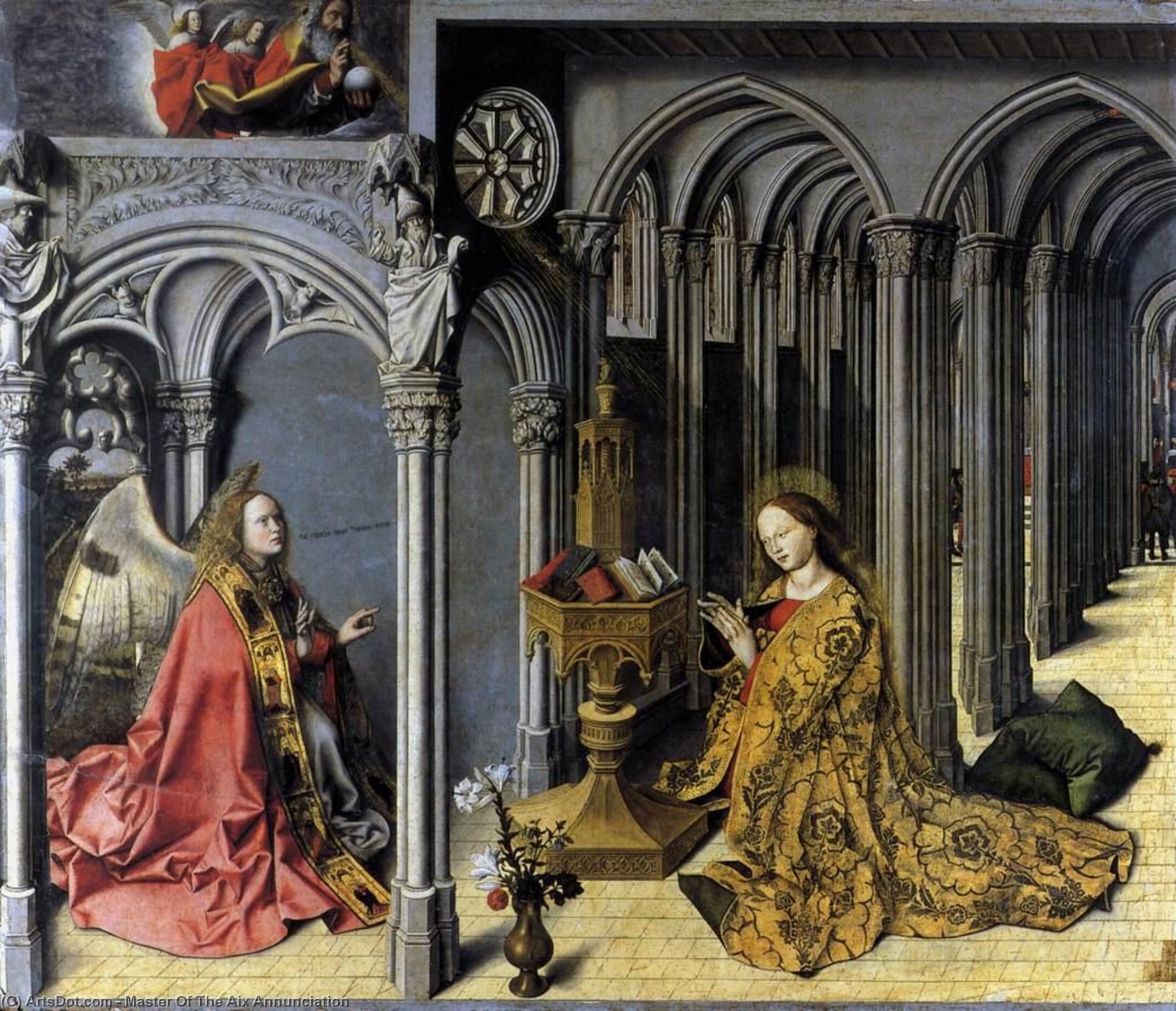
Annunciation
 Gothic
 1445
1445 155.0 x 176.0 cm
 Sainte-Marie-Madeleine
 Читать далее
Жикле / Арт-принт
Печать (жикле) или холст музейного качества с быстрыми сроками изготовления и широким выбором вариантов отделки. ( Купить картину ручной работы Перейти к цифровым изображениям)




































Выберите один из наших стандартных размеров, соответствующих оригинальным пропорциям произведения искусства.

Вы можете указать свои собственные размеры, чтобы репродукция идеально подошла под конкретную раму или пространство. Если выбранный вами размер не будет соответствовать пропорциям оригинала, мы либо обрежем произведение, либо дополним изображение зеркальным отражением краев или однотонной заливкой. Перед началом производства вам будет отправлен цифровой макет для утверждения.
Пожалуйста, обратите внимание, что предварительный просмотр на экране не отображает фактическую обрезку или расширение изображения. Только макет точно покажет финальную композицию.
Несмотря на возможность заказа индивидуальных размеров, мы рекомендуем выбирать размер из предопределенного списка, чтобы сохранить оригинальные пропорции.
Доставка по всему миру () за 2 недели вместо стандартных 4/5 недель. (12 Сентябрь)

Бесплатная экспресс-доставка по всему миру

Высококачественный льняной холст

Полное страхование доставки

Гарантия возмещения таможенных пошлин

Гарантия точного соответствия цветов

100-дневная политика возврата (только при обнаружении дефектов)

Гарантия возврата 100% средств

Предложение оптовых скидок
 Вариант со стеклом доступен только для размеров менее 110 см

Annunciation
Жикле / Арт-принт
Размер репродукции
-


Итоговая стоимость
$ 62
Composition and Symbolism
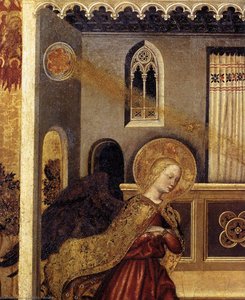
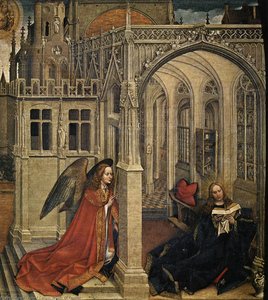
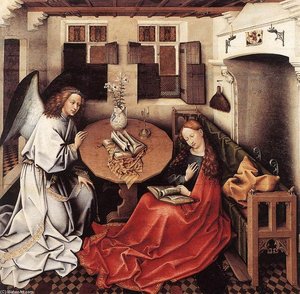
The composition of the painting is balanced, with the two main figures, the angel Gabriel and Mary, centrally placed within an elaborate architectural setting. The use of light and shadow creates a sense of depth and three-dimensionality in the painting. The attention to detail in both the figures and the background architecture demonstrates the artist's skill and devotion to the religious subject matter. The red and blue colors used in the painting often represent the blood of Christ and the purity of Mary, respectively.Artistic Style and Influences
The Master Of The Aix Annunciation is believed to have been influenced by Early Netherlandish artists such as Jan van Eyck. The painting's intricate iconographic details echo Annunciations created by van Eyck and his contemporaries. For more information on the artist and his works, visit /art/list/?Filter=Master-Of-The-Aix-Annunciation.- The painting is a prime example of Gothic style, characterized by its elongated figures and detailed architectural elements.
- The composition of the painting is balanced, with the two main figures centrally placed within an elaborate architectural setting.
- The use of light and shadow creates a sense of depth and three-dimensionality in the painting.
The Annunciation is a masterpiece of Gothic art, and its beauty and significance can be appreciated by art lovers around the world.
Похожие произведения
Биография художника
A Serene Vision of Faith: The Enigma of the Master of the Aix Annunciation
The identity of the Master of the Aix Annunciation remains one of the most captivating mysteries in the annals of Early Netherlandish painting. While his true name is shrouded in the mists of the mid-15th century, his brushwork speaks with a clarity and profound stillness that resonates across the centuries. Scholars often whisper the name Barthélemy d'Eyck in connection to this elusive figure, suggesting a lineage tied to the prestigious workshops of the Low Countries. Likely emerging from the artistic crucible of Leuven around 1430, the Master was shaped by an environment of intense devotion and technical innovation, where the mastery of oil paint allowed for a new, luminous language of spiritual expression.
To encounter the work of this artist is to step into a realm where the divine and the earthly intersect through meticulous detail. His oeuvre is characterized by a breathtaking realism that does not merely replicate the physical world but elevates it, imbuing every fold of fabric and every architectural shadow with theological significance. This period of art, marked by fervent piety and the early stirrings of humanist thought, found in the Master a perfect vessel for expressing the complex nuances of Christian iconography. His ability to capture profound emotional depth—ranging from the quiet grace of a celestial visitation to the heavy sorrow of a lamentation—marks him as a pivotal figure in the transition toward a more humanized religious art.
Mastery of Light and Symbolism
The technical prowess of the Master is most evident in his command of the relatively new medium of oil paint. Through a sophisticated process of meticulous layering, he achieved unprecedented tonal gradations and a palpable sense of textural richness. This technique allowed for a unique luminosity, where light seems to emanate from within the subjects themselves, mirroring the spiritual aspiration inherent in his sacred themes. His compositions are often balanced and architectural, utilizing elaborate settings to frame holy figures, much like the celebrated Aix Annunciation itself. In this masterpiece, the interplay of light and shadow creates a sensory experience that guides the viewer toward contemplation.
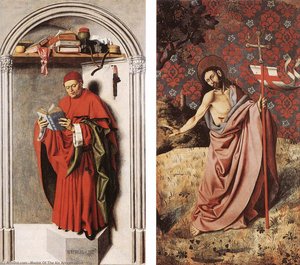
Beyond mere technical skill, the artist utilized a secret language of symbols to communicate complex truths to his audience. Every element within his panels—be it a specific botanical detail or a particular arrangement of liturgical objects—serves as a bridge between the mundane and the miraculous. This symbolic depth is particularly evident in works such as Prophet Jeremiah and Christ, where the weight of prophecy meets the promise of redemption through intricate, carefully rendered imagery. His work demonstrates an awareness of broader European trends, absorbing the structural influences of Italian masters like Giotto while remaining firmly rooted in the rich, descriptive traditions of the Flemish school.
Legacy and Historical Significance
The historical significance of the Master of the Aix Annunciation lies in his ability to capture the very essence of a transformative era. He stood at the crossroads of the late Middle Ages and the burgeoning Renaissance, crafting an aesthetic that honored tradition while embracing the technical possibilities of a new age. Although much of his biographical history remains lost to time, his artistic legacy is preserved in the silent, powerful presence of his surviving panels, which continue to inspire awe in museums from Aix-en-Provence to Brussels.
His contributions can be summarized through several enduring artistic hallmarks:
- Technical Innovation: The pioneering use of oil glazes to create depth, light, and a lifelike texture.
- Iconographic Depth: A sophisticated integration of Christian symbolism within realistic landscapes and interiors.
- Emotional Resonance: The ability to portray profound spiritual states, from serene peace to deep mourning, with subtle nuance.
- Cultural Bridge: A style that synthesized the meticulous detail of Northern Europe with an emerging awareness of broader European compositional trends.
Основные сведения
- Artistic Movement Or Style: Early Netherlandish Art
- Artists Or Movements Influenced By This Artist: ['Flemish Primitives']
- Artists Who Influenced This Artist: ['Jan van Eyck']
- Full Name: Master of the Aix Annunciation
- Nationality: Dutch
- Notable Artworks:
- Annunciation
- The Annunciation (detail)
Похожие статьи
Топ-10 шедевров масляной живописи на доске, изменившие искусство | ArtsDot.com
Откройте для себя 10 легендарных шедевров масляной живописи на доске, изменивших искусство! Узнайте истории Ван Гога, Моне и других великих художников. Репродукции картин премиум-качества для вашего интерьера – ArtsDot.com

Масляная живопись: История, техника и непреходящее наследие
Узнайте все о масляной живописи: история техники, секреты мастеров и современные тенденции. Погрузитесь в мир искусства с экспертами !

The Enduring Legacy of Oil on Canvas: Technique, History & Aesthetic Impact
Explore the rich history & techniques of oil painting – from Renaissance masters to Impressionism. Discover pigments, layering methods, and why this timeless medium endures. Expert insights for artists & art enthusiasts.

The Enduring Power of Painting: A Historical & Contemporary Exploration of Form and Emotion
Explore the rich history & enduring techniques of oil painting with ArtsDot. Discover masterpieces, learn about art collecting, and find authentic handmade reproductions crafted by skilled artists.

Oil on Canvas: A Historical & Technical Exploration of a Timeless Artistic Medium
Explore the rich history & enduring techniques of oil painting on canvas. Discover the science behind its longevity, conservation practices, and contemporary relevance. Expert insights for art enthusiasts.