


 Предпросмотр
 Поделиться
 Поделиться
 Детали произведения

 Скачать
 Похожие работы
 Рентгенография
 Слайд-шоу
 Статистика
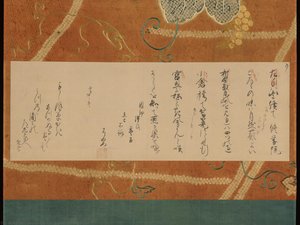
Manuscript Scroll of Nozaraishi Kikō\n\n- Atsuta Shrine, Nagoya

 Читать далее
Масляная репродукция ручной работы
Картина маслом на холсте в выбранном вами размере и раме, написанная на заказ нашими художниками. ( Перейти к печати Перейти к цифровым изображениям)




































Выберите один из наших стандартных размеров, соответствующих оригинальным пропорциям произведения искусства.

Вы можете указать собственные размеры, чтобы картина идеально вписалась в выбранную раму или пространство. Если выбранный вами размер не соответствует пропорциям оригинала, мы либо обрежем полотно, либо расширим его за счет дополнительных элементов, написанных вручную. Цифровой макет будет отправлен вам на утверждение перед началом производства.
Обратите внимание, что предварительный просмотр на экране не отражает фактическую обрезку или расширение. Только макет точно покажет окончательную композицию.
Хотя доступны индивидуальные размеры, мы рекомендуем выбирать вариант из предопределенного списка, чтобы сохранить исходные пропорции.
После оформления заказа команда ArtsDot.com свяжется с клиентом по электронной почте для уточнения деталей и предоставит предварительный макет
Доставка по всему миру () за 3–4 недели вместо стандартных 5 недель. (13 Сентябрь). Без компромиссов в качестве.

Бесплатная экспресс-доставка по всему миру

Высококачественный льняной холст

Полное страхование доставки

Гарантия возмещения таможенных пошлин

Гарантия точного соответствия цветов

100-дневная политика возврата (только при обнаружении дефектов)

Гарантия возврата 100% средств

Предложение оптовых скидок
 Вариант со стеклом доступен только для размеров менее 110 см

Manuscript Scroll of Nozaraishi Kikō\n\n- Atsuta Shrine, Nagoya
Техника репродукции
Размер репродукции
-


Итоговая стоимость
$ 313
Похожие произведения







Биография художника
Matsuo Bashō: Life and Legacy
Early Life and Background
- Born Matsuo Kinsaku in 1644 near Ueno, Iga Province, Japan.
- Came from a family with samurai roots, though his father was likely a low-ranking retainer.
- Received an early education and showed an aptitude for poetry.
- Served as a page to Tōdō Yoshitada, fostering his interest in *haikai no renga* (linked verse).
Artistic Development and Influences
- Initially focused on collaborative poetry forms like *renga*.
- The death of his patron, Tōdō Yoshitada, in 1666 marked a turning point, leading him to dedicate himself fully to poetry.
- Influenced by Zen Buddhism, which emphasized simplicity, mindfulness, and connection with nature.
- Early works showed conventional styles but gradually evolved towards a more minimalist and evocative approach.
- Chinese poetry also played a role in shaping his aesthetic sensibilities.
The Rise of Haiku and Bashō’s Style
- Bashō is credited with elevating the *hokku* (the opening verse of a *renga*) to an independent poetic form, later known as haiku.
- His haiku are characterized by their concise language, vivid imagery, and focus on nature.
- He sought to capture fleeting moments and evoke deep emotions with minimal words.
- Emphasized *sabi* – the beauty of transience, imperfection, and age – in his work.
Travels and Major Works
- Bashō embarked on several journeys throughout Japan, seeking inspiration for his poetry.
- His most famous travelogue is Oku no Hosomichi (The Narrow Road to the Deep North), published in 1694.
- Other notable works include *Nozarashi kikō* (Records of a Weather-Exposed Skeleton) and numerous collections of haiku and *renga*.
- His travel writings blended poetry with prose, creating a unique literary style known as haibun.
Achievements and Historical Significance
- Widely regarded as the greatest master of haiku in Japanese history.
- Revolutionized the art of *haikai no renga* by emphasizing naturalness and emotional depth.
- His work influenced generations of poets and continues to be studied and admired today.
- Bashō’s poetry is often reproduced on monuments and traditional sites throughout Japan, demonstrating his enduring cultural impact.
- He helped establish haiku as a major art form, recognized for its ability to capture the essence of life in a few carefully chosen words.
Legacy
- Bashō’s emphasis on direct experience and observation continues to resonate with artists and writers worldwide.
- His minimalist style has influenced modern poetry and other art forms.
- He remains a symbol of Japanese artistic excellence and spiritual depth.
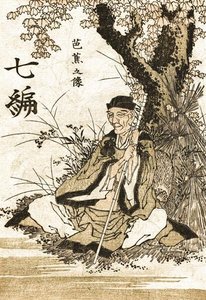
matsuo bashō
1644 - 1694 , Japan
Основные сведения
- Birth Date: 1644
- Birth Place: Ueno, Japan
- Death Date: 1694
- Movement: Haiku, Edo period literature
- Name: Matsuo Bashō
- Nationality: Japanese
- Notable Works: Oku no Hosomichi (The Narrow Road to the Deep North)