

 Поделиться
 Поделиться
 Детали произведения

 Скачать
 Похожие работы
 Слайд-шоу
 Статистика
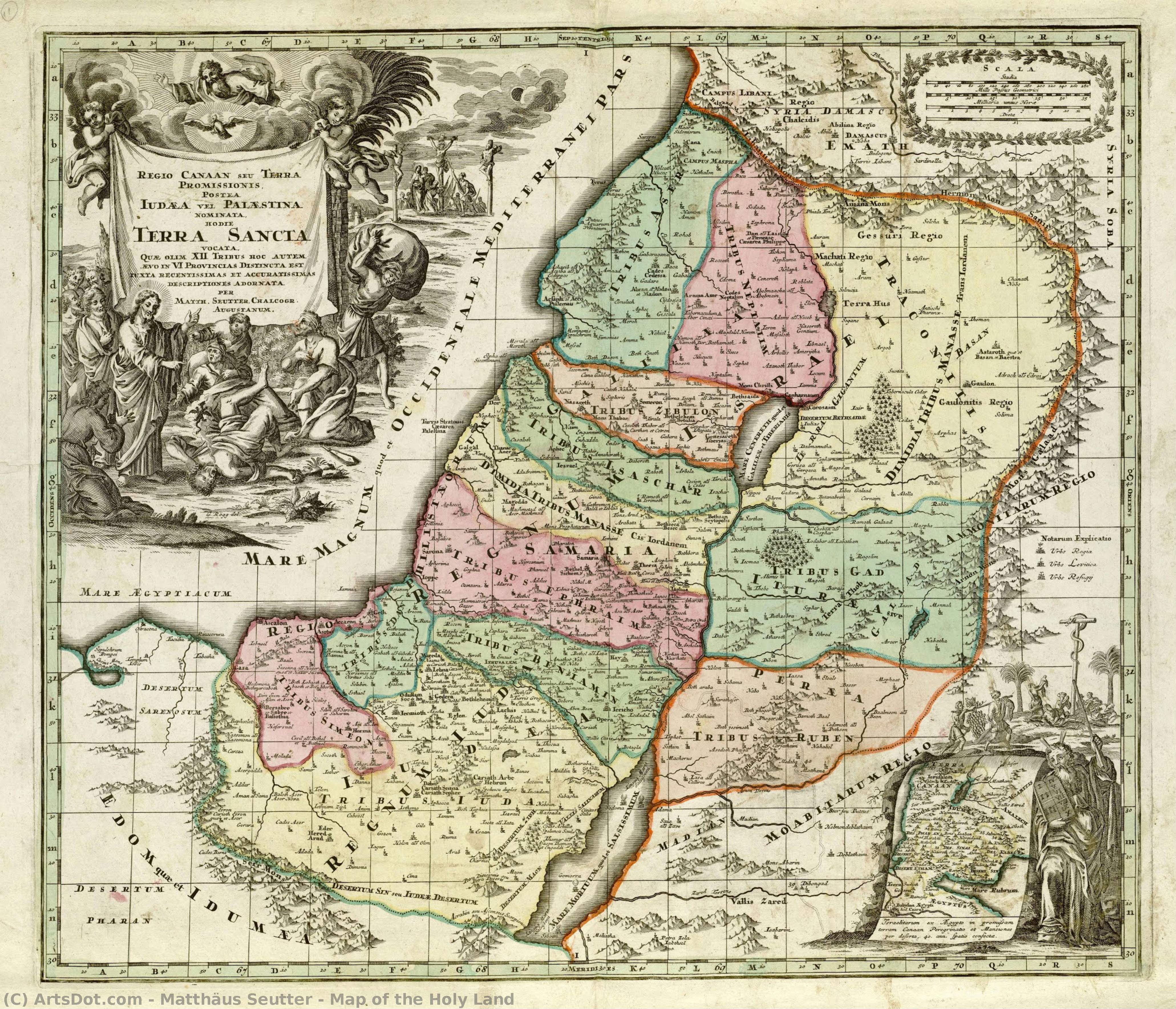
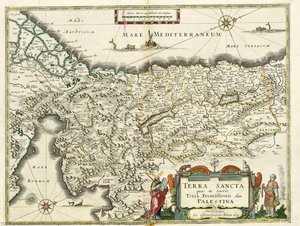
Map of the Holy Land
 Copper
- Baroque
 1725
1725- Early Modern
 50.0 x 57.0 cm
 Национальная библиотека Израиля
 Читать далее
Жикле / Арт-принт
Печать (жикле) или холст музейного качества с быстрыми сроками изготовления и широким выбором вариантов отделки. ( Купить картину ручной работы Перейти к цифровым изображениям)




































Выберите один из наших стандартных размеров, соответствующих оригинальным пропорциям произведения искусства.

Вы можете указать свои собственные размеры, чтобы репродукция идеально подошла под конкретную раму или пространство. Если выбранный вами размер не будет соответствовать пропорциям оригинала, мы либо обрежем произведение, либо дополним изображение зеркальным отражением краев или однотонной заливкой. Перед началом производства вам будет отправлен цифровой макет для утверждения.
Пожалуйста, обратите внимание, что предварительный просмотр на экране не отображает фактическую обрезку или расширение изображения. Только макет точно покажет финальную композицию.
Несмотря на возможность заказа индивидуальных размеров, мы рекомендуем выбирать размер из предопределенного списка, чтобы сохранить оригинальные пропорции.
Доставка по всему миру () за 2 недели вместо стандартных 4/5 недель. (12 Сентябрь)

Бесплатная экспресс-доставка по всему миру

Высококачественный льняной холст

Полное страхование доставки

Гарантия возмещения таможенных пошлин

Гарантия точного соответствия цветов

100-дневная политика возврата (только при обнаружении дефектов)

Гарантия возврата 100% средств

Предложение оптовых скидок
 Вариант со стеклом доступен только для размеров менее 110 см

Map of the Holy Land
Жикле / Арт-принт
Размер репродукции
-


Итоговая стоимость
$ 62
A Journey Through Time: The Cartographic Mastery of Matthäus Seutter
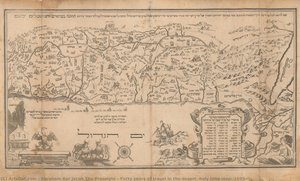
In the delicate dance between science and art, few works capture the Enlightenment's thirst for discovery as elegantly as the Map of the Holy Land. Created in 1725 by the esteemed Augsburg cartographer Matthäus Seutter, this exquisite piece serves as more than a mere geographical guide; it is a window into a bygone era where every line etched onto copper held the weight of spiritual and historical significance. As one gazes upon the intricate topography, the viewer is transported to the eighteenth century, witnessing a world being meticulously documented through the lens of German precision and artistic grace.
The artistry of Seutter lies in his ability to transform cold, topographical data into a vibrant tapestry of color and detail. Though the foundation of the work rests upon the stark clarity of engraving, the application of soft pinks, verdant greens, azure blues, and warm yellows breathes life into the landscape. These hues do not merely mark boundaries; they evoke the sun-drenched mountains, the fertile valleys, and the life-giving rivers that define this sacred terrain. The use of copper as a medium provides an unmistakable antique luster, lending the map a tactile depth that invites the eye to wander through its winding paths and ancient settlements.
The Legacy of the Augsburg Master
To understand the soul of this map, one must look to the hands that crafted it. Matthäus Seutter’s journey from an apprentice brewer to a titan of German cartography is a testament to the era's transformative spirit. Trained under the legendary Johann Baptist Homann, Seutter inherited a meticulousness that would become his hallmark. His independent publishing house in Augsburg became a beacon of excellence, producing works that were as much decorative treasures for the nobility as they were essential tools for scholars. This specific map, now preserved within the prestigious National Library of Israel, represents the pinnacle of his ability to marry imperial grandeur with scientific accuracy.
For the discerning collector or interior designer, this reproduction offers a profound opportunity to introduce a sense of historical gravity and intellectual elegance into a space. The piece functions as a sophisticated focal point, perfect for a study, a library, or a grand hallway where conversation and contemplation are encouraged. It carries an emotional resonance that speaks of exploration, faith, and the enduring human desire to map the unknown. Owning such a work is not merely about decorating a wall; it is about curating a legacy of knowledge and beauty that transcends generations.
Похожие произведения
Биография художника
The Brewer’s Son Who Mapped the World
The story of Matthäus Seutter is one of the most remarkable transformations in the history of European cartography, a journey that began far from the delicate copperplates and ink-stained studios of the great publishing houses. Born in Augsburg, Germany, on September 20, 1678, Seutter’s early life was destined for a much more grounded profession; he began his career as an apprentice brewer, a trade that seemed entirely disconnected from the scientific and artistic heights he would later achieve. Yet, driven by an unfulfilled creative spirit, he abandoned the brewery for Nuremberg, where he sought out the legendary Johann Baptist Homann. Under Homann’s masterful tutelage, Seutter transitioned from a student of craft to a master of engraving, absorbing the meticulous techniques required to translate the vast complexities of the Earth onto paper.
This apprenticeship was more than mere technical training; it was an immersion into the very heart of the Enlightenment's geographical ambitions. By studying under Homann, one of the most influential map publishers of the era, Seutter learned how to marry scientific accuracy with aesthetic grandeur. Around 1700, demonstrating a bold and independent spirit, Seutter departed from his mentor’s shadow to establish his own cartographic publishing house in his native Augsburg. While the early years of his independent venture were marked by the struggles common to any new entrepreneur, his unwavering commitment to excellence allowed him to carve out a unique niche in the competitive European market.
A Master of Engraving and Imperial Recognition
Seutter’s work is characterized by a profound duality: it is simultaneously a rigorous scientific record and a breathtaking display of artistic virtuosity. While much of his cartographic output drew upon the foundational work of established firms like Homann and Delisle, Seutter breathed new life into these geographic outlines through his exceptional engraving skills. He possessed a rare ability to incorporate decorative flourishes—ornate cartouches, mythical sea creatures, and delicate topographical embellishments—that transformed a simple map into a piece of fine art. This stylistic choice did not merely decorate the page; it elevated the atlas to an object of prestige and wonder for collectors across the continent.
The pinnacle of his professional prestige arrived in 1732, when Emperor Charles VI bestowed upon him the illustrious title of Imperial Geographer. This was no mere honorary gesture; it was a formal recognition of his significant contributions to the advancement of geographical knowledge and his role in cementing Augsburg as a premier center for artistic and scientific production. This title granted him a level of authority that resonated through the scholarly circles of Europe, signaling that his maps were trusted authorities on the shape and state of the known world.
Legacy of the Augsburg Cartographer
The enduring significance of Matthäus Seutter lies in his ability to bridge the gap between the utilitarian need for navigation and the human desire for beauty. His most celebrated achievement, the Atlas Novus Sive Tabulae Geographicae, stands as a testament to his prolific career and his mastery of the medium. Through his work, we see the world through the eyes of the 18th century—a period of expanding horizons and intense curiosity. Even after his death in 1757, his influence persisted, as his son Albrecht Carl continued the family firm, ensuring that the Seutter name remained synonymous with cartographic excellence.
Today, the works of Seutter are cherished not only by historians but by art lovers who find beauty in the intricate lines and historical narratives etched into his copperplates. His legacy is found in:
- The Art of the Atlas: Redefining the map as a decorative masterpiece through sophisticated engraving.
- Scientific Continuity: Maintaining the high standards of German cartography by refining and expanding upon the works of his predecessors.
- Imperial Prestige: Elevating the status of the Augsburg publishing industry to an international stage under the mantle of the Holy Roman Empire.
matthäus seutter
1678 - 1757 , Germany
Основные сведения
- Artistic Movement Or Style: Renaissance maps
- Artists Or Movements Influenced By This Artist: ['Delisle']
- Artists Who Influenced This Artist: ['Johann Baptist Homann']
- Date Of Birth: 1678 Augsburg Germany
- Date Of Death: 1757 Augsburg Germany
- Full Name: Matthäus Seutter
- Nationality: German
- Notable Artworks: ['Map of the Holy Land']
- Place Of Birth: Augsburg Germany
Похожие статьи
Hendrick Goltzius: Master Engraver & the Flourishing of Dutch Mannerism
Explore the life & art of Hendrick Goltzius, a master engraver of Dutch Mannerism. Discover his innovative techniques, iconic engravings like 'Jahel', and lasting influence on Baroque art. Learn about collecting Goltzius today.
10 шедевров гравюры, изменивших искусство навсегда | ArtsDot
Откройте для себя 10 легендарных шедевров гравюры от Дюрера, Гойи и Рембрандта! Узнайте историю создания этих культовых работ и их влияние на искусство. Репродукции высокого качества для вашего интерьера – ArtsDot.
Топ-10 знаменитых картин в медных тонах: искусство и декор от ArtsDot
Погрузитесь в мир искусства с топ-10 знаменитых картин, доминирующих медными тонами! Узнайте истории великих художников и их шедевров. Репродукции высокого качества для вашего интерьера от ArtsDot.com.
Engraving: A Historical Survey of Technique, Artistic Expression & Enduring Legacy
Explore the rich history of engraving with ArtsDot. Discover techniques, iconic artists like Dürer & Callot, collecting tips, and expert guidance for preserving your art investment. Learn about intaglio printing & more!
The Intricate World of Engraving: A Historical Survey of Technique, Artistic Expression & Enduring Legacy
Explore the rich history of engraving with ArtsDot. Discover techniques, iconic artists like Dürer & Callot, collecting tips, and expert guidance for preserving your art investment. Learn about intaglio printing & more!