

 Предпросмотр
 Поделиться
 Поделиться
 Детали произведения

 Скачать
 Похожие работы
 Рентгенография
 Слайд-шоу
 Статистика
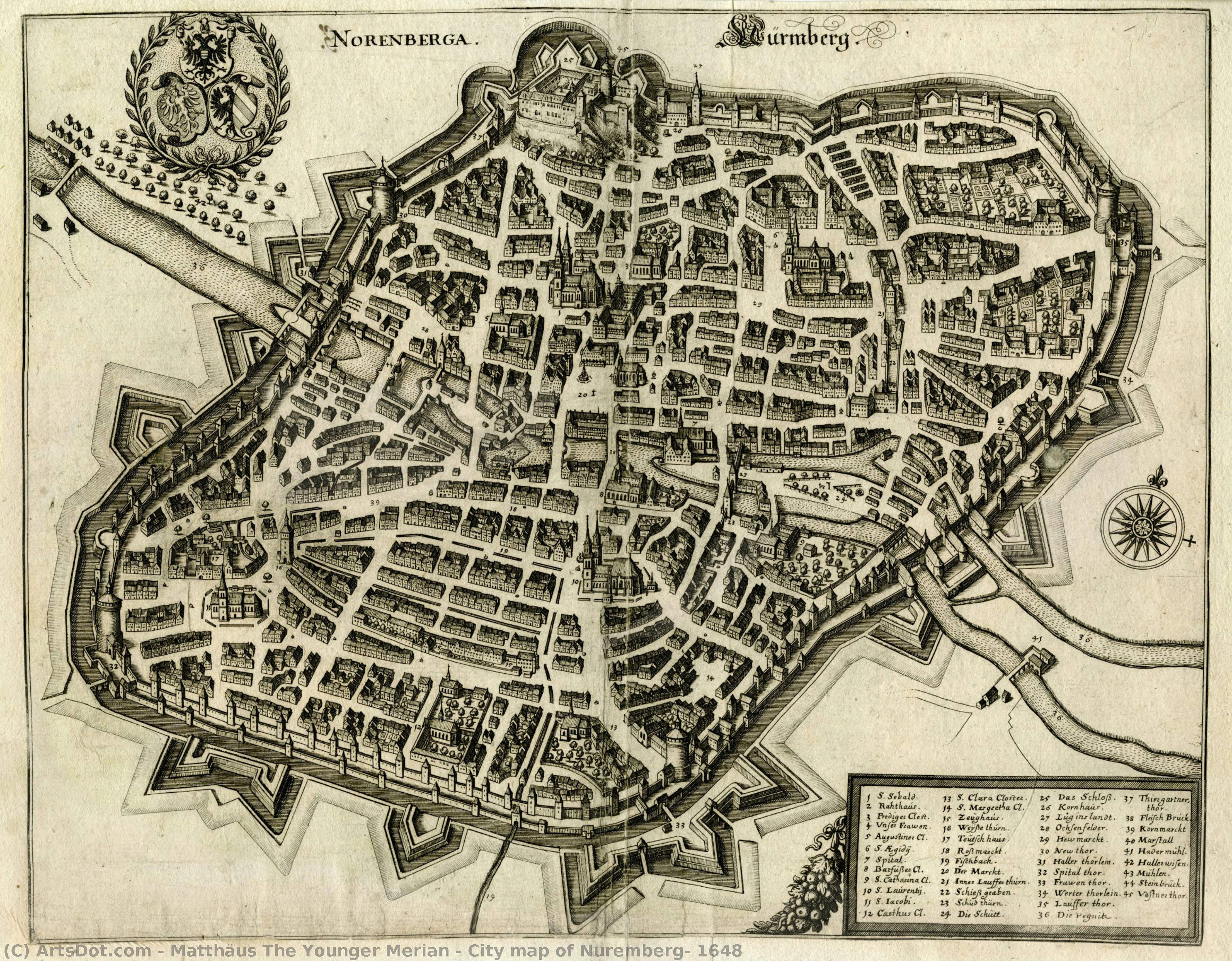
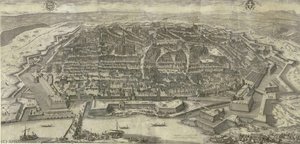
City map of Nuremberg, 1648


 Читать далее
Приобретите цифровое изображение высокого разрешения в улучшенном качестве, которое значительно превосходит онлайн-превью.
Каждый файл тщательно подготавливается нашими специалистами с использованием передовых инструментов и экспертной ручной ретуши. Мы гарантируем исключительную четкость, точную цветопередачу и детальную проработку каждого изображения.
Финальный файл доставляется по электронной почте в течение 72 часов и оптимизирован для немедленного использования в профессиональной среде, при верстке и печати. Это тот же уровень качества, которому доверяют ведущие дизайнерские студии, издательства и галереи.
Цифровое изображение
Скачайте файл высокого разрешения для личного использования, печати и творческих проектов. ( Перейти к печати Купить картину ручной работы)
Включено в каждый заказ цифровых изображений
Гарантия экспертной цифровой доставки
Выбирая ArtsDot.com, вы получаете не просто изображение — вы приобретаете профессионально обработанное цифровое произведение искусства, созданное с безупречной точностью и под защитой гарантии качества. Вот всё, что автоматически входит в ваш заказ:

Мгновенная доставка по e-mail
Ваш цифровой файл в высоком разрешении будет отправлен вам по электронной почте в течение 72 часов после оформления заказа — и сразу станет доступен для использования.

Цифровой файл с ИИ-улучшением
Ваше произведение искусства проходит профессиональную оптимизацию с использованием передовых инструментов ИИ и ручной обработки, что гарантирует максимальную детализацию, четкость и точность цветопередачи.

Бессрочная бесплатная повторная доставка
Случайно удалили или потеряли файл? Не беспокойтесь — мы отправим его вам повторно в любое время и совершенно бесплатно.

Без импортных пошлин — навсегда
Наслаждайтесь вашим произведением искусства мгновенно без таможенных пошлин, сборов или затрат на доставку — цифровые загрузки всегда не облагаются налогом.

Гарантия точности цветопередачи
Мы гарантируем, что ваше цифровое изображение максимально точно передает оригинальные цвета благодаря использованию профессиональных инструментов и систем управления цветом.

Гарантия удовлетворенности 100 дней
Если вы не будете удовлетворены своим цифровым изображением, мы внесем правки или вернем 100% стоимости в течение 100 дней — без лишних вопросов.

100% Гарантия возврата средств
Не удовлетворены покупкой? Получите полный возврат средств в течение 100 дней после получения цифрового файла — без лишних вопросов.

Скидки на оптовые заказы
Купите 3 изображения, сэкономьте 10% — Купите 5, сэкономьте 15% — Купите 10+, сэкономьте 20%. Отличное решение для творческих проектов, галерей и агентств.
A Window into the Seventeenth Century
To gaze upon the City Map of Nuremberg, 1648 is to step through a portal into the heart of the Holy Roman Empire during a transformative era. Created by the master engraver Matthäus Merian the Younger, this exquisite work serves as much more than a mere cartographic tool; it is a breathtaking tapestry of historical memory and architectural grandeur. At its center, the imposing silhouette of the Nuremberg castle rises above the cityscape, acting as an anchor for the sprawling network of streets, bridges, and soaring church spires that define the urban landscape. The painting captures a moment in time when the meticulous detail of Baroque scientific illustration met the romantic allure of the cityscape, offering a view that is simultaneously precise and deeply atmospheric.
The artistry of Merian the Younger shines through in the intricate linework and the profound sense of depth achieved within the composition. As a pioneer of detailed observation, Merian utilized his mastery of engraving techniques to render every cobblestone, timber-framed house, and distant fortification with startling clarity. The technique allows for a play of light and shadow that breathes life into the static map, suggesting the movement of the small, scattered figures—the residents and travelers of 1648—who populate the scene. For the discerning collector, this piece offers a rare marriage of topographical accuracy and artistic soul, making it a centerpiece that invites prolonged contemplation.
Beyond its technical brilliance, the work carries a heavy emotional resonance, evoking a sense of nostalgia for a lost world of craftsmanship and communal structure. The sprawling layout of Nuremberg, with its complex layers of fortifications and religious landmarks, symbolizes the stability and cultural richness of the era. For interior designers and art enthusiasts alike, this reproduction provides an unparalleled opportunity to introduce a sense of heritage and intellectual depth into a space. Whether placed in a grand library, a sophisticated study, or a contemporary living area, the map acts as a conversation piece that bridges the gap between the scientific rigor of the seventeenth century and the aesthetic elegance of the modern home.
Похожие произведения
Биография художника
A Legacy of Precision: The Life and Art of Matthäus Merian the Younger
In the grand tapestry of the seventeenth century, few threads are as intricate or as vital as those woven by Matthäus Merian the Younger. Born in the historic Swiss city of Basel in 1621, Merian was destined to inherit a profound artistic lineage. As the eldest son of the renowned engraver Matthäus Merian the Elder, his very existence was intertwined with the burgeoning world of scientific illustration and cartographic excellence. His early years were shaped by a rigorous apprenticeship under Dietrich Meyer in Zürich, where he mastered the foundational principles of Renaissance composition. This early training instilled in him a reverence for detail that would later define his career, allowing him to bridge the gap between the raw observation of nature and the refined elegance of Baroque artistry.
The journey of Merian’s development was one of constant movement across the vibrant cultural hubs of Europe. His travels took him through the artistic heartlands of Paris, Amsterdam, and London, where he encountered the transformative energies of the era's greatest masters. It is whispered in the annals of art history that his time in London brought him into the orbit of Anthonis van Dyck, an encounter that undoubtedly deepened his understanding of psychological depth and the regal grace required for high-society portraiture. These wanderings were not merely for leisure but were essential pilgrimages of style; by absorbing the dramatic chiaroscuro of the Caravaggisti and the atmospheric realism found in the Low Countries, Merian developed a versatile hand capable of both the microscopic precision of an engraver and the sweeping grandeur of a painter.
The Architect of Landscapes and the Cartographic Vision
While his talent for portraiture earned him prestige among the nobility, Merian’s most enduring contribution to the historical record lies in his monumental work as a publisher and topographical illustrator. Following the passing of his father in 1650, Merian, alongside his brother Caspar, took up the mantle of the family publishing house in Frankfurt. This period marked the height of his collaborative genius. Together, they continued the production of the Topographia Germaniae and the Theatrum Europaeum—works that were far more than mere maps. They were breathtaking visual encyclopedias that captured the very soul of the German landscapes, documenting cities, flora, fauna, and the shifting political boundaries of a continent in flux.
To look upon a Merian engraving is to witness a marriage of science and art. His work demanded an unparalleled level of accuracy, yet it was never devoid of aesthetic wonder. He possessed the rare ability to render the rugged textures of a forest or the intricate architecture of a cathedral with such fidelity that his prints served as essential tools for both scholars and travelers alike. This dedication to scientific observation ensured that his name would be forever linked to the Age of Enlightenment, providing a visual foundation upon which future generations of naturalists and historians would build their understanding of the natural world.
Portraiture, Altarpieces, and Final Reflections
Beyond the meticulous lines of his maps, Merian the Younger achieved significant acclaim as a portraitist of the European elite. His ability to capture the dignity of his subjects was perhaps most famously demonstrated during the coronation of Leopold I in Frankfurt in 1658. Whether he was portraying the Swedish military leader Carl Gustaf Wrangel or creating intimate, symbolic works like The Pregnant Countess Wrangel, Merian infused his subjects with a sense of timelessness and grace. His skill extended even into the sacred realm, where he composed moving altarpieces for prestigious locations such as the Bamberg Cathedral and the Barfüßerkirche in Frankfurt, proving that his artistic range could encompass both the secular majesty of kings and the spiritual devotion of the church.
As the seventeenth century drew to a close, Merian’s influence continued to resonate through the works of his pupils, including the talented Bartholomäus Kilian. Though the family publishing house eventually saw a decline in output, the artistic standard set by Matthäus remained an unshakeable benchmark. When he passed away in Frankfurt on February 15, 1687, he left behind a world that was more clearly mapped, more beautifully documented, and more artistically enriched. His life remains a testament to the power of observation—a legacy where every etched line serves as a window into the splendor of the Baroque era.
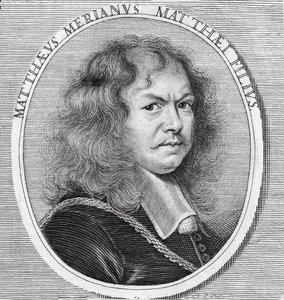
matthäus the younger merian
1621 - 1687 , Switzerland
Основные сведения
- Artistic Movement Or Style: Baroque
- Artists Or Movements Influenced By This Artist: Renaissance
- Artists Who Influenced This Artist: Dietrich Meyer
- Date Of Birth: March 25, 1621
- Date Of Death: February 15, 1687
- Full Name: Matthäus Merian the Younger
- Nationality: Swiss
- Notable Artworks:
- Hans Christoffer of Königsmarck
- Garden Of Burgermeister Schwind
- City map of Nuremberg, 1648
- Place Of Birth: Basel, Switzerland