
- Главная

- Репродукция картины маслом
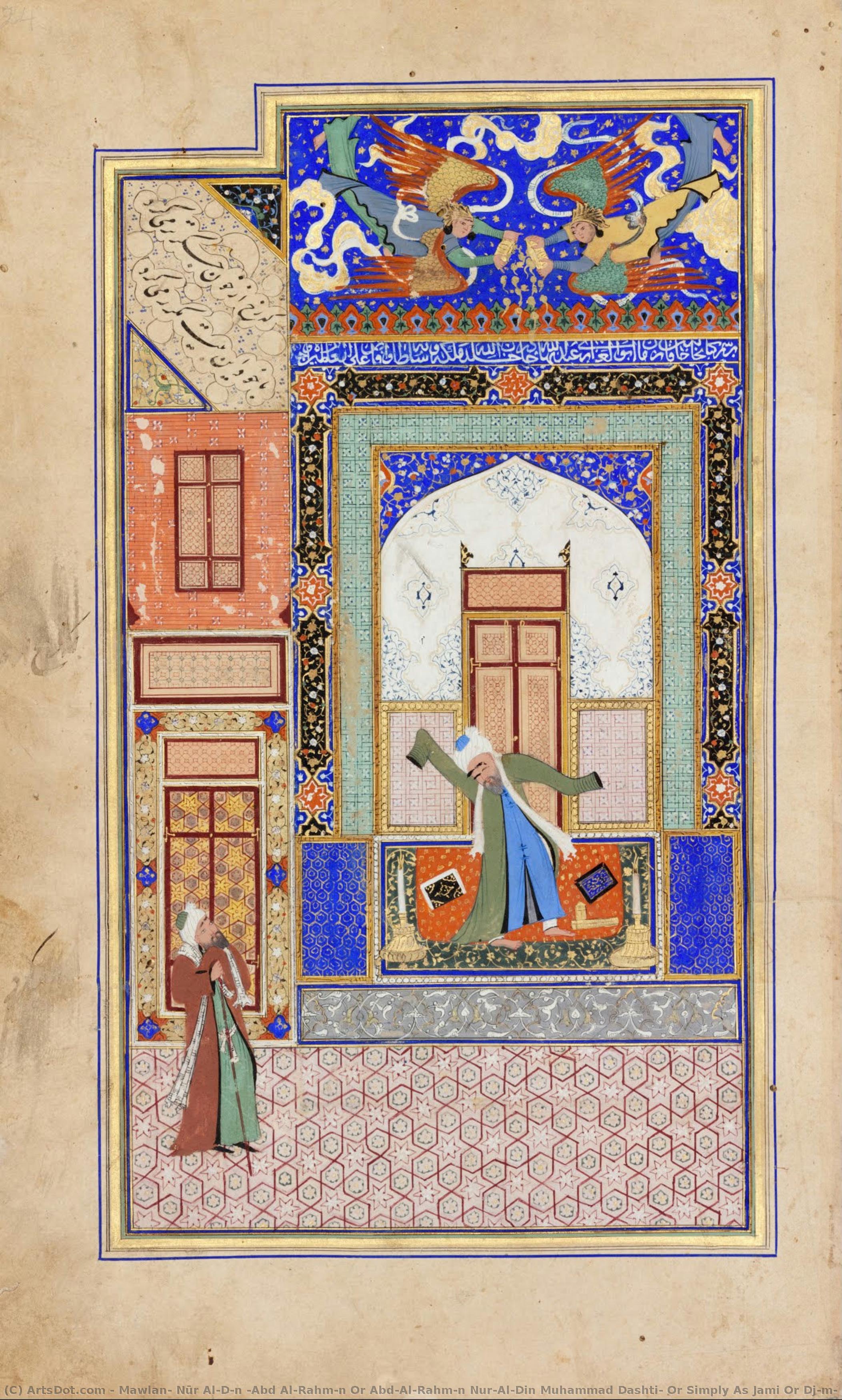
- Mawlanā Nūr Al-Dīn 'Abd Al-Rahmān Or Abd-Al-Rahmān Nur-Al-Din Muhammad Dashti, Or Simply As Jami Or Djāmī And In Turkey As Molla Cami
 Предпросмотр
 Поделиться
 Поделиться
 Детали произведения

 Скачать
 Похожие работы
 Рентгенография
 Слайд-шоу
 Статистика
Manuscript
 17.0 x 28.0 cm
 al-Sabah Collection Kuwait
 Читать далее
Масляная репродукция ручной работы
Картина маслом на холсте в выбранном вами размере и раме, написанная на заказ нашими художниками. ( Перейти к печати Перейти к цифровым изображениям)




































Выберите один из наших стандартных размеров, соответствующих оригинальным пропорциям произведения искусства.

Вы можете указать собственные размеры, чтобы картина идеально вписалась в выбранную раму или пространство. Если выбранный вами размер не соответствует пропорциям оригинала, мы либо обрежем полотно, либо расширим его за счет дополнительных элементов, написанных вручную. Цифровой макет будет отправлен вам на утверждение перед началом производства.
Обратите внимание, что предварительный просмотр на экране не отражает фактическую обрезку или расширение. Только макет точно покажет окончательную композицию.
Хотя доступны индивидуальные размеры, мы рекомендуем выбирать вариант из предопределенного списка, чтобы сохранить исходные пропорции.
После оформления заказа команда ArtsDot.com свяжется с клиентом по электронной почте для уточнения деталей и предоставит предварительный макет
Доставка по всему миру () за 3–4 недели вместо стандартных 5 недель. (12 Сентябрь). Без компромиссов в качестве.

Бесплатная экспресс-доставка по всему миру

Высококачественный льняной холст

Полное страхование доставки

Гарантия возмещения таможенных пошлин

Гарантия точного соответствия цветов

100-дневная политика возврата (только при обнаружении дефектов)

Гарантия возврата 100% средств

Предложение оптовых скидок
 Вариант со стеклом доступен только для размеров менее 110 см

Manuscript
Техника репродукции
Размер репродукции
-


Итоговая стоимость
$ 263
Похожие произведения



Биография художника
The Mystical Journey of Jami: A Life Woven in Poetry and Sufism
Born Nur al-Din Muhammad Dashti sometime around 1408-1409, though precise dates remain shrouded in the mists of Persian history, Abd al-Rahman Jami – often simply known as Jami or Djāmī – emerged from a world steeped in intellectual and spiritual fervor. His birthplace, near Jam, in present-day Afghanistan, provided an early grounding in the rich traditions of Islamic scholarship and Sufi mysticism that would profoundly shape his life and work. Unlike many poets who experienced hardship or exile, Jami enjoyed relative comfort and privilege, allowing him to dedicate himself fully to learning and artistic creation. His father was a scholar connected to the Timurid court, fostering an environment where poetry wasn’t merely a pastime but a revered discipline. This upbringing instilled in Jami a deep respect for both classical Persian literature and the esoteric teachings of Sufism, particularly those emanating from the Naqshbandi order. He received his early education in Samarkand, then a vibrant center of culture under the reign of Timur (Tamerlane), before continuing his studies in Herat, which would become the defining location for much of his creative output and spiritual development.A Synthesis of Tradition: Influences and Early Works
Jami’s poetic voice wasn't born in isolation; it was a carefully constructed synthesis of centuries of Persian literary tradition. He drew heavily from masters like Rumi, Hafez, Saadi, and Nizami, absorbing their stylistic nuances and philosophical depth. However, Jami didn’t simply imitate his predecessors. He sought to *reconcile* seemingly disparate strands within the poetic canon – the lyrical intensity of Hafez with the epic scope of Nizami, the spiritual fervor of Rumi with the ethical teachings of Saadi. This ambition is evident in his early works, such as the Tuhfat al-Abrar (Gift to the Pious), a masnavi (rhyming couplets) exploring moral and religious themes. His initial focus was on didactic poetry, aiming to guide readers towards spiritual enlightenment through accessible verse. But even in these early pieces, hints of his later mastery – the intricate imagery, the musicality of language, and the subtle exploration of Sufi concepts – began to emerge. He wasn’t content with simply *telling* stories about virtue; he wanted to evoke a feeling of divine presence within the reader's heart. His growing interest in the Naqshbandi Sufi order also became increasingly apparent, influencing his understanding of spiritual practice and shaping the themes explored in his poetry.The Pinnacle of Persian Mystical Poetry: Major Achievements
Jami’s most celebrated works represent the culmination of his artistic and spiritual journey. The Haft Awrang (Seven Thrones), a collection of seven masnavis, each dedicated to a different stage of Sufi initiation, is considered one of the masterpieces of Persian literature. It's a sprawling epic that weaves together tales of prophets, saints, and lovers, all serving as allegories for the soul’s ascent towards God. The Layla wa Majnun (Layla and Majnun), his retelling of the classic Arabic tale of star-crossed lovers, is perhaps his most widely read poem. Jami imbues the story with a profound Sufi interpretation, portraying Layla as the embodiment of divine beauty and Majnun’s unrequited love as the soul's yearning for union with God. However, it was the Shams al-Din Yusuf, a monumental divan (collection of poems) exceeding 15,000 couplets, that truly cemented Jami’s reputation as a poetic genius. This work showcases his unparalleled command of language, his intricate use of symbolism, and his profound understanding of Sufi metaphysics. Within theA Legacy Enduring Through Centuries: Historical Significance
Jami’s influence on Persian literature and Sufi thought is immeasurable. He wasn't merely a poet; he was a scholar, a mystic, and a teacher who sought to synthesize the intellectual and spiritual currents of his time. His works became foundational texts for Sufi orders across Central Asia, South Asia, and beyond. The Baharistan, a collection of anecdotes and moral tales, served as an ethical guide for generations of readers. He also wrote extensively on Islamic theology and philosophy, demonstrating a remarkable breadth of knowledge.- His emphasis on the importance of both outward observance and inner experience resonated deeply with Sufi practitioners.
- Jami’s poetry continues to be studied and celebrated for its beauty, depth, and spiritual insight.
- He bridged the gap between classical Persian literary tradition and the evolving landscape of Sufi mysticism.

Основные сведения
- Artistic Movement Or Style: Sufi Poetry, Literature
- Date Of Birth: (Unknown)
- Date Of Death: (Unknown)
- Full Name: Mawlanā Nūr Al-Dīn 'Abd Al-Rahmān
- Nationality: Persian
- Notable Artworks:
- Haft Paykar
- Tuhfat al-Ahrar
- Lawā'ih
- Place Of Birth: (Unknown)