

 Предпросмотр
 Поделиться
 Поделиться
 Детали произведения

 Скачать
 Похожие работы
 Рентгенография
 Слайд-шоу
 Статистика
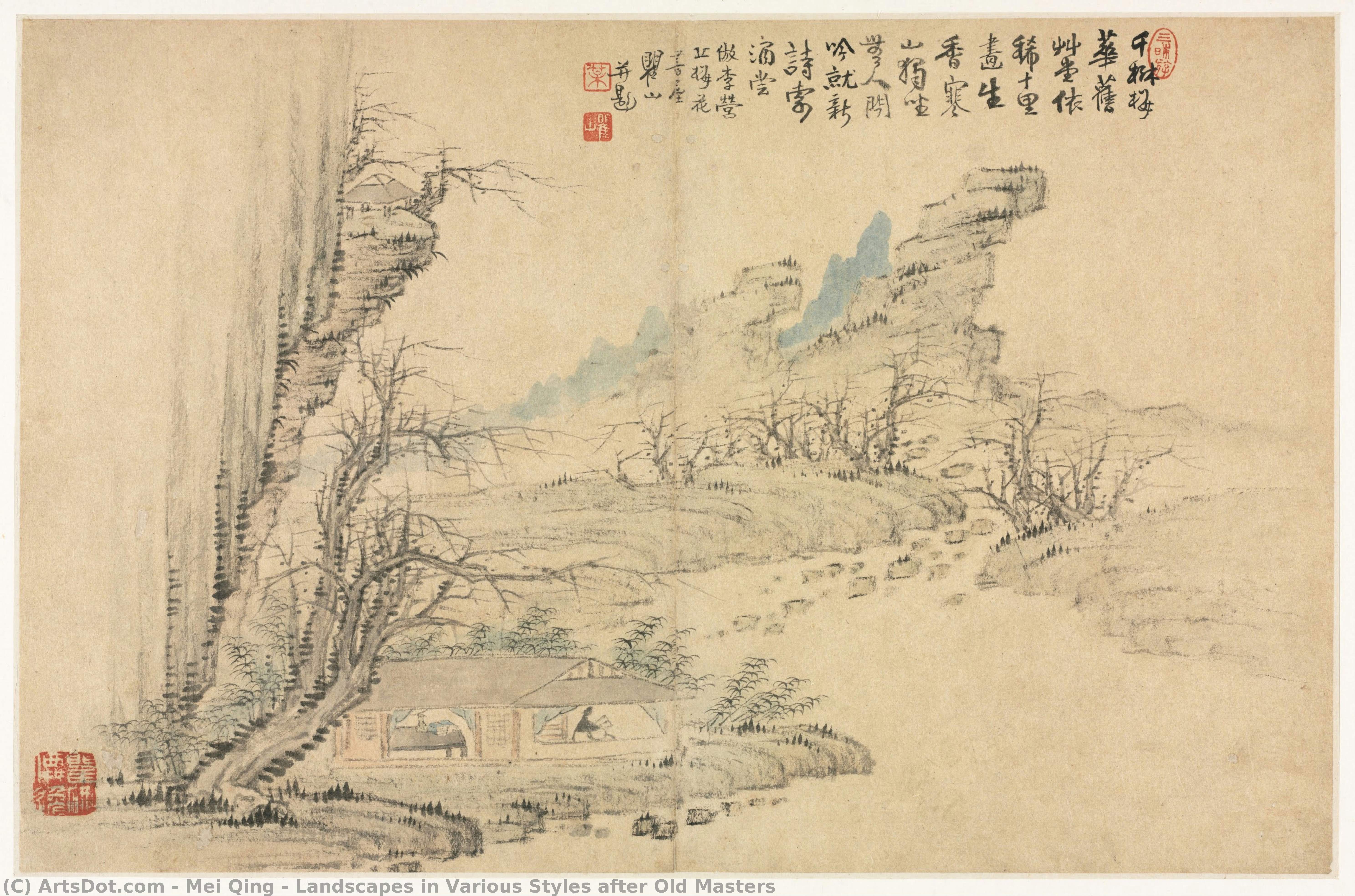
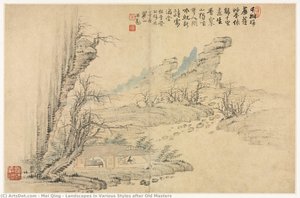
Landscapes in Various Styles after Old Masters
 Ink
Ink- Chinese Landscape Painting
 1690
1690- Early Modern
 28.0 x 44.0 cm
 Кливлендский музей искусств
 Читать далее
Масляная репродукция ручной работы
Картина маслом на холсте в выбранном вами размере и раме, написанная на заказ нашими художниками. ( Перейти к печати Перейти к цифровым изображениям)




































Выберите один из наших стандартных размеров, соответствующих оригинальным пропорциям произведения искусства.

Вы можете указать собственные размеры, чтобы картина идеально вписалась в выбранную раму или пространство. Если выбранный вами размер не соответствует пропорциям оригинала, мы либо обрежем полотно, либо расширим его за счет дополнительных элементов, написанных вручную. Цифровой макет будет отправлен вам на утверждение перед началом производства.
Обратите внимание, что предварительный просмотр на экране не отражает фактическую обрезку или расширение. Только макет точно покажет окончательную композицию.
Хотя доступны индивидуальные размеры, мы рекомендуем выбирать вариант из предопределенного списка, чтобы сохранить исходные пропорции.
После оформления заказа команда ArtsDot.com свяжется с клиентом по электронной почте для уточнения деталей и предоставит предварительный макет
Доставка по всему миру () за 3–4 недели вместо стандартных 5 недель. (11 Сентябрь). Без компромиссов в качестве.

Бесплатная экспресс-доставка по всему миру

Высококачественный льняной холст

Полное страхование доставки

Гарантия возмещения таможенных пошлин

Гарантия точного соответствия цветов

100-дневная политика возврата (только при обнаружении дефектов)

Гарантия возврата 100% средств

Предложение оптовых скидок
 Вариант со стеклом доступен только для размеров менее 110 см

Landscapes in Various Styles after Old Masters
Техника репродукции
Размер репродукции
-


Итоговая стоимость
$ 263
Похожие произведения
Биография художника
The Ethereal Landscapes of Mei Qing: A Legacy of Ink and Spirit
In the turbulent transition between the Ming and Qing dynasties, a period marked by profound political upheaval and cultural shifting, the art of Mei Qing (ca. 1623–1697) emerged as a serene sanctuary of continuity. Born in Xuancheng, Anhui Province, Mei Qing was more than a mere chronicler of nature; he was a scholar-artist whose life’s trajectory mirrored the broader cultural currents of his era. His existence was defined by an unwavering devotion to Daoist ideals and a deep-seated commitment to the literati tradition, allowing him to weave a visual language that spoke of harmony even amidst the chaos of a changing empire. Through his mastery of the brush, he captured not just the physical majesty of the Chinese landscape, and but the very breath of the mountains themselves.
The foundation of Mei Qing’s artistic soul was laid through rigorous classical training and a profound connection to the earth of Anhui. Under the mentorship of the respected calligrapher and painter Wang Meng, Mei Qing inherited a lineage of technical excellence and a deep appreciation for the Huangshan School aesthetic. This early instruction instilled in him the ability to translate complex geological forms into poetic expressions. His travels through the legendary Huangshan Mountains—a landscape of mist-shrouded peaks and ancient pines—became the primary wellspring of his inspiration. Drawing from the venerable precedents of masters like Huang Gongwang and Ni Zan, Mei Qing embraced a minimalist yet powerful approach, utilizing angular rock formations and sparsely rendered vegetation to evoke a sense of profound solitude and spiritual clarity.
Technique and the Philosophy of Effortless Action
To observe a work by Mei Qing is to witness the delicate dance between ink and void. His technique was characterized by a sophisticated use of the dry brush, a method that allowed him to render the rugged, weathered textures of granite cliffs with startling realism while maintaining an ethereal lightness. Often executing his visions on satin—a medium cherished by the masters of the Ming dynasty—he employed subtle tonal variations to create atmospheric depth, making the viewer feel as though they were peering through layers of mountain mist. This mastery of tonality was not merely a technical feat but a philosophical one; it embodied the Daoist concept of wu wei, or effortless action. In his compositions, every stroke felt deliberate yet natural, as if the landscape had simply manifested itself upon the silk.
His artistic repertoire extended beyond the purely visual into the realms of poetry and calligraphy, creating a holistic experience of the literati spirit. His works often integrated calligraphic inscriptions that complemented the mood of his landscapes, such as his evocative Poem on Boating on the Qinhuai River. In such pieces, the dramatic variations of ink tonality reveal a painterly sensibility that transcends simple representation. Whether he was depicting the tranquil waters of a mountain lake or the jagged heights of a precipice, Mei Qing’s work remained anchored in a sense of balance and tranquility, inviting the observer into a state of meditative contemplation.
Historical Significance and Enduring Resonance
The historical importance of Mei Qing lies in his role as a bridge between eras. As a "loyalist" painter, his work carried the weight of cultural preservation, maintaining the aesthetic integrity of the Ming tradition even as the Qing dynasty rose to power. His friendships with other luminaries, such as the great monk-artist Shitao, placed him at the very heart of a vibrant intellectual circle that sought to find beauty and meaning in a fractured world. His ability to synthesize the ruggedness of the Huangshan landscape with the refined elegance of scholarly painting ensured his place in the canon of Chinese art history.
Today, the legacy of Mei Qing continues to resonate through his celebrated masterpieces, such as Boating beneath Echo Hill and his various depictions of the peaks of Mount Huang. His ability to capture the "spirit resonance" of nature remains a benchmark for landscape painters. Through his eyes, we see a world where the mountains are not merely stone and tree, but living entities imbued with Daoist wisdom, reminding us that even in times of great change, the essence of nature and the purity of the artistic spirit remain eternal.
mei qing
1623 - 1697
Основные сведения
- Artistic Movement Or Style: Huangshan School
- Artists Or Movements Influenced By This Artist:
- Huang Gongwang
- Ni Zan
- Artists Who Influenced This Artist: ['Wang Meng']
- Date Of Death: 1697
- Full Name: Mei Qing
- Nationality: Chinese
- Notable Artworks: ['Strolling in a Misty Valley']
- Place Of Birth: Xuancheng, Anhui Province
Похожие статьи
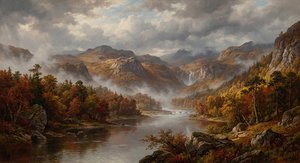
Школа реки Гудзон: 10 шедевров, изменивших американскую живопись | ArtsDot
Погрузитесь в мир Школы реки Гудзон! 10 шедевров Томаса Коула, Фредерика Чёрча и других мастеров американского романтизма. Купите репродукции картин высокого качества для вашего интерьера на ArtsDot.com.
Arboreal Echoes: A Historical & Artistic Exploration of Trees in Painting
Explore the rich history of trees in painting! Discover symbolism, Romantic masterpieces by Caspar David Friedrich & beyond. A curated journey for art enthusiasts.

25 Шедевров Поля Сезанна: Открывая Новую Эру в Искусстве | ArtsDot
Откройте для себя 25 величайших шедевров Поля Сезанна! Узнайте истории создания картин импрессионизма и постимпрессионизма, технику художника и вдохновение для вашего интерьера. Репродукции картин Сезанна высокого качества на ArtsDot.com.
Majestic Peaks on Canvas: A Historical & Artistic Exploration of Mountains in Fine Art
Explore the history of mountain painting! Discover Romantic masterpieces & key artists like Dahl & Calame. Learn about the Sublime & Picturesque aesthetics and find your perfect artwork at ArtsDot.
Arboreal Echoes: A Historical & Artistic Exploration of Trees in Painting
Explore the rich history of trees in painting! Discover symbolism, Romantic masterpieces by Caspar David Friedrich & beyond. A curated journey for art enthusiasts.