

 Предпросмотр
 Поделиться
 Поделиться
 Детали произведения

 Скачать
 Похожие работы
 Рентгенография
 Слайд-шоу
 Статистика
Necklacing
 Oil
Oil- WallArt
- Contemporary Expressionism
 2016
2016- Contemporary
 200.0 x 151.0 cm
 Музей Метрополитен
 Читать далее
Приобретите цифровое изображение высокого разрешения в улучшенном качестве, которое значительно превосходит онлайн-превью.
Каждый файл тщательно подготавливается нашими специалистами с использованием передовых инструментов и экспертной ручной ретуши. Мы гарантируем исключительную четкость, точную цветопередачу и детальную проработку каждого изображения.
Финальный файл доставляется по электронной почте в течение 72 часов и оптимизирован для немедленного использования в профессиональной среде, при верстке и печати. Это тот же уровень качества, которому доверяют ведущие дизайнерские студии, издательства и галереи.
Цифровое изображение
Скачайте файл высокого разрешения для личного использования, печати и творческих проектов. ( Перейти к печати Купить картину ручной работы)
Включено в каждый заказ цифровых изображений
Гарантия экспертной цифровой доставки
Выбирая ArtsDot.com, вы получаете не просто изображение — вы приобретаете профессионально обработанное цифровое произведение искусства, созданное с безупречной точностью и под защитой гарантии качества. Вот всё, что автоматически входит в ваш заказ:

Мгновенная доставка по e-mail
Ваш цифровой файл в высоком разрешении будет отправлен вам по электронной почте в течение 72 часов после оформления заказа — и сразу станет доступен для использования.

Цифровой файл с ИИ-улучшением
Ваше произведение искусства проходит профессиональную оптимизацию с использованием передовых инструментов ИИ и ручной обработки, что гарантирует максимальную детализацию, четкость и точность цветопередачи.

Бессрочная бесплатная повторная доставка
Случайно удалили или потеряли файл? Не беспокойтесь — мы отправим его вам повторно в любое время и совершенно бесплатно.

Без импортных пошлин — навсегда
Наслаждайтесь вашим произведением искусства мгновенно без таможенных пошлин, сборов или затрат на доставку — цифровые загрузки всегда не облагаются налогом.

Гарантия точности цветопередачи
Мы гарантируем, что ваше цифровое изображение максимально точно передает оригинальные цвета благодаря использованию профессиональных инструментов и систем управления цветом.

Гарантия удовлетворенности 100 дней
Если вы не будете удовлетворены своим цифровым изображением, мы внесем правки или вернем 100% стоимости в течение 100 дней — без лишних вопросов.

100% Гарантия возврата средств
Не удовлетворены покупкой? Получите полный возврат средств в течение 100 дней после получения цифрового файла — без лишних вопросов.

Скидки на оптовые заказы
Купите 3 изображения, сэкономьте 10% — Купите 5, сэкономьте 15% — Купите 10+, сэкономьте 20%. Отличное решение для творческих проектов, галерей и агентств.
A Visceral Encounter with Memory and Tradition
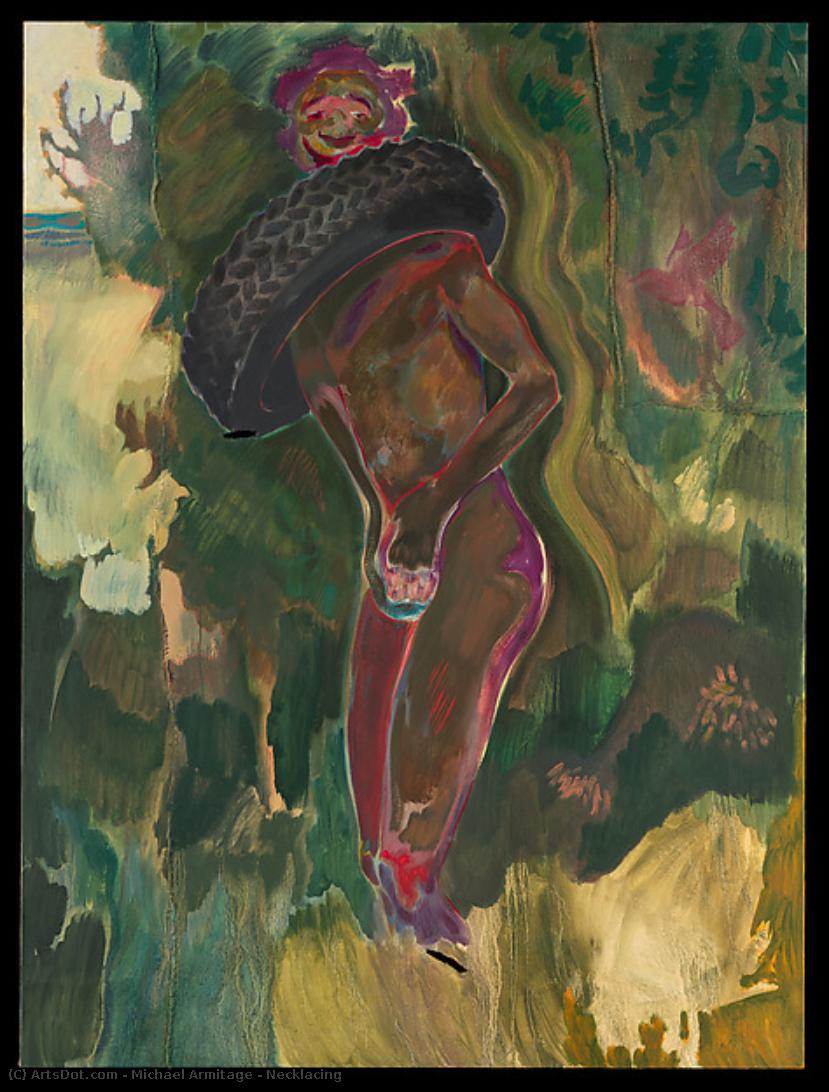
In the profound and arresting work “Necklacing,” created in 2016 by the acclaimed Kenyan artist Michael Armitage, viewers are invited into a space where personal vulnerability meets the heavy weight of historical trauma. The painting presents a striking, almost haunting image: a nude male figure dominates the central composition, bearing the immense burden of a large tire upon his head. This is not merely a surrealist gesture; it is a deliberate and harrowing reference to the "necklacing" ritual practiced during the South African apartheid era—a period marked by extreme violence and systemic injustice. Through this powerful subject matter, Armitage forces a confrontation with the ghosts of the past, transforming a historical atrocity into a timeless meditation on struggle, resilience, and the enduring scars left by societal upheaval.
The emotional resonance of the piece is amplified by its unique and culturally significant medium. Armitage utilizes lubugo, a traditional Ugandan barkcloth, as his canvas. This choice is far from incidental; the cloth itself is a vessel of history, deeply rooted in Buganda traditions and imbued with the narratives of generations. The organic, textured surface of the barkcloth provides a tactile depth that standard canvas cannot replicate, allowing the imperfections and natural fibers of the material to interact with the paint. By marrying this ancient East African substrate with contemporary oil painting techniques, Armitude creates a dialogue between ancestral heritage and modern expression, making the artwork feel as though it is emerging directly from the earth and its history.
A Symphony of Color and Expressive Form
Visually, “Necklacing” is a masterclass in expressive abstraction and controlled chaos. The artist employs a rich, saturated palette where bold reds and intense pinks clash against earthy, somber tones. These vibrant hues are not merely decorative; they serve as symbolic conduits for passion, anger, and the sacrificial nature of the subject matter. The brushwork is gestural and fluid, with thick, impasto-like applications of paint that create a sense of movement and instability. This technique mirrors the psychological turbulence of the scene, where scattered geometric shapes and amorphous forms drift through the background like fragments of a fractured memory.
For the discerning collector or interior designer, this piece offers an unparalleled opportunity to introduce a work of profound intellectual and aesthetic depth into a curated space. The painting’s dynamic, asymmetrical composition and dramatic use of light and shadow ensure that it commands attention, acting as a powerful focal point in any sophisticated setting. Whether viewed as a study in the complexities of dual identity—reflecting Armitage's own Kenyan and English heritage—or as a breathtaking example of modern expressionism, “Necklacing” remains an unforgettable testament to the power of art to confront the uncomfortable while celebrating the beauty of human endurance.
Похожие произведения
Биография художника
Michael Armitage: Bridging East African Roots and Western Abstraction
Born in Nairobi, Kenya, in 1984 to an English father and a Kikuyu mother, Michael Armitage’s artistic journey is deeply intertwined with his dual heritage. Growing up amidst the vibrant landscapes and complex social realities of Kenya shaped his early sensibilities, fostering a fascination with storytelling and a profound connection to both its traditions and its contemporary struggles. This formative period instilled in him a unique perspective – one that would later become the cornerstone of his distinctive artistic style.
Armitage’s formal training began at the Slade School of Fine Art in London, where he initially explored abstract painting. However, a pivotal shift occurred when he encountered the traditional Ugandan bark cloth, known as lubugo, used for ceremonial purposes and often incorporating imperfections and historical narratives within its very fibers. This material, with its inherent fragility and textural complexity, proved to be an ideal medium for his evolving artistic vision. He began working on lubugo in 2014, a decision that fundamentally altered the trajectory of his work, grounding it in East African culture and history while simultaneously allowing him to push the boundaries of traditional painting techniques.
The Weight of Narrative: Exploring Trauma and Memory
Armitage’s paintings are not simply depictions of scenes; they are layered narratives steeped in symbolism and often confronting themes of violence, displacement, and memory. He frequently draws inspiration from historical events – particularly the South African apartheid era and its lingering impact on Uganda – weaving together personal experiences with broader socio-political contexts. A powerful example of this is ‘Necklacing’ (2014), a visceral oil painting on lubugo that depicts the brutal act of necking, a form of vigilante justice used during apartheid to punish black activists. The work's raw emotion and expressive brushwork powerfully convey the tragedy and injustice at its core.
His exploration of trauma extends beyond specific historical events. Armitage’s work often engages with themes of displacement, migration, and the complexities of identity. He has spoken about his sister’s experiences as a gay man in Kenya, where homosexuality is illegal, and this personal narrative informs many of his paintings, creating poignant dialogues between individual stories and broader societal issues. The use of fragmented imagery, distorted perspectives, and symbolic color palettes contributes to the overall sense of unease and invites viewers to contemplate the hidden narratives embedded within each piece.
Technique and Materiality: A Unique Artistic Process
Armitage’s artistic process is as distinctive as his subject matter. The use of lubugo, a material traditionally associated with death and mourning in Uganda, immediately imbues his paintings with a sense of history and cultural significance. The cloth's inherent imperfections – its holes, wrinkles, and variations in texture – force Armitage to adapt his painting techniques, creating a unique visual language that is both challenging and rewarding.
He often works with thinned paint, allowing it to bleed and seep into the fibers of the lubugo, further blurring the boundaries between image and material. This process not only creates a tactile quality in his paintings but also emphasizes the materiality of the medium itself, reminding viewers of the inherent history and cultural context embedded within the artwork. His exploration of color is equally deliberate, employing vibrant hues alongside muted tones to evoke a range of emotions – from joy and exuberance to sorrow and despair.
Recognition and Legacy: A Rising Star
Michael Armitage’s work has garnered significant international recognition in recent years. He was selected as one of the featured artists at the 2019 Venice Biennale, a prestigious event that catapulted him onto the global art scene. His paintings have been exhibited at major museums and galleries around the world, including the Museum of Modern Art in New York City, the Swiss Kunsthalle Basel, and the Norval Foundation in Cape Town.
In 2023, a Sotheby’s auction saw one of his works, “Muliro Gardens (baboons)” (2016), sell for over $2.2 million, establishing him as a significant contemporary artist commanding high prices on the international market. Furthermore, in May 2025, "Mpeketoni" (2015) sold for $2.37m at Sotheby’s, solidifying his position within the art world. His recent design of a new £1 coin for the United Kingdom, set to be issued in 2023, further demonstrates his growing influence and recognition beyond the realm of fine art.
Michael Armitage's work stands as a powerful testament to the intersection of personal experience, cultural heritage, and artistic innovation. His unique approach to painting – utilizing unconventional materials, exploring complex narratives, and embracing the inherent imperfections of his chosen medium – has established him as a compelling voice in contemporary art, inviting viewers to engage with profound questions about history, memory, and identity.
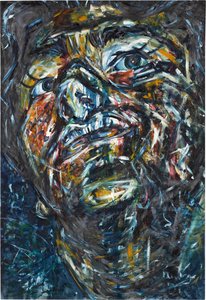
Майкл Армитедж
1984 - , Кения