


 Предпросмотр
 Поделиться
 Поделиться
 Детали произведения

 Скачать
 Похожие работы
 Рентгенография
 Слайд-шоу
 Статистика
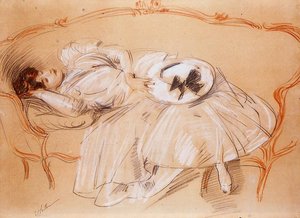
Fryderyk Chopin reading the newspaper and Maurice Sand drawing\n\nView 1


 Читать далее
Жикле / Арт-принт
Печать (жикле) или холст музейного качества с быстрыми сроками изготовления и широким выбором вариантов отделки. ( Купить картину ручной работы Перейти к цифровым изображениям)




P118B $10

P118H $10

P118W $10

P438Z $10

P508JH $12

P508YH $12

P805H $10

P805Z $10

P919BZ $10

P919G $10

P919XJ $10

P959ZH $10

P968JZ $12

W106C $8

W218G $10

W218JH $8

W218Y $10

W307PJ $10

W316G $10

W316PJ $8

W316Y $10

W398PJ $8

W4111J $10

W500HY $15

W500JH $15

W692G $12

W849H $8

W940BG $15

W953PJ $8

Выберите один из наших стандартных размеров, соответствующих оригинальным пропорциям произведения искусства.

Вы можете указать свои собственные размеры, чтобы репродукция идеально подошла под конкретную раму или пространство. Если выбранный вами размер не будет соответствовать пропорциям оригинала, мы либо обрежем произведение, либо дополним изображение зеркальным отражением краев или однотонной заливкой. Перед началом производства вам будет отправлен цифровой макет для утверждения.
Пожалуйста, обратите внимание, что предварительный просмотр на экране не отображает фактическую обрезку или расширение изображения. Только макет точно покажет финальную композицию.
Несмотря на возможность заказа индивидуальных размеров, мы рекомендуем выбирать размер из предопределенного списка, чтобы сохранить оригинальные пропорции.
Доставка по всему миру () за 2 недели вместо стандартных 4/5 недель. (15 Сентябрь)

Бесплатная экспресс-доставка по всему миру

Высококачественный льняной холст

Полное страхование доставки

Гарантия возмещения таможенных пошлин

Гарантия точного соответствия цветов

100-дневная политика возврата (только при обнаружении дефектов)

Гарантия возврата 100% средств

Предложение оптовых скидок
 Вариант со стеклом доступен только для размеров менее 110 см

Fryderyk Chopin reading the newspaper and Maurice Sand drawing\n\nView 1
Жикле / Арт-принт
Размер репродукции
-


Итоговая стоимость
$ 62
A Moment Captured in Parisian Life
This evocative drawing transports us directly into the intimate atmosphere of a nineteenth-century Parisian salon or study. The scene is imbued with the quiet drama of intellectual pursuit and artistic collaboration. At the heart of the composition, a woman sits absorbed in the rustling pages of a newspaper, suggesting a moment paused from the ceaseless current of daily news and thought. Behind her, another figure stands, perhaps an admirer, a confidant, or even the artist at work, lending a sense of narrative tension to the otherwise domestic setting. The inclusion of comfortable yet formal furnishings—the sturdy chairs and the plush couch visible in the background—grounds the scene in a recognizable, affluent milieu.
The Echoes of Artistic Genius
While the specific figures evoke memories of musical luminaries like Fryderyk Chopin and artists such as Maurice Sand, the drawing itself functions as a beautiful tableau vivant. It speaks to the vibrant ecosystem of creative life that flourished in Paris during the 19th century—a time when music, literature, and visual arts were inextricably intertwined. The presence of these celebrated names, even if only suggested by the composition's spirit, invites us to contemplate the salon culture where genius was both nurtured and observed. It is a meditation on inspiration itself.
Mastery in Line and Shadow
The technique employed here lends itself to an air of delicate realism characteristic of fine academic drawing. The artist has utilized line work with remarkable skill, capturing not just the forms of the people and furniture, but also the subtle interplay of light and shadow that defines a room's mood. One can almost feel the texture of the paper beneath the woman’s fingers or the weight of the air in the room. This masterful handling of graphite or charcoal allows the viewer to connect with the scene on an almost tactile level.
Symbolism of Leisure and Intellect
Beyond the surface narrative, the drawing is rich with symbolism. The newspaper itself represents the confluence of public life and private contemplation—the necessary pause amidst information overload. The act of observation, whether through reading or sketching, symbolizes the human need to process the world around us. For the collector or designer, this piece offers more than mere decoration; it offers a sophisticated conversation starter, suggesting an appreciation for culture, history, and the quiet dignity found in moments of intellectual repose.
Bringing Parisian Romance Home
Reproducing such a scene allows one to infuse any interior space—be it a formal drawing-room or a cozy study nook—with the romance and depth of historical European art. Owning this reproduction is an embrace of that golden age when artistic patronage was at its height. It serves as a timeless homage to the creative spirit, making your walls resonate with the whispers of past masters.
Похожие произведения
Биография художника
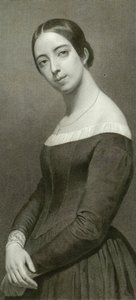
A Symphony of Spirit: The Life and Legacy of Pauline Viardot
In the vibrant, candlelit salons of nineteenth-century Paris, few figures commanded the room with as much grace and intellectual depth as Michelle Ferdinande Pauline García. Known to history by her married name, Pauline Viardot, she was far more than a mere performer; she was a cultural phenomenon whose very existence bridged the passionate traditions of her Spanish heritage with the sophisticated artistic currents of France. Born in Paris in 1821, her life was an intricate tapestry woven from melody, drama, and a profound dedication to the arts. To encounter her work is to step into an era where music, literature, and visual expression were not separate disciplines, but rather a single, breathing ecosystem of human emotion.
Her journey began within the cradle of musical genius. Raised in a family where every breath seemed composed of rhythm and harmony, she was the daughter of the legendary Spanish singing teacher Manuel García II. This lineage provided her with an unparalleled foundation, allowing her to master the piano under the tutelage of the incomparable Franz Liszt and explore the complexities of music theory with Anton Reicha. This early immersion in rigorous training instilled in her a lifelong pursuit of technical perfection, yet it was her ability to infuse that technique with raw, dramatic soul that would eventually define her legendary status as a mezzo-soprano.
The Stage and the Score: A Career of Dramatic Brilliance
When Viardot made her operatic debut in London in 1839, the world was introduced to a voice of extraordinary range and expressive power. She did not merely sing roles; she inhabited them. Her performances were characterized by a remarkable ability to navigate the most demanding dramatic landscapes, such as her celebrated portrayal of Desdemona in Rossini's Otello. In these moments, the boundaries between the singer and the character dissolved, leaving audiences captivated by a nuance of emotion that felt both intimate and monumental. Her repertoire was a testament to her versatility, spanning the most profound operatic works of her time and cementing her reputation as one of the foremost dramatic mezzo-sopranos of the nineteenth century.
Yet, the impulse to create did not end when the curtain fell. Viardot possessed a prolific creative spirit that found expression through composition and pedagogy. She was a scholar of sound, composing transcriptions of Chopin’s mazurkas and drawing inspiration from the lyrical traditions of Russia. Her work as a composer reflected a deep intellectual curiosity, blending technical mastery with a poetic sensibility. Furthermore, her influence extended to future generations through her role as a pedagogue, where she passed on the secrets of vocal excellence, ensuring that her musical lineage would continue to resonate long after her final performance.
A Lasting Impression on the Artistic Landscape
The historical significance of Pauline Viardot lies in her role as a central node in the network of European high culture. She was a woman who moved seamlessly between languages—speaking fluent Spanish, French, English, and Italian—and between disciplines. Her life serves as a beautiful tableau vivant of the nineteenth-century salon culture, where the presence of figures like Chopin or Maurice Sand could turn a simple gathering into a moment of historical weight. Through her compositions, her stage presence, and her pedagogical legacy, she helped shape the very definition of the modern artist: one who is simultaneously a creator, an interpreter, and a guardian of tradition.
Today, we remember her not just for the notes she sang, but for the atmosphere of inspiration she cultivated. Her life remains a testament to the power of artistic convergence, proving that when heritage meets rigorous discipline, the result is a legacy that transcends time, much like the enduring echoes of a perfectly executed aria.
michelle ferdinande pauline garcía
1821 - 1910 , France
Основные сведения
- Artistic Movement Or Style: Spanish & French Art
- Artists Or Movements Influenced By This Artist: ['Hector Berlioz']
- Artists Who Influenced This Artist: ['Franz Liszt']
- Date Of Birth: July 18, 1821
- Full Name: Michelle Ferdinande Pauline García
- Nationality: French
- Notable Artworks:
- Chopin Reading
- Maurice Sand Drawing View 1
- Place Of Birth: Paris, France
Похожие статьи

Hablot Knight Browne: Phiz & the Victorian Social Canvas – A Critical Legacy
Explore the life & art of Hablot Knight Browne ('Phiz'), Dickens's iconic illustrator. Discover his masterful social commentary, technical innovations, and enduring legacy in Victorian illustration. A critical examination for history lovers.

The Refined Aesthetic of Victorian Illustration: A Study in Narrative & Technique
Explore the captivating world of Victorian illustration! Discover Pre-Raphaelite influences, key artists like Rossetti & Stephens, and the era's rich narrative detail. A deep dive for art enthusiasts.
The Enduring Power of Illustration: A Historical Survey of Narrative Art & Visual Storytelling
Explore the rich history of illustration! From ancient cave paintings to Art Nouveau masterpieces, discover how visual storytelling has shaped culture. Expert insights & stunning examples.
Топ-10 шедевров XIX века: искусство, история и декор от ArtsDot.com
Погрузитесь в мир искусства XIX века! От реализма до импрессионизма – 10 величайших картин, истории художников и вдохновение для вашего интерьера. Репродукции высокого качества на ArtsDot.com. Откройте всю коллекцию онлайн!

Kay Rasmus Nielsen: A Golden Age Illustrator's Enchanting Legacy of Symbolism & Narrative
Explore the captivating world of Kay Rasmus Nielsen, a celebrated Golden Age illustrator renowned for his Art Nouveau fairy tale art & Disney contributions. Discover his unique style, enduring legacy, and how to collect his enchanting works.