

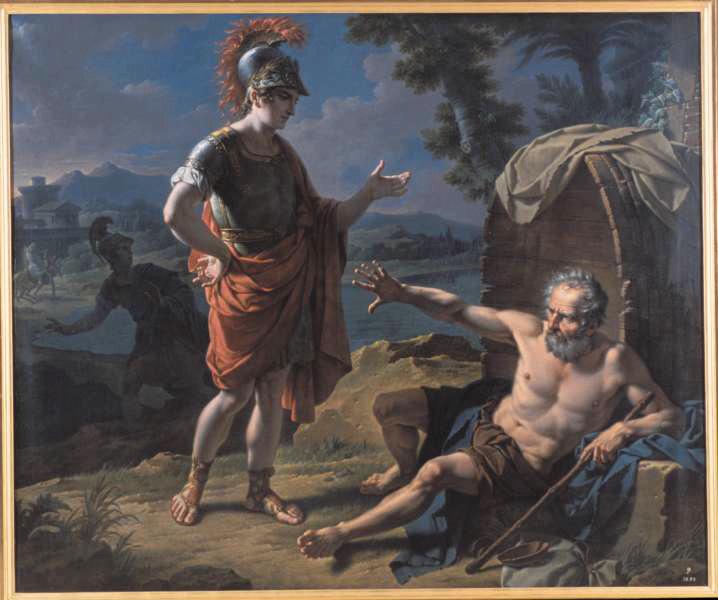
 Предпросмотр
 Поделиться
 Поделиться
 Детали произведения

 Скачать
 Похожие работы
 Рентгенография
 Слайд-шоу
 Статистика
Alexandre et Diogène
 Читать далее
Приобретите цифровое изображение высокого разрешения в улучшенном качестве, которое значительно превосходит онлайн-превью.
Каждый файл тщательно подготавливается нашими специалистами с использованием передовых инструментов и экспертной ручной ретуши. Мы гарантируем исключительную четкость, точную цветопередачу и детальную проработку каждого изображения.
Финальный файл доставляется по электронной почте в течение 72 часов и оптимизирован для немедленного использования в профессиональной среде, при верстке и печати. Это тот же уровень качества, которому доверяют ведущие дизайнерские студии, издательства и галереи.
Цифровое изображение
Скачайте файл высокого разрешения для личного использования, печати и творческих проектов. ( Перейти к печати Купить картину ручной работы)
Включено в каждый заказ цифровых изображений
Гарантия экспертной цифровой доставки
Выбирая ArtsDot.com, вы получаете не просто изображение — вы приобретаете профессионально обработанное цифровое произведение искусства, созданное с безупречной точностью и под защитой гарантии качества. Вот всё, что автоматически входит в ваш заказ:

Мгновенная доставка по e-mail
Ваш цифровой файл в высоком разрешении будет отправлен вам по электронной почте в течение 72 часов после оформления заказа — и сразу станет доступен для использования.

Цифровой файл с ИИ-улучшением
Ваше произведение искусства проходит профессиональную оптимизацию с использованием передовых инструментов ИИ и ручной обработки, что гарантирует максимальную детализацию, четкость и точность цветопередачи.

Бессрочная бесплатная повторная доставка
Случайно удалили или потеряли файл? Не беспокойтесь — мы отправим его вам повторно в любое время и совершенно бесплатно.

Без импортных пошлин — навсегда
Наслаждайтесь вашим произведением искусства мгновенно без таможенных пошлин, сборов или затрат на доставку — цифровые загрузки всегда не облагаются налогом.

Гарантия точности цветопередачи
Мы гарантируем, что ваше цифровое изображение максимально точно передает оригинальные цвета благодаря использованию профессиональных инструментов и систем управления цветом.

Гарантия удовлетворенности 100 дней
Если вы не будете удовлетворены своим цифровым изображением, мы внесем правки или вернем 100% стоимости в течение 100 дней — без лишних вопросов.

100% Гарантия возврата средств
Не удовлетворены покупкой? Получите полный возврат средств в течение 100 дней после получения цифрового файла — без лишних вопросов.

Скидки на оптовые заказы
Купите 3 изображения, сэкономьте 10% — Купите 5, сэкономьте 15% — Купите 10+, сэкономьте 20%. Отличное решение для творческих проектов, галерей и агентств.
Похожие произведения




Биография художника
Early Life and Academic Foundations
Nicolas André Monsiaux, born in Paris around 1754, emerged during a period of significant artistic transition in France. While precise details surrounding his early life remain somewhat elusive, it is known that he initially studied under the guidance of Peyron at the Academy school. This foundational training proved crucial, though Peyron’s own unsuccessful challenge for leadership within the burgeoning neoclassical movement perhaps instilled in Monsiaux a degree of independent spirit. A pivotal moment arrived with the patronage of the Marquis de Corberon, whose financial support enabled Monsiaux to undertake the formative journey to Rome in 1776. Four years spent at the Academy in Rome were instrumental in shaping his artistic sensibilities, placing him amongst contemporaries like David and Valenciennes—artists who would themselves become defining figures of their era. This period was characterized by a rigorous study of classical antiquity, a pursuit that would permeate Monsiaux’s subsequent work.The Rise of a Historical Painter
Upon returning to Paris in 1780, Monsiaux faced initial obstacles in exhibiting his art due to the restrictive nature of the Royal Academy at the time. Undeterred, he actively participated in the Salons de la Correspondence, showcasing landscapes and works demonstrating a keen sensitivity to light and atmosphere. His formal acceptance into the Academy followed in 1787 with “Alexander Breaking in Bucephalus,” and full membership was achieved two years later with “The Death of Agis.” However, Monsiaux distinguished himself not merely as a painter but also as a skilled draftsman, presenting finished drawings of historical subjects at the Salons—a testament to his technical prowess. This period reveals an artist actively seeking recognition and establishing a reputation for both skill and intellectual engagement.Navigating Revolution and Defining a Style
The French Revolution dramatically altered the artistic landscape, opening up exhibition opportunities previously unavailable. Monsiaux responded with remarkable versatility, embracing modern historical subjects alongside portraits and genre scenes. His 1791 submission, including “Ulysses Returning to his Palace after Slaying the Lovers of Penelope, Ordering the Women to Remove their Bodies,” signaled a willingness to engage with narratives beyond traditional mythology. He was among the first artists of David’s generation to explore contemporary themes, and his 1802 painting, “Molière reading Tartufe at the house of Ninon de Lenclos,” is considered foundational to what Vivant-Denon termed the *Style Troubadour*—a genre characterized by its romanticized depictions of literary and historical figures. This marked a significant turning point in his career, solidifying his position as an innovator.Themes, Technique, and Lasting Legacy
Monsiaux’s art is defined by a distinctive blend of neoclassical rigor and a growing interest in dramatic narrative. His compositions often feature carefully arranged groups of figures, imbued with psychological depth and emotional resonance. While influenced by the Poussiniste tradition—emphasizing clarity, order, and intellectual content—he also demonstrated a sensitivity to color and texture. He frequently depicted scenes from classical history, mythology, and increasingly, pivotal moments in French history and philosophy. His works often served as visual embodiments of moral or political ideals, reflecting the turbulent times in which he lived. Monsiaux’s influence extended beyond his immediate circle; his ability to seamlessly integrate historical accuracy with compelling storytelling paved the way for subsequent generations of history painters. He died in Paris in 1837, leaving behind a body of work that continues to captivate and inspire.Major Achievements and Historical Significance
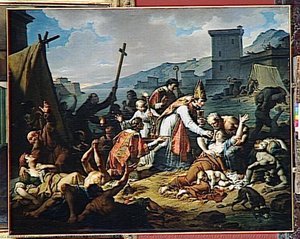
- “Devouement de Mgr Belzunce” (1720): A powerful depiction of plague relief in Marseille, showcasing Monsiaux’s ability to convey dramatic emotion.
- “La Consulta de la République Cisalpine” (1802): A significant work illustrating a key moment in Napoleonic history and demonstrating his mastery of large-scale composition.
- “Zeuxis Choosing His Models” (1797): A testament to his classical training and skill in depicting mythological subjects.
- Pioneering the *Style Troubadour*: Monsiaux’s exploration of modern historical themes established a new genre that profoundly influenced French painting.
- A Bridge Between Neoclassicism and Romanticism: His work represents a fascinating transition between artistic styles, blending intellectual rigor with emotional intensity.
Основные сведения
- Artistic Movement Or Style: Neoclassical
- Date Of Death: Living
- Full Name: Nicolas André Monsiaux
- Nationality: French
- Notable Artworks:
- Devouement de Mgr Belzunce
- La Consulta de la République
- Aspasie s'entretenant avec...
- Zeuxis Choosing His Models