


 Предпросмотр
 Поделиться
 Поделиться
 Детали произведения

 Скачать
 Похожие работы
 Рентгенография
 Слайд-шоу
 Статистика
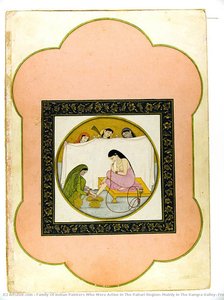
Mian Ram Singh of Jammu in Love
 Watercolor
- WallArt
- Pahari Miniature Painting
 22.0 x 27.0 cm
 Lahore Museum
 Читать далее
Масляная репродукция ручной работы
Картина маслом на холсте в выбранном вами размере и раме, написанная на заказ нашими художниками. ( Перейти к печати Перейти к цифровым изображениям)




P118B $10

P118H $10

P118W $10

P438Z $10

P508JH $12

P508YH $12

P805H $10

P805Z $10

P919BZ $10

P919G $10

P919XJ $10

P959ZH $10

P968JZ $12

W106C $8

W218G $10

W218JH $8

W218Y $10

W307PJ $10

W316G $10

W316PJ $8

W316Y $10

W398PJ $8

W4111J $10

W500HY $15

W500JH $15

W692G $12

W849H $8

W940BG $15

W953PJ $8
Выберите один из наших стандартных размеров, соответствующих оригинальным пропорциям произведения искусства.

Вы можете указать собственные размеры, чтобы картина идеально вписалась в выбранную раму или пространство. Если выбранный вами размер не соответствует пропорциям оригинала, мы либо обрежем полотно, либо расширим его за счет дополнительных элементов, написанных вручную. Цифровой макет будет отправлен вам на утверждение перед началом производства.
Обратите внимание, что предварительный просмотр на экране не отражает фактическую обрезку или расширение. Только макет точно покажет окончательную композицию.
Хотя доступны индивидуальные размеры, мы рекомендуем выбирать вариант из предопределенного списка, чтобы сохранить исходные пропорции.
После оформления заказа команда ArtsDot.com свяжется с клиентом по электронной почте для уточнения деталей и предоставит предварительный макет
Доставка по всему миру () за 3–4 недели вместо стандартных 5 недель. (14 Сентябрь). Без компромиссов в качестве.

Бесплатная экспресс-доставка по всему миру

Высококачественный льняной холст

Полное страхование доставки

Гарантия возмещения таможенных пошлин

Гарантия точного соответствия цветов

100-дневная политика возврата (только при обнаружении дефектов)

Гарантия возврата 100% средств

Предложение оптовых скидок
 Вариант со стеклом доступен только для размеров менее 110 см

Mian Ram Singh of Jammu in Love
Техника репродукции
Размер репродукции
-


Итоговая стоимость
$ 363
The Intimate Portrait of a Nobleman – Nainsukh’s *Mian Ram Singh of Jammu in Love*
Within the serene landscapes of the Himalayan foothills resides a captivating miniature painting, *Mian Ram Singh of Jammu in Love*, by the masterful Nainsukh. Completed around 1760, this work transcends mere portraiture; it offers a poignant glimpse into aristocratic life during the mid-18th century, revealing a world of quiet contemplation and subtle social dynamics. More than just a depiction of a man, it’s an evocative study in light, color, and the delicate dance between observation and emotion.
Nainsukh, born around 1710 in Guler, stands as one of the most significant figures in Pahari painting – a regional style renowned for its exquisite detail, vibrant hues, and profound sensitivity to nature. His artistic lineage, tracing back through his father Pandit Seu and brother Manaku, instilled within him a deep understanding of established conventions while simultaneously fostering an innovative spirit. *Mian Ram Singh of Jammu in Love* exemplifies this duality; it’s firmly rooted in the traditions of Pahari art yet imbued with Nainsukh's distinctive stylistic flourishes – a preference for uncolored grounds, subtle shading achieved through washes of color, and a meticulous attention to detail that elevates the scene beyond simple representation.
A Study in Light, Color, and Composition
The painting’s composition is remarkably balanced, centered around Mian Ram Singh, seated on a balcony overlooking a courtyard. The architectural elements—arches, columns, and windows—form a structured framework, subtly receding into the background to create a sense of depth. Below him, figures are arranged in groups, suggesting a bustling social scene, yet the focus remains firmly fixed on the nobleman’s solitary presence. The color palette is restrained but remarkably rich; muted earth tones – ochre, terracotta, and beige – dominate, punctuated by delicate accents of pink, green, and blue that add visual interest without overwhelming the overall mood.
Nainsukh masterfully employs light to sculpt form and define space. The diffused illumination creates a gentle glow across the scene, avoiding harsh shadows and contributing to the painting’s inherent softness. The fine lines used to delineate architectural details, clothing patterns, and facial features are particularly noteworthy – they speak to Nainsukh's exceptional technical skill and his dedication to capturing every nuance of texture and form. The loop of the hookah stem is a signature element, adding a touch of intimate detail that draws the viewer into the scene.
Symbolism and Emotional Resonance
*Mian Ram Singh of Jammu in Love* isn’t simply a portrait; it's a carefully constructed tableau brimming with symbolic meaning. The nobleman’s posture – relaxed yet dignified, his gaze directed towards an unseen horizon – suggests contemplation and perhaps even melancholy. The presence of the hookah, a symbol of leisure and social connection, hints at a life of privilege and refined tastes. The figures in the courtyard below represent the broader community surrounding Mian Ram Singh, subtly reinforcing his position within that society.
The painting evokes a powerful sense of serenity and order, reflecting the values associated with aristocratic life. It’s a moment frozen in time – a quiet observation of human interaction set against the backdrop of a beautiful landscape. The subtle emotional undertones invite viewers to contemplate the complexities of social status, personal reflection, and the enduring allure of beauty.
A Legacy of Artistic Innovation
Created primarily with watercolor on paper, *Mian Ram Singh of Jammu in Love* showcases Nainsukh’s mastery of layering techniques and his ability to create a sense of depth through subtle variations in color density. The flattened perspective, characteristic of miniature painting, serves to heighten the focus on detail and composition rather than striving for strict realism. This work stands as a testament to Nainsukh's pivotal role in shaping the Pahari style – a style that continues to captivate art lovers today with its exquisite beauty and profound emotional resonance.
Reproductions of this stunning artwork are available through ArtsDot.com, offering collectors and enthusiasts alike the opportunity to bring this masterpiece into their homes or studios.
Похожие произведения
Биография художника
A Life Immersed in Color and Courtly Detail
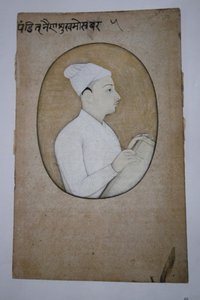
Nainsukh, a name meaning “Joy of the Eyes,” was indeed a source of visual delight for those fortunate enough to encounter his work. Born around 1710 in Guler, nestled in the foothills of the Himalayas within present-day Himachal Pradesh, India, Nainsukh emerged from a lineage steeped in artistic tradition. His father, Pandit Seu, was a renowned painter, and his elder brother, Manaku, also achieved considerable recognition within the Pahari painting style. This familial foundation provided young Nainsukh with an immersive education, honing his skills under their guidance and laying the groundwork for a distinctive aesthetic that would ultimately set him apart as one of the most original and brilliant Indian painters of the 18th century. The early years spent in Guler were crucial, instilling within him not only technical proficiency but also a deep understanding of the established conventions of Pahari art—a style characterized by its vibrant colors, delicate details, and focus on religious narratives and courtly life. However, even at this nascent stage, Nainsukh demonstrated an inclination towards innovation, subtly hinting at the stylistic departures that would define his mature work.From Guler to Jasrota: A Transformation of Style
Around 1740, a pivotal moment arrived in Nainsukh’s artistic journey. He made the significant decision to leave the familiar surroundings of his family workshop in Guler and seek patronage at the court of Mian Zorawar Singh, and later his son Balwant Singh, in Jasrota. This relocation proved transformative. While already possessing a strong foundation in Pahari painting, Nainsukh’s exposure to the refined aesthetics of Mughal art—which had begun to permeate the region—profoundly influenced his approach. He didn't merely imitate Mughal techniques; instead, he masterfully integrated them into the existing Pahari framework, creating a unique synthesis that elevated the style to new heights. This period witnessed a shift in Nainsukh’s palette towards more muted tones and a greater emphasis on naturalistic representation. His figures gained a newfound sense of volume and depth through subtle shading and delicate washes, while his landscapes became increasingly detailed and atmospheric. The influence is not simply stylistic; it's a broadening of subject matter, an increased interest in portraying the nuances of daily life alongside traditional religious themes.The Essence of Nainsukh’s Artistry
Nainsukh’s paintings are immediately recognizable for their distinctive qualities. He possessed an extraordinary ability to observe and capture detail with remarkable precision, whether depicting the intricate patterns on a garment or the subtle expressions on a face. His compositions, often complex and layered, draw the viewer into a world of courtly intrigue, religious devotion, and intimate moments. A hallmark of his style is the innovative use of space—he created a sense of depth and atmosphere that was unprecedented in Pahari painting, employing techniques like aerial perspective to suggest distance and recession. His color palette, while restrained compared to earlier Pahari works, is nonetheless rich and evocative, with a particular fondness for lush greens and subtle earth tones. But perhaps most importantly, Nainsukh imbued his figures with an emotional depth and psychological insight that transcends mere representation. He wasn’t simply painting portraits or scenes; he was capturing the essence of human experience—joy, sorrow, contemplation, and desire. Raja Balwant Singh’s Vision of Krishna and Radha, for example, exemplifies this ability to convey spiritual themes with a delicate grace and profound emotional resonance.Legacy and Enduring Influence
Nainsukh's impact on the trajectory of Pahari painting is immeasurable. He not only refined existing techniques but also introduced new approaches that inspired generations of artists. By the end of his career, he had established a thriving family workshop, ensuring that his artistic legacy would continue through his children and nephew—collectively known as the “Family of Nainsukh.” These artists carried on his style, further disseminating his innovations throughout the region. His work represents a high point in Pahari painting, bridging the gap between earlier traditions and later developments. Today, approximately one hundred works attributed to Nainsukh survive, housed in museums and private collections around the world. They offer invaluable insights into the cultural, religious, and social life of the Rajput courts during the 18th century, solidifying his position as a pivotal figure in Indian art history. His paintings are not merely beautiful objects; they are windows into a bygone era—testaments to the power of art to capture the human spirit and preserve it for posterity.Notable Works
- A Troupe of Trumpeters: An early work showcasing his observational skills and compositional abilities.
- Pandit Hari Haran and Acolytes Approaching a Palace: Demonstrates the essence of Pahari painting with its delicate details and atmospheric perspective.
- Raja Balwant Singh’s Vision of Krishna and Radha: Exemplifies his ability to represent spiritual themes with subtlety and grace.
- An Acolyte's Progress: Highlights his innovative approach to allegorical subjects and continuous narrative.
Nainsukh
1710 - 1778 , India
Основные сведения
- Artistic Movement Or Style: Pahari painting
- Artists Or Movements Influenced By This Artist:
- Pahari painters
- His family workshop
- Artists Who Influenced This Artist:
- Pandit Seu
- Mughal painting
- Date Of Birth: 1710
- Date Of Death: 1778
- Full Name: Nainsukh
- Nationality: Indian
- Notable Artworks:
- A Troupe of Trumpeters
- Pandit Hari Haran...
- Raja Balwant Singh’s Vision
- An Acolyte's Progress
- Place Of Birth: Guler, India
Похожие статьи
George Catlin: Witnessing & Representing Indigenous Life on the American Frontier
Explore the captivating art of George Catlin, renowned for his vivid portraits & landscapes documenting Native American life on the frontier. Discover a vanishing world through stunning paintings and historical context.
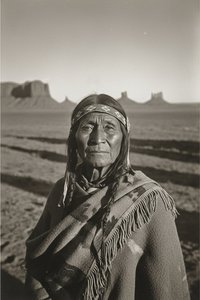
Shadow Catcher: Edward S. Curtis & the Ethnographic Portraiture of a Vanishing West
Explore the life & work of Edward S. Curtis, the 'Shadow Catcher,' and his groundbreaking photographic documentation of Native American cultures. Discover iconic images from *The North American Indian* and a critical look at his lasting legacy.
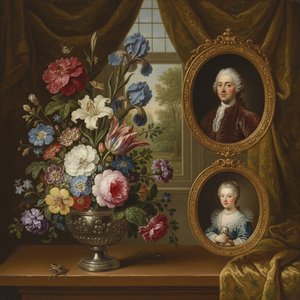
Jan van Kessel the Elder: A Baroque Master of Floral Still Life & Miniature Portraiture
Discover the exquisite detail of Jan van Kessel the Elder's Baroque floral still lifes & captivating miniatures. Explore his artistic legacy, scientific precision, and lasting influence on 17th-century Flemish painting.
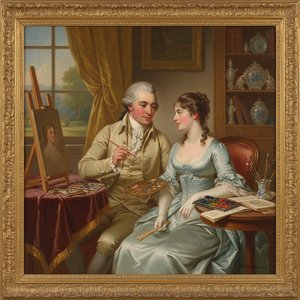
Richard Cosway: Capturing Regency Elegance & Intimacy Through Portraiture
Explore the captivating world of Richard Cosway, Regency society's celebrated portrait miniaturist. Discover his exquisite art, aristocratic patrons & lasting legacy with ArtsDot.
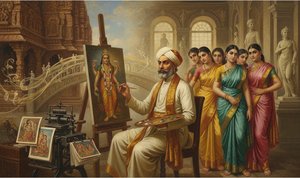
Raja Ravi Varma: Bridging Tradition & Modernity in 19th-Century Indian Art
Explore the life & art of Raja Ravi Varma, a pioneer who fused European techniques with Indian iconography. Discover his iconic paintings, lasting legacy, and influence on modern Indian art at ArtsDot.