

 Предпросмотр
 Поделиться
 Поделиться
 Детали произведения

 Скачать
 Похожие работы
 Рентгенография
 Слайд-шоу
 Статистика
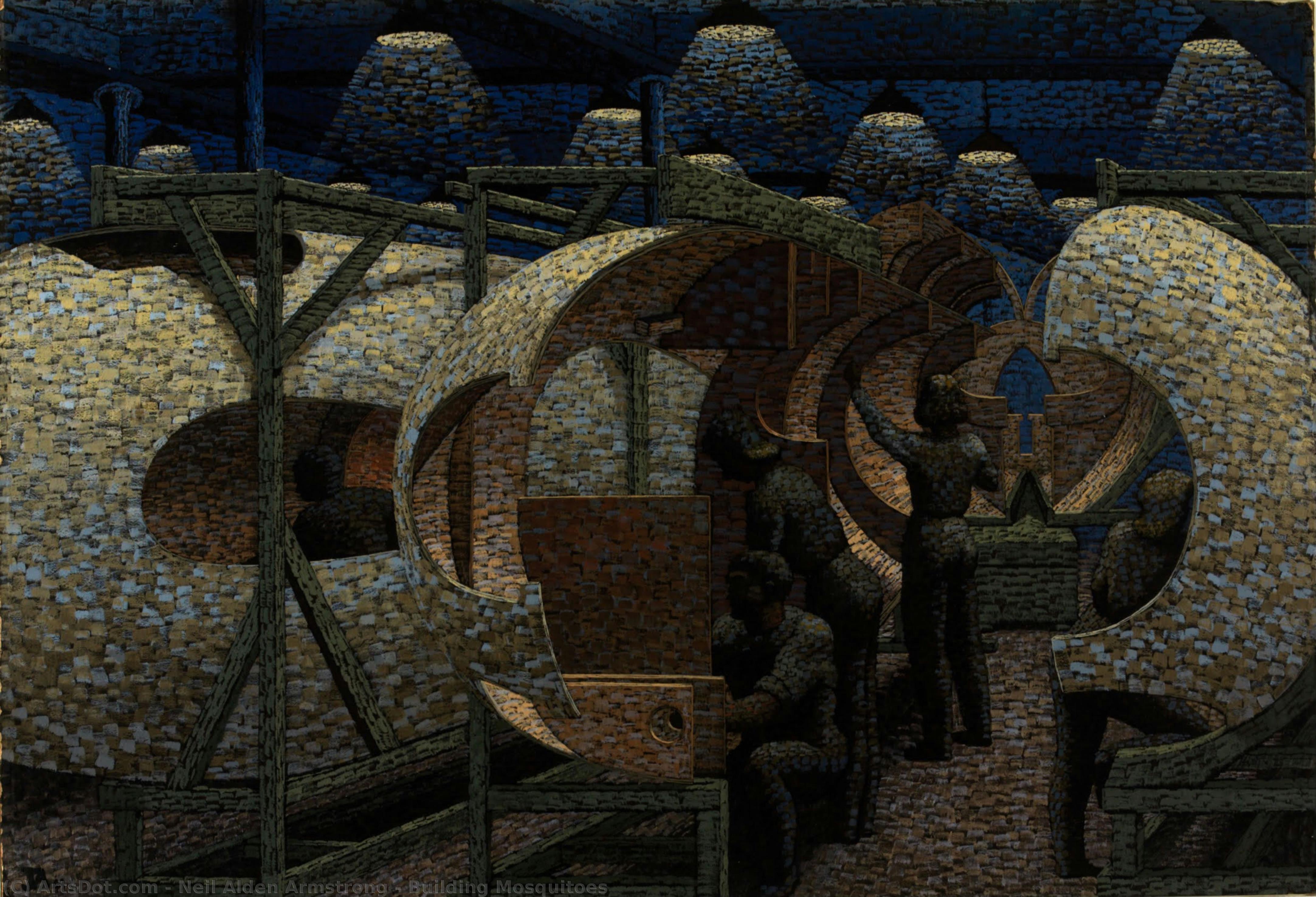
Building Mosquitoes
 1943
1943 81.0 x 55.0 cm
 Имперские военные музеи
 Читать далее
Жикле / Арт-принт
Печать (жикле) или холст музейного качества с быстрыми сроками изготовления и широким выбором вариантов отделки. ( Купить картину ручной работы Перейти к цифровым изображениям)




































Выберите один из наших стандартных размеров, соответствующих оригинальным пропорциям произведения искусства.

Вы можете указать свои собственные размеры, чтобы репродукция идеально подошла под конкретную раму или пространство. Если выбранный вами размер не будет соответствовать пропорциям оригинала, мы либо обрежем произведение, либо дополним изображение зеркальным отражением краев или однотонной заливкой. Перед началом производства вам будет отправлен цифровой макет для утверждения.
Пожалуйста, обратите внимание, что предварительный просмотр на экране не отображает фактическую обрезку или расширение изображения. Только макет точно покажет финальную композицию.
Несмотря на возможность заказа индивидуальных размеров, мы рекомендуем выбирать размер из предопределенного списка, чтобы сохранить оригинальные пропорции.
Доставка по всему миру () за 2 недели вместо стандартных 4/5 недель. (13 Сентябрь)

Бесплатная экспресс-доставка по всему миру

Высококачественный льняной холст

Полное страхование доставки

Гарантия возмещения таможенных пошлин

Гарантия точного соответствия цветов

100-дневная политика возврата (только при обнаружении дефектов)

Гарантия возврата 100% средств

Предложение оптовых скидок
 Вариант со стеклом доступен только для размеров менее 110 см

Building Mosquitoes
Жикле / Арт-принт
Размер репродукции
-


Итоговая стоимость
$ 62
Похожие произведения







Биография художника
The Celestial Visionary: The Artistry of Neil Alden Armstrong
Beyond the monumental legacy of the first human footprint on the lunar surface lies a more intimate, visual narrative—one captured through the delicate strokes of an artist who saw the cosmos not just as a frontier for science, but as a canvas of profound beauty. Neil Alden Armstrong, born in the quiet, pastoral landscape of Wapakonita, Ohio, in 1930, possessed a dual consciousness. While history remembers him as the commander of Apollo 11, his soul was deeply attuned to the aesthetic rhythms of both the terrestrial and the extraterrestrial. His life, much like his art, was a seamless blend of rigorous engineering precision and an evocative, wandering curiosity that sought to translate the sublime into form.
The foundations of his visual language were laid in the fertile soil of the American Midwest. The landscapes of Ohio, with their rolling horizons and shifting seasonal light, provided his earliest subjects. These formative years instilled in him a deep appreciation for the interplay of shadow and atmosphere, a quality that would later define his more experimental works. As he transitioned from a young boy fascinated by model airplanes to a decorated naval aviator and eventually a pioneer of spaceflight, his perspective underwent a radical expansion. The horizon was no longer bound by Earth's atmosphere; it now encompassed the stark, monochromatic majesty of the lunar plains and the infinite velvet of the void.
A Convergence of Science and Sketch
Armstrong’s artistic development was uniquely shaped by his unprecedented access to the most extraordinary vistas in human history. His work often functioned as a personal, visual diary of exploration. During the historic Apollo 11 mission, he utilized watercolor sketches to capture the ephemeral essence of spaceflight—moments that were too fleeting or too profound for mere technical documentation. These sketches are characterized by a remarkable ability to convey movement and tension, from the controlled power of a rocket launch to the weightless, ethereal stillness of orbital flight.
In these works, one finds a fascinating tension between the technical and the poetic:
- The Lunar Surface: His depictions of the Moon eschew mere topographical accuracy in favor of capturing the stark, haunting beauty of the lunar landscape, emphasizing the dramatic interplay of light and cratered shadows.
- Earthly Nostalgia: Interwoven with his cosmic observations are tender renderings of Earth, where the soft textures of Ohio landscapes serve as a grounding, emotional counterpoint to the cold vacuum of space.
- The Mechanics of Flight: His sketches often highlight the structural elegance of aeronautical engineering, treating the machinery of exploration with the same reverence one might accord a classical sculpture.
Legacy Beyond the Lunar Dust
The historical significance of Neil Armstrong’s art lies in its ability to humanize the monumental. While the world watched the grainy television broadcasts of the lunar landing, Armstrong was experiencing the event through a sensory and aesthetic lens that few others could claim. His paintings and sketches offer a rare glimpse into the internal life of an explorer—a way to process the overwhelming scale of the universe through the intimate medium of art. He did not merely observe history; he felt its texture and sought to preserve its visual soul.
Today, his body of work stands as a testament to the idea that scientific advancement and artistic expression are not opposing forces, but rather two different ways of seeking truth. To study Armstrong’s art is to witness a mind attempting to bridge the gap between the known and the unknown, between the heavy gravity of Earth and the weightless wonder of the stars. He remains a singular figure in the annals of both exploration and art, reminding us that even in the most clinical environments of high-stakes engineering, there is always room for the profound beauty of a well-placed brushstroke.
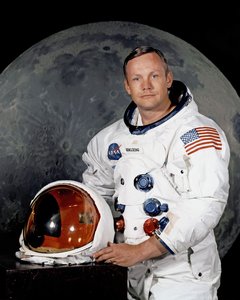
neil alden armstrong
1930 - 2012 , United States of America
Основные сведения
- Artistic Movement Or Style: Watercolor sketches
- Artists Or Movements Influenced By This Artist: ['Space Exploration']
- Artists Who Influenced This Artist:
- Charles Lindbergh
- Leonardo da Vinci
- Date Of Birth: August 5, 1930
- Date Of Death: August 25, 2012
- Full Name: Neil Alden Armstrong
- Nationality: American
- Notable Artworks:
- Apollo 11 Mission
- Wapakoneta Landscapes
- Moon's Surface
- Place Of Birth: Wapakoneta, United States