 Предпросмотр
 Поделиться
 Поделиться
 Детали произведения

 Скачать
 Похожие работы
 Рентгенография
 Слайд-шоу
 Статистика
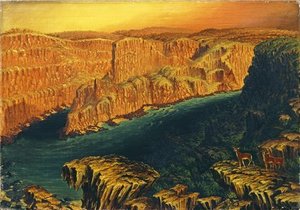
Grand Canyon


 Читать далее
Масляная репродукция ручной работы
Картина маслом на холсте в выбранном вами размере и раме, написанная на заказ нашими художниками. ( Перейти к печати Перейти к цифровым изображениям)




P118B $10

P118H $10

P118W $10

P438Z $10

P508JH $12

P508YH $12

P805H $10

P805Z $10

P919BZ $10

P919G $10

P919XJ $10

P959ZH $10

P968JZ $12

W106C $8

W218G $10

W218JH $8

W218Y $10

W307PJ $10

W316G $10

W316PJ $8

W316Y $10

W398PJ $8

W4111J $10

W500HY $15

W500JH $15

W692G $12

W849H $8

W940BG $15

W953PJ $8




Выберите один из наших стандартных размеров, соответствующих оригинальным пропорциям произведения искусства.

Вы можете указать собственные размеры, чтобы картина идеально вписалась в выбранную раму или пространство. Если выбранный вами размер не соответствует пропорциям оригинала, мы либо обрежем полотно, либо расширим его за счет дополнительных элементов, написанных вручную. Цифровой макет будет отправлен вам на утверждение перед началом производства.
Обратите внимание, что предварительный просмотр на экране не отражает фактическую обрезку или расширение. Только макет точно покажет окончательную композицию.
Хотя доступны индивидуальные размеры, мы рекомендуем выбирать вариант из предопределенного списка, чтобы сохранить исходные пропорции.
После оформления заказа команда ArtsDot.com свяжется с клиентом по электронной почте для уточнения деталей и предоставит предварительный макет
Доставка по всему миру () за 3–4 недели вместо стандартных 5 недель. (11 Сентябрь). Без компромиссов в качестве.

Бесплатная экспресс-доставка по всему миру

Высококачественный льняной холст

Полное страхование доставки

Гарантия возмещения таможенных пошлин

Гарантия точного соответствия цветов

100-дневная политика возврата (только при обнаружении дефектов)

Гарантия возврата 100% средств

Предложение оптовых скидок
 Вариант со стеклом доступен только для размеров менее 110 см

Grand Canyon
Техника репродукции
Размер репродукции
-


Итоговая стоимость
$ 263
Nicholas Roerich’s Grand Canyon: A Testament to Vastness and Spiritual Resonance
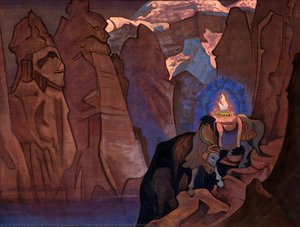
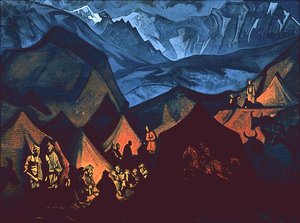
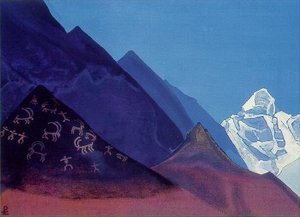
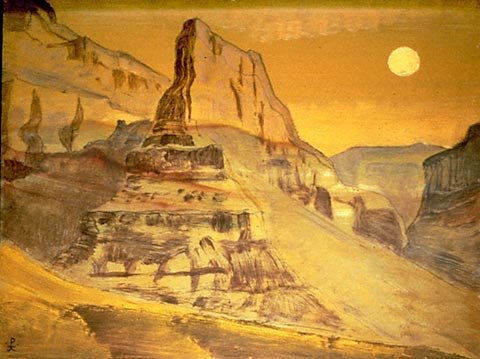
Nicholas Roemerich's "Grand Canyon," painted in 1921, is more than just a depiction of a dramatic American landscape; it’s a profound meditation on scale, spirituality, and the human connection to the natural world. Executed during a period of intense personal and artistic exploration for Roerich, this work embodies his evolving philosophy – one deeply intertwined with Eastern mysticism, archaeological pursuits, and a fervent belief in the preservation of cultural heritage. The painting immediately draws the viewer into the heart of the Grand Canyon’s immensity, capturing not just its geological grandeur but also an almost palpable sense of awe.
- Subject Matter: The scene is dominated by the iconic Grand Canyon itself, rendered with a remarkable attention to detail in the layering of rock formations and the play of light.
- Composition: Roerich masterfully employs perspective to create an illusion of depth, drawing the eye into the canyon’s seemingly endless expanse. The placement of the foreground mountains, strategically positioned on either side, further enhances this sense of vastness.
- Color Palette: The artist utilizes a warm, evocative color palette – predominantly ochres, reds, and golds – to capture the effect of the setting sun. This choice isn’t merely aesthetic; it aligns with Roerich's interest in the symbolism of light and its connection to spiritual enlightenment.
Technique and Style: A Fusion of Realism and Symbolism
Roerich’s technique is characterized by a meticulous realism, evident in his precise rendering of geological features and atmospheric effects. However, beneath this surface lies a deeply symbolic approach. The inclusion of human figures – small in comparison to the monumental landscape – serves not just as a compositional element but also as a representation of humanity's place within the universe. These figures are not merely observers; they are participants in a spiritual experience, suggesting a harmonious relationship between humankind and nature. Roerich’s brushwork is loose yet controlled, creating a textured surface that adds to the painting’s tactile quality and reinforces its sense of grandeur.
- Realism: Roerich's meticulous attention to detail in depicting the canyon's geological formations demonstrates his commitment to realistic representation.
- Symbolic Elements: The inclusion of human figures adds a layer of symbolic meaning, representing humanity’s place within the vastness of nature and the universe.
- Brushwork: Loose yet controlled brushstrokes create a textured surface that enhances the painting's sense of grandeur and realism.
Historical Context and Roerich’s Vision
“Grand Canyon” was created during a pivotal moment in Roerich’s artistic development. Following his travels through Central Asia, he became increasingly fascinated by Eastern philosophies, particularly those of Buddhism and Hinduism, which profoundly influenced his work. He believed that art could be a powerful tool for promoting peace and understanding between cultures – a conviction reflected in his tireless efforts to establish the East-West Museum (later the Roerich Museum) in New York. This painting reflects this broader vision, suggesting a connection between the spiritual dimensions of the landscape and the need for global harmony.
The painting’s creation coincided with Roerich's growing interest in exploring the relationship between art, spirituality, and archaeology – themes that would dominate his work for decades to come.Emotional Impact and Artistic Legacy
Roerich’s “Grand Canyon” possesses a powerful emotional resonance. It evokes feelings of awe, humility, and wonder at the scale and beauty of nature. The painting's enduring appeal lies in its ability to transport the viewer to this remote corner of the American Southwest, inviting contemplation on themes of time, space, and humanity’s place within the cosmos. As a significant work by one of the 20th century’s most influential artists, this reproduction offers an opportunity to experience Roerich's unique vision and contribute to the ongoing appreciation of his remarkable artistic legacy.
Похожие произведения
Биография художника
A Life Immersed in Art and Spirit
Nicholas Roerich, born October 9, 1874, in the vibrant cultural heart of Saint Petersburg, Russia, was a figure whose life transcended the boundaries of artistic expression. He wasn’t merely a painter; he was an archaeologist, a writer, a philosopher, and a tireless advocate for peace and cultural preservation. His upbringing, steeped in both intellectual rigor – his father was a notary public – and artistic appreciation thanks to his mother, laid the foundation for a remarkably multifaceted career. Roerich simultaneously pursued studies in law and art at St. Petersburg University and the Imperial Academy of Arts beginning in 1893, demonstrating an early commitment to a broad understanding of the world. This dual path wasn’t contradictory for him; rather, it reflected a belief that artistic vision needed grounding in historical context and intellectual discipline. He received his artist designation in 1897 and completed his law degree the following year, setting the stage for a life dedicated to both creative exploration and reasoned action.The Allure of Symbolism and Theatrical Innovation
Roerich’s artistic development was profoundly shaped by the currents of Russian Symbolism, a movement that sought to evoke emotional and spiritual depths through evocative imagery and suggestive forms. He quickly became involved with Sergei Diaghilev's influential “World of Art” society, eventually assuming its presidency from 1910 to 1916. This association proved pivotal, exposing him to a network of innovative artists, composers, and thinkers who were redefining the landscape of Russian art. His early work revealed a fascination with archaeology and stage design, leading to groundbreaking collaborations with Diaghilev’s Ballets Russes. Roerich's designs for productions like Alexander Borodin's *Prince Igor* (1909) and, most famously, Igor Stravinsky’s revolutionary *The Rite of Spring* (1913), were not simply backdrops; they were integral components of the theatrical experience. He blended meticulous historical research with a bold imaginative vision, creating visually stunning environments that amplified the emotional power of the music and choreography. These designs weren't merely decorative; they were attempts to evoke primordial forces and ancient rituals, reflecting the Symbolist interest in myth and spirituality. His work was also influenced by apocrypha and medieval sectarian writings like the Dove Book, adding layers of esoteric meaning to his artistic creations.A Journey Towards Mysticism and Himalayan Visions
As Roerich’s career progressed, his paintings underwent a significant transformation, increasingly embracing mystical and spiritual themes. This shift was fueled by his growing interest in Theosophy and Eastern religions, philosophies that emphasized the interconnectedness of all things and the pursuit of inner wisdom. His *Architectural Studies* series (1904–1905) showcased not only his architectural skill but also a deep commitment to preserving cultural heritage, foreshadowing his later advocacy for protecting art during times of conflict. Recurring motifs began to emerge in his work: majestic landscapes, ancient cities shrouded in mystery, and figures imbued with spiritual significance like St. Panteleimon and Kuan Yin. He embarked on extensive travels throughout Central Asia, conducting archaeological research and documenting ancient cultures, experiences that deeply informed his artistic vision and reinforced his belief in the importance of cultural understanding. These journeys were not merely expeditions; they were pilgrimages into the heart of human history and spiritual tradition.Key Works & Continuing Relevance
- Saint Nicholas: A detailed monochrome mural showcasing medieval art and heraldic symbolism, reflecting a deep respect for Russian iconography.
- City: Evocative depictions of ancient urban landscapes, capturing the essence of vanished civilizations and hinting at hidden narratives.
- Lake of the Nagas: A tempera painting blending symbolism and nature, exemplifying his unique artistic vision and exploring themes of transformation and spiritual awakening.
- The Protecting Veil of the Holy Mother of God: A monumental mosaic commissioned for a Russian church, demonstrating his ability to translate complex religious concepts into powerful visual forms.
The Roerich Pact & Lasting Impact
Beyond his artistic achievements, Nicholas Roerich was a passionate advocate for international cultural cooperation. Recognizing the devastating impact of war on cultural treasures, he spearheaded the creation of the Roerich Pact in 1935 – an unprecedented agreement among nations aimed at protecting art and architecture from destruction during armed conflicts. This initiative, driven by his unwavering belief in the value of human heritage, earned him multiple nominations for the Nobel Peace Prize, a testament to his humanitarianism and dedication to fostering global understanding. His work continues to inspire artists, scholars, and activists worldwide, reminding us of the profound connection between art, spirituality, and the preservation of our shared cultural legacy. His paintings remain powerful symbols of hope and a call to protect the beauty and wisdom of human civilization for generations to come.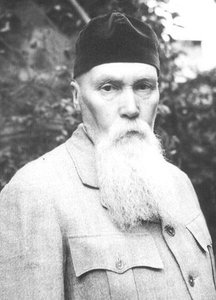
Николай Константинович Роерих
1874 - 1947 , Россия
Основные сведения
- Artistic Movement Or Style: Символизм, духовное искусство
- Artists Or Movements Influenced By This Artist: ['Русский символизм']
- Artists Who Influenced This Artist: ['Сергей Дягилев']
- Date Of Birth: 9 октября 1874 г.
- Date Of Death: 13 декабря 1947 г.
- Full Name: Николай Константинович Роерих
- Nationality: Русский
- Notable Artworks:
- «Святой Николай»
- «Город»
- «Озеро Нагасов»
- Place Of Birth: Санкт-Петербург, Россия
Похожие статьи

Романтический пейзаж: 10 шедевров, изменивших искусство | ArtsDot.com
Погрузитесь в мир романтического пейзажа! 10 шедевров Фридриха, Тёрнера и других гениев. Узнайте историю создания культовых картин и вдохновитесь для декора интерьера. Репродукции высокого качества на ArtsDot.com.
Aleksey Savrasov: The Poetic Realism That Defined Russian Landscape Painting
Explore the poetic realism of Aleksey Savrasov, founder of Russian lyrical landscape painting. Discover his masterpieces like 'The Rooks Have Returned' and learn about his lasting influence on 19th-century art. ArtsDot offers high-quality reproductions.

Джон Констебль: 25 шедевров английского пейзажа для вашего интерьера
Погрузитесь в мир английского пейзажа с Джоном Констеблом! 25 шедевров романтизма, история создания картин и вдохновение для вашего интерьера. Репродукции высокого качества на ArtsDot.com – искусство для ценителей.
Nicholas Roerich: Mysticism, Mountains & the Search for Ageless Wisdom in Art
Explore the captivating art of Nicholas Roerich – a visionary painter whose Himalayan landscapes blend spiritual mysticism with cultural preservation. Discover his legacy & symbolism.

Evocations of Place: A Historical Journey Through Landscape Art
Explore the rich history of landscape art with ArtsDot. Discover renowned artists, movements like Impressionism & Romanticism, and expert guidance for collecting timeless pieces. Find your perfect serene escape today!