

 Предпросмотр
 Поделиться
 Поделиться
 Детали произведения

 Скачать
 Похожие работы
 Рентгенография
 Слайд-шоу
 Статистика
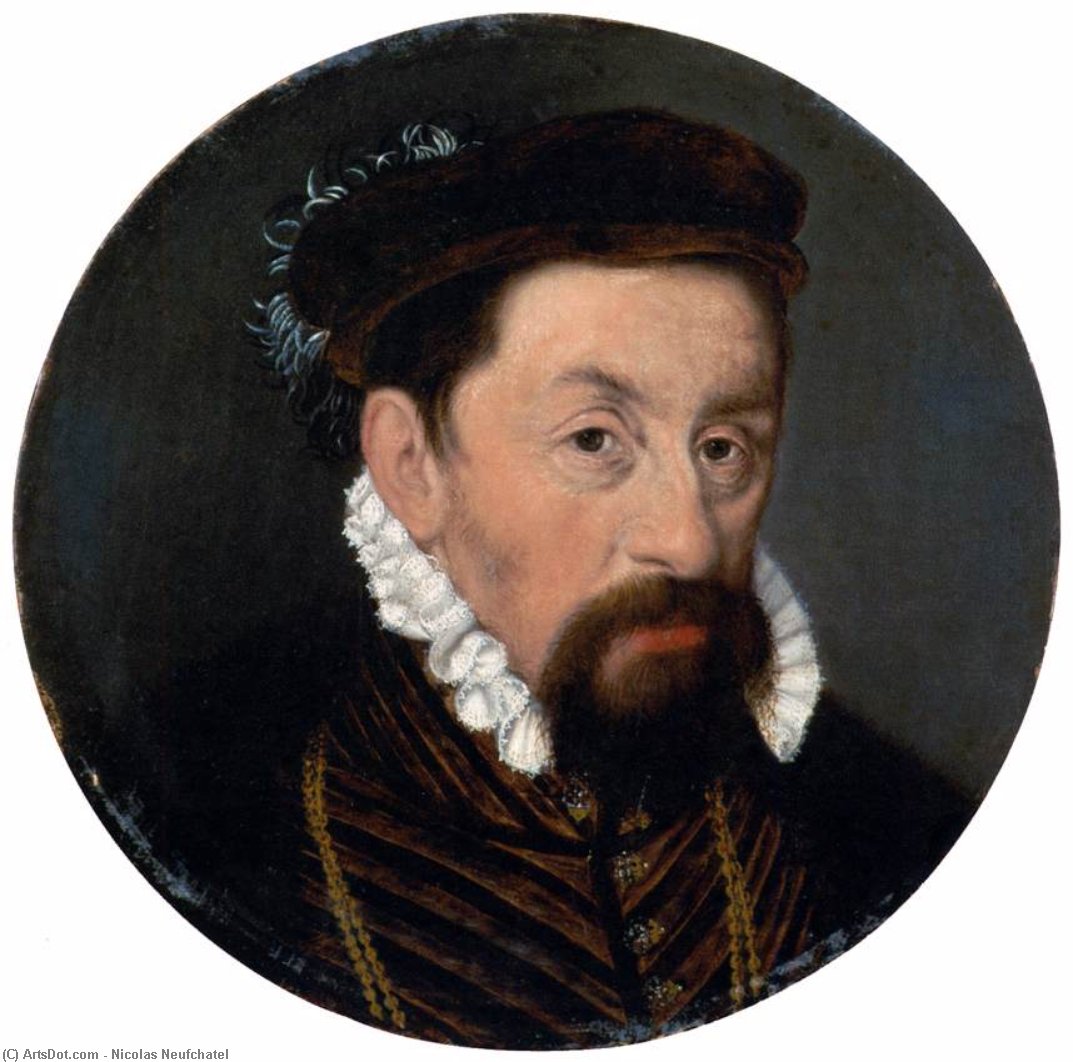
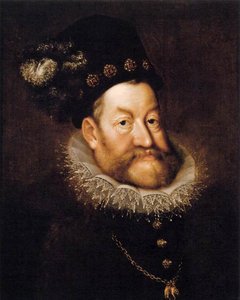
Emperor Maximilian II
 Oil
Oil- WallArt
- Baroque
 Renaissance
 20.0 x 20.0 cm
 Музей истории искусств (Вена)
 Читать далее
Масляная репродукция ручной работы
Картина маслом на холсте в выбранном вами размере и раме, написанная на заказ нашими художниками. ( Перейти к печати Перейти к цифровым изображениям)




P118B $10

P118H $10

P118W $10

P438Z $10

P508JH $12

P508YH $12

P805H $10

P805Z $10

P919BZ $10

P919G $10

P919XJ $10

P959ZH $10

P968JZ $12

W106C $8

W218G $10

W218JH $8

W218Y $10

W307PJ $10

W316G $10

W316PJ $8

W316Y $10

W398PJ $8

W4111J $10

W500HY $15

W500JH $15

W692G $12

W849H $8

W940BG $15

W953PJ $8




Выберите один из наших стандартных размеров, соответствующих оригинальным пропорциям произведения искусства.

Вы можете указать собственные размеры, чтобы картина идеально вписалась в выбранную раму или пространство. Если выбранный вами размер не соответствует пропорциям оригинала, мы либо обрежем полотно, либо расширим его за счет дополнительных элементов, написанных вручную. Цифровой макет будет отправлен вам на утверждение перед началом производства.
Обратите внимание, что предварительный просмотр на экране не отражает фактическую обрезку или расширение. Только макет точно покажет окончательную композицию.
Хотя доступны индивидуальные размеры, мы рекомендуем выбирать вариант из предопределенного списка, чтобы сохранить исходные пропорции.
После оформления заказа команда ArtsDot.com свяжется с клиентом по электронной почте для уточнения деталей и предоставит предварительный макет
Доставка по всему миру () за 3–4 недели вместо стандартных 5 недель. (10 Сентябрь). Без компромиссов в качестве.

Бесплатная экспресс-доставка по всему миру

Высококачественный льняной холст

Полное страхование доставки

Гарантия возмещения таможенных пошлин

Гарантия точного соответствия цветов

100-дневная политика возврата (только при обнаружении дефектов)

Гарантия возврата 100% средств

Предложение оптовых скидок
 Вариант со стеклом доступен только для размеров менее 110 см

Emperor Maximilian II
Техника репродукции
Размер репродукции
-


Итоговая стоимость
$ 263
A Sovereign Gaze: The Majesty of Emperor Maximilian II
In the quiet intensity of Nicolas Neufchatel’s Emperor Maximilian II, one does not merely encounter a portrait; one meets the weight of an empire. Painted around 1566, this masterful work serves as a profound window into the twilight of the Renaissance, a period where the rigid structures of the Middle Ages were yielding to the psychological complexities of humanism. The Emperor is captured in a moment of solemnity, his gaze fixed upon the viewer with a piercing clarity that suggests both the burden of his crown and the unwavering resolve of the Habsburg dynasty. Neuf chatel does not rely on the gaudy trappings of royalty to convey power; instead, he finds it in the subtle tension of a brow and the dignified stillness of a ruler acutely aware of his historical moment.
The technical brilliance of this piece lies in Neufchatel’s sophisticated command of chiaroscuro. By orchestrating a dramatic interplay between deep, velvety shadows and soft, directional light, the artist sculpts the Emperor’s features with an almost tactile three-dimensionality. The light catches the texture of his beard and the crisp edge of his collar, creating a luminous effect that breathes life into the canvas. Through the meticulous application of glazing—layering thin, translucent pigments—Neufchatel achieves a rich, inner glow that gives the skin a lifelike warmth. This scientific precision in rendering anatomy and light ensures that the portrait transcends mere likeness, becoming an evocative study of character and presence.
Historical Resonance and Artistic Legacy
To behold this portrait is to step into the heart of the Holy Roman Empire at its zenith. Commissioned during a period of immense political and religious upheaval, the work was intended to solidify the prestige of the Habsburg line. As Maximilian II navigated the delicate religious tensions following the Peace of Augsburg, his image served as a symbol of stability and continuity. Neufchatel, a master of the Nuremberg and Antwerp traditions, infused the portrait with a realism that eschewed idealized beauty in favor of psychological depth. This commitment to truth—capturing the sitter's inner contemplation alongside his outward grandeur—makes the piece an essential cornerstone for any collection focused on the transformative era of the 16th century.
For the discerning collector or interior designer, this reproduction offers more than just aesthetic beauty; it provides a focal point of profound historical gravity. The dark, atmospheric background allows the subject to emerge with striking prominence, making it an ideal centerpiece for sophisticated spaces that demand a sense of heritage and intellectual depth. Whether placed in a formal study, a grand library, or a curated gallery wall, the Emperor Maximilian II invites conversation, evoking the timeless elegance of a bygone era and the enduring power of masterful portraiture.
Похожие произведения

Биография художника
Nicolas Neufchatel: The Subtle Master of Nuremberg Portraiture
Nicolas Neufchatel (c. 1527 – c. 1590), known as Lucidel, stands as a pivotal figure in the artistic landscape of the mid-16th century, particularly celebrated for his exquisitely rendered portraits executed during his time in Nuremberg and Antwerp. While biographical details remain somewhat elusive—scholarly consensus suggests he was born around 1527—his legacy endures through an impressive oeuvre that exemplifies the humanist ideals prevalent at the dawn of the Baroque era. His artistic journey commenced in Antwerp, where he studied under Pieter Coecke van Aelst and absorbed the stylistic innovations championed by Frans Floris and Willem Key. These formative influences instilled within him a meticulous attention to detail and a profound understanding of chiaroscuro—the dramatic interplay of light and shadow—techniques that would become hallmarks of his distinctive style. The Antwerp Guild of St. Luke documented his enrollment in 1539, marking the beginning of his professional career amidst a vibrant artistic milieu. A significant turning point arrived in 1561 when Neufchatel relocated to Nuremberg, driven by religious convictions following the Protestant Reformation. This move coincided with a period of intense intellectual and artistic ferment within the city—a crucible for Mannerism and Proto-Baroque experimentation. His presence in Nuremberg solidified his reputation as one of the foremost portrait painters of the decade, securing commissions from prominent dignitaries and demonstrating an unparalleled ability to capture psychological nuance alongside physical likeness. Notably, he produced a captivating portrait of Johann Gregor van der Schardt in 1567, showcasing his mastery of capturing emotion and conveying character with remarkable subtlety. Despite continuing artistic activity after 1567—including the depiction of Emperor Maximilian II—information regarding Neufchatel’s later life remains sparse. He continued to reside in Nuremberg until at least 1573, furthering his artistic endeavors amidst a flourishing cultural environment. His work reflects not only technical virtuosity but also an engagement with humanist ideals and a sensitivity to the complexities of human experience—qualities that contribute significantly to his enduring artistic significance. Neufchatel’s artistic output comprises approximately sixty paintings and drawings, predominantly portraits, landscapes, and genre scenes. He skillfully employed oil paint on canvas, favoring muted palettes and delicate brushstrokes to achieve an ethereal quality that distinguishes him from many of his contemporaries. His portraits are distinguished by their psychological depth—capturing expressions of contemplation, dignity, and inner turmoil with remarkable precision. Furthermore, he demonstrated a keen understanding of spatial perspective and atmospheric effects, particularly evident in his landscapes which evoke the serene beauty of the German countryside. His influence extends beyond his immediate artistic output; Neufchatel’s stylistic innovations helped shape the trajectory of portraiture during the Baroque period. He championed a refined aesthetic characterized by understated elegance and psychological realism—a legacy that continues to inspire artists today. Nicolas Neufchatel remains an artist whose work embodies the spirit of humanist inquiry and artistic excellence, securing his place as a cornerstone of Renaissance art history.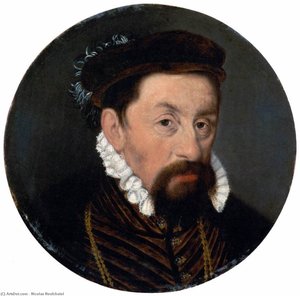
nicolas neufchatel
1524 - 1567
Основные сведения
- Artistic Movement Or Style: Renaissance
- Artists Or Movements Influenced By This Artist: ['Baroque']
- Artists Who Influenced This Artist: ['Pieter Coecke van Aelst']
- Date Of Birth: c. 1527
- Date Of Death: c. 1590
- Full Name: Nicolas Neufchatel
- Nationality: Flemish
- Notable Artworks:
- Portrait of Archduchess Anna of Austria.
- Emperor Maximilian II.
- Portrait of a Patrician.
- Place Of Birth: Antwerp
Похожие статьи
Jacob Jordaens: Baroque Dynamism & Genre Innovation of the Antwerp School
Discover Jacob Jordaens, a leading Flemish Baroque painter renowned for his dynamic compositions & realistic genre scenes. Explore his life, art, and lasting influence with ArtsDot.
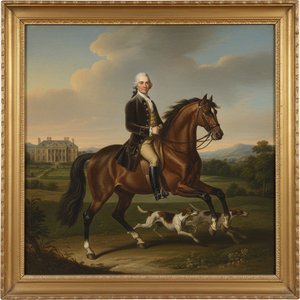
John Francis Sartorius II: Equestrian Elegance & the Rise of British Portraiture
Explore the captivating world of Francis Sartorius II (1734-1804), a leading British painter renowned for his exquisite equestrian portraits and hunting scenes. Discover his life, techniques & enduring legacy.
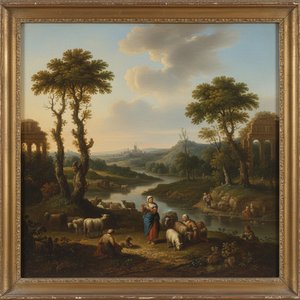
Nicolaes Berchem: Dutch Golden Age Pastoralism & the Evolution of Landscape Painting
Explore the captivating world of Nicolaes Berchem, a leading Dutch Golden Age painter. Discover his idyllic landscapes, masterful technique & lasting influence on art history. Learn more at ArtsDot.
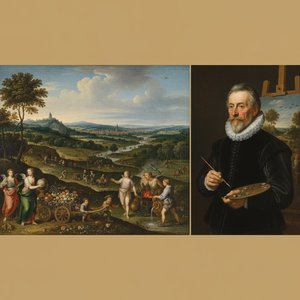
Jan Brueghel the Elder: A Master of Flemish Landscape & Allegory – Exploring Innovation & Influence
Explore the captivating world of Jan Brueghel the Elder, a Flemish Baroque master renowned for his stunning landscapes & allegorical paintings. Discover his collaborations with Rubens and lasting artistic legacy.
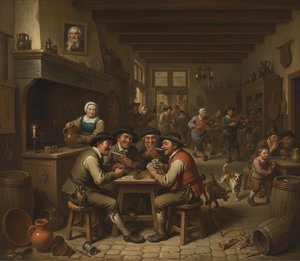
David Teniers II: Master of Flemish Genre & Social Commentary
Explore the captivating world of David Teniers II, a leading Flemish Baroque painter renowned for his lively genre scenes & insightful social commentary. Discover his masterpieces and legacy with ArtsDot.