

 Предпросмотр
 Поделиться
 Поделиться
 Детали произведения

 Скачать
 Похожие работы
 Рентгенография
 Слайд-шоу
 Статистика
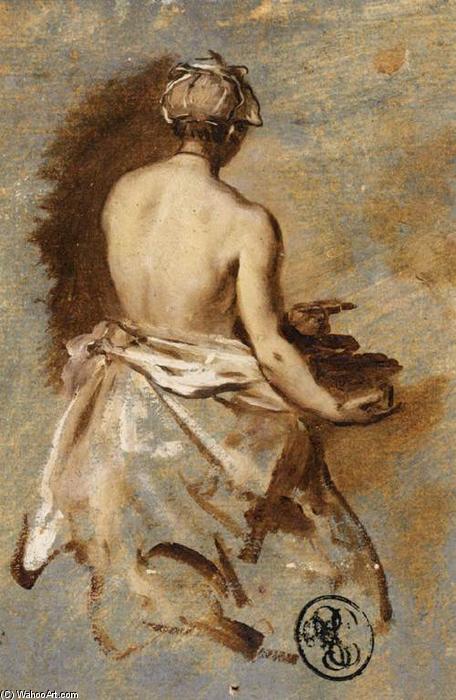
Young Woman with a Nude Back Presenting a Bowl
 Acrylic On Canvas
- WallArt
- Baroque
 152.0 x 100.0 cm
 Лувр
Лувр
 Читать далее
Приобретите цифровое изображение высокого разрешения в улучшенном качестве, которое значительно превосходит онлайн-превью.
Каждый файл тщательно подготавливается нашими специалистами с использованием передовых инструментов и экспертной ручной ретуши. Мы гарантируем исключительную четкость, точную цветопередачу и детальную проработку каждого изображения.
Финальный файл доставляется по электронной почте в течение 72 часов и оптимизирован для немедленного использования в профессиональной среде, при верстке и печати. Это тот же уровень качества, которому доверяют ведущие дизайнерские студии, издательства и галереи.
Цифровое изображение
Скачайте файл высокого разрешения для личного использования, печати и творческих проектов. ( Перейти к печати Купить картину ручной работы)
Включено в каждый заказ цифровых изображений
Гарантия экспертной цифровой доставки
Выбирая ArtsDot.com, вы получаете не просто изображение — вы приобретаете профессионально обработанное цифровое произведение искусства, созданное с безупречной точностью и под защитой гарантии качества. Вот всё, что автоматически входит в ваш заказ:

Мгновенная доставка по e-mail
Ваш цифровой файл в высоком разрешении будет отправлен вам по электронной почте в течение 72 часов после оформления заказа — и сразу станет доступен для использования.

Цифровой файл с ИИ-улучшением
Ваше произведение искусства проходит профессиональную оптимизацию с использованием передовых инструментов ИИ и ручной обработки, что гарантирует максимальную детализацию, четкость и точность цветопередачи.

Бессрочная бесплатная повторная доставка
Случайно удалили или потеряли файл? Не беспокойтесь — мы отправим его вам повторно в любое время и совершенно бесплатно.

Без импортных пошлин — навсегда
Наслаждайтесь вашим произведением искусства мгновенно без таможенных пошлин, сборов или затрат на доставку — цифровые загрузки всегда не облагаются налогом.

Гарантия точности цветопередачи
Мы гарантируем, что ваше цифровое изображение максимально точно передает оригинальные цвета благодаря использованию профессиональных инструментов и систем управления цветом.

Гарантия удовлетворенности 100 дней
Если вы не будете удовлетворены своим цифровым изображением, мы внесем правки или вернем 100% стоимости в течение 100 дней — без лишних вопросов.

100% Гарантия возврата средств
Не удовлетворены покупкой? Получите полный возврат средств в течение 100 дней после получения цифрового файла — без лишних вопросов.

Скидки на оптовые заказы
Купите 3 изображения, сэкономьте 10% — Купите 5, сэкономьте 15% — Купите 10+, сэкономьте 20%. Отличное решение для творческих проектов, галерей и агентств.
The Enigmatic Figure: Nicolas Vleughels and the Depiction of Vulnerability
Nicolas Vleughels’ “Young Woman with a Nude Back Presenting a Bowl” is not merely a portrait; it's an invitation into a realm of quiet contemplation, a masterful distillation of Baroque principles rendered with a distinctly Flemish sensibility. Painted circa 1720-1730, this oil on canvas work immediately draws the viewer in with its dramatic lighting and subtle modeling – techniques inherited from his rigorous study of Rubens, yet imbued with a unique artistic voice. The composition centers around a Rückenfigur, a back view, which is a hallmark of Baroque painting, designed to heighten drama and suggest an unspoken narrative. The woman’s posture, kneeling gracefully and offering a bowl, speaks volumes without uttering a single word. Her vulnerability is palpable, her gaze averted, creating a sense of mystery that compels the viewer to project their own interpretations onto the scene.
- Baroque Drama: The directional lighting, originating from an unseen source above and slightly to the left, casts deep shadows that sculpt the figure’s form, emphasizing her curves and creating a powerful sense of volume.
- Flemish Precision: Vleughels' meticulous attention to detail—the delicate folds of the drapery, the subtle variations in tone—demonstrates the enduring legacy of Flemish artistic tradition within his work.
- Rückenfigur Technique: The use of a Rückenfigur is not simply a compositional device; it’s a deliberate strategy for conveying emotion and inviting introspection.
A Symphony of Color and Texture – The Artist's Hand
The painting’s palette—a rich tapestry of warm browns, ochres, creams, and subtle hints of red—evokes an atmosphere of aged elegance and quiet solemnity. Vleughels masterfully employs layering techniques, building up the paint surface in thin glazes to achieve a remarkable sense of texture and depth. The brushstrokes are visible yet controlled, contributing to the painting’s overall tactile quality. Close examination reveals a deliberate roughness—a subtle imperfection that adds to the work's authenticity and timelessness. This textural approach is reminiscent of the Old Masters, particularly those who favored impasto techniques.
Technique Highlights:- Oil Glazes: Thin layers of oil paint were applied and allowed to dry before adding subsequent layers, creating luminous effects and rich color depth.
- Impasto (Subtle): While not overtly heavy, Vleughels utilized a slight impasto technique in areas where he wanted to emphasize form and texture.
Historical Context: The French Academy and Artistic Exchange
Nicolas Vleughels’ life was inextricably linked to the vibrant artistic community of Rome. Appointed as co-director of the Académie de France in 1724, he played a pivotal role in fostering exchange between France and Italy—a period of immense creative ferment. His time in Rome profoundly influenced his style, exposing him to the grandeur of Venetian painting while simultaneously reinforcing his commitment to Flemish artistic traditions. The work reflects this duality: it’s both deeply rooted in the classical ideals championed by the Academy and infused with a distinctly personal vision.
Significance:- Academia's Role: Vleughels' position at the French Academy facilitated the movement of artists, ideas, and techniques between France and Italy.
- Venetian Influence: The subtle use of color and light in the painting demonstrates the impact of Venetian masters like Titian and Veronese on Vleughels’ artistic sensibilities.
Symbolism and Emotional Resonance – A Portrait of Contemplation
While the precise meaning of the scene remains open to interpretation, “Young Woman with a Nude Back Presenting a Bowl” is rich in symbolic potential. The woman's posture suggests vulnerability, perhaps even resignation or quiet sorrow. The bowl itself could represent offering, charity, or simply the bounty of life. The averted gaze invites the viewer to contemplate her inner world—her thoughts, her feelings, her experiences. Ultimately, the painting transcends a simple portrait; it’s a meditation on human emotion and the complexities of the human condition. It speaks to themes of modesty, grace, and the quiet dignity of everyday existence.
Похожие произведения

Биография художника
The Convergence of Flemish Heritage and Venetian Grandeur
Nicolas Vleughels stands as a pivotal figure in the artistic landscape of the early Baroque era, embodying a magnificent confluence of Flemish artistic heritage and the burgeoning influence of Venetian painting. Born in Paris in 1668, his very identity was rooted in a lineage of excellence; he was the son of Philippe Vleughels, a renowned Flemish painter who had emigrated from Antwerp. This connection to the great traditions of the North provided Nicolas with a foundation steeped in technical precision and a vibrant community of expatriate artists residing in the French capital.
His formative years were defined by rigorous instruction under the watchful eye of Pierre Mignard, a prominent portraitist whose meticulous realism would leave an indelible mark on Vle.ueghels’ stylistic sensibilities. Yet, it was his profound dedication to mastering the masters that truly shaped his hand. He spent countless hours diligently copying the works of Rubens, the titan of Baroque art, absorbing the expressive power and dynamic energy that characterized the Flemish tradition. This deep reverence for Rubens allowed him to weave a sense of muscularity and life into his compositions, even as he sought new horizons.
A Transformative Journey Through Italy
Despite early recognition—including securing the second prize in the Académie royale de peinture et de sculpture’s competition in 1694—Vleughels faced the inevitable challenges of establishing a singular voice in a crowded Parisian scene. Driven by an unquenchable ambition, he embarked on a transformative journey to Rome in 1703. This pilgrimage was not merely a change of scenery but a profound artistic awakening. In Italy, he encountered the works of Casper van Wittel, a celebrated vedute painter whose panoramic depictions of landscapes captivated him with their light and spatial depth.
The influence of Venice, however, would become the true cornerstone of his evolution. As he immersed himself in the Venetian atmosphere, the dramatic compositions of Veronese began to resonate deeply within his soul. This encounter catalyzed a stylistic shift toward an opulent color palette and a sense of theatrical staging. His work began to breathe with the warmth and grandeur of the Venetian Baroque, blending the structural integrity of his Flemish roots with a new, luminous splendor that celebrated light and movement.
Legacy and Artistic Maturity
Upon returning to Paris around 1709, Vleughels emerged as an artist of significant prestige, eventually serving as a director at the French Academy in Rome. His later years were marked by a fascinating intersection with the emerging Rococo movement; he forged a profound friendship with Jean-Antoine Watteau, whose delicate and playful style offered a striking contrast to Vleughels’ more classical and dramatic tendencies. This period of his life saw him navigating the transition between the heavy grandeur of the Baroque and the refined elegance of the coming age.
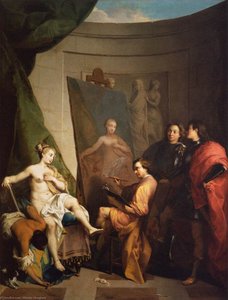
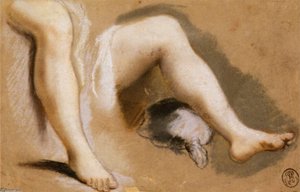
The enduring significance of Nicolas Vleughels lies in his ability to bridge disparate worlds. His oeuvre remains a testament to a life spent synthesizing diverse influences, from the meticulous detail of his Flemish ancestors to the sweeping, colorful drama of the Italian masters. Whether through the serene beauty found in his Study for the Head of Campaspe or the theatrical narrative of Apelles Painting Campaspe, Vleughels continues to captivate the viewer with a unique vision that remains eternally elegant and profoundly classical.
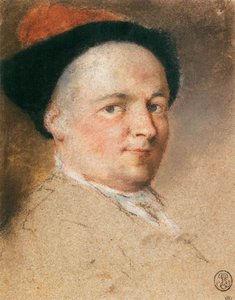
Nicolas Vleughels
1668 - 1737 , France
Основные сведения
- Artistic Movement Or Style: Baroque
- Artists Or Movements Influenced By This Artist: ['Jean-Antoine Watteau']
- Artists Who Influenced This Artist:
- Pierre Mignard
- Rubens
- Date Of Birth: Paris, France (1668)
- Date Of Death: 1737
- Full Name: Nicolas Vleughels
- Nationality: French
- Notable Artworks:
- Study for the Legs of Campaspe
- Young Woman with a Nude Back Presenting a Bowl
- Place Of Birth: Paris