

 Предпросмотр
 Поделиться
 Поделиться
 Детали произведения

 Скачать
 Похожие работы
 Рентгенография
 Слайд-шоу
 Статистика
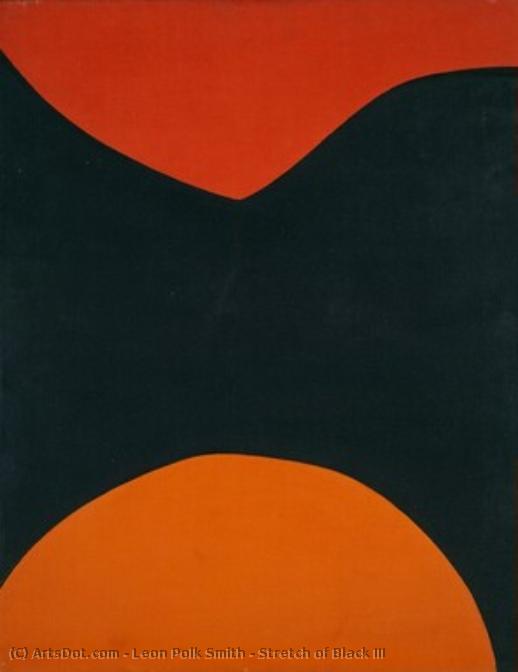
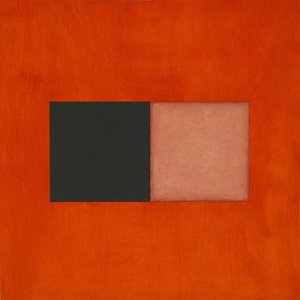
Stretch of Black III
 1961
1961 69.0 x 58.0 cm
 Читать далее
Жикле / Арт-принт
Печать (жикле) или холст музейного качества с быстрыми сроками изготовления и широким выбором вариантов отделки. ( Купить картину ручной работы Перейти к цифровым изображениям)




































Выберите один из наших стандартных размеров, соответствующих оригинальным пропорциям произведения искусства.

Вы можете указать свои собственные размеры, чтобы репродукция идеально подошла под конкретную раму или пространство. Если выбранный вами размер не будет соответствовать пропорциям оригинала, мы либо обрежем произведение, либо дополним изображение зеркальным отражением краев или однотонной заливкой. Перед началом производства вам будет отправлен цифровой макет для утверждения.
Пожалуйста, обратите внимание, что предварительный просмотр на экране не отображает фактическую обрезку или расширение изображения. Только макет точно покажет финальную композицию.
Несмотря на возможность заказа индивидуальных размеров, мы рекомендуем выбирать размер из предопределенного списка, чтобы сохранить оригинальные пропорции.
Доставка по всему миру () за 2 недели вместо стандартных 4/5 недель. (12 Сентябрь)

Бесплатная экспресс-доставка по всему миру

Высококачественный льняной холст

Полное страхование доставки

Гарантия возмещения таможенных пошлин

Гарантия точного соответствия цветов

100-дневная политика возврата (только при обнаружении дефектов)

Гарантия возврата 100% средств

Предложение оптовых скидок
 Вариант со стеклом доступен только для размеров менее 110 см

Stretch of Black III
Жикле / Арт-принт
Размер репродукции
-


Итоговая стоимость
$ 62
Похожие произведения




Биография художника
Leon Polk Smith: Architect of Quiet Intensity
Born in Chickasha, Oklahoma, in 1906, Leon Polk Smith emerged as a singular voice within the American art world—a quiet revolutionary who redefined abstraction through geometric precision and an almost austere sensibility. His career spanned nearly seven decades, marked by a relentless pursuit of clarity and a profound engagement with the fundamental elements of form and color. More than simply painting, Smith constructed visual dialogues, inviting viewers to contemplate the inherent relationships between shape, edge, and hue—a legacy that continues to resonate in contemporary art.
Smith’s early life instilled within him a deep appreciation for self-reliance and a pragmatic approach to life, forged amidst the hardships of the Dust Bowl era. His childhood experiences – working on ranches and constructing roads in Arizona during the Depression – shaped his disciplined work ethic and an inherent understanding of material and process. This grounding contrasted sharply with his later embrace of abstraction, suggesting a deliberate tension between the tangible realities of his past and the purely visual language he would develop as an artist. A pivotal moment arrived at East Central State College (now East Central University) in Ada, Oklahoma, where he discovered the transformative power of art—a revelation that irrevocably altered the course of his life.
The Hard-Edge Aesthetic and Piet Mondrian’s Influence
Smith's artistic journey was profoundly influenced by Piet Mondrian, whose rigorously geometric abstractions provided a crucial conceptual framework. However, Smith didn’t simply replicate Mondrian’s style; he distilled it to its essence, stripping away any suggestion of subjective expression or emotional content. His paintings are characterized by starkly delineated edges—often achieved through meticulous masking techniques—that precisely separate two distinct colors on the canvas. This commitment to geometric clarity and a rejection of illusionistic depth became the hallmark of his distinctive “hard-edge” style.
Unlike many artists who sought to imbue their work with personal symbolism, Smith deliberately avoided overt narratives or figurative elements. His paintings are exercises in pure form, demanding that viewers engage with them on an intellectual and perceptual level. The simplicity of his compositions—typically limited to just two colors against a neutral background—creates a sense of meditative stillness, inviting contemplation and a heightened awareness of the visual field.
A Unique Approach to Materials and Process
Smith’s approach to materials and process was as unconventional as his artistic vision. He frequently employed unframed canvases – often irregularly shaped – which he would mask with tape or cardboard before applying paint. This technique not only created sharp, precise edges but also challenged traditional notions of the picture frame, blurring the boundaries between art and architecture. He favored a limited palette—primarily black, white, and various shades of red—allowing him to focus on the interplay of color and form. The use of industrial-grade paint and masking tape further emphasized his commitment to directness and eschewal of traditional artistic techniques.
His studio was a meticulously organized space, reflecting his disciplined approach to artmaking. Smith’s process involved painstaking preparation—measuring, cutting, and applying masking materials with unwavering precision. This attention to detail extended to every aspect of his work, from the selection of pigments to the application of paint.
Recognition and Legacy
Leon Polk Smith's paintings have been exhibited extensively throughout the United States, Europe, and South America, finding a place in major museums including the Museum of Modern Art (MoMA) in New York, the Tate Gallery in London, and the Museo de Arte Contemporáneo in Buenos Aires. His work is recognized for its intellectual rigor, formal clarity, and profound sense of stillness. Smith’s influence extends beyond his own generation, inspiring a new wave of artists who embrace geometric abstraction and explore the possibilities of minimalist forms.
Despite his critical acclaim, Smith remained remarkably private and eschewed self-promotion. He was more concerned with the act of creation than with recognition or fame. Leon Polk Smith passed away in 1996, leaving behind a body of work that continues to challenge and inspire viewers—a testament to the power of simplicity, precision, and unwavering dedication to artistic vision.

no alternate name
1906 - 1996 , United States of America
Основные сведения
- Artistic Movement Or Style: Hard-edge painting
- Artists Or Movements Influenced By This Artist: ['Hard-edge school']
- Artists Who Influenced This Artist: ['Piet Mondrian']
- Date Of Birth: 1906
- Date Of Death: 1996
- Full Name: Leon Polk Smith
- Nationality: American
- Notable Artworks:
- Two Colors
- Red and Black
- Blue and White
- Place Of Birth: Chickasha, USA