 Предпросмотр
 Поделиться
 Поделиться
 Детали произведения

 Скачать
 Похожие работы
 Рентгенография
 Слайд-шоу
 Статистика
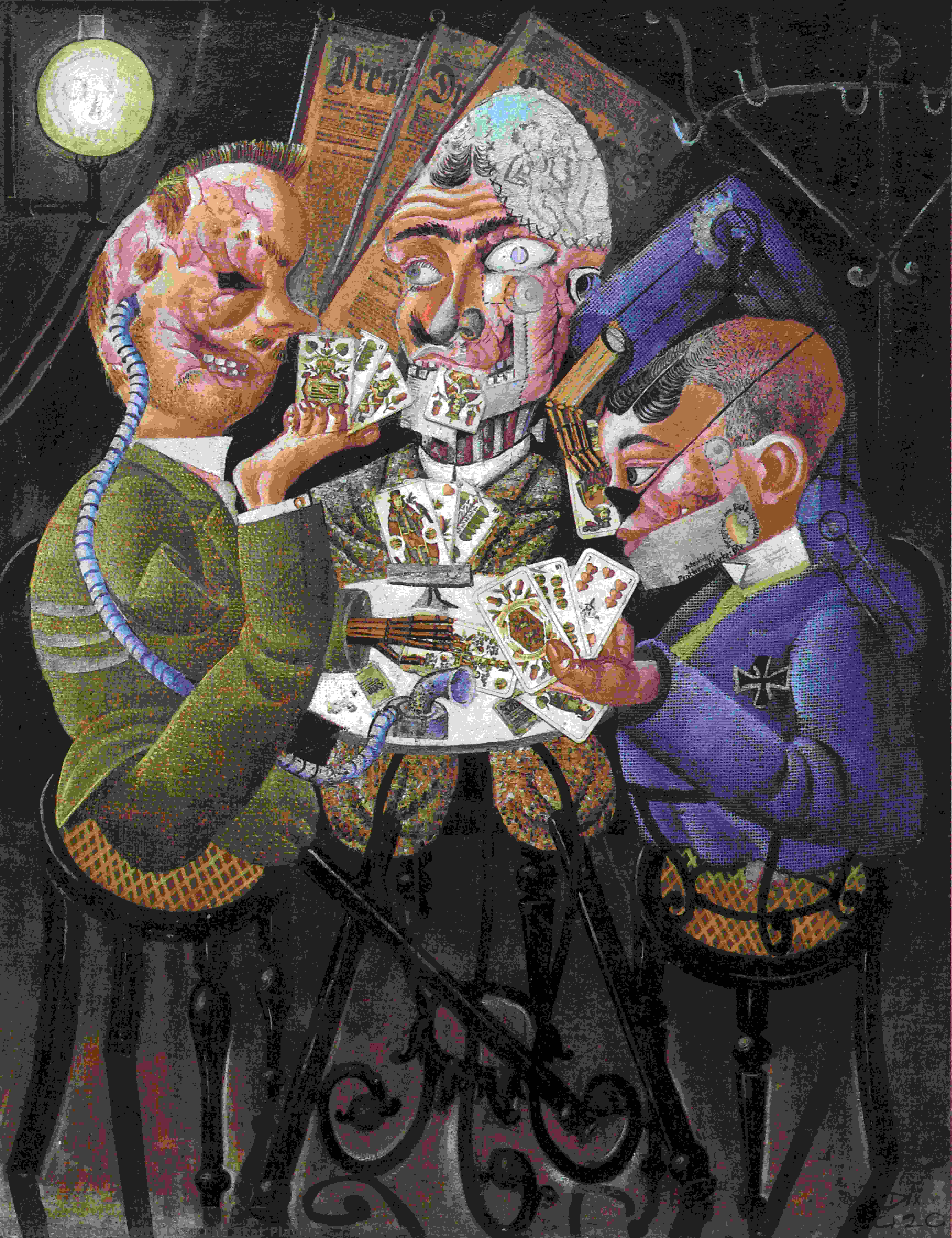
The Skat Players
 Acrylic On Canvas
- WallArt
- Dadaism
 1920
1920- Modern
 87.0 x 110.0 cm
 Читать далее
Жикле / Арт-принт
Печать (жикле) или холст музейного качества с быстрыми сроками изготовления и широким выбором вариантов отделки. ( Купить картину ручной работы Перейти к цифровым изображениям)




P118B $10

P118H $10

P118W $10

P438Z $10

P508JH $12

P508YH $12

P805H $10

P805Z $10

P919BZ $10

P919G $10

P919XJ $10

P959ZH $10

P968JZ $12

W106C $8

W218G $10

W218JH $8

W218Y $10

W307PJ $10

W316G $10

W316PJ $8

W316Y $10

W398PJ $8

W4111J $10

W500HY $15

W500JH $15

W692G $12

W849H $8

W940BG $15

W953PJ $8




Выберите один из наших стандартных размеров, соответствующих оригинальным пропорциям произведения искусства.

Вы можете указать свои собственные размеры, чтобы репродукция идеально подошла под конкретную раму или пространство. Если выбранный вами размер не будет соответствовать пропорциям оригинала, мы либо обрежем произведение, либо дополним изображение зеркальным отражением краев или однотонной заливкой. Перед началом производства вам будет отправлен цифровой макет для утверждения.
Пожалуйста, обратите внимание, что предварительный просмотр на экране не отображает фактическую обрезку или расширение изображения. Только макет точно покажет финальную композицию.
Несмотря на возможность заказа индивидуальных размеров, мы рекомендуем выбирать размер из предопределенного списка, чтобы сохранить оригинальные пропорции.
Доставка по всему миру () за 2 недели вместо стандартных 4/5 недель. (11 Сентябрь)

Бесплатная экспресс-доставка по всему миру

Высококачественный льняной холст

Полное страхование доставки

Гарантия возмещения таможенных пошлин

Гарантия точного соответствия цветов

100-дневная политика возврата (только при обнаружении дефектов)

Гарантия возврата 100% средств

Предложение оптовых скидок
 Вариант со стеклом доступен только для размеров менее 110 см

The Skat Players
Жикле / Арт-принт
Размер репродукции
-


Итоговая стоимость
$ 62
The Skat Players: A Haunting Reflection of Post-War Germany
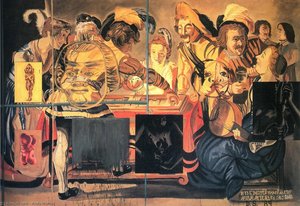
Otto Dix's "The Skat Players," created in 1920, is a profoundly unsettling and powerful artwork that serves as a stark commentary on the aftermath of World War I. This oil-on-canvas painting (87 x 110 cm) embodies the Dadaist style, capturing the despair, social upheaval, and struggle for survival prevalent in post-war Germany.
Context and Inspiration
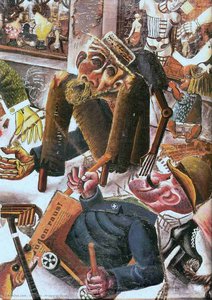
Dix's experiences during World War I deeply influenced his artistic vision. Witnessing firsthand the brutal realities of war fueled a desire to depict the psychological and physical scars left on German society. "The Skat Players" is part of a series of four works from 1920—including "Pragerstrasse," "Streichholzhändler," and "Die Barrikade"—that collectively portray the atmosphere of disillusionment and societal decay following the war.
Composition, Technique, and Symbolism
- The Scene: The painting depicts three disabled veterans engrossed in a game of Skat, a popular German card game. Their severe physical disabilities are prominently displayed, emphasizing the devastating impact of war on individuals.
- Cluttered Setting: The room is depicted as chaotic and disheveled, with newspapers, books, and other items scattered around. This symbolizes the disorder and disruption that permeated post-war life.
- Symbolism of Newspapers: Hanging newspapers represent the constant flow of news about the war's aftermath, highlighting the pervasive sense of anxiety and uncertainty.
- Mixed Media Technique: Dix innovatively incorporated collage elements—playing cards, newspapers, aluminum foil, and paper imitations of textiles—into his oil painting technique. This adds depth, texture, and a fragmented quality to the artwork, reflecting the fractured state of society.
- Mechanical Jaw Detail: The prosthetic jaw of one player, featuring a self-portrait fragment with a humorous inscription about being "only valid with the portrait of the inventor," is a particularly striking detail that underscores the dehumanizing effects of war and Dix's own complex relationship to it.
Historical Significance and Emotional Impact
“The Skat Players” stands as a significant work within the New Objectivity movement (Neue Sachlichkeit), which sought to portray reality without romanticization or idealization. The painting is a powerful critique of the societal and political conditions that led to World War I and its devastating consequences. It evokes feelings of anxiety, unease, and moral decay—a sense of something deeply wrong beneath the surface of an ordinary activity.
Conservation and Legacy
The artwork underwent meticulous restoration by Ursus Dix, the artist's son, in 1984/85. Today, "The Skat Players" resides at the Neue Nationalgalerie in Berlin, serving as a poignant reminder of war’s lasting impact on individuals and society.
Похожие произведения
Биография художника
Early Life and the Shadow of War
Wilhelm Heinrich Otto Dix, born in 1891 in Untermhaus, a small village near Gera in Thuringia, emerged from a world defined by industrial labor and a quiet yearning for artistic expression. His father, Franz Dix, was an iron foundry worker, grounding him in the realities of manual labor, while his mother, Louise, possessed a poetic spirit, creating a domestic environment that subtly nurtured young Otto’s creative inclinations. Crucially, it was the influence of his cousin, Fritz Amann – a painter residing nearby – that truly ignited Dix's ambition. Hours spent in Amann’s studio weren’t merely lessons in technique; they were an immersion into a world where artistic creation held tangible power and significance. This early exposure fostered a deep appreciation for visual storytelling and the potential of art to convey complex emotions and ideas. Initially, Dix’s artistic pursuits centered on landscapes, reflecting the rural beauty of his childhood home, but these works already hinted at a nascent ability to capture light and atmosphere with remarkable precision. The outbreak of World War I dramatically altered the course of Dix's life. Driven by a youthful idealism and a desire to serve his country, he volunteered for military service in 1914. This decision would irrevocably shape his artistic trajectory, exposing him to the brutal realities of trench warfare – a trauma that would haunt his work for decades to come. He participated in some of the most devastating battles of the war, including the horrific Somme and Flanders campaigns, witnessing firsthand the senseless slaughter, the physical devastation, and the profound psychological scars inflicted upon soldiers. The horrors he experienced fundamentally transformed him from a promising landscape painter into a chronicler of human suffering and societal decay—a voice for the silenced victims of conflict.The Weimar Republic and Neue Sachlichkeit
Returning to Germany after the war, Dix found himself immersed in the turbulent atmosphere of the Weimar Republic – a period marked by political instability, economic hardship, and social unrest. This era profoundly influenced his artistic vision, leading him away from the romanticism of Expressionism towards a new aesthetic known as *Neue Sachlichkeit* (New Objectivity). Rejecting emotional abstraction and subjective interpretation, *Neue Sachlichkeit* prioritized stark realism, unflinching honesty, and critical social commentary. Dix became one of its most prominent figures alongside artists like George Grosz and Max Beckmann, each employing their distinct styles to expose the corruption, decadence, and moral bankruptcy of post-war Germany. Dix’s early works from this period are characterized by a remarkable blend of technical skill and unsettling imagery. Paintings such as *The Trench* (1923) – a brutally realistic depiction of dismembered bodies – caused public outrage and forced museums to hide the work from view, demonstrating the power of art to challenge societal norms and confront uncomfortable truths. However, this wasn’t merely shock value; it was a deliberate attempt to expose the horrors of war and the indifference of society towards its victims. Dix didn't shy away from depicting the physical and psychological wounds inflicted upon soldiers, nor did he ignore the social consequences of conflict—the marginalization and forgotten status of veterans. He also turned his attention to the excesses and moral failings of Weimar society, creating satirical portraits of politicians, industrialists, and celebrities that exposed their hypocrisy and greed.Influences and Artistic Style
Dix’s artistic style was shaped by a diverse range of influences. Initially drawn to the expressive qualities of Expressionism, he quickly recognized its limitations in conveying the stark realities of his time. He found inspiration in the works of Northern Renaissance masters like Lucas Cranach and Hans Baldung Grien, particularly their mastery of anatomy, composition, and chiaroscuro—the dramatic use of light and shadow. He also studied the techniques of Albrecht Dürer, admiring his meticulous detail and precise draftsmanship. Furthermore, he was deeply influenced by the ideas of Friedrich Nietzsche, whose philosophy encouraged a rejection of bourgeois morality and an embrace of intense experience – a sentiment that resonated powerfully with Dix’s own disillusionment with society. Dix's distinctive style is characterized by its sharp realism, often bordering on caricature; his figures are rendered with meticulous detail, yet imbued with a sense of unease and alienation. He frequently employed photomontage and collage techniques to create layered compositions that combined realistic imagery with symbolic elements. His use of color was deliberately muted and restrained, reflecting the bleakness of his subject matter. Dix’s work is not simply a representation of reality; it's an interpretation—a powerful statement about the human condition in a time of profound crisis.Later Years and Legacy
As the Nazi regime gained power in the 1930s, Dix’s art became increasingly controversial. His unflinching depictions of social injustice and his refusal to conform to Nazi ideology led to censorship and persecution. He was dismissed from his teaching position at the Dresden Academy of Fine Arts in 1933 and forced to flee Germany. During World War II, he served in the German army, an experience that further deepened his anti-war sentiments. After the war, Dix experienced a resurgence of recognition and acclaim, though the trauma of both conflicts continued to inform his work. He shifted away from overtly political themes, focusing instead on landscapes and religious subjects—a strategic move for self-preservation while retaining a subtle undercurrent of melancholy and critique. Otto Dix’s legacy as one of Germany's most important 20th-century artists is undeniable. His unflinching realism, biting social commentary, and profound exploration of human suffering continue to resonate with audiences today. He remains a pivotal figure in understanding the artistic and social landscape of Weimar Germany—a period defined by both unprecedented innovation and devastating conflict. Dix’s art serves as a stark reminder of the horrors of war, the fragility of human existence, and the enduring power of art to challenge injustice and provoke reflection. His work is exhibited in major museums worldwide, ensuring that his powerful vision continues to be seen and appreciated for generations to come.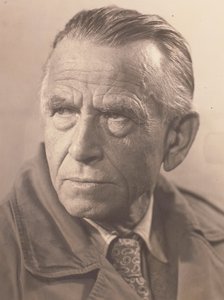
Отто Диккс
1891 - 1969 , Германия
Основные сведения
- Artistic Movement Or Style: Новая объективность
- Artists Or Movements Influenced By This Artist: ['Грозь Георг']
- Date Of Birth: 2 декабря 1891 г.
- Date Of Death: 25 июля 1969 г.
- Full Name: Wilhelm Heinrich Otto Dix
- Nationality: Немецкий
- Notable Artworks:
- Тrench
- Metropolis
- Военные инвалиды
- Place Of Birth: Унтерхаузен, Германия
Похожие статьи
10 Шедевров Немецкого Экспрессионизма: Искусство Эмоций и Вдохновения | ArtsDot
Погрузитесь в мир немецкого экспрессионизма! Узнайте истории создания шедевров Мунка, Кирхнера, Кандинского и других великих художников. Репродукции картин высокого качества для вашего интерьера на ArtsDot.com. Откройте всю коллекцию онлайн!
Neue Sachlichkeit: Objectivity, Realism & Social Commentary in Interwar German Art
Explore Neue Sachlichkeit – the pivotal German art movement critiquing Weimar society with unflinching realism. Discover key artists like Dix & Grosz, its historical context, and collecting insights for discerning investors.
The Northern Awakening: Artistic Innovation & Cultural Transformation in the German Renaissance
Explore the artistic innovation of the German Renaissance! Discover Dürer, the Danube School & Reformation art. Learn about techniques, materials & lasting influence. Find museum-quality reproductions at ArtsDot.
Otto Dix: Trauma, Society & Artistic Rebellion in Weimar Germany
Explore the powerful and unsettling art of Otto Dix, a key figure of Neue Sachlichkeit. Discover his unflinching depictions of Weimar Germany's trauma, society, and war through insightful analysis & iconic masterpieces.

Anton von Werner: Imperial Painter, Historical Witness & Shifting German Identity
Explore the life & work of Anton von Werner, Imperial Germany's leading painter. Discover his dramatic depictions of war, unification, and court life – a fascinating insight into 19th-century German history & art.