

 Предпросмотр
 Поделиться
 Поделиться
 Детали произведения

 Скачать
 Похожие работы
 Рентгенография
 Слайд-шоу
 Статистика
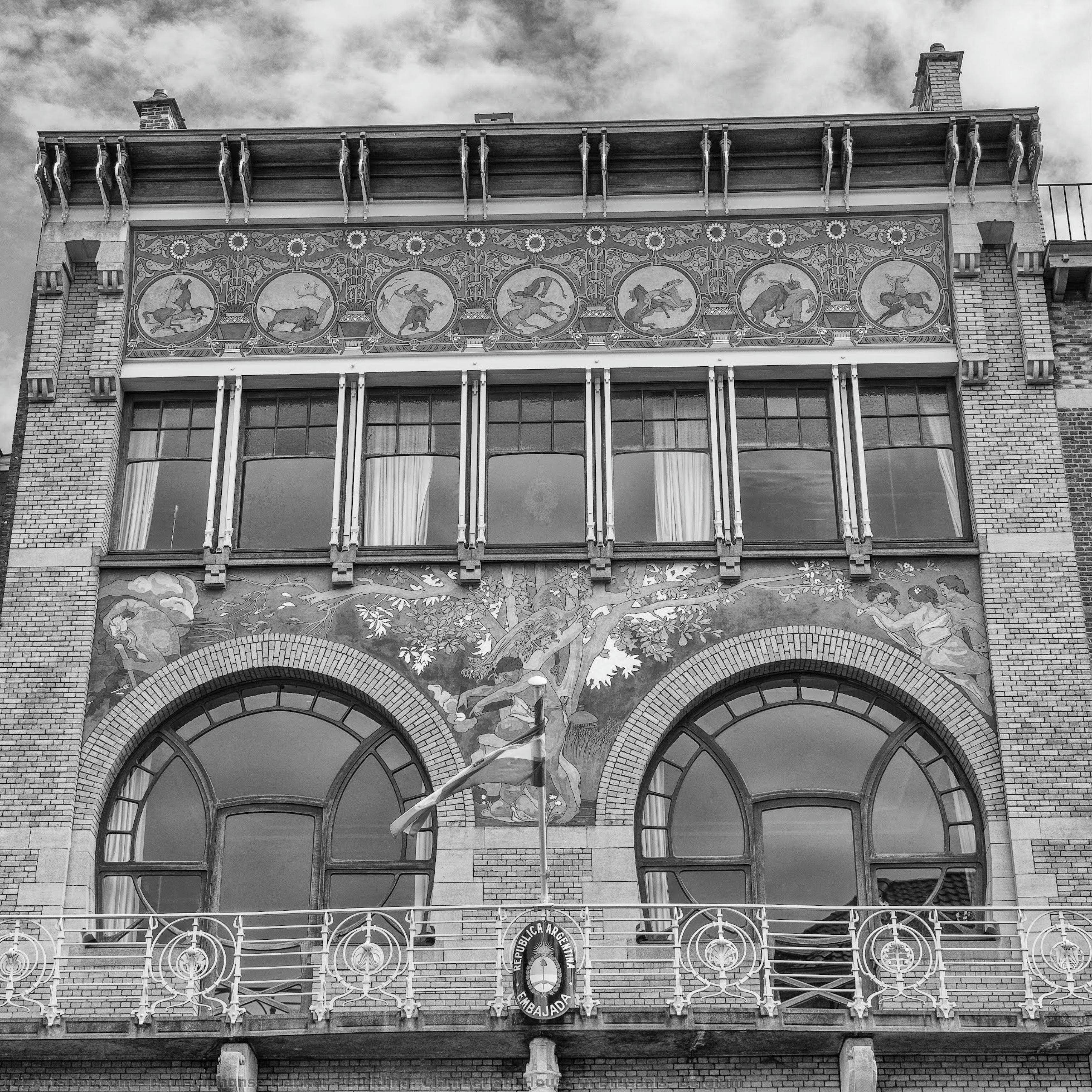
Building. Ciamberlani House in Brussels, Belgium

 Читать далее
Приобретите цифровое изображение высокого разрешения в улучшенном качестве, которое значительно превосходит онлайн-превью.
Каждый файл тщательно подготавливается нашими специалистами с использованием передовых инструментов и экспертной ручной ретуши. Мы гарантируем исключительную четкость, точную цветопередачу и детальную проработку каждого изображения.
Финальный файл доставляется по электронной почте в течение 72 часов и оптимизирован для немедленного использования в профессиональной среде, при верстке и печати. Это тот же уровень качества, которому доверяют ведущие дизайнерские студии, издательства и галереи.
Цифровое изображение
Скачайте файл высокого разрешения для личного использования, печати и творческих проектов. ( Перейти к печати Купить картину ручной работы)
Включено в каждый заказ цифровых изображений
Гарантия экспертной цифровой доставки
Выбирая ArtsDot.com, вы получаете не просто изображение — вы приобретаете профессионально обработанное цифровое произведение искусства, созданное с безупречной точностью и под защитой гарантии качества. Вот всё, что автоматически входит в ваш заказ:

Мгновенная доставка по e-mail
Ваш цифровой файл в высоком разрешении будет отправлен вам по электронной почте в течение 72 часов после оформления заказа — и сразу станет доступен для использования.

Цифровой файл с ИИ-улучшением
Ваше произведение искусства проходит профессиональную оптимизацию с использованием передовых инструментов ИИ и ручной обработки, что гарантирует максимальную детализацию, четкость и точность цветопередачи.

Бессрочная бесплатная повторная доставка
Случайно удалили или потеряли файл? Не беспокойтесь — мы отправим его вам повторно в любое время и совершенно бесплатно.

Без импортных пошлин — навсегда
Наслаждайтесь вашим произведением искусства мгновенно без таможенных пошлин, сборов или затрат на доставку — цифровые загрузки всегда не облагаются налогом.

Гарантия точности цветопередачи
Мы гарантируем, что ваше цифровое изображение максимально точно передает оригинальные цвета благодаря использованию профессиональных инструментов и систем управления цветом.

Гарантия удовлетворенности 100 дней
Если вы не будете удовлетворены своим цифровым изображением, мы внесем правки или вернем 100% стоимости в течение 100 дней — без лишних вопросов.

100% Гарантия возврата средств
Не удовлетворены покупкой? Получите полный возврат средств в течение 100 дней после получения цифрового файла — без лишних вопросов.

Скидки на оптовые заказы
Купите 3 изображения, сэкономьте 10% — Купите 5, сэкономьте 15% — Купите 10+, сэкономьте 20%. Отличное решение для творческих проектов, галерей и агентств.
Похожие произведения








Биография художника
The Architect of Organic Elegance: The Life and Legacy of Paul Hankar
In the heart of late nineteenth-century Brussels, a revolution was quietly unfolding, etched into the very stone, iron, and glass of the city's expanding streets. At the forefront of this metamorphosis stood Paul Hankar, a visionary whose work would breathe life into the burgeoning Art Nouveau movement. Born in 1859 to a stonemason in Frameries, Belgium, Hankar’s early connection to the raw, tactile elements of construction was more than mere coincidence; it was the foundation of his artistic soul. His upbringing instilled in him a profound respect for craftsmanship and an intimate understanding of how material innovation could redefine the boundaries of beauty. Before he ever drafted a blueprint for a grand edifice, Hankar honed his skills as a decorative sculptor, learning to manipulate stone with a sensitivity that would later allow him to treat architecture not merely as shelter, but as a living, breathing sculpture.
Hankar’s journey toward architectural mastery led him to the Royal Academy of Fine Arts in Brussels, an institution where his creative trajectory was irrevocably altered. It was here that he forged a legendary intellectual and professional bond with Victor Horta. Together, these two pioneers shared a fascination for the transformative potential of modern materials. Influenced by the theories of Eugène Viollet-le-Duc, who championed the marriage of historical inspiration with industrial progress, Hankar looked toward the future. He saw in wrought iron and glass not just structural necessities, but poetic tools capable of mimicking the undulating, organic rhythms found in nature. This period of study and collaboration laid the groundwork for a style that would reject the rigid, heavy symmetries of the past in favor of something far more fluid and evocative.
A Symphony of Iron and Stone
The true brilliance of Hankar’s work emerged when he began to apply these avant-garde principles to the domestic landscape. His architectural achievements were characterized by a daring use of asymmetrical compositions and surfaces that seemed to ripple with movement. The Hankar House, completed in 1893, served as a manifesto for his personal aesthetic—a structure that utilized brick and bluestone with a rhythmic precision that felt entirely new. However, it was the Hôtel Ciamberlani that truly cemented his reputation as a master of the Art Nouveau idiom. In this masterpiece, Hankar demonstrated an unparalleled ability to integrate intricate ironwork into the very fabric of the building, creating mesmerizing patterns that danced across facades and interiors alike.
Beyond the grand scale of residential architecture, Hankar’s genius extended into the intimate details of daily life through his exquisite furniture design. He possessed a rare ability to blend functional necessity with high art, ensuring that every chair, table, or cabinet echoed the organic motifs of his larger structures. His work was never purely decorative; it was an integrated experience of space and object. This holistic approach—often referred to as Gesamtkunstwerk, or a total work of art—meant that a Hankar interior was a cohesive environment where the curve of a window bar might find its echo in the leg of a wooden chair. His shopfront designs, such as the celebrated Niguet's Shirt Shop, further showcased his ability to bring this flamboyant, Japanese-inspired elegance to the public eye, captivating passersby with curved mahogany tracery and astonishingly detailed decorations.
The Enduring Echo of a Visionary
Though his life was tragically short, ending in 1901 at the age of forty-one, Paul Hankar left behind an indelible mark on the history of European design. He did not merely participate in a movement; he helped define its very essence. His ability to navigate the tension between industrial modernity and organic naturalism allowed him to create a language of architecture that felt both cutting-edge and timelessly beautiful. The historical significance of his work lies in this very duality—the way he utilized economical materials like wood, brick, and iron to achieve an atmosphere of unparalleled luxury and artistic depth.
Today, the legacy of Paul Hankar remains etched into the urban fabric of Brussels, serving as a testament to a man who saw the potential for poetry in every structural element. His contributions can be summarized through several key pillars of his impact:
- Material Innovation: The pioneering use of wrought iron and glass to create fluid, organic architectural forms.
- Architectural Revolution: The introduction of asymmetrical compositions that challenged the neoclassical traditions of the nineteenth century.
- Integrated Design: A seamless mastery over both large-scale architecture and fine furniture design, creating unified aesthetic environments.
- Art Nouveau Leadership: Establishing Brussels as a global epicenter for the Art Nouveau movement alongside contemporaries like Victor Horta.
As we look back upon his career, we see more than just an architect; we see a dreamer who understood that the built environment is a reflection of our deepest connection to the natural world. Through his hands, stone became soft, iron became vine-like, and the city itself began to bloom.
paul-alphonse hankar
1859 - 1901 , Belgium
Основные сведения
- Artistic Movement Or Style: Art Nouveau
- Artists Or Movements Influenced By This Artist: ['Victor Horta']
- Artists Who Influenced This Artist:
- Henri Beyaert
- Eugène Viollet-le-Duc
- Date Of Birth: December 11, 1859
- Date Of Death: January 17, 1901
- Full Name: Paul Alphonse Hankar
- Nationality: Belgian
- Notable Artworks:
- Courtesan with necklace of gems
- Building. Ciamberlani House in Brussels
- Place Of Birth: Frameries, Belgium