

 Предпросмотр
 Поделиться
 Поделиться
 Детали произведения

 Скачать
 Похожие работы
 Рентгенография
 Слайд-шоу
 Статистика
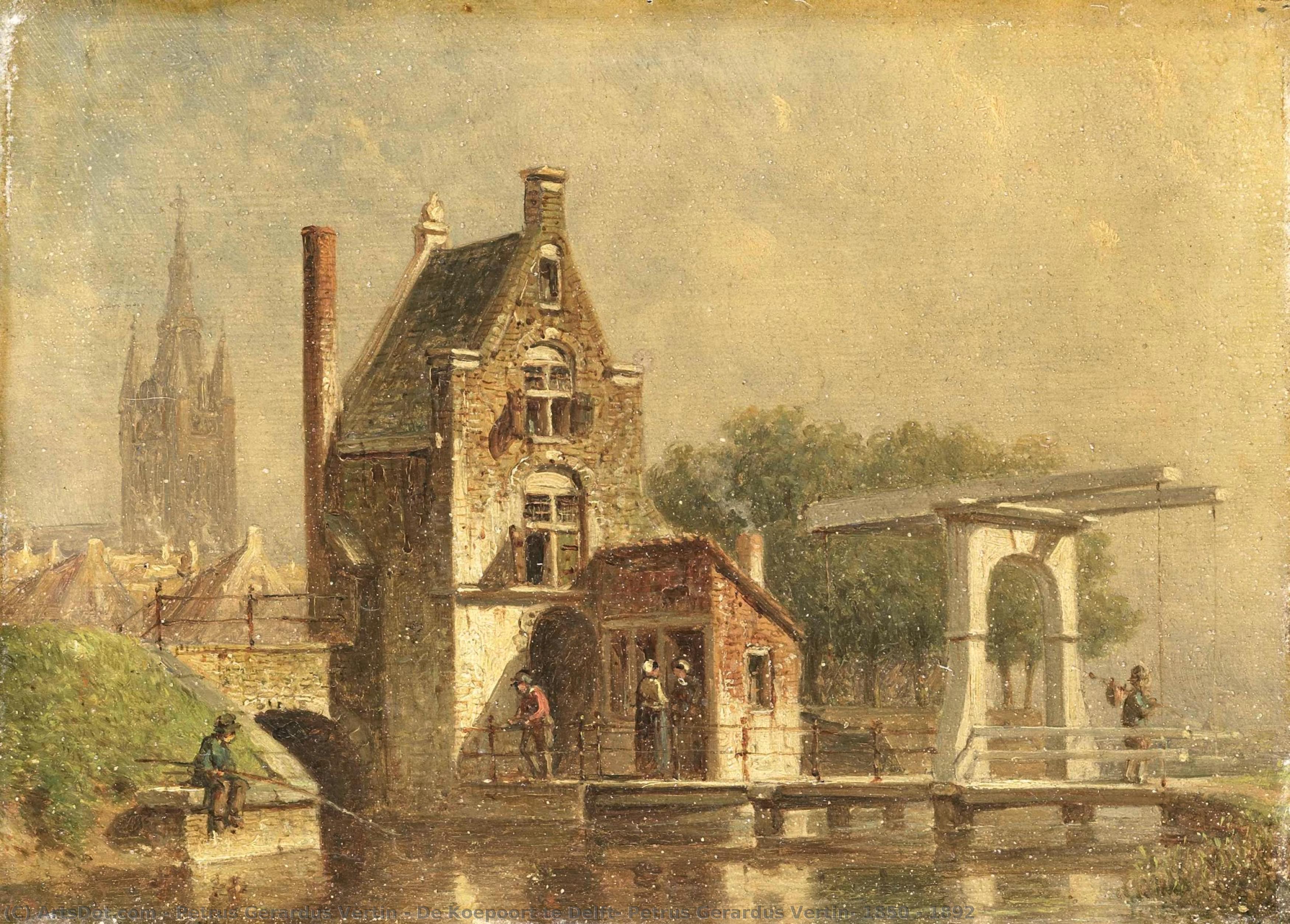
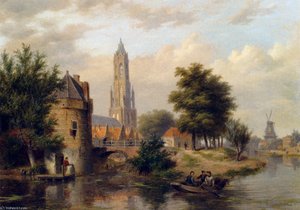
De Koepoort te Delft, Petrus Gerardus Vertin, 1850 - 1892
 Contemporary Realism
 1892
1892 16.0 x 22.0 cm
 Читать далее
Жикле / Арт-принт
Печать (жикле) или холст музейного качества с быстрыми сроками изготовления и широким выбором вариантов отделки. ( Купить картину ручной работы Перейти к цифровым изображениям)




































Выберите один из наших стандартных размеров, соответствующих оригинальным пропорциям произведения искусства.

Вы можете указать свои собственные размеры, чтобы репродукция идеально подошла под конкретную раму или пространство. Если выбранный вами размер не будет соответствовать пропорциям оригинала, мы либо обрежем произведение, либо дополним изображение зеркальным отражением краев или однотонной заливкой. Перед началом производства вам будет отправлен цифровой макет для утверждения.
Пожалуйста, обратите внимание, что предварительный просмотр на экране не отображает фактическую обрезку или расширение изображения. Только макет точно покажет финальную композицию.
Несмотря на возможность заказа индивидуальных размеров, мы рекомендуем выбирать размер из предопределенного списка, чтобы сохранить оригинальные пропорции.
Доставка по всему миру () за 2 недели вместо стандартных 4/5 недель. (12 Сентябрь)

Бесплатная экспресс-доставка по всему миру

Высококачественный льняной холст

Полное страхование доставки

Гарантия возмещения таможенных пошлин

Гарантия точного соответствия цветов

100-дневная политика возврата (только при обнаружении дефектов)

Гарантия возврата 100% средств

Предложение оптовых скидок
 Вариант со стеклом доступен только для размеров менее 110 см

De Koepoort te Delft, Petrus Gerardus Vertin, 1850 - 1892
Жикле / Арт-принт
Размер репродукции
-


Итоговая стоимость
$ 62
Похожие произведения

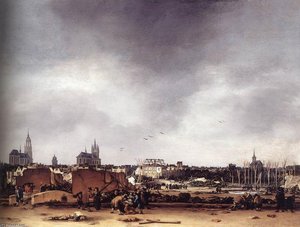
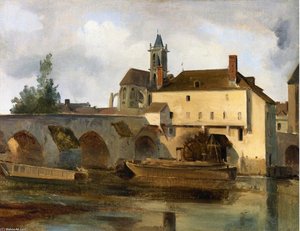
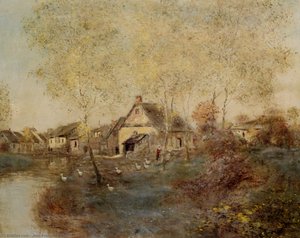
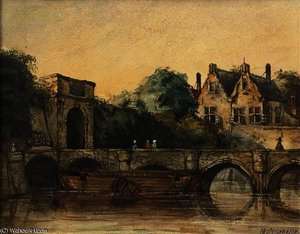
Биография художника
The Soul of the Hague School: The Life and Legacy of Petrus Gerardus Vertin
In the quiet, mist-laden landscapes of the nineteenth-century Netherlands, few artists captured the ephemeral beauty of the Dutch atmosphere as tenderly as Petrus Gerardus Vertin. Born in 1819 in The Hague, Vertin emerged from an era defined by a profound shift in artistic consciousness. As a central figure within the Hague School, he moved away from the stiff, idealized romanticism of previous generations, choosing instead to embrace a realism that sought the truth in the subtle interplay of light, shadow, and moisture. His formative years in The Hague, a city steeped in intellectual curiosity and artistic tradition, provided him with the foundational tools to observe the world not just as a collection of objects, but as a series of fleeting, emotional moments.
Vertin’s formal training at the Academy of Visual Arts in The Hague was instrumental in shaping his technical precision. It was here that he honed his ability to translate the complex textures of the Dutch landscape onto paper and canvas. His education instilled in him a deep respect for meticulous detail, yet he never allowed technical accuracy to overshadow the emotional resonance of his work. This balance became the hallmark of his style, allowing him to bridge the gap between rigorous observation and poetic expression.
A Master of Light and Water
The true magic of Vertin’s oeuvre lies in his mastery of the watercolor medium. While many of his contemporaries sought the permanence of oil, Vertin found a unique language in the translucency of watercolor, which allowed him to replicate the luminous, often melancholic, quality of Dutch light. He was particularly captivated by the landscapes of Delft and its surrounding waterways, finding endless inspiration in the way winter light could transform a canal into a mirror of silver and grey.
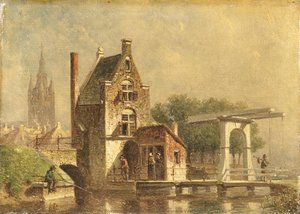
His technique was characterized by an extraordinary ability to render texture—the dampness of a stone wall, the soft ripple of a canal, or the biting chill of a frost-covered landscape. In his iconic work, “De Koepoort te Delft,” Vertin invites the viewer into a tranquil scene where historic architecture meets the gentle movement of a water mill. Through his brush, the architecture feels grounded and permanent, yet the atmosphere remains fluid and ever-changing. This duality—the solid history of the Netherlands paired with the fleeting nature of weather—creates a sense of nostalgic sentimentality that continues to captivate collectors today.
The Teacher of Masters
Beyond his personal achievements as a painter, Vertin’s historical significance is cemented by his profound impact on the next generation of Dutch masters. As a respected instructor at the Academy of Visual Arts, he did not merely teach technique; he nurtured an artistic philosophy rooted in authenticity and emotional depth. His classroom served as a crucible for some of the most celebrated names in late nineteenth-century art.
Through his mentorship, Vertin’s influence flowed into the works of:
- Johannes Bosboom, who would become a master of church interiors and light.
- Jan Hendrik Weissenbruch, a titan of the Hague School known for his atmospheric landscapes.
By guiding these luminaries, Vertin ensured that the principles of the Hague School—realism, emotional honesty, and an intimate connection to the Dutch landscape—would endure well into the twentieth century. His legacy is not found only in the museums that house his breathtaking watercolors, but in the very DNA of Dutch landscape painting itself.
petrus gerardus vertin
1819 - 1893 , Netherlands
Основные сведения
- Artistic Movement Or Style: Hague School
- Artists Who Influenced This Artist:
- Johannes Bosboom
- Jan Hendrik Weissenbruch
- Date Of Birth: 1819
- Full Name: Petrus Gerardus Vertin
- Nationality: Dutch
- Notable Artworks: ['De Koepoort te Delft']
- Place Of Birth: The Hague, Netherlands
Похожие статьи
Charles Leickert: Capturing the Dutch Golden Age Light – A Comprehensive Study of Technique, Context, and Legacy
Explore the captivating winter landscapes of Charles Leickert, a master of Dutch Golden Age light & atmosphere. Discover his techniques, symbolism, and lasting legacy – a comprehensive study for art enthusiasts and collectors.
Golden Light & Dutch Skies: Bringing the Magic of Dutch Golden Age Landscapes into Your Home
Transform your home with the breathtaking light of Dutch Golden Age landscapes. Discover how hand-painted oil reproductions of masterworks like Ruisdael and Vermeer bring timeless elegance, atmosphere, and soulful texture to modern interiors. Elevate your space with museum-quality art.

Романтический пейзаж: 10 шедевров, изменивших искусство | ArtsDot.com
Погрузитесь в мир романтического пейзажа! 10 шедевров Фридриха, Тёрнера и других гениев. Узнайте историю создания культовых картин и вдохновитесь для декора интерьера. Репродукции высокого качества на ArtsDot.com.
Jan van Goyen: Master of Dutch Landscape & Atmospheric Perspective
Discover Jan van Goyen, the master of Dutch landscape painting. Explore his subtle technique, atmospheric realism & lasting influence on art history. Learn about this 17th-century pioneer at ArtsDot.
Evoking Nature's Sublime: A Comprehensive Exploration of 19th-Century Landscape Painting
Explore the captivating world of 19th-century landscape painting! Discover renowned artists like Friedrich & Monet, key movements, and find the perfect artwork to bring nature's serenity into your home. Expert insights at ArtsDot.