


 Предпросмотр
 Поделиться
 Поделиться
 Детали произведения

 Скачать
 Похожие работы
 Рентгенография
 Слайд-шоу
 Статистика
Hercules
 Renaissance
 1499
1499 38.0 x 21.0 cm
 Фрик Коллекция
 Читать далее
Масляная репродукция ручной работы
Картина маслом на холсте в выбранном вами размере и раме, написанная на заказ нашими художниками. ( Перейти к печати Перейти к цифровым изображениям)




































Выберите один из наших стандартных размеров, соответствующих оригинальным пропорциям произведения искусства.

Вы можете указать собственные размеры, чтобы картина идеально вписалась в выбранную раму или пространство. Если выбранный вами размер не соответствует пропорциям оригинала, мы либо обрежем полотно, либо расширим его за счет дополнительных элементов, написанных вручную. Цифровой макет будет отправлен вам на утверждение перед началом производства.
Обратите внимание, что предварительный просмотр на экране не отражает фактическую обрезку или расширение. Только макет точно покажет окончательную композицию.
Хотя доступны индивидуальные размеры, мы рекомендуем выбирать вариант из предопределенного списка, чтобы сохранить исходные пропорции.
После оформления заказа команда ArtsDot.com свяжется с клиентом по электронной почте для уточнения деталей и предоставит предварительный макет
Доставка по всему миру () за 3–4 недели вместо стандартных 5 недель. (12 Сентябрь). Без компромиссов в качестве.

Бесплатная экспресс-доставка по всему миру

Высококачественный льняной холст

Полное страхование доставки

Гарантия возмещения таможенных пошлин

Гарантия точного соответствия цветов

100-дневная политика возврата (только при обнаружении дефектов)

Гарантия возврата 100% средств

Предложение оптовых скидок
 Вариант со стеклом доступен только для размеров менее 110 см

Hercules
Техника репродукции
Размер репродукции
-


Итоговая стоимость
$ 263
Похожие произведения

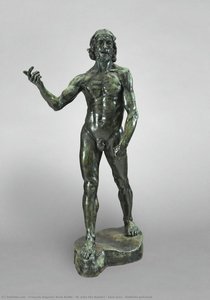
Биография художника
A Renaissance Sculptor’s Echoes: Pier Jacopo Alari Bonacolsi (l'Antico)
The name Pier Jacopo Alari Bonacolsi, more commonly known as l'Antico – “the Ancient One” – resonates with a profound sense of artistic reverence. Born around 1460 in Mantua, Italy, during the height of the Italian Renaissance, he wasn’t merely a sculptor; he was a conduit to the past, a meticulous interpreter of classical forms, and a key figure in shaping the Gonzaga court's obsession with antiquity. His life unfolded within a world of burgeoning artistic patronage, political intrigue, and an almost obsessive desire to recapture the glories of Rome and Greece – a pursuit that profoundly influenced his distinctive style and enduring legacy.
Bonacolsi’s early years remain shrouded in relative obscurity, typical for artists of noble lineage during this period. However, it's believed he received training as a goldsmith, an invaluable skill that undoubtedly informed his later work with bronze. This background provided him with the technical mastery necessary to replicate and reinterpret classical forms with astonishing precision. His rise to prominence began within the opulent court of Gianfrancesco Gonzaga at Gazzuolo, a strategically important estate where the young marquis sought to establish a refined artistic environment. This early association with the Gonzaga family would prove pivotal, setting the stage for his subsequent career as their principal sculptor and establishing a deep connection between art and political power.
- Early Patronage: Gianfrancesco Gonzaga and Isabella d'Este
- Location of Work: Gazzuolo and Mantua
- Skillset: Goldsmithing, Bronze Casting, Restoration
The Language of Antiquity: Style and Technique
What truly distinguishes l’Antico’s work is his remarkably faithful adherence to the *all'antica* style – “in the manner of the ancients.” This wasn’t simply imitation; it was a deliberate attempt to recreate the idealized beauty, proportion, and technical skill of Greek and Roman sculpture. His bronzes are characterized by an almost unnerving realism, achieved through painstaking detail and a mastery of surface treatment. The cool, silvery patination – often enhanced with touches of gold and silver inlay – evokes the patina of age and lends his sculptures an air of timelessness.
Unlike many contemporary sculptors who focused on dramatic narratives or expressive gestures, l’Antico specialized in portraiture and studies of classical figures. He meticulously copied existing Roman statues, but he also developed a unique ability to imbue these reproductions with psychological depth. His portraits aren't merely representations of physical likeness; they capture the essence of character, conveying intelligence, serenity, or even subtle emotion. This was achieved through carefully calibrated details – the angle of the eyes, the curve of the lips, the tension in the shoulders – all rendered with exquisite precision.
His technique involved a complex process of wax modeling followed by casting in bronze. Crucially, he preserved his original wax models, allowing him to create multiple replicas of his works—a revolutionary practice at the time that ensured the longevity and dissemination of his art. This dedication to preserving the original forms was a testament to his respect for the classical tradition and his desire to share it with a wider audience.
The Gonzaga Court: A Crucible of Artistic Innovation
L’Antico's career flourished within the vibrant court of Isabella d'Este, one of the most influential patrons of the arts in Renaissance Italy. She recognized his exceptional talent and commissioned numerous works from him, including portraits of her husband, Francesco II Gonzaga, and various studies of classical figures. The Gonzaga court itself became a center for artistic innovation, attracting leading artists, scholars, and intellectuals – a veritable melting pot of ideas and influences.
The Gonzaga’s vast collection of Roman antiquities—sculptures, coins, mosaics, and frescoes—provided l'Antico with invaluable inspiration. He studied these artifacts firsthand, meticulously analyzing their forms, proportions, and techniques. This direct engagement with the classical past fueled his own artistic development and allowed him to create sculptures that were both faithful reproductions and subtle reinterpretations of ancient models.
- Key Patron: Isabella d'Este
- Court Environment: A hub for artists, scholars, and intellectuals
- Influence: Direct study of Roman antiquities
Legacy and Significance
Pier Jacopo Alari Bonacolsi’s contribution to the Renaissance is profound. He wasn't just a skilled sculptor; he was a key figure in reviving interest in classical antiquity, shaping artistic tastes, and establishing new standards of technical excellence. His sculptures served as models for subsequent generations of artists, influencing the development of portraiture and sculpture throughout Europe.
His work continues to be admired today for its exquisite detail, psychological depth, and faithful representation of classical forms. The fact that several of his original bronze models survive—including the striking portraits of Emperor Antoninus Pius and the captivating *Spinario* (a depiction of a young man with a basket)—testifies to the enduring quality of his art. L’Antico's legacy lies not only in the beauty of his sculptures but also in his role as a bridge between the past and the present, reminding us of the timeless power of classical ideals.
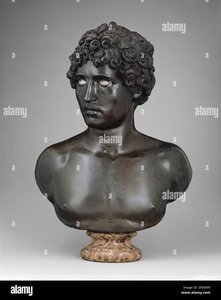
pier jacopo alari bonacolsi
1528 , Italy
Основные сведения
- Artistic Movement Or Style: Renaissance, all'antica
- Artists Or Movements Influenced By This Artist:
- Isabella d'Este
- Gonzaga Family
- Artists Who Influenced This Artist:
- Andrea Mantegna
- Roman Sculpture
- Date Of Birth: c. 1460
- Date Of Death: 1528
- Full Name: Pier Jacopo Alari Bonacolsi
- Nationality: Italian
- Notable Artworks:
- Antonin Pius Bust
- Medallions Gonzaga
- Hercules & Hydra
- Place Of Birth: Mantua, Italy
Похожие статьи
The Enduring Legacy of Bronze: History, Technique & Artistic Expression for the Collector
Explore the rich history & enduring appeal of bronze sculpture with expert insights for collectors at ArtsDot. Learn about casting techniques, iconic artists, and collecting tips.
The Enduring Legacy of Bronze Sculpture: A Collector's Guide to Form & Cultural Significance
Explore the rich history & enduring appeal of bronze sculpture with expert insights for collectors at ArtsDot. Learn about casting techniques, iconic artists, and collecting tips to build a discerning art collection.

The Enduring Legacy of Bronze: A Historical & Artistic Exploration for the Collector
Explore the rich history & enduring appeal of bronze sculpture with expert insights for collectors at ArtsDot. Learn about casting techniques, iconic artists, collecting tips & contemporary interpretations.

10 легендарных бронзовых скульптур, изменивших искусство навсегда | ArtsDot
Погрузитесь в мир великих бронзовых скульптур! От Давида Микеланджело до работ Родена – история искусства, техники и вдохновения. Купите репродукции шедевров для вашего интерьера на ArtsDot.com

10 легендарных бронзовых шедевров, изменивших искусство | ArtsDot
Погрузитесь в мир великих бронзовых шедевров! От Давида Донателло до Мыслителя Родена – узнайте историю создания, технику и значение легендарных скульптур. Вдохновение для интерьера и музейное качество репродукций на ArtsDot.com.