 Поделиться
 Поделиться
 Детали произведения

 Скачать
 Похожие работы
 Слайд-шоу
 Статистика
Jean-Antoine-Dominique Ingres (1780-1867)


 Читать далее
Жикле / Арт-принт
Печать (жикле) или холст музейного качества с быстрыми сроками изготовления и широким выбором вариантов отделки. ( Купить картину ручной работы Перейти к цифровым изображениям)
































Выберите один из наших стандартных размеров, соответствующих оригинальным пропорциям произведения искусства.

Вы можете указать свои собственные размеры, чтобы репродукция идеально подошла под конкретную раму или пространство. Если выбранный вами размер не будет соответствовать пропорциям оригинала, мы либо обрежем произведение, либо дополним изображение зеркальным отражением краев или однотонной заливкой. Перед началом производства вам будет отправлен цифровой макет для утверждения.
Пожалуйста, обратите внимание, что предварительный просмотр на экране не отображает фактическую обрезку или расширение изображения. Только макет точно покажет финальную композицию.
Несмотря на возможность заказа индивидуальных размеров, мы рекомендуем выбирать размер из предопределенного списка, чтобы сохранить оригинальные пропорции.
Доставка по всему миру () за 2 недели вместо стандартных 4/5 недель. (13 Сентябрь)

Бесплатная экспресс-доставка по всему миру

Высококачественный льняной холст

Полное страхование доставки

Гарантия возмещения таможенных пошлин

Гарантия точного соответствия цветов

100-дневная политика возврата (только при обнаружении дефектов)

Гарантия возврата 100% средств

Предложение оптовых скидок
 Вариант со стеклом доступен только для размеров менее 110 см

Jean-Antoine-Dominique Ingres (1780-1867)
Жикле / Арт-принт
Размер репродукции
-


Итоговая стоимость
$ 62
A Dialogue of Line and Legacy
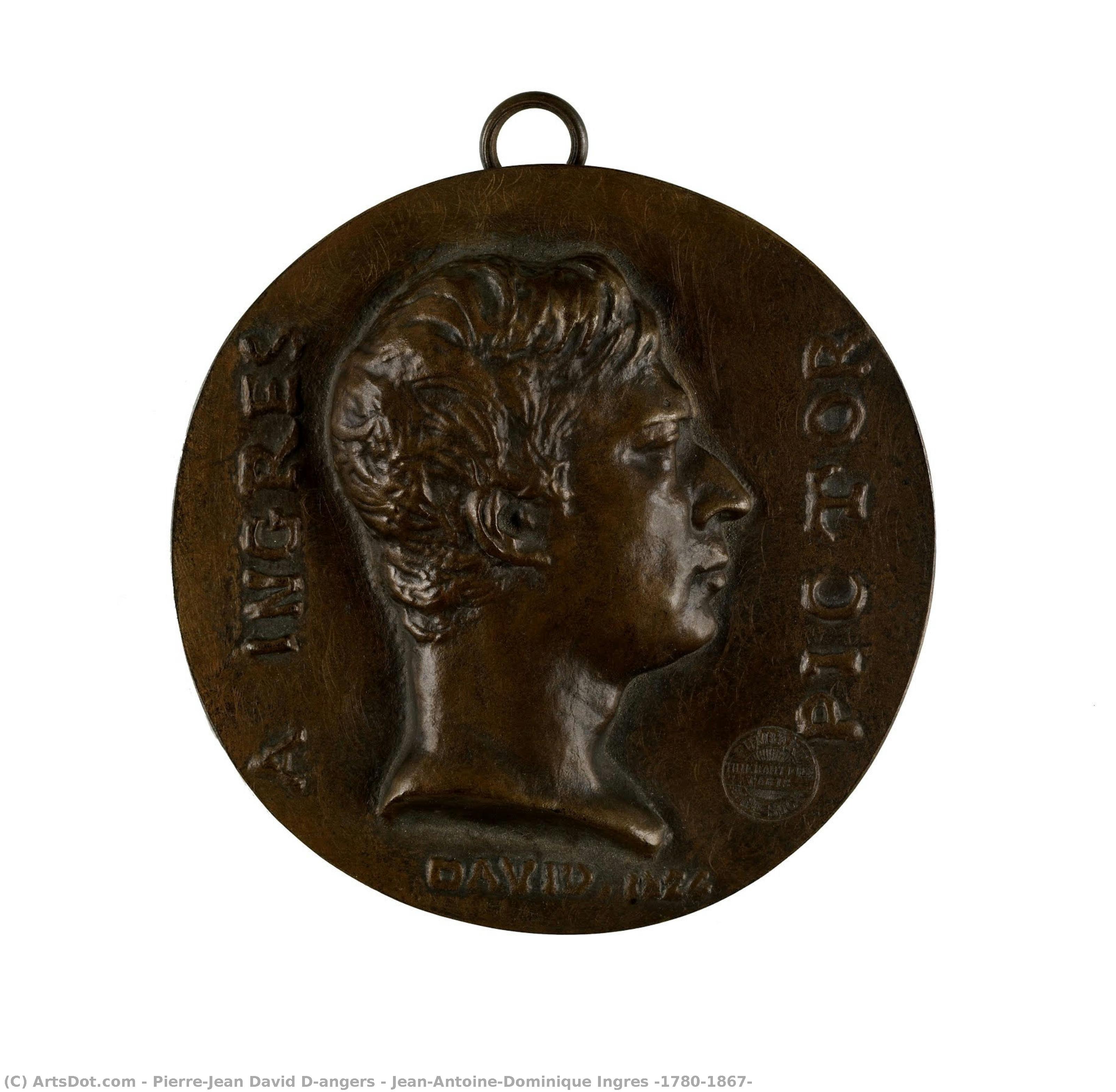
In the grand tapestry of nineteenth-century French art, few threads are as intricately woven as the relationship between Jean-Auguste-Dominique Ingres and his mentor, Pierre-Jean David d’Angers. This exquisite bronze medallion, completed in 1826, serves as more than a mere portrait; it is a profound visual dialogue between two masters of their era. Through this piece, we witness the intersection of rigorous Neoclassicism and the stirring whispers of Romanticism. The work captures Ingres not just as a man, but as an emblem of academic excellence, rendered with a precision that honors the lineage of Jacques-Louis David. To behold this reproduction is to step into a moment of artistic transition, where the clarity of form meets the burgeoning emotional depth of a new age.
The artistry of David d’Angers shines through in the meticulous execution of the subject's features. As a sculptor and medalist, d’Angers possessed an unparalleled ability to translate human character into the enduring medium of metal. In this portrait, the face of Ingres is presented with an almost photographic realism that commands attention. One cannot help but be captivated by the subtle anatomical nuances—the deliberate curve of the nose, the precise definition of the lips, and the thoughtful, structured arrangement of the hair. Every line serves a purpose, contributing to a sense of controlled elegance and dignity that defines the Neoclassical ideal.
The Soul of the Bronze
Beyond the technical mastery, there is an undeniable emotional resonance within this work. The portrait functions as a study in character, offering a glimpse into the intellectual intensity of one of history's most influential painters. There is a quiet strength in the profile, a stillness that suggests a mind deeply engaged with the classical traditions of Poussin and the pursuit of aesthetic perfection. For the collector or the interior designer, this piece offers a sophisticated focal point—a way to introduce a sense of historical gravity and intellectual refinement into a contemporary space. It is a work that invites contemplation, drawing the viewer into the silent, powerful presence of a master.
Integrating such a high-quality reproduction into a curated collection allows for a seamless blend of history and modern luxury. Whether placed in a sunlit study or a formal gallery setting, the metallic luster and classical composition provide an anchor of timelessness. It is not merely a decoration but a conversation starter, a piece that carries with it the weight of the French Academy and the enduring spirit of artistic excellence. Owning this depiction of Ingres is to possess a fragment of the very foundation upon which modern art was built, making it an essential acquisition for those who appreciate the profound beauty of the classical tradition.
Похожие произведения
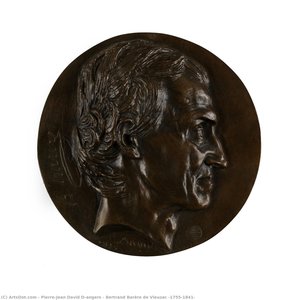
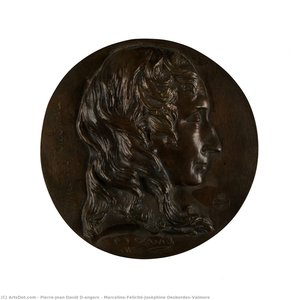
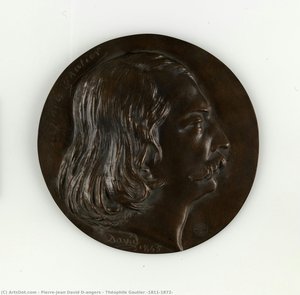
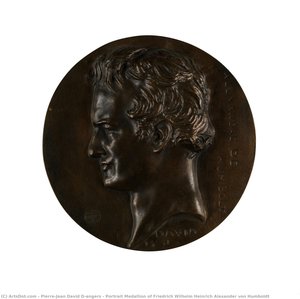
Биография художника
Pierre Jean David d'Angers - The Frick Collection
David d’Angers (1789–1856) stands as a pivotal figure in French sculpture of the Romantic era, embodying both classical refinement and fervent republican conviction. Born in Angers, France, his early life was marked by familial ties to craftsmanship—his father practiced wood carving—which instilled within him an appreciation for meticulous detail and artistic precision. This formative influence propelled him toward ambitious artistic pursuits, culminating in enrollment at the École des Beaux-Arts in Paris in 1808, where he honed his skills under Philippe-Laurent Roland, absorbing the precepts of neoclassical art while simultaneously encountering the burgeoning Romantic movement. A defining moment arrived in 1809 when David accepted Jacques-Louis David’s invitation to study alongside him—a connection that would prove profoundly influential. Embracing the name “David d’Angers,” he deliberately invoked his master's lineage, asserting a desire for artistic independence tempered by respect for tradition. This decision signaled an intention to forge his own distinctive voice while acknowledging the pervasive impact of David’s groundbreaking vision. Despite initial financial hardships—he arrived in Paris with meager funds—David persevered, securing recognition through works like “Othryades” (1810), demonstrating a nascent talent for dramatic composition and heroic portrayal.The Roman Years: Classical Influence and Political Awakening
His five years spent in Rome between 1811 and 1816 constituted a crucible of artistic maturation. Surrounded by the grandeur of antiquity—particularly the sculptures of Antonio Canova—David absorbed the ideals of Greek art: idealized form, heroic narrative, and restrained emotion. However, he didn’t merely replicate classical models; he infused them with his own sensibilities, initiating a subtle yet significant shift toward Romantic expression. This period wasn't solely focused on academic study; it was also marked by an increasing awareness of political realities—the Bourbon Restoration casting a shadow over France as he returned home. During this time, he briefly relocated to England, encountering the intellectual ferment of Victorian society and engaging in spirited debates about artistic purpose and social responsibility.Neoclassical Mastery: Portraits and Monumental Sculpture
David’s return to Paris solidified his reputation as one of France's foremost sculptors. He quickly established himself as a prolific artist, undertaking commissions for portraits—often imbued with psychological depth—and monumental sculptures that celebrated civic virtue and national pride. His early masterpiece, *Condé* (lost), showcased his burgeoning ability to convey dynamism and emotion through sculptural form, foreshadowing the stylistic innovations of the Romantic era. Subsequent projects included the statue of Marshall Jean Baptiste Kléber in Père Lachaise Cemetery—a testament to his technical prowess and artistic vision—and the monumental frieze adorning the Pantheon—a bold assertion of French intellectual heritage and a symbol of republican ideals.A Legacy Enduring Through Time
David’s influence extended far beyond his own lifetime, inspiring generations of artists and shaping the visual culture of France. His sculptures—characterized by their meticulous detail, expressive dynamism, and profound psychological insight—remain among the most iconic achievements of 19th-century art. The Musée David in Angers houses a comprehensive collection of his works, preserving his legacy for posterity. Pierre Jean David d’Angers' enduring contribution to sculpture lies not only in his technical skill but also in his unwavering commitment to artistic ideals—a conviction that he sought to embody the spirit of an era and honor the achievements of great men and women through monumental art. His sculptures continue to captivate audiences today, cementing his place as a cornerstone of French artistic history.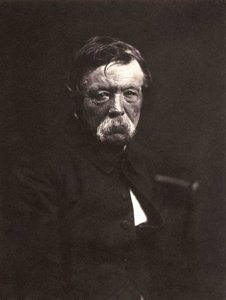
Пьер-Жан Дэвид Д’Анже
1788 - 1856 , Франция
Основные сведения
- Artistic Movement Or Style: Неоклассицизм
- Artists Or Movements Influenced By This Artist: ['Романтизм']
- Artists Who Influenced This Artist:
- Жак-Луи Давид
- Филипп-Лорен Дэвида
- Date Of Birth: 1789
- Date Of Death: 1856
- Full Name: Pierre Jean David d’Angers
- Nationality: Французский
- Notable Artworks:
- Враненный Филопомен
- Боль
- Эпаминад
- Place Of Birth: Angers, Франция
Похожие статьи

The Enduring Form: Sculpture Across History, Technique & Emotional Resonance
Explore the rich history of sculpture with ArtsDot. Discover key techniques, influential artists & investment potential for discerning collectors. Expert insights into valuing and collecting timeless masterpieces.

10 легендарных бронзовых скульптур, изменивших искусство навсегда | ArtsDot
Погрузитесь в мир великих бронзовых скульптур! От Давида Микеланджело до работ Родена – история искусства, техники и вдохновения. Купите репродукции шедевров для вашего интерьера на ArtsDot.com

The Enduring Form: Exploring Themes & Techniques in Sculpture Across Historical Periods
Explore the rich history of sculpture from ancient masterpieces to contemporary innovations. Discover key techniques, influential artists & investment potential for discerning art collectors.

10 легендарных бронзовых шедевров, изменивших искусство | ArtsDot
Погрузитесь в мир великих бронзовых шедевров! От Давида Донателло до Мыслителя Родена – узнайте историю создания, технику и значение легендарных скульптур. Вдохновение для интерьера и музейное качество репродукций на ArtsDot.com.
10 Шедевров Неоклассицизма: Искусство, Определившее Эпоху | ArtsDot
Погрузитесь в мир неоклассицизма! 10 шедевров от Давида, Кановы и других великих художников. Узнайте историю создания культовых картин и найдите идеальную репродукцию для вашего интерьера на ArtsDot.com