

 Предпросмотр
 Поделиться
 Поделиться
 Детали произведения

 Скачать
 Похожие работы
 Рентгенография
 Слайд-шоу
 Статистика
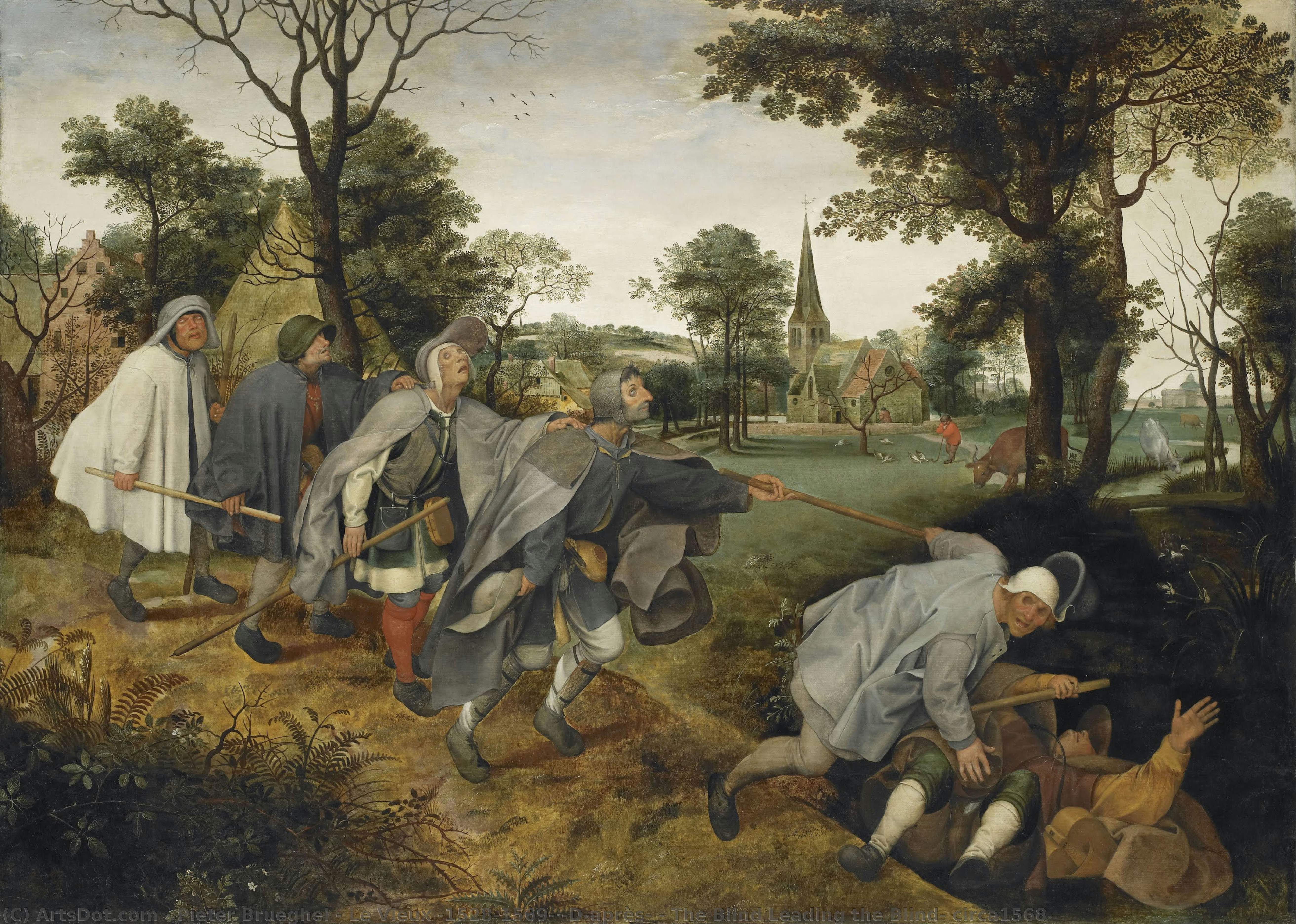
The Blind Leading the Blind, circa1568
 Acrylic On Canvas
- WallArt
- Northern Renaissance
 122.0 x 170.0 cm
 Гранд-Пале
 Читать далее
Масляная репродукция ручной работы
Картина маслом на холсте в выбранном вами размере и раме, написанная на заказ нашими художниками. ( Перейти к печати Перейти к цифровым изображениям)




P118B $10

P118H $10

P118W $10

P438Z $10

P508JH $12

P508YH $12

P805H $10

P805Z $10

P919BZ $10

P919G $10

P919XJ $10

P959ZH $10

P968JZ $12

W106C $8

W218G $10

W218JH $8

W218Y $10

W307PJ $10

W316G $10

W316PJ $8

W316Y $10

W398PJ $8

W4111J $10

W500HY $15

W500JH $15

W692G $12

W849H $8

W940BG $15

W953PJ $8
Выберите один из наших стандартных размеров, соответствующих оригинальным пропорциям произведения искусства.

Вы можете указать собственные размеры, чтобы картина идеально вписалась в выбранную раму или пространство. Если выбранный вами размер не соответствует пропорциям оригинала, мы либо обрежем полотно, либо расширим его за счет дополнительных элементов, написанных вручную. Цифровой макет будет отправлен вам на утверждение перед началом производства.
Обратите внимание, что предварительный просмотр на экране не отражает фактическую обрезку или расширение. Только макет точно покажет окончательную композицию.
Хотя доступны индивидуальные размеры, мы рекомендуем выбирать вариант из предопределенного списка, чтобы сохранить исходные пропорции.
После оформления заказа команда ArtsDot.com свяжется с клиентом по электронной почте для уточнения деталей и предоставит предварительный макет
Доставка по всему миру () за 3–4 недели вместо стандартных 5 недель. (13 Сентябрь). Без компромиссов в качестве.

Бесплатная экспресс-доставка по всему миру

Высококачественный льняной холст

Полное страхование доставки

Гарантия возмещения таможенных пошлин

Гарантия точного соответствия цветов

100-дневная политика возврата (только при обнаружении дефектов)

Гарантия возврата 100% средств

Предложение оптовых скидок
 Вариант со стеклом доступен только для размеров менее 110 см

The Blind Leading the Blind, circa1568
Техника репродукции
Размер репродукции
-


Итоговая стоимость
$ 263
The Blind Leading the Blind – A Chronicle of Human Fallibility
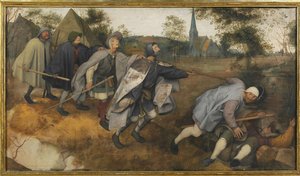
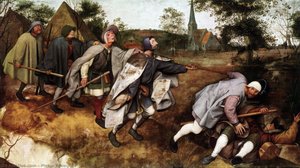
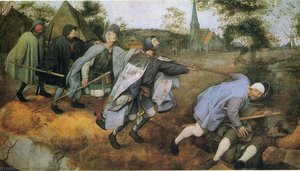
Pieter Bruegel the Elder’s “The Blind Leading the Blind,” completed around 1568, isn't merely a painting; it’s a profound meditation on human folly, societal delusion, and the perilous nature of following blindly. Born in Breda during a turbulent period of religious upheaval in the Netherlands – a time marked by Spanish rule and simmering unrest – Bruegel possessed an unparalleled ability to distill the complexities of everyday life onto canvas. This particular work, housed within the prestigious Museo di Capodimonte in Naples, offers a starkly realistic yet subtly satirical depiction of a biblical parable, transforming a simple story into a timeless commentary on human behavior. The scene unfolds within a small village setting, dominated by a winding path that leads a procession of six figures – all blind men – away from the viewer. Their faces are etched with varying degrees of disfigurement and distress, each bearing unique signs of impaired vision, hinting at different forms of blindness beyond mere physical impairment. They hold onto one another for support, their movements suggesting a desperate, yet ultimately futile, attempt to navigate their way forward. The composition is masterfully constructed; the diagonal lines created by the path and the figures’ bodies draw the eye relentlessly into the heart of the scene, amplifying the sense of disorientation and impending doom. The muted color palette – dominated by earthy browns, grays, and ochres – reinforces the painting's somber mood, mirroring the bleakness of the situation depicted.A Masterclass in Flemish Realism
Bruegel’s technical prowess is immediately evident in “The Blind Leading the Blind.” Executed in distemper on linen canvas—a technique favored for its luminous quality and ability to capture subtle tonal variations—the painting showcases his meticulous attention to detail. He doesn't shy away from depicting the imperfections of human form, rendering the blind men’s faces with a raw honesty that underscores their vulnerability. The artist’s use of *chiaroscuro* – the dramatic interplay of light and shadow – adds depth and volume to the scene, emphasizing the figures’ physical presence and creating a palpable sense of atmosphere. Notice how Bruegel skillfully employs texture to convey the roughness of the path beneath their feet, the worn fabric of their clothing, and the weathered surfaces of the buildings in the background. The landscape itself is rendered with remarkable precision, capturing the rolling hills and distant trees characteristic of the Flemish countryside. This commitment to realism wasn’t simply a matter of technical skill; it was integral to Bruegel's artistic vision—he sought to depict the world as he saw it, without embellishment or idealization.Symbolism and the Weight of Faith
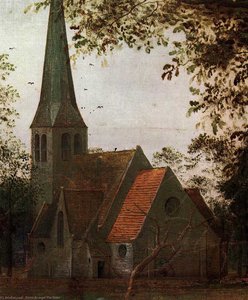
The painting’s narrative is rooted in the biblical parable of Matthew 15:14, which describes Jesus warning against leading others astray through ignorance. However, Bruegel transcends a simple illustration of this story, imbuing it with layers of symbolic meaning. The blind men represent not only those who are physically unable to see but also individuals who are willfully blind to truth and reason – those who follow blindly without questioning or critical thought. The fact that they are all holding onto each other suggests a shared vulnerability and dependence, highlighting the dangers of collective delusion. The village itself can be interpreted as a microcosm of society—a place where appearances often deceive and where individuals are easily misled. Even the presence of St. Anna’s Church in the background subtly underscores the painting's themes of faith and guidance, suggesting that true vision comes not from outward appearance but from inner understanding. The inclusion of a cowherd in the distance adds another layer of complexity, hinting at the mundane realities of rural life and the potential for both wisdom and folly within everyday experiences.A Legacy of Observation and Social Commentary
Pieter Brueghel the Elder’s legacy extends far beyond this single masterpiece. He was a pivotal figure in the development of Northern Renaissance art, pioneering a style characterized by its unflinching realism, social commentary, and profound psychological insight. His paintings offer a rare glimpse into the lives of ordinary people—peasants, laborers, and merchants—revealing their hopes, fears, and struggles with remarkable honesty. Following his father’s death in 1569, Brueghel continued to work alongside his brother Jan Brueghel the Younger, establishing a prolific workshop that produced hundreds of paintings inspired by his father's style. The younger Brueghel’s output significantly expanded the reach and influence of his family’s artistic legacy, ensuring that Pieter Bruegel’s profound observations about human nature would continue to resonate with audiences for centuries to come. “The Blind Leading the Blind” stands as a testament to this enduring power—a haunting reminder of the importance of critical thinking, independent judgment, and the potential pitfalls of blindly following the crowd.Похожие произведения
Похожие статьи
Jan Brueghel the Elder: A Master of Flemish Landscape & Allegory – Exploring Innovation & Influence
Explore the captivating world of Jan Brueghel the Elder, a Flemish Baroque master renowned for his stunning landscapes & allegorical paintings. Discover his collaborations with Rubens and lasting artistic legacy.
Pieter Bruegel the Elder: A Master of Genre, Landscape & Social Commentary
Explore the life & art of Pieter Bruegel the Elder, a pivotal figure of the Renaissance. Discover his groundbreaking genre scenes, symbolic landscapes, and lasting influence on art history. Learn more at ArtsDot.
Топ-10 шедевров Северного Возрождения: искусство для вашего дома от ArtsDot.com
Погрузитесь в мир Северного Возрождения! Откройте 10 шедевров Ван Эйка, Дюрера и других великих художников. Узнайте историю создания культовых картин и вдохновитесь для декора вашего дома с ArtsDot.com. Explore the full collection online!
David Teniers II: Master of Flemish Genre & Social Commentary
Explore the captivating world of David Teniers II, a leading Flemish Baroque painter renowned for his lively genre scenes & insightful social commentary. Discover his masterpieces and legacy with ArtsDot.
25 Шедевров Kunsthistorisches Museum: Искусство для Вашего Дома | ArtsDot
Погрузитесь в мир искусства с 25 шедеврами Kunsthistorisches Museum, Vienna! Узнайте истории Рафаэля, Рембрандта и Вермеера. Купите репродукции картин для вашего дома на ArtsDot.com – музейное качество и вдохновение для интерьера.