 Предпросмотр
 Поделиться
 Поделиться
 Детали произведения

 Скачать
 Похожие работы
 Рентгенография
 Слайд-шоу
 Статистика
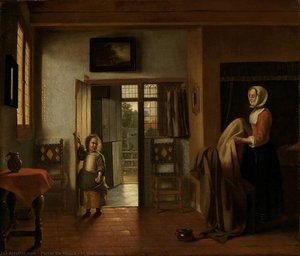
A Mother Delousing her Child
 Acrylic On Canvas
- WallArt
 1660
1660- Early Modern
 61.0 x 52.0 cm
 Рейксмюзеум
 Читать далее
Жикле / Арт-принт
Печать (жикле) или холст музейного качества с быстрыми сроками изготовления и широким выбором вариантов отделки. ( Купить картину ручной работы Перейти к цифровым изображениям)




P118B $10

P118H $10

P118W $10

P438Z $10

P508JH $12

P508YH $12

P805H $10

P805Z $10

P919BZ $10

P919G $10

P919XJ $10

P959ZH $10

P968JZ $12

W106C $8

W218G $10

W218JH $8

W218Y $10

W307PJ $10

W316G $10

W316PJ $8

W316Y $10

W398PJ $8

W4111J $10

W500HY $15

W500JH $15

W692G $12

W849H $8

W940BG $15

W953PJ $8




Выберите один из наших стандартных размеров, соответствующих оригинальным пропорциям произведения искусства.

Вы можете указать свои собственные размеры, чтобы репродукция идеально подошла под конкретную раму или пространство. Если выбранный вами размер не будет соответствовать пропорциям оригинала, мы либо обрежем произведение, либо дополним изображение зеркальным отражением краев или однотонной заливкой. Перед началом производства вам будет отправлен цифровой макет для утверждения.
Пожалуйста, обратите внимание, что предварительный просмотр на экране не отображает фактическую обрезку или расширение изображения. Только макет точно покажет финальную композицию.
Несмотря на возможность заказа индивидуальных размеров, мы рекомендуем выбирать размер из предопределенного списка, чтобы сохранить оригинальные пропорции.
Доставка по всему миру () за 2 недели вместо стандартных 4/5 недель. (11 Сентябрь)

Бесплатная экспресс-доставка по всему миру

Высококачественный льняной холст

Полное страхование доставки

Гарантия возмещения таможенных пошлин

Гарантия точного соответствия цветов

100-дневная политика возврата (только при обнаружении дефектов)

Гарантия возврата 100% средств

Предложение оптовых скидок
 Вариант со стеклом доступен только для размеров менее 110 см

A Mother Delousing her Child
Жикле / Арт-принт
Размер репродукции
-


Итоговая стоимость
$ 62
A Moment of Domesticity: Pieter de Hooch’s “A Mother Delousing Her Child”
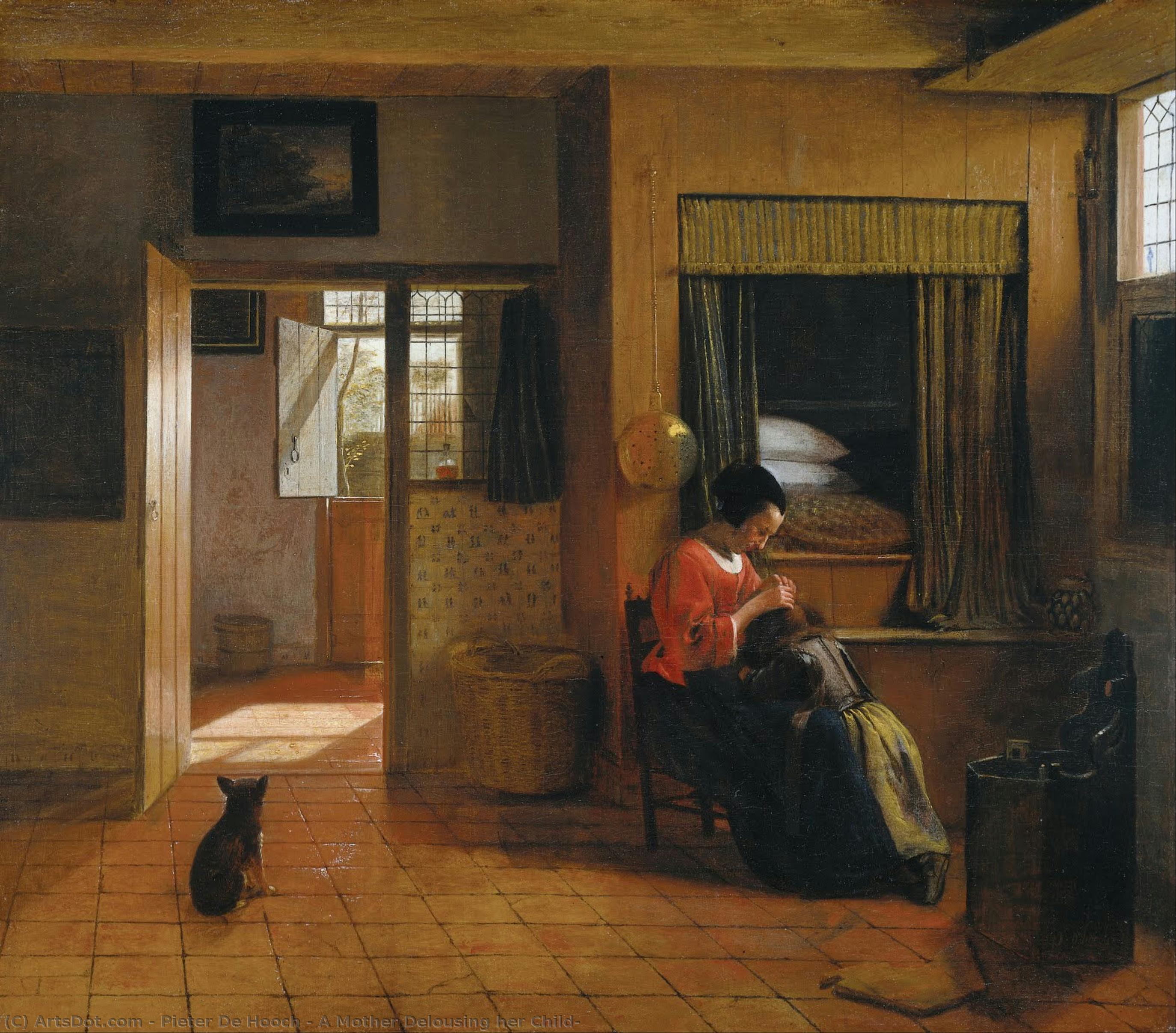
Pieter de Hooch's "A Mother Delousing Her Child," painted circa 1660, is more than just a depiction of a mundane household task; it’s a poignant window into the burgeoning middle-class life of 17th-century Holland. This intimate scene, now housed within the Rijksmuseum in Amsterdam, captures a fleeting moment of vulnerability and care amidst the bustling world of the Dutch Golden Age. The painting, measuring just 61 x 52 cm, belies its small scale with an astonishingly detailed portrayal of everyday life – a testament to de Hooch’s mastery of light, shadow, and the subtle nuances of human emotion. It's a work that speaks volumes about family, hygiene, and the quiet dignity of domesticity.The Scene Unfolds: Composition and Setting
The composition is remarkably restrained, drawing the viewer’s eye immediately to the central figures – a mother diligently examining her child’s head for lice. The setting is a modestly furnished interior, likely a bedroom or sitting room, rendered with meticulous attention to detail. Delft blue tiles adorn the floor, hinting at the wealth and status of the household, while a simple bed stands in the background, partially obscured by a curtain. A dining table holds a bowl, suggesting a recent meal, and a ‘kakstoel’ – a small potty chair – adds an element of realism to the scene, grounding it firmly within the realities of daily life. The inclusion of a cat, calmly observing from beneath the woman's feet, introduces a touch of domestic tranquility and perhaps even a subtle commentary on observation and vigilance. The doorway glimpsed in the background offers a tantalizing suggestion of another room, expanding the spatial awareness of the scene without disrupting its intimate focus.Technique and Style: De Hooch’s Signature Approach
De Hooch was a master of *doorway paintings*, a technique he perfected during his time in Haarlem under Nicolaes Berchem. This style is characterized by an ambiguous space, often featuring a partially visible doorway or window that invites the viewer to imagine what lies beyond. In “A Mother Delousing Her Child,” this technique serves not only as a compositional device but also as a metaphor for the hidden complexities of domestic life. De Hooch’s brushwork is remarkably delicate and precise, creating an illusion of depth through subtle variations in light and shadow. He employed a muted palette – predominantly browns, creams, and blues – to evoke a sense of quietness and understated elegance. The lighting, diffused and naturalistic, further enhances the painting's realism, casting soft shadows that accentuate the figures’ forms and textures. Notably, de Hooch was known for his ability to capture the fleeting expressions on his subjects’ faces, imbuing each scene with a sense of lived experience.Symbolism and Context: A Reflection of Dutch Society
The act of delousing itself carries significant symbolic weight within the context of 17th-century Holland. Lice were a persistent and widespread problem, particularly in densely populated urban areas, and meticulous hygiene was considered essential for maintaining health and social standing. The mother’s focused attention on her child underscores the importance placed on family care and the responsibility of parents to protect their offspring. Furthermore, the scene reflects the growing emphasis on domesticity within the emerging middle class – a shift away from the more overtly public life of merchants and artisans towards a greater focus on home and family. The painting’s realism—the inclusion of everyday objects like the ‘kakstoel’—demonstrates de Hooch's commitment to portraying the lives of ordinary people, capturing a slice of Dutch society that was increasingly valued for its quiet dignity and understated beauty.Emotional Resonance: A Quiet Moment of Connection
Despite its seemingly simple subject matter, “A Mother Delousing Her Child” possesses a remarkable emotional resonance. The mother’s expression is one of focused determination mingled with tenderness, conveying both the burden of responsibility and the deep affection she feels for her child. The scene evokes a sense of intimacy and vulnerability, reminding us of the fundamental human need for connection and care. It's a painting that invites contemplation on themes of family, health, and the quiet moments of everyday life—moments often overlooked but profoundly meaningful. ArtsDot’s hand-painted reproductions offer an unparalleled opportunity to experience the beauty and subtlety of this iconic work by Pieter de Hooch, bringing its timeless charm into your home or studio.Похожие произведения

Биография художника
ранние годы и обучение
Питер де Хёх, выдающаяся фигура голландского Золотого века, родился 20 декабря 1629 года в Роттердаме, Нидерланды. Он был старшим из пяти детей в семье Хендрика Хендриксза де Хёха, каменщика, и Аннегке Питерс, повитухи. О его ранних годах известно немного, однако считается, что он работал в Роттердаме, Делфте и Амстердаме. Художественное становление де Хёха проходило в Харлеме под руководством мастера пейзажа Николаса Берхема вместе с Якобом Охтервельтом. Этот период заложил фундамент его будущего успеха как мастера безмолвных домашних сцен, наполненных светом, проникающим сквозь открытые дверные проемы.художественный стиль и темы
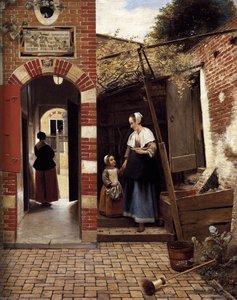
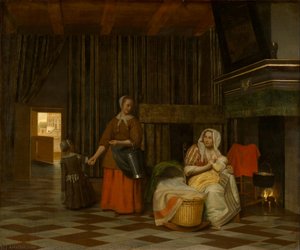
Творчество де Хёха отличается поразительным вниманием к деталям, натурализмом и виртуозным использованием света. Его полотна часто воспевают повседневную жизнь, отражая ценности и устремления зарождающегося среднего класса. Ярким примером этого стиля служит картина «Дворик дома в Делфте» (1658), демонстрирующая его способность уловить самые простые мгновения бытия. Хотя работы де Хёха перекликаются по темам и композиции с полотнами Эммануэля де Витте, именно его сосредоточенность на людях и их внутренних связях выделяет его среди современников. Это отчетливо проявляется в таких работах, как «Кормящая женщина» (1658) и «Женщина с младенцем на руках» (1658), которые раскрывают его глубокий интерес к интимным домашним сценам.значимые работы и наследие
К числу наиболее значимых шедевров де Хёха относятся:- «Веселый пьяница» (ок. 1650)
- «Картисты в залитой солнцем комнате» (1658)
- «Женщина, готовящая хлеб с маслом для мальчика» (1661)
музеи и коллекции
Произведения де Хёха можно встретить в различных музеях мира, включая Королевский музей изящных искусств в Антверпене (Бельгия), который обладает богатейшей коллекцией европейского искусства с XV по XX века. Узнайте больше о Питере де Хёхе и его работах на ArtsDot: [https://ArtsDot.com/@/pieter-de-hooch](https://ArtsDot.com/@/pieter-de-hooch) /ru/art/show/art-d3b4kt-ru/ (откройте для себя шедевры Королевского музея изящных искусств, Бельгия)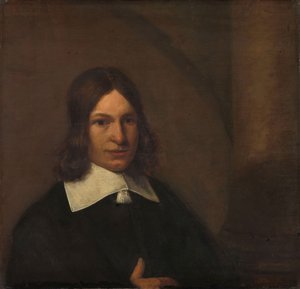
Питер де Хёх
1629 - 1694 , Нидерланды
Основные сведения
- Artistic Movement Or Style: Голландская золотая эра
- Artists Or Movements Influenced By This Artist:
- Геррит Доу
- Йоханнес Вермер
- Artists Who Influenced This Artist:
- Николаас Берхем
- Якоб Охтервельт
- Date Of Birth: 20 декабря 1629 г.
- Date Of Death: после 1683 г.
- Full Name: Pieter Hendricksz. de Hooch
- Nationality: Нидерландцы
- Notable Artworks:
- Тюрковая кладовая
- Служанка и молодой мальчик во внутреннем дворе
- Place Of Birth: Роттердам, Нидерланды
Похожие статьи

Golden Age Reflections: Dutch Baroque Painting & Cultural Innovation
Explore the Dutch Golden Age of painting! Discover key artists like Vermeer & ter Borch, their innovative techniques, and the rich cultural context behind these Baroque masterpieces. Learn about collecting & appreciating this iconic art period.
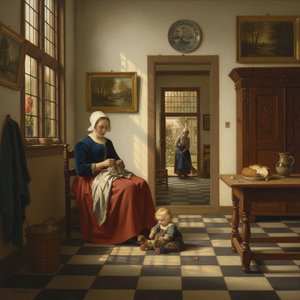
Pieter de Hooch: Illuminating Dutch Domestic Life & Golden Age Charm
Explore the captivating world of Pieter de Hooch, a master of Dutch Golden Age painting. Discover his innovative use of light, intimate domestic scenes, and lasting influence on art history. Learn more at ArtsDot.

Willem van de Velde the Elder: Master of Maritime Painting & Chronicler of the Dutch Golden Age
Discover the captivating maritime paintings of Willem van de Velde the Elder, a master chronicler of the Dutch Golden Age. Explore his unparalleled realism and lasting influence on naval art history.

Illuminating Innovation: Exploring the Dutch Golden Age of Painting
Explore the Dutch Golden Age of painting with ArtsDot. Discover Rembrandt, Vermeer & other Masters. Learn about key characteristics, iconic artworks, and lasting influence. Expert insights for collectors & enthusiasts.

Золотой век Голландии: 10 шедевров, изменивших искусство | ArtsDot.com
Погрузитесь в эпоху Золотого века Нидерландов! 10 шедевров Рембрандта, Вермеера и других мастеров. Узнайте истории создания культовых картин и вдохновитесь для интерьера. Репродукции музейного качества на ArtsDot.com.