

 Предпросмотр
 Поделиться
 Поделиться
 Детали произведения

 Скачать
 Похожие работы
 Рентгенография
 Слайд-шоу
 Статистика
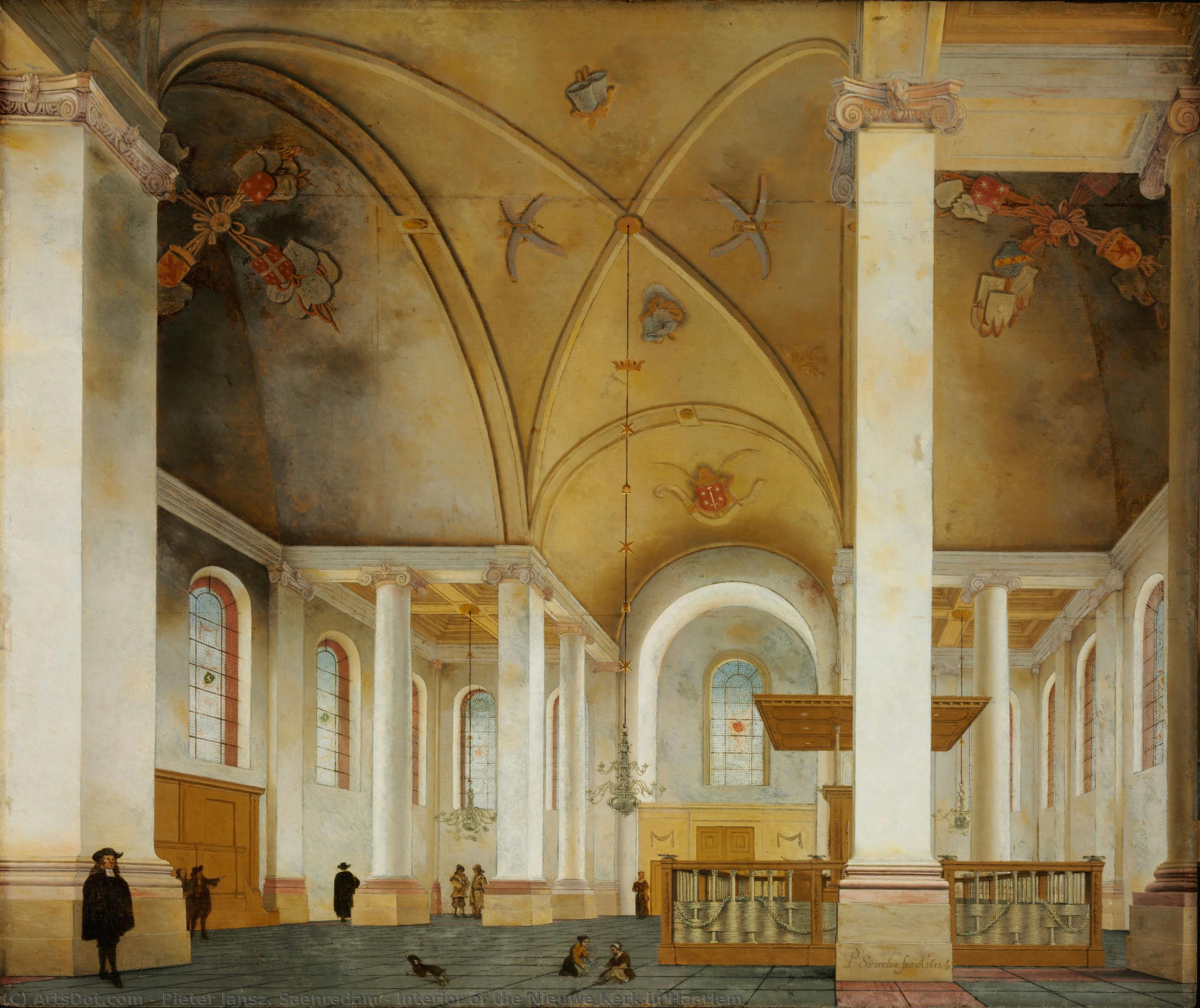
Interior of the Nieuwe Kerk in Haarlem
 Acrylic On Canvas
- WallArt
- Baroque
 1653
1653 86.0 x 103.0 cm
 Музей искусств Будапешта
 Читать далее
Масляная репродукция ручной работы
Картина маслом на холсте в выбранном вами размере и раме, написанная на заказ нашими художниками. ( Перейти к печати Перейти к цифровым изображениям)




P118B $10

P118H $10

P118W $10

P438Z $10

P508JH $12

P508YH $12

P805H $10

P805Z $10

P919BZ $10

P919G $10

P919XJ $10

P959ZH $10

P968JZ $12

W106C $8

W218G $10

W218JH $8

W218Y $10

W307PJ $10

W316G $10

W316PJ $8

W316Y $10

W398PJ $8

W4111J $10

W500HY $15

W500JH $15

W692G $12

W849H $8

W940BG $15

W953PJ $8




Выберите один из наших стандартных размеров, соответствующих оригинальным пропорциям произведения искусства.

Вы можете указать собственные размеры, чтобы картина идеально вписалась в выбранную раму или пространство. Если выбранный вами размер не соответствует пропорциям оригинала, мы либо обрежем полотно, либо расширим его за счет дополнительных элементов, написанных вручную. Цифровой макет будет отправлен вам на утверждение перед началом производства.
Обратите внимание, что предварительный просмотр на экране не отражает фактическую обрезку или расширение. Только макет точно покажет окончательную композицию.
Хотя доступны индивидуальные размеры, мы рекомендуем выбирать вариант из предопределенного списка, чтобы сохранить исходные пропорции.
После оформления заказа команда ArtsDot.com свяжется с клиентом по электронной почте для уточнения деталей и предоставит предварительный макет
Доставка по всему миру () за 3–4 недели вместо стандартных 5 недель. (13 Сентябрь). Без компромиссов в качестве.

Бесплатная экспресс-доставка по всему миру

Высококачественный льняной холст

Полное страхование доставки

Гарантия возмещения таможенных пошлин

Гарантия точного соответствия цветов

100-дневная политика возврата (только при обнаружении дефектов)

Гарантия возврата 100% средств

Предложение оптовых скидок
 Вариант со стеклом доступен только для размеров менее 110 см

Interior of the Nieuwe Kerk in Haarlem
Техника репродукции
Размер репродукции
-


Итоговая стоимость
$ 313
A Singular Vision of Sacred Space: Pieter Jansz. Saenredam’s Interior of the Nieuwe Kerk
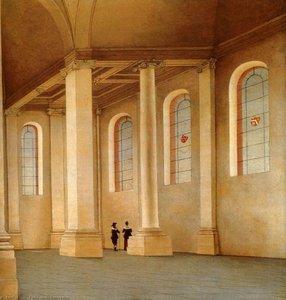
The Dutch Golden Age witnessed an explosion of artistic creativity, yet amidst the opulent portraits and dramatic landscapes flourished a remarkable figure – Pieter Jansz. Saenredam – whose unwavering focus on architectural interiors distinguished him from his peers. Born in Assendelft in 1597, Saenredam embarked on a lifelong mission to capture the essence of Dutch Protestant churches, transforming them into canvases of serene contemplation and spiritual reverence. This dedication wasn’t merely stylistic; it reflected a profound philosophical stance – an insistence on observing and representing the world with meticulous detail, mirroring the burgeoning scientific spirit of the era.- Historical Context: Saenredam's work emerged during a period of religious reformation in Holland, where Protestant churches held significant sway. The artist’s commitment to portraying these spaces stemmed from a deep conviction that architecture could convey spiritual truths – a belief rooted in the Calvinist theology prevalent at the time.
- Style and Technique: Unlike many artists preoccupied with narrative storytelling, Saenredam prioritized accuracy and stillness. His watercolors employed a technique characterized by layering delicate washes to build up tonal gradations, achieving remarkable luminosity and capturing the subtle nuances of light within the church interiors. Precise linear perspective guided the viewer’s eye through the nave, emphasizing the grandeur of the vaulted ceilings and monumental columns.
- Symbolism: The church interior served as a powerful symbol of faith and divine presence. Saenredam's depiction wasn’t merely decorative; it aimed to inspire contemplation and reverence for God. The geometric precision of the architectural elements – arches, columns, and vaults – mirrored theological concepts of order and harmony.
- Emotional Impact: Viewing Saenredam’s Interior of the Nieuwe Kerk evokes a feeling of tranquility and solemn beauty. The artist's masterful use of watercolor captures not only the physical appearance of the church but also its spiritual essence—a testament to his ability to translate visual observation into profound artistic expression.
Похожие произведения
Биография художника
A Life Illuminated: The Architectural Visions of Pieter Jansz. Saenredam
Pieter Jansz. Saenredam, born in the quiet Dutch village of Assendelft in 1597, dedicated his artistic life to a singular and profoundly moving pursuit: capturing the serene grandeur of Dutch churches. He wasn’t interested in bustling genre scenes or dramatic historical narratives; instead, he found beauty and spiritual resonance within the cool, spacious interiors of Protestant houses of worship. This dedication set him apart from many of his contemporaries during the Dutch Golden Age, establishing him as a unique voice focused on architectural precision and an almost meditative stillness. His early artistic journey began around 1612 with an apprenticeship to Frans Pietersz de Grebber, a prominent Haarlem portraitist. This foundational training instilled in Saenredam essential skills in draftsmanship and technique, providing the building blocks for his later mastery. However, it was his friendship with Jacob van Campen, a painter and architect of considerable renown, that truly shaped his artistic direction, fostering a deep understanding of perspective and architectural principles that would become hallmarks of his style.The Architect’s Eye: Style and Development
Saenredam specialized in painting the interiors of Dutch churches, particularly those belonging to the Protestant Reformed Church—a reflection of the religious landscape of his time. His work is immediately recognizable for its remarkable precision, meticulous detail, and masterful application of perspective. He wasn’t striving for dramatic effect or emotional intensity; rather, he aimed for an almost scientific accuracy in his depictions. Unlike many artists who populated their scenes with figures to add narrative or life, Saenredam often omitted them entirely, choosing instead to emphasize the architectural space itself as the primary subject. This deliberate choice draws the viewer’s eye to the soaring arches, the play of light and shadow on whitewashed walls, and the subtle nuances of the building's structure. His palette was deliberately restrained, primarily employing whites, grays, and subtle tonal variations to convey depth and luminosity within the church interiors. He understood that less could be more, allowing the architecture to speak for itself with quiet dignity. This approach wasn’t simply about technical skill; it reflected a particular sensibility—a reverence for the space as a testament to faith and human ingenuity. He meticulously studied architectural treatises and experimented with innovative techniques to achieve unparalleled realism.Landmarks in Paint: Major Works and Achievements
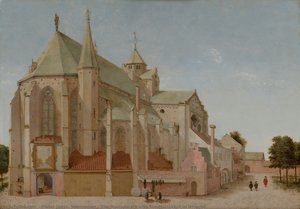
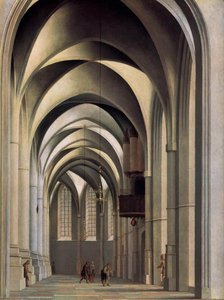
Several works stand out as testaments to Saenredam's exceptional talent. Interior of St Bavo’s Church in Haarlem, for example, is a masterpiece showcasing his ability to capture the vastness and intricate detail of a large church interior. The sheer scale of the space is breathtaking, rendered with an astonishing level of accuracy—a testament to Saenredam's mastery of perspective and tonal gradation. Similarly, Interior of Sint-Odulphuskerk in Assendelft demonstrates his dedication to faithfully representing architectural features, revealing a deep respect for the building’s history and design. The careful rendering of stonework textures and the subtle interplay of light contribute to its enduring appeal. The Nave and Choir of the Mariakerk in Utrecht (1641) exemplifies his skill in rendering complex spatial relationships, creating a convincing illusion of depth and volume—a feat accomplished with remarkable precision. And The West Façade of the Church of Saint Mary in Utrecht (1662) is a stunning architectural panel that showcases the clarity and elegance characteristic of Dutch Golden Age painting. These works weren’t merely representations; they were acts of preservation, capturing buildings as they existed at a specific moment in time—a valuable historical record for future generations.Influences and Historical Significance
Saenredam's artistic vision was profoundly influenced by the architectural theories and designs of his friend, Jacob van Campen. Van Campen’s emphasis on classical principles and harmonious proportions informed Saenredam’s understanding of spatial composition and contributed to the sense of order and balance in his paintings. He absorbed knowledge from humanist scholars and embraced innovative methods for achieving visual realism—a departure from prevailing artistic conventions. His work reflects a broader cultural shift toward rational observation and intellectual inquiry, aligning with the spirit of the Dutch Renaissance. Furthermore, Saenredam’s paintings serve as invaluable historical documents, preserving images of churches that have undergone alterations or even been destroyed over time—a poignant reminder of the passage of time and the importance of artistic documentation. He stands as a pioneer in architectural painting, establishing himself as one of the foremost artists of his era.A Lasting Impression: Final Years and Enduring Influence
Pieter Jansz. Saenredam continued painting throughout his life, refining his technique and producing a substantial body of work that continues to captivate viewers today. He died in Haarlem in 1665, leaving behind a legacy as one of the most important architectural painters of the Dutch Golden Age. His paintings are not merely depictions of buildings; they are meditations on light, space, and the enduring power of architecture to inspire awe and reverence—a testament to Saenredam’s artistic genius and his unwavering commitment to capturing the beauty of the sacred spaces he revered. His meticulous attention to detail and masterful use of perspective continue to influence artists today, ensuring that Pieter Jansz. Saenredam's vision remains a beacon of artistic excellence for generations to come.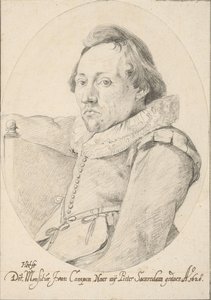
Питер Янсз. Саенредам
1597 - 1665 , Нидерланды
Основные сведения
- Artistic Movement Or Style: Голландская живопись Золотого века
- Artists Or Movements Influenced By This Artist: ['Голландский реализм']
- Artists Who Influenced This Artist: ['Якоб ван Кампен']
- Date Of Birth: 1597
- Date Of Death: 1665
- Full Name: Pieter Jansz. Saenredam
- Nationality: Нидерландцы
- Notable Artworks:
- Интерьер церкви Святого Баво в Хаарлеме
- Синт-Одульфускерк в Ассенделфте
- Нив и хор церкви Святой Марии в Утрехте (1641)
- Западный фасад церкви Святой Марии в Утрехте (1662)
- Place Of Birth: Ассенделфт, Нидерланды
Похожие статьи
Illuminating Realism: Exploring the Dutch Golden Age of Painting (1600-1700)
Explore the Dutch Golden Age of painting (1600-1700) with ArtsDot. Discover Rembrandt, Vermeer & other masters. Learn about techniques, history & find museum-quality reproductions.

Illuminating Innovation: Exploring the Dutch Golden Age of Painting
Explore the Dutch Golden Age of painting with ArtsDot. Discover Rembrandt, Vermeer & other Masters. Learn about key characteristics, iconic artworks, and lasting influence. Expert insights for collectors & enthusiasts.

Золотой век Голландии: 10 шедевров, изменивших искусство | ArtsDot.com
Погрузитесь в эпоху Золотого века Нидерландов! 10 шедевров Рембрандта, Вермеера и других мастеров. Узнайте истории создания культовых картин и вдохновитесь для интерьера. Репродукции музейного качества на ArtsDot.com.
Golden Light & Dutch Skies: Bringing the Magic of Dutch Golden Age Landscapes into Your Home
Transform your home with the breathtaking light of Dutch Golden Age landscapes. Discover how hand-painted oil reproductions of masterworks like Ruisdael and Vermeer bring timeless elegance, atmosphere, and soulful texture to modern interiors. Elevate your space with museum-quality art.

Golden Age Reflections: Dutch Baroque Painting & Cultural Innovation
Explore the Dutch Golden Age of painting! Discover key artists like Vermeer & ter Borch, their innovative techniques, and the rich cultural context behind these Baroque masterpieces. Learn about collecting & appreciating this iconic art period.
