

 Предпросмотр
 Поделиться
 Поделиться
 Детали произведения

 Скачать
 Похожие работы
 Рентгенография
 Слайд-шоу
 Статистика
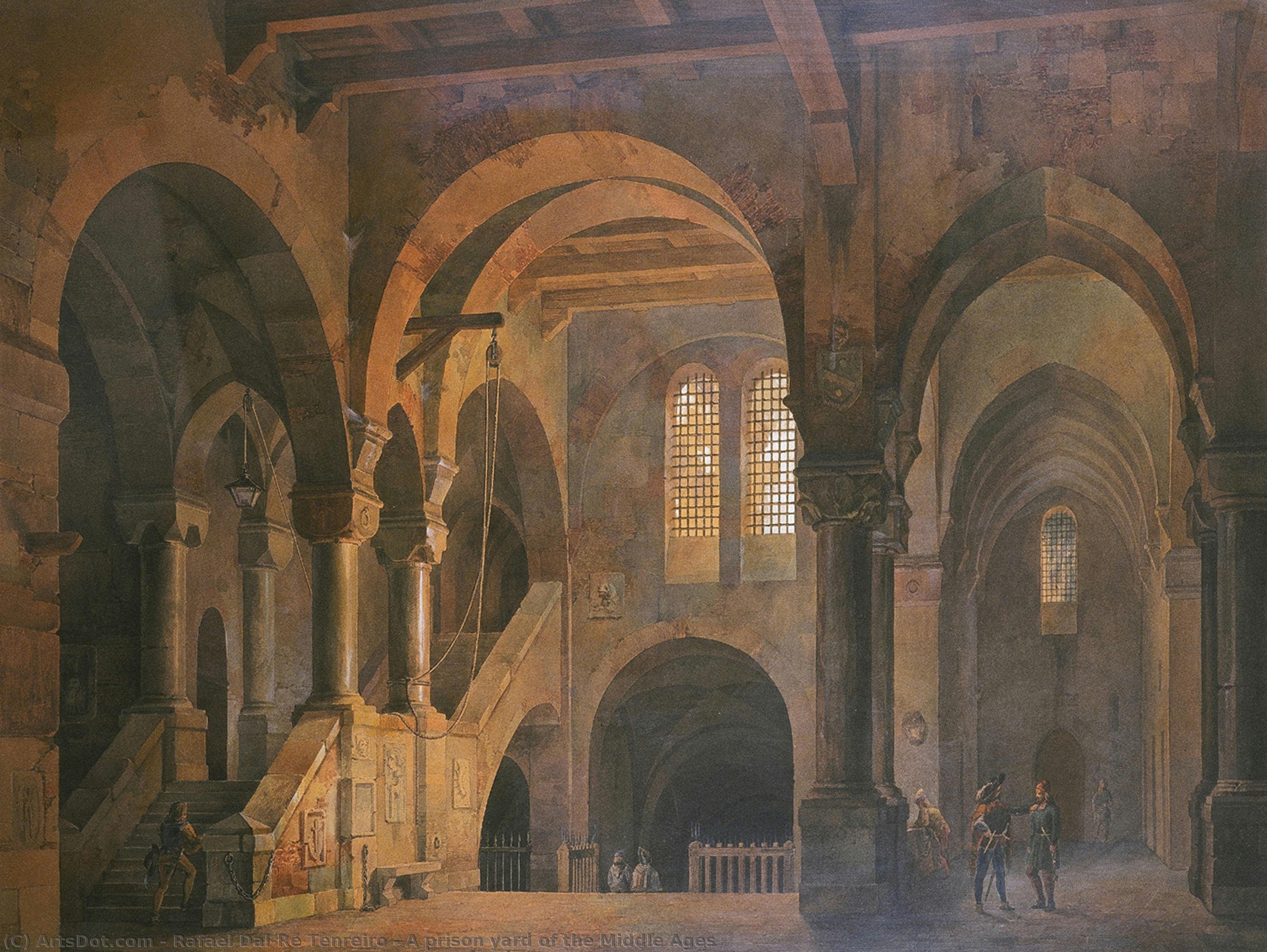
A prison yard of the Middle Ages


 Читать далее
Приобретите цифровое изображение высокого разрешения в улучшенном качестве, которое значительно превосходит онлайн-превью.
Каждый файл тщательно подготавливается нашими специалистами с использованием передовых инструментов и экспертной ручной ретуши. Мы гарантируем исключительную четкость, точную цветопередачу и детальную проработку каждого изображения.
Финальный файл доставляется по электронной почте в течение 72 часов и оптимизирован для немедленного использования в профессиональной среде, при верстке и печати. Это тот же уровень качества, которому доверяют ведущие дизайнерские студии, издательства и галереи.
Цифровое изображение
Скачайте файл высокого разрешения для личного использования, печати и творческих проектов. ( Перейти к печати Купить картину ручной работы)
Включено в каждый заказ цифровых изображений
Гарантия экспертной цифровой доставки
Выбирая ArtsDot.com, вы получаете не просто изображение — вы приобретаете профессионально обработанное цифровое произведение искусства, созданное с безупречной точностью и под защитой гарантии качества. Вот всё, что автоматически входит в ваш заказ:

Мгновенная доставка по e-mail
Ваш цифровой файл в высоком разрешении будет отправлен вам по электронной почте в течение 72 часов после оформления заказа — и сразу станет доступен для использования.

Цифровой файл с ИИ-улучшением
Ваше произведение искусства проходит профессиональную оптимизацию с использованием передовых инструментов ИИ и ручной обработки, что гарантирует максимальную детализацию, четкость и точность цветопередачи.

Бессрочная бесплатная повторная доставка
Случайно удалили или потеряли файл? Не беспокойтесь — мы отправим его вам повторно в любое время и совершенно бесплатно.

Без импортных пошлин — навсегда
Наслаждайтесь вашим произведением искусства мгновенно без таможенных пошлин, сборов или затрат на доставку — цифровые загрузки всегда не облагаются налогом.

Гарантия точности цветопередачи
Мы гарантируем, что ваше цифровое изображение максимально точно передает оригинальные цвета благодаря использованию профессиональных инструментов и систем управления цветом.

Гарантия удовлетворенности 100 дней
Если вы не будете удовлетворены своим цифровым изображением, мы внесем правки или вернем 100% стоимости в течение 100 дней — без лишних вопросов.

100% Гарантия возврата средств
Не удовлетворены покупкой? Получите полный возврат средств в течение 100 дней после получения цифрового файла — без лишних вопросов.

Скидки на оптовые заказы
Купите 3 изображения, сэкономьте 10% — Купите 5, сэкономьте 15% — Купите 10+, сэкономьте 20%. Отличное решение для творческих проектов, галерей и агентств.
A Window into the Medieval Soul
In the delicate, translucent layers of "A prison yard of the Middle Ages," we are transported far from the modern era and cast into a world of historical gravity and quiet drama. This evocative watercolor, dating back to 1900, serves as a poignant visual narrative of a bygone epoch. The scene unfolds within the confines of a stone courtyard, where the architecture—defined by its rhythmic arched windows—suggests a place of both sanctuary and confinement. Through the masterful use of light and shadow, the artist breathes life into a moment frozen in time, inviting the viewer to contemplate the lives of those who once paced these very grounds.
The composition is a delicate dance of figures and fauna, meticulously placed to guide the eye through the historical landscape. Two central figures stand as silent witnesses to the passage of time, their presence anchored by the imposing structure behind them. As our gaze wanders toward the periphery, we encounter others—shadowy silhouettes that add depth and a sense of communal existence to the yard. The inclusion of horses, scattered with intentional grace across the mid-ground and foreground, introduces an element of organic vitality. These creatures are not merely background elements; they represent the pulse of medieval life, bridging the gap between the human struggle and the natural world.
Technique and Atmospheric Resonance
The choice of watercolor as a medium is fundamental to the emotional resonance of this piece. The artist utilizes the inherent fluidity of the medium to create an atmosphere that feels both ethereal and grounded. There is a soft, almost dreamlike quality to the washes of color, which allows the edges of the architecture and the figures to bleed slightly into the surrounding air, mimicking the hazy, nostalgic lens of memory. This technique avoids the harshness of realism, opting instead for a romanticized interpretation that emphasizes mood over minute detail.
For the discerning collector or interior designer, this artwork offers a profound sense of historical continuity. The muted palette and the soft textures make it an exquisite choice for spaces that require a touch of contemplative elegance. Whether placed in a study filled with leather-bound books or as a focal point in a contemporary gallery, the painting provides a sophisticated anchor. It does not merely decorate a wall; it commands a conversation about history, the passage of time, and the enduring human spirit. Owning a high-quality reproduction of this work means bringing a piece of historical storytelling into the modern home, offering an eternal window into the shadows of the Middle Ages.
Похожие произведения
Биография художника
Early Life and the Prairie Landscape
Alex Katz, born July 24, 1927, in Brooklyn, New York, wasn’t destined for a life immersed in the vibrant hues of the art world. His early years were shaped by the quiet austerity of his Ukrainian immigrant family – his father, Odesa-born, had lost a factory during the upheaval following the Russian Revolution. The family moved to St. Albans, Queens, when he was just a toddler, and later to rural Willingdon, Alberta, in Canada, where he spent much of his childhood. This shift profoundly impacted him; the stark beauty of the Canadian prairies – vast fields of wheat under endless skies – became an enduring subject, a foundational element in his artistic vision. His upbringing instilled a certain reserve, a quiet observation that would later characterize his paintings’ understated power. The isolation and the rhythms of farm life fostered a deep connection to the landscape, a connection he would translate onto canvas with remarkable precision and emotional depth. He described his childhood as “a kind of slow-motion tragedy,” a sentiment that subtly informs the melancholic beauty found in many of his works.- Born: July 24, 1927, Brooklyn, New York
- Family Background: Ukrainian immigrant parents
- Early Education: Cooper Union and Skowhegan School of Painting and Sculpture
- Key Influences: The vastness and simplicity of the Canadian prairie landscape
The Influence of Skowhegan and Early Techniques
Katz’s artistic journey truly began with his time at the Skowhegan School of Painting and Sculpture in 1949. This pivotal experience, a deliberate departure from formal academic training, proved transformative. Skowhegan introduced him to *plein air* painting – working directly outdoors – a technique that fundamentally altered his approach. He abandoned the meticulous detail favored by many instructors and embraced a looser, more immediate style. The emphasis on capturing the essence of a scene, rather than replicating it perfectly, became a defining characteristic of his work. He famously described Skowhegan as giving him “a reason to devote my life to painting,” a statement that reveals the profound impact this immersive experience had on shaping his artistic identity. This period also solidified his fascination with capturing fleeting moments and the subtle shifts in light and color – elements he would later master with remarkable skill.- Skowhegan School of Painting and Sculpture (1949-1950): A turning point in his artistic development
- *Plein air* painting: Embracing direct observation and capturing the essence of a scene
- Shift from meticulous detail to a looser, more immediate style
The Rise of “Simple” Paintings and Pop Art Precursors
By the early 1950s, Katz began producing what would become his signature works: large-scale paintings depicting ordinary scenes – people sitting in diners, couples strolling along streets, children playing in parks. These images were rendered with startling simplicity, almost to the point of abstraction. The figures are often presented at a distance, cropped and slightly out of focus, creating a sense of detachment and inviting the viewer to complete the scene in their own minds. This deliberate simplification, coupled with his bold use of color – vibrant reds, yellows, and blues – positioned Katz as a key figure in the burgeoning Pop Art movement, though he resisted being definitively labeled as such. Critics often described his work as “simple,” but this understated quality belied a profound understanding of composition, light, and human psychology. His paintings weren’t about detailed representation; they were about capturing an atmosphere, a feeling, a moment suspended in time.- Large-scale paintings depicting everyday scenes
- Simplified figures presented at a distance
- Bold use of color: Vibrant reds, yellows, and blues
- Positioned as a precursor to Pop Art (though he resisted the label)
Themes of Isolation and American Life
Throughout his career, Katz’s paintings explored themes of isolation, alienation, and the complexities of American life. His subjects – often ordinary people in unremarkable settings – seem perpetually distanced from one another, reflecting a sense of loneliness or detachment. He wasn't interested in grand narratives or dramatic events; instead, he focused on the quiet moments of everyday existence, capturing the subtle nuances of human interaction and the unspoken emotions that lie beneath the surface. His work can be seen as a meditation on the American experience – its vastness, its contradictions, and its inherent sense of solitude. The repetition of figures and scenes across decades suggests an ongoing exploration of these fundamental themes, creating a body of work that is both timeless and deeply personal.- Themes: Isolation, alienation, complexities of American life
- Subjects: Ordinary people in unremarkable settings
- Emphasis on quiet moments and unspoken emotions
Legacy and Recognition
Alex Katz’s impact on contemporary art is undeniable. He has exhibited his work extensively around the world, with over 200 solo exhibitions and nearly 500 group shows. His paintings are held in major museums and private collections worldwide. While he remained largely outside the mainstream art establishment for much of his career, Katz’s unique vision and unwavering commitment to his artistic principles have earned him a devoted following and critical acclaim. He is remembered not just as an artist but as a pioneer – someone who challenged conventional notions of representation and paved the way for future generations of artists to explore new ways of seeing and interpreting the world around them. He died in 2016, leaving behind a legacy of quietly powerful paintings that continue to resonate with viewers today.- Extensive exhibitions worldwide (over 200 solo, nearly 500 group)
- Significant presence in major museums and private collections
- Pioneer of a unique artistic vision – challenging conventional notions of representation

rafael dal-ré tenreiro
1927 - 2016