


 Предпросмотр
 Поделиться
 Поделиться
 Детали произведения

 Скачать
 Похожие работы
 Рентгенография
 Слайд-шоу
 Статистика
Victimisation of women
 2005
2005 274.0 x 56.0 cm
 National Museum of Ethnology
 Читать далее
Масляная репродукция ручной работы
Картина маслом на холсте в выбранном вами размере и раме, написанная на заказ нашими художниками. ( Перейти к печати Перейти к цифровым изображениям)




































Выберите один из наших стандартных размеров, соответствующих оригинальным пропорциям произведения искусства.

Вы можете указать собственные размеры, чтобы картина идеально вписалась в выбранную раму или пространство. Если выбранный вами размер не соответствует пропорциям оригинала, мы либо обрежем полотно, либо расширим его за счет дополнительных элементов, написанных вручную. Цифровой макет будет отправлен вам на утверждение перед началом производства.
Обратите внимание, что предварительный просмотр на экране не отражает фактическую обрезку или расширение. Только макет точно покажет окончательную композицию.
Хотя доступны индивидуальные размеры, мы рекомендуем выбирать вариант из предопределенного списка, чтобы сохранить исходные пропорции.
После оформления заказа команда ArtsDot.com свяжется с клиентом по электронной почте для уточнения деталей и предоставит предварительный макет
Доставка по всему миру () за 3–4 недели вместо стандартных 5 недель. (13 Сентябрь). Без компромиссов в качестве.

Бесплатная экспресс-доставка по всему миру

Высококачественный льняной холст

Полное страхование доставки

Гарантия возмещения таможенных пошлин

Гарантия точного соответствия цветов

100-дневная политика возврата (только при обнаружении дефектов)

Гарантия возврата 100% средств

Предложение оптовых скидок
 Вариант со стеклом доступен только для размеров менее 110 см

Victimisation of women
Техника репродукции
Размер репродукции
-


Итоговая стоимость
$ 263
Похожие произведения



Биография художника
Rani Chitrakar: Weaving Narratives of Women’s Voices
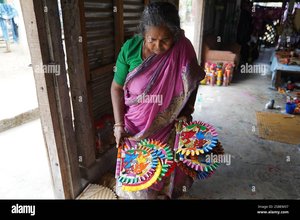
Rani Chitrakar, a name increasingly recognized within the vibrant tapestry of contemporary Indian art, is more than just an artist; she's a custodian of tradition and a powerful storyteller. Born in Kathmandu, Nepal, into a lineage deeply rooted in the Patua community – itinerant scroll painters who have historically documented social realities through intricate visual narratives – Chitrakar carries with her centuries of artistic heritage. Her work isn’t merely decorative; it’s a potent form of social commentary, meticulously rendered on seven-panelled paper scrolls that confront issues of gender inequality and societal constraints with both sensitivity and unwavering conviction.
The Patua tradition itself is steeped in history. Originating in the villages of Naya, nestled within West Bengal's Medinipur region, these artists have long been entrusted with preserving and disseminating stories – often drawn from Hindu epics like the Ramayana and Mahabharata – while simultaneously offering critiques of social norms. Traditionally, Patuas were known for their *patachitra*, a distinctive style of scroll painting characterized by bold colors, stylized figures, and a narrative approach that unfolded as the scrolls were unrolled before an audience. Chitrakar’s work builds directly upon this legacy, adapting it to address contemporary concerns with remarkable clarity and emotional resonance.
The ‘Victimisation of Women’ Scroll: A Chronicle of Disadvantage
Chitrakar's most celebrated piece, “Victimisation of Women,” created in 2005, stands as a testament to her artistic skill and profound social awareness. This seven-panel scroll meticulously depicts the myriad ways women are marginalized within Indian society – from domestic servitude and economic hardship to violence and systemic discrimination. The imagery is both arresting and deeply moving, portraying scenes of vulnerability and resilience with an unflinching honesty. Each panel carefully constructs a narrative, layering symbolic representations that speak volumes about the challenges faced by women in various contexts.
The scroll’s composition isn't simply illustrative; it’s a deliberate arrangement designed to evoke empathy and provoke reflection. The use of color is particularly significant – muted tones often convey sorrow and oppression, while brighter hues are reserved for moments of hope or resistance. Chitrakar masterfully employs traditional Patua techniques—bold outlines, expressive figures, and intricate patterns—to create a visual language that is both instantly recognizable and deeply layered with meaning. The scroll’s seven panels represent the seven stages of life, each panel illustrating a specific challenge faced by women.
Roots in Tradition, A Contemporary Voice
Chitrakar's artistic journey is inextricably linked to her heritage. She hails from Naya, a village renowned for its concentration of Patua families, and she learned the craft directly from her elders – a lineage that stretches back generations. This intimate connection to tradition provides her with a solid foundation in technique and storytelling, while simultaneously allowing her to infuse her work with a uniquely personal perspective. Her family’s history as keepers of oral narratives has instilled within her a deep respect for the power of visual communication.
However, Chitrakar isn't simply replicating traditional forms; she is actively evolving them. She embraces contemporary themes and utilizes her art to address pressing social issues, demonstrating a remarkable ability to bridge the gap between tradition and modernity. Her work has garnered recognition both nationally and internationally, solidifying her position as a leading voice in contemporary Indian art.
Technique and Symbolism: The Language of the Scroll
The creation of a Patua scroll is a labor-intensive process that demands considerable skill and patience. Chitrakar begins by meticulously sketching the composition on paper, carefully planning each panel to ensure a cohesive narrative flow. She then applies layers of natural pigments derived from plants and minerals, creating vibrant colors that are both durable and visually striking. The intricate details—the folds of clothing, the expressions on faces, the patterns in textiles—are rendered with painstaking precision.
Symbolism plays a crucial role in Chitrakar’s work. Each element within the scroll carries a specific meaning, contributing to the overall message. For example, depictions of women carrying heavy loads symbolize their disproportionate burden of domestic labor, while images of closed doors represent restricted opportunities and social isolation. The use of traditional motifs—such as lotus flowers (representing purity and enlightenment) and peacocks (symbolizing beauty and grace)—adds layers of cultural significance to the narrative.
Legacy and Significance
Rani Chitrakar’s work transcends mere artistic expression; it serves as a vital form of social activism. By visually documenting the challenges faced by women in Indian society, she raises awareness about systemic inequalities and encourages dialogue about gender justice. Her scrolls are not simply beautiful objects; they are powerful tools for change, capable of sparking empathy, inspiring action, and preserving a crucial aspect of Nepal’s cultural heritage.
As Chitrakar continues to create her art, she ensures that the Patua tradition remains vibrant and relevant in the 21st century. Her work stands as a testament to the enduring power of storytelling—a reminder that even within the confines of tradition, there is always room for innovation, critique, and ultimately, hope.
rani chitrakar
Nepal
Основные сведения
- Artistic Movement Or Style: Patua painting
- Artists Or Movements Influenced By This Artist: ['Patachitra tradition']
- Artists Who Influenced This Artist: ['Traditional West Bengal patuas']
- Date Of Birth: Kathmandu, Nepal (date missing)
- Date Of Death: Living
- Full Name: Rani Chitrakar
- Nationality: Nepalese
- Notable Artworks: ['Victimisation of Women (2005)']
- Place Of Birth: Kathmandu, Nepal