 Предпросмотр
 Поделиться
 Поделиться
 Детали произведения

 Скачать
 Похожие работы
 Рентгенография
 Слайд-шоу
 Статистика
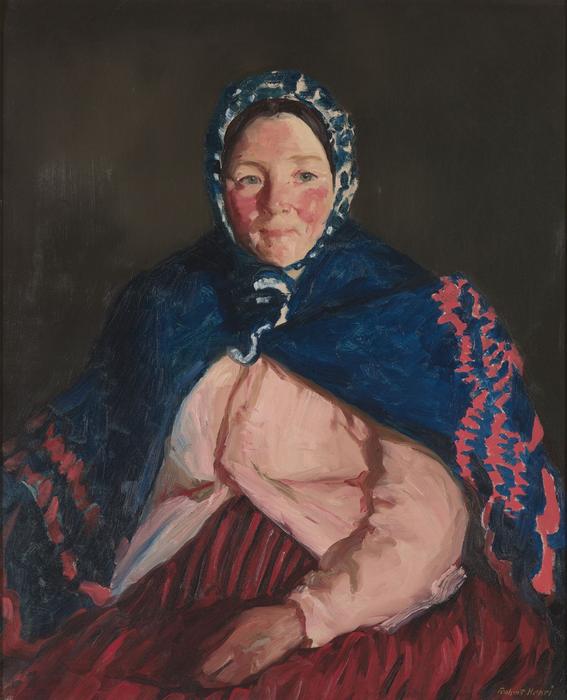
Old Johnnie's Wife


 Читать далее
Масляная репродукция ручной работы
Картина маслом на холсте в выбранном вами размере и раме, написанная на заказ нашими художниками. ( Перейти к печати Перейти к цифровым изображениям)




P118B $10

P118H $10

P118W $10

P438Z $10

P508JH $12

P508YH $12

P805H $10

P805Z $10

P919BZ $10

P919G $10

P919XJ $10

P959ZH $10

P968JZ $12

W106C $8

W218G $10

W218JH $8

W218Y $10

W307PJ $10

W316G $10

W316PJ $8

W316Y $10

W398PJ $8

W4111J $10

W500HY $15

W500JH $15

W692G $12

W849H $8

W940BG $15

W953PJ $8




Выберите один из наших стандартных размеров, соответствующих оригинальным пропорциям произведения искусства.

Вы можете указать собственные размеры, чтобы картина идеально вписалась в выбранную раму или пространство. Если выбранный вами размер не соответствует пропорциям оригинала, мы либо обрежем полотно, либо расширим его за счет дополнительных элементов, написанных вручную. Цифровой макет будет отправлен вам на утверждение перед началом производства.
Обратите внимание, что предварительный просмотр на экране не отражает фактическую обрезку или расширение. Только макет точно покажет окончательную композицию.
Хотя доступны индивидуальные размеры, мы рекомендуем выбирать вариант из предопределенного списка, чтобы сохранить исходные пропорции.
После оформления заказа команда ArtsDot.com свяжется с клиентом по электронной почте для уточнения деталей и предоставит предварительный макет
Доставка по всему миру () за 3–4 недели вместо стандартных 5 недель. (10 Сентябрь). Без компромиссов в качестве.

Бесплатная экспресс-доставка по всему миру

Высококачественный льняной холст

Полное страхование доставки

Гарантия возмещения таможенных пошлин

Гарантия точного соответствия цветов

100-дневная политика возврата (только при обнаружении дефектов)

Гарантия возврата 100% средств

Предложение оптовых скидок
 Вариант со стеклом доступен только для размеров менее 110 см

Old Johnnie's Wife
Техника репродукции
Размер репродукции
-


Итоговая стоимость
$ 263
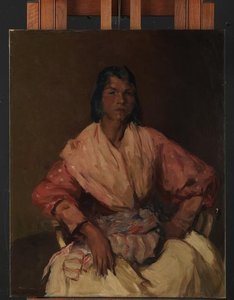
A Portrait of Quiet Dignity: Robert Henri’s “Old Johnnie’s Wife”
Robert Henri's "Old Johnnie’s Wife," painted in 1913, isn’t merely a portrait; it’s a carefully constructed meditation on time, experience, and the quiet dignity of an ordinary life. Created during a pivotal moment in American art—the burgeoning Ashcan School movement—this oil painting offers a glimpse into Henri's commitment to depicting the realities of everyday existence with unflinching honesty and profound empathy. The work resides within the Indianapolis Museum of Art, a testament to its enduring artistic merit and historical significance.
Henri, a key figure in this realist school, rejected the idealized subjects and polished techniques favored by academic art institutions. Instead, he sought inspiration from the streets of New York City, capturing the lives of working-class individuals with remarkable sensitivity. “Old Johnnie’s Wife” embodies this ethos perfectly. The subject, identified as Biddy Commons—a woman connected to a fisherman on Ireland's rugged coast—is presented not as a glamorous icon but as a weathered and wise elder, her face etched with the stories of a life lived outdoors.
The Language of Color and Texture
Technically, the painting is a masterclass in observation. Henri’s brushwork is both energetic and deliberate; thick impasto strokes build up layers of color, creating a palpable sense of texture that invites the viewer to reach out and touch the fabric of her shawl or the warmth of her skin. The palette is rich and earthy—deep blues, reds, and browns—contrasting sharply with the dark background, which serves to isolate and elevate the subject. This strategic use of light and shadow not only defines the figure but also imbues it with a sense of depth and dimensionality.
Notice particularly the subtle play of color on her face – the rosy cheeks, the delicate highlights around her eyes. Henri doesn’t shy away from depicting the marks of age; instead, he celebrates them as evidence of a life well-lived. The blue scarf, draped gracefully around her neck, adds a touch of understated elegance and hints at a connection to her maritime heritage.
A Window into the Ashcan School
“Old Johnnie’s Wife” is deeply rooted in the context of the Ashcan School. This movement sought to break away from traditional artistic conventions and portray American life with a raw, unvarnished honesty. Henri's subjects were often marginalized figures—immigrants, laborers, and the poor—and his paintings captured their struggles and resilience with remarkable compassion. The painting reflects the broader themes explored by the Ashcan School: the dignity of labor, the beauty of everyday life, and the importance of social justice.
Interestingly, Henri’s interest in this particular subject stemmed from a personal connection to Ireland. He spent summers on Achill Island, immersing himself in the lives of its inhabitants and capturing their spirit on canvas. This intimate knowledge informs the painting's authenticity and emotional resonance.
Symbolism and Emotional Impact
Beyond its technical brilliance, “Old Johnnie’s Wife” is imbued with a quiet sense of melancholy and contemplation. The woman’s gaze—direct yet gentle—invites the viewer to share in her thoughts and feelings. There's an unspoken story behind her eyes, hinting at a life filled with both hardship and joy. The shawl, worn and slightly faded, symbolizes resilience and endurance – a tangible reminder of the passage of time.
Ultimately, Henri’s portrait transcends its subject matter to become a universal meditation on aging, memory, and the enduring beauty of the human spirit. It's a painting that rewards repeated viewing, revealing new layers of meaning with each encounter. A reproduction of this piece would bring a touch of timeless elegance and quiet contemplation to any space.
Похожие произведения
Биография художника
A Turbulent Genesis: The Early Life of Robert Henri
Robert Henri, born Robert Henry Cozad in Cincinnati, Ohio, in 1865, carried within him from the outset a sense of displacement and reinvention that would profoundly shape both his life and art. His childhood was far from idyllic; shadowed by the volatile relationship between his father, John Jackson Cozad—a man of ambition and risk as a gambler and real estate developer—and his mother, Theresa Gatewood Cozad. This instability culminated in a dramatic event in 1882: a fatal shooting over a land dispute that forced the family into flight, adopting new identities to escape retribution. Young Robert became Robert Henri, a deliberate severing from a past fraught with conflict and a symbolic rebirth as an artist. The westward journey through Nebraska and Colorado, culminating in a settling in New York City and then Atlantic City, instilled within him a deep empathy for those living on the fringes of society—an empathy that would become a defining characteristic of his artistic vision. This early experience of upheaval and reinvention fostered a spirit of independence and a commitment to portraying life as it truly was, unburdened by convention or societal expectation. His father’s involvement in a shooting incident prompted the family to change their names, creating a new identity for themselves.Forging a New Vision: Artistic Development and Influences
Henri’s formal artistic education began at the Pennsylvania Academy of the Fine Arts in Philadelphia under Thomas Anshutz, where he honed his technical skills. However, it was his subsequent journey to Paris in 1888 that truly ignited his artistic awakening. Initially drawn to the academic tradition at the Académie Julian and influenced by masters like William-Adolphe Bouguereau and François Millet, Henri gradually gravitated towards Impressionism. Yet, he wasn’t content with merely replicating what he saw; he sought a more profound engagement with reality—a way to capture not just the fleeting effects of light but also the raw emotion and vitality of modern life. This quest led him to embrace a bolder, more direct approach, influenced by the Dutch Realist Franz Hals, whose loose brushwork and psychological insight resonated deeply with Henri’s own artistic sensibilities. He began experimenting with *pochades*, small wood panels used for quick sketches, encouraging spontaneity and immediacy in his work. Returning to America, he became a dedicated teacher, imparting not just technique but also a philosophy of art rooted in observation, honesty, and individual expression. His early works often depicted scenes of urban life, capturing the energy and grit of New York City with remarkable detail and emotional intensity.Championing the Real: The Ashcan School and “The Eight”
Robert Henri’s impact on American art extended far beyond his own canvases; he became a catalyst for change, challenging the conservative norms of the established art world. He was a central figure in the emergence of the Ashcan School—a group of artists who dared to depict the gritty realities of urban life, from bustling city streets to crowded tenements. Henri’s commitment to realism and his rejection of academic pretension led him to organize “The Eight” in 1908—a collective of like-minded artists including William Glackens, George Luks, Everett Shinn, and John Sloan—who staged an independent exhibition as a direct protest against the restrictive policies of the National Academy of Design. This act of defiance was a watershed moment in American art history, signaling a shift away from European dominance and towards a uniquely American artistic voice. Henri’s paintings during this period, such as “Woman in Manteau” (1899) and his evocative portraits, captured the dignity and resilience of ordinary people, offering a powerful counterpoint to the idealized representations favored by the establishment. The group's work was often characterized by its unflinching portrayal of poverty, corruption, and social injustice, reflecting the realities of life in rapidly industrializing America.Legacy and Enduring Influence
Robert Henri’s influence on subsequent generations of American artists is immeasurable. As a teacher, he mentored a remarkable roster of talent, including Joseph Stella, Edward Hopper, Rockwell Kent, George Bellows, Norman Raeben, Louis D. Fancher, and Stuart Davis—artists who would go on to shape the course of 20th-century art. His book, *The Art Spirit*, published posthumously in 1923, remains a seminal text for aspiring artists, offering timeless wisdom on observation, technique, and the importance of artistic integrity. *Henri’s commitment to portraying life with honesty and empathy*, his rejection of convention, and his unwavering belief in the power of art to connect with audiences continue to inspire artists today. His paintings are not merely representations of reality; they are windows into the human condition—testaments to the beauty, struggle, and resilience of the human spirit. He left an indelible mark on American Realism, paving the way for a more democratic and inclusive art world that celebrated the everyday experiences of ordinary people. His legacy endures not only through his own masterful works but also through the countless artists he inspired to find their own voices and tell their own stories.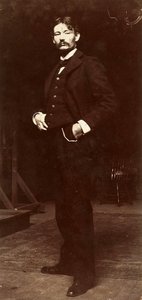
Роберт Генри
1865 - 1929 , Соединенные Штаты Америки
Основные сведения
- Artistic Movement Or Style: Аштанская школа, Реализм
- Artists Or Movements Influenced By This Artist:
- Эдвард Хоппер
- Восемь
- Artists Who Influenced This Artist:
- Фрэнс Галь
- Франсуа Милет
- Date Of Birth: 24 июня 1865 г.
- Date Of Death: 12 июля 1929 г.
- Full Name: Robert Henry Cozad / Robert Henri
- Nationality: Американский
- Notable Artworks:
- Женщина в мантии
- Снег
- Сиси в желтом
- Place Of Birth: Цинциннати, США
Похожие статьи
Robert Henri & the Spirit of American Realism: A Legacy of Urban Life and Artistic Independence
Explore the life & legacy of Robert Henri, a pivotal figure in American Realism. Discover his captivating portraits, influence on the Ashcan School, and enduring impact on art history. Learn more at ArtsDot.
Robert W. Salmon: Navigating the Currents of Maritime Painting & American Realism
Explore the captivating maritime paintings of Robert W. Salmon, a pioneer of American Luminism. Discover his Boston Harbor scenes, legacy, and collecting guide at ArtsDot.
Топ-25 шедевров Анри Матисса: Цвет и форма в интерьере с ArtsDot
Погрузитесь в мир Анри Матисса! 25 шедевров фовизма, ярких красок и новаторских техник. Узнайте историю создания культовых картин художника и вдохновитесь для интерьера с ArtsDot.com – музейное качество репродукций.
10 Шедевров Американского Реализма: Искусство Правды и Жизни | ArtsDot
Погрузитесь в мир американского реализма! 10 шедевров от Эндрю Уайета, Эдварда Хоппера и других. История искусства, техники живописи и вдохновение для вашего интерьера. Купите репродукции картин на ArtsDot.com!
Grant Wood & American Regionalism: Identity, Myth & the Rural Landscape
Explore the world of Grant Wood & American Regionalism with ArtsDot. Discover the symbolism behind 'American Gothic', recurring themes, and the movement's lasting impact on art history. High-quality reproductions available.