

 Предпросмотр
 Поделиться
 Поделиться
 Детали произведения

 Скачать
 Похожие работы
 Рентгенография
 Слайд-шоу
 Статистика
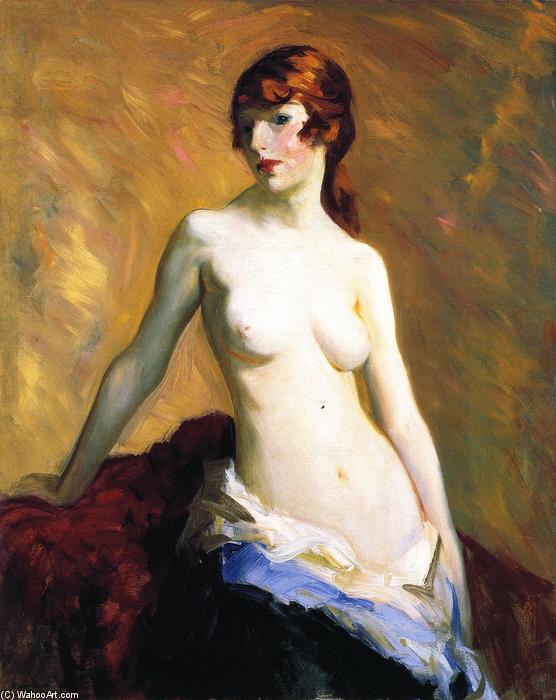
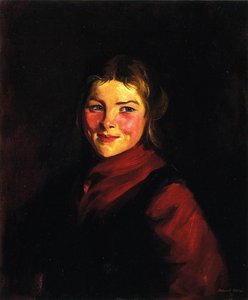
The Young Girl


 Читать далее
Приобретите цифровое изображение высокого разрешения в улучшенном качестве, которое значительно превосходит онлайн-превью.
Каждый файл тщательно подготавливается нашими специалистами с использованием передовых инструментов и экспертной ручной ретуши. Мы гарантируем исключительную четкость, точную цветопередачу и детальную проработку каждого изображения.
Финальный файл доставляется по электронной почте в течение 72 часов и оптимизирован для немедленного использования в профессиональной среде, при верстке и печати. Это тот же уровень качества, которому доверяют ведущие дизайнерские студии, издательства и галереи.
Цифровое изображение
Скачайте файл высокого разрешения для личного использования, печати и творческих проектов. ( Перейти к печати Купить картину ручной работы)
Включено в каждый заказ цифровых изображений
Гарантия экспертной цифровой доставки
Выбирая ArtsDot.com, вы получаете не просто изображение — вы приобретаете профессионально обработанное цифровое произведение искусства, созданное с безупречной точностью и под защитой гарантии качества. Вот всё, что автоматически входит в ваш заказ:

Мгновенная доставка по e-mail
Ваш цифровой файл в высоком разрешении будет отправлен вам по электронной почте в течение 72 часов после оформления заказа — и сразу станет доступен для использования.

Цифровой файл с ИИ-улучшением
Ваше произведение искусства проходит профессиональную оптимизацию с использованием передовых инструментов ИИ и ручной обработки, что гарантирует максимальную детализацию, четкость и точность цветопередачи.

Бессрочная бесплатная повторная доставка
Случайно удалили или потеряли файл? Не беспокойтесь — мы отправим его вам повторно в любое время и совершенно бесплатно.

Без импортных пошлин — навсегда
Наслаждайтесь вашим произведением искусства мгновенно без таможенных пошлин, сборов или затрат на доставку — цифровые загрузки всегда не облагаются налогом.

Гарантия точности цветопередачи
Мы гарантируем, что ваше цифровое изображение максимально точно передает оригинальные цвета благодаря использованию профессиональных инструментов и систем управления цветом.

Гарантия удовлетворенности 100 дней
Если вы не будете удовлетворены своим цифровым изображением, мы внесем правки или вернем 100% стоимости в течение 100 дней — без лишних вопросов.

100% Гарантия возврата средств
Не удовлетворены покупкой? Получите полный возврат средств в течение 100 дней после получения цифрового файла — без лишних вопросов.

Скидки на оптовые заказы
Купите 3 изображения, сэкономьте 10% — Купите 5, сэкономьте 15% — Купите 10+, сэкономьте 20%. Отличное решение для творческих проектов, галерей и агентств.
The Young Girl: A Portrait of Quiet Strength in American Realism
Robert Henri’s “The Young Girl,” painted in 1915, stands as a cornerstone of Ashcan School realism and embodies Henri's unwavering commitment to portraying the human condition with unflinching honesty. More than just a depiction of a nude figure—a deliberate choice reflecting Henri’s fascination with the female form—the painting is an exploration of vulnerability, contemplation, and subtle emotional resonance within the confines of urban life. Its enduring appeal lies in Henri’s masterful technique and his ability to capture not merely what he saw but also what he felt.Background & Inspiration: Millet's Influence and the Ashcan School Movement
Henri’s artistic vision was profoundly shaped by the Impressionists, particularly François Millet, whose canvases celebrated rural landscapes with luminous color palettes and a focus on capturing fleeting moments of everyday existence. Henri sought to emulate Millet’s approach but redirected his gaze inward, examining the complexities of human psychology within the gritty realities of New York City. The Ashcan School, founded in 1907, championed this humanist perspective—rejecting idealized representations and striving instead for an authentic portrayal of urban life and its inhabitants. Henri's aim was to depict individuals as they truly were: flawed, vulnerable, yet imbued with dignity and spirit.Style & Technique: Bold Brushstrokes and Impasto Texture
“The Young Girl” exemplifies Henri’s distinctive style through its bold brushstrokes and masterful use of impasto—thickly applied paint that creates a palpable textural surface. The artist eschewed meticulous detail in favor of capturing the essence of his subject, prioritizing rhythm, color, and volume to convey movement and emotion. Notice how Henri utilizes a muted palette dominated by earthy tones – browns and ochres – juxtaposed against the vibrant blue dress, drawing attention to the figure’s torso and face. The composition is centered around the woman seated on a crimson velvet cushion, emphasizing her stillness and inviting contemplation. Thick brushstrokes delineate the contours of her body and imbue the fabric with warmth and depth, mirroring the subtle melancholy expressed in her gaze.Symbolism & Emotional Impact: Vulnerability and Contemplation
Henri’s portrayal transcends mere visual representation; it speaks to themes of vulnerability and inner reflection. The woman's serene expression—a slight downturn of the lips hinting at sadness—suggests a profound awareness of life’s complexities. Henri deliberately avoids romanticizing her subject, presenting her with an honest gaze that confronts viewers with the realities of human experience. This quiet dignity is reinforced by her posture – relaxed yet attentive – conveying a sense of inner peace amidst the bustling city backdrop. The blurred landscape behind her serves as a reminder of the external world while simultaneously highlighting the woman’s internal focus.Legacy & Reproduction: Celebrating Henri's Vision
“The Young Girl” remains an influential work within American art history, representing Henri’s unwavering dedication to portraying human emotion and experience with uncompromising realism. Its enduring beauty resides not only in its technical brilliance but also in its ability to evoke empathy and contemplation. To appreciate Henri’s artistic legacy fully, consider commissioning a high-quality reproduction from ArtsDot.com – allowing you to bring this iconic image into your home or studio and celebrate the spirit of American Realism. For more information on Robert Henri and his oeuvre, visit ArtsDot.com and explore Wikipedia's comprehensive biographical account.Похожие произведения
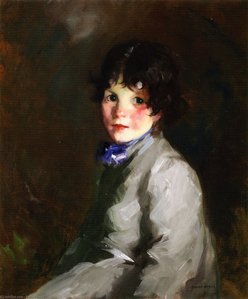
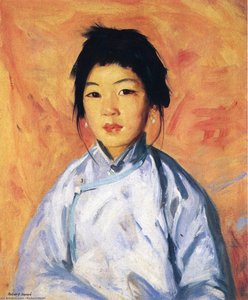
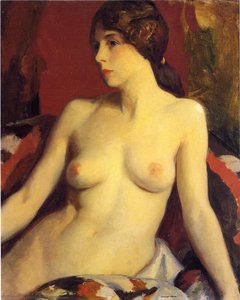
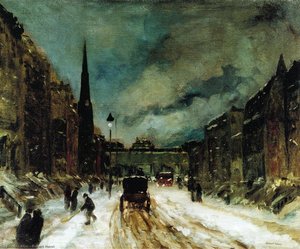
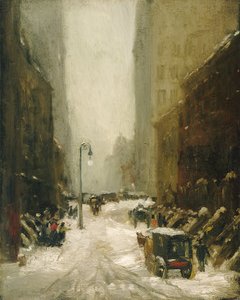
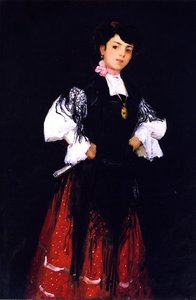
Биография художника
A Turbulent Genesis: The Early Life of Robert Henri
Robert Henri, born Robert Henry Cozad in Cincinnati, Ohio, in 1865, carried within him from the outset a sense of displacement and reinvention that would profoundly shape both his life and art. His childhood was far from idyllic; shadowed by the volatile relationship between his father, John Jackson Cozad—a man of ambition and risk as a gambler and real estate developer—and his mother, Theresa Gatewood Cozad. This instability culminated in a dramatic event in 1882: a fatal shooting over a land dispute that forced the family into flight, adopting new identities to escape retribution. Young Robert became Robert Henri, a deliberate severing from a past fraught with conflict and a symbolic rebirth as an artist. The westward journey through Nebraska and Colorado, culminating in a settling in New York City and then Atlantic City, instilled within him a deep empathy for those living on the fringes of society—an empathy that would become a defining characteristic of his artistic vision. This early experience of upheaval and reinvention fostered a spirit of independence and a commitment to portraying life as it truly was, unburdened by convention or societal expectation. His father’s involvement in a shooting incident prompted the family to change their names, creating a new identity for themselves.Forging a New Vision: Artistic Development and Influences
Henri’s formal artistic education began at the Pennsylvania Academy of the Fine Arts in Philadelphia under Thomas Anshutz, where he honed his technical skills. However, it was his subsequent journey to Paris in 1888 that truly ignited his artistic awakening. Initially drawn to the academic tradition at the Académie Julian and influenced by masters like William-Adolphe Bouguereau and François Millet, Henri gradually gravitated towards Impressionism. Yet, he wasn’t content with merely replicating what he saw; he sought a more profound engagement with reality—a way to capture not just the fleeting effects of light but also the raw emotion and vitality of modern life. This quest led him to embrace a bolder, more direct approach, influenced by the Dutch Realist Franz Hals, whose loose brushwork and psychological insight resonated deeply with Henri’s own artistic sensibilities. He began experimenting with *pochades*, small wood panels used for quick sketches, encouraging spontaneity and immediacy in his work. Returning to America, he became a dedicated teacher, imparting not just technique but also a philosophy of art rooted in observation, honesty, and individual expression. His early works often depicted scenes of urban life, capturing the energy and grit of New York City with remarkable detail and emotional intensity.Championing the Real: The Ashcan School and “The Eight”
Robert Henri’s impact on American art extended far beyond his own canvases; he became a catalyst for change, challenging the conservative norms of the established art world. He was a central figure in the emergence of the Ashcan School—a group of artists who dared to depict the gritty realities of urban life, from bustling city streets to crowded tenements. Henri’s commitment to realism and his rejection of academic pretension led him to organize “The Eight” in 1908—a collective of like-minded artists including William Glackens, George Luks, Everett Shinn, and John Sloan—who staged an independent exhibition as a direct protest against the restrictive policies of the National Academy of Design. This act of defiance was a watershed moment in American art history, signaling a shift away from European dominance and towards a uniquely American artistic voice. Henri’s paintings during this period, such as “Woman in Manteau” (1899) and his evocative portraits, captured the dignity and resilience of ordinary people, offering a powerful counterpoint to the idealized representations favored by the establishment. The group's work was often characterized by its unflinching portrayal of poverty, corruption, and social injustice, reflecting the realities of life in rapidly industrializing America.Legacy and Enduring Influence
Robert Henri’s influence on subsequent generations of American artists is immeasurable. As a teacher, he mentored a remarkable roster of talent, including Joseph Stella, Edward Hopper, Rockwell Kent, George Bellows, Norman Raeben, Louis D. Fancher, and Stuart Davis—artists who would go on to shape the course of 20th-century art. His book, *The Art Spirit*, published posthumously in 1923, remains a seminal text for aspiring artists, offering timeless wisdom on observation, technique, and the importance of artistic integrity. *Henri’s commitment to portraying life with honesty and empathy*, his rejection of convention, and his unwavering belief in the power of art to connect with audiences continue to inspire artists today. His paintings are not merely representations of reality; they are windows into the human condition—testaments to the beauty, struggle, and resilience of the human spirit. He left an indelible mark on American Realism, paving the way for a more democratic and inclusive art world that celebrated the everyday experiences of ordinary people. His legacy endures not only through his own masterful works but also through the countless artists he inspired to find their own voices and tell their own stories.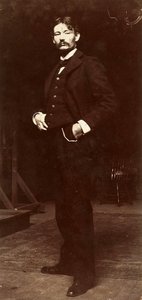
Роберт Генри
1865 - 1929 , Соединенные Штаты Америки
Основные сведения
- Artistic Movement Or Style: Аштанская школа, Реализм
- Artists Or Movements Influenced By This Artist:
- Эдвард Хоппер
- Восемь
- Artists Who Influenced This Artist:
- Фрэнс Галь
- Франсуа Милет
- Date Of Birth: 24 июня 1865 г.
- Date Of Death: 12 июля 1929 г.
- Full Name: Robert Henry Cozad / Robert Henri
- Nationality: Американский
- Notable Artworks:
- Женщина в мантии
- Снег
- Сиси в желтом
- Place Of Birth: Цинциннати, США