

 Предпросмотр
 Поделиться
 Поделиться
 Детали произведения

 Скачать
 Похожие работы
 Рентгенография
 Слайд-шоу
 Статистика
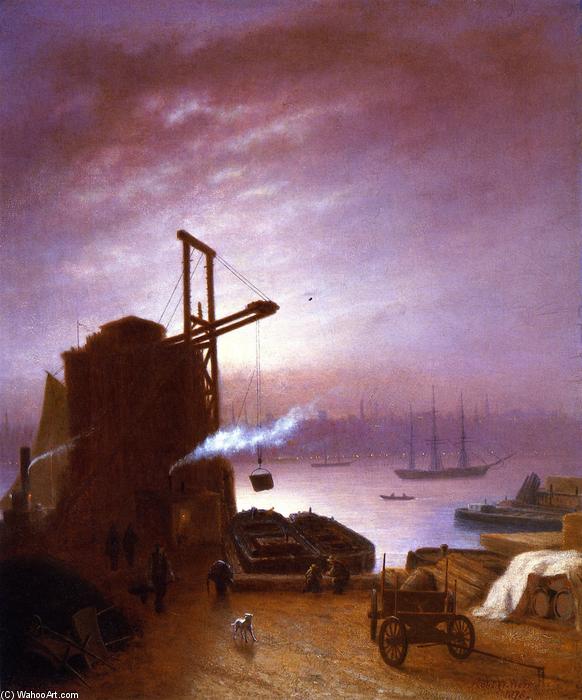
The Hudson River from Hoboken


 Читать далее
Масляная репродукция ручной работы
Картина маслом на холсте в выбранном вами размере и раме, написанная на заказ нашими художниками. ( Перейти к печати Перейти к цифровым изображениям)




P118B $10

P118H $10

P118W $10

P438Z $10

P508JH $12

P508YH $12

P805H $10

P805Z $10

P919BZ $10

P919G $10

P919XJ $10

P959ZH $10

P968JZ $12

W106C $8

W218G $10

W218JH $8

W218Y $10

W307PJ $10

W316G $10

W316PJ $8

W316Y $10

W398PJ $8

W4111J $10

W500HY $15

W500JH $15

W692G $12

W849H $8

W940BG $15

W953PJ $8




Выберите один из наших стандартных размеров, соответствующих оригинальным пропорциям произведения искусства.

Вы можете указать собственные размеры, чтобы картина идеально вписалась в выбранную раму или пространство. Если выбранный вами размер не соответствует пропорциям оригинала, мы либо обрежем полотно, либо расширим его за счет дополнительных элементов, написанных вручную. Цифровой макет будет отправлен вам на утверждение перед началом производства.
Обратите внимание, что предварительный просмотр на экране не отражает фактическую обрезку или расширение. Только макет точно покажет окончательную композицию.
Хотя доступны индивидуальные размеры, мы рекомендуем выбирать вариант из предопределенного списка, чтобы сохранить исходные пропорции.
После оформления заказа команда ArtsDot.com свяжется с клиентом по электронной почте для уточнения деталей и предоставит предварительный макет
Доставка по всему миру () за 3–4 недели вместо стандартных 5 недель. (11 Сентябрь). Без компромиссов в качестве.

Бесплатная экспресс-доставка по всему миру

Высококачественный льняной холст

Полное страхование доставки

Гарантия возмещения таможенных пошлин

Гарантия точного соответствия цветов

100-дневная политика возврата (только при обнаружении дефектов)

Гарантия возврата 100% средств

Предложение оптовых скидок
 Вариант со стеклом доступен только для размеров менее 110 см

The Hudson River from Hoboken
Техника репродукции
Размер репродукции
-


Итоговая стоимость
$ 263
A Window into the Nineteenth Century Harbor
In the quiet majesty of Robert Walter Weir’s 1878 masterpiece, The Hudson River from Hoboken, we are invited to step back into a vanished era of American maritime life. This evocative scene captures more than just a geographical vista; it serves as a living tableau of the bustling vitality that once defined the Hudson Valley harbor. As the eye wanders across the canvas, one encounters a rhythmic dance of movement and stillness. Boats glide upon the water’s surface, their silhouettes etched against the shimmering expanse, while the shoreline teems with the gentle industry of daily life. The presence of figures strolling along the docks, accompanied by the humble companionship of a dog and the sturdy utility of a horse, breathes an intimate, human warmth into the expansive landscape. It is a composition that celebrates the harmonious coexistence of nature and civilization, rendered with the soulful precision characteristic of the Hudson River School.
The atmosphere of the painting is profoundly shaped by Weir’s masterful command of light and sky. A heavy, contemplative layer of clouds hangs above the scene, casting a soft, diffused glow that lends a sense of depth and atmospheric weight to the entire composition. This technique does not merely depict weather; it evokes a mood of serene introspection. The interplay between the silvered light of the overcast sky and the darker, more turbulent tones of the water creates a visual tension that keeps the viewer’s gaze perpetually moving. For the discerning collector or interior designer, this piece offers a sophisticated palette of muted earth tones and cool blues, making it an exquisite centerpiece for a room that seeks to evoke tranquility, history, and a sense of timelessness.
The Legacy of a Master Educator and Artist
To truly appreciate the nuances of this work, one must consider the hand behind the brush. Robert Walter Weir was far more than a mere observer of landscapes; he was a pivotal figure in the American artistic consciousness. As an educator at West Point, Weir’s life was dedicated to the cultivation of both the mind and the eye, influencing generations of leaders through his commitment to classical beauty and historical truth. His training, which took him from the mercantile streets of New York to the storied studios of Italy, allowed him to infuse his American subjects with a refined, European sensibility. In The Hudson River from Hoboken, we see the culmination of this journey—a perfect marriage of American topographical accuracy and a classical approach to light and composition.
For those looking to adorn their homes or galleries with a high-quality reproduction, this painting represents an investment in heritage. It is not merely a decorative element but a conversation piece that speaks to the era of westward expansion, the importance of maritime commerce, and the romanticized beauty of the American wilderness. The painting’s ability to anchor a space with its historical gravity while providing a window of escapism makes it a timeless choice for any curated collection. Owning a reproduction of such a significant work allows the spirit of the Hudson River School to reside within a modern interior, bridging the gap between the rugged history of the nineteenth century and the refined aesthetics of the present day.
Похожие произведения
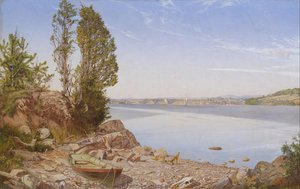
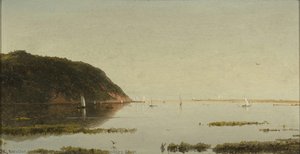
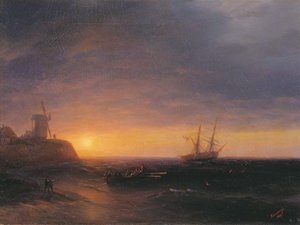
Биография художника
Robert Walter Weir (1803 – 1889): A Pioneer of Romantic Landscape Painting and Educator
Robert Walter Weir stands as a monumental figure in American art history, recognized primarily for his contribution to the Hudson River School movement and his transformative role as an instructor at West Point Military Academy. Born June 18, 1803, in New York City, Weir’s life was marked by unwavering dedication to artistic pursuits alongside a profound commitment to shaping the intellectual landscape of future generations. His journey began with self-directed study—a cornerstone of his distinctive style—before blossoming into an internationally acclaimed artist and educator whose legacy continues to inspire admiration. ### Early Life and Artistic Training Weir’s formative years instilled in him a deep appreciation for classical art principles, profoundly influencing his artistic vision. He commenced his artistic education with Robert Cox (or Cook), an English heraldic painter, and John Wesley Jarvis, honing his skills through meticulous observation and disciplined practice. Recognizing the importance of broadening his horizons, Weir embarked on a pivotal voyage to Italy in 1824–25 and subsequently returned to Rome in 1825–27—experiences that cemented his connection with the artistic fervor of the Renaissance. During these formative years, he absorbed the grandeur of Michelangelo’s sculptures and Raphael’s frescoes, mastering techniques that would define his oeuvre for decades to come. ### The Hudson River School and Monumental Painting Weir's membership in the Hudson River School solidified his place within the canon of American landscape painting. He embraced the movement’s ethos—a reverence for nature imbued with Romantic idealism—producing canvases that captured the sublime beauty of the American wilderness. His most celebrated achievement, *The Embarkation of the Pilgrims*, commissioned by Congress in 1837 and installed in the Rotunda of the U.S. Capitol in 1843, exemplifies this artistic spirit. This monumental painting transcends mere depiction; it functions as a powerful allegory of courage, faith, and the foundational values of American identity—a testament to Weir’s ability to distill complex ideas into visually arresting compositions. Other notable works include *Landing of Hendrik Hudson*, *Evening of the Crucifixion*, *Columbus before the Council of Salamanca*, *Our Lord on the Mount of Olives*, and *Virgil and Dante crossing the Styx*. ### Teaching at West Point: Shaping Future Leaders Weir’s tenure as Professor of Drawing at the United States Military Academy from 1834 to 1876 represents an unparalleled contribution to American education. He didn't merely impart technical skills; he cultivated a discerning eye and fostered creative problem-solving abilities within a generation of aspiring officers—individuals who would shape the course of American history. Among his distinguished students were Ulysses S. Grant, Robert E. Lee, Jefferson Davis, and James Abbott McNeill Whistler—a remarkable roster demonstrating the breadth of Weir’s influence. His pedagogical approach prioritized intellectual curiosity alongside artistic mastery, fostering an environment conducive to cultivating critical thinking and imaginative expression. ### Legacy and Recognition Robert Walter Weir's enduring legacy extends far beyond his artistic accomplishments. He established a family tradition of artistic excellence; two of his sons followed in his footsteps—John Ferguson Weir and Julian Alden Weir—further amplifying the Weir name within American art history. His works continue to be displayed in prominent museums worldwide, ensuring that his contributions remain visible and appreciated by generations to come. Weir’s influence resonates through countless artists who were inspired by his unwavering dedication to artistic expression and intellectual rigor—a testament to a life devoted to fostering creativity and shaping the minds of future leaders. He remains a pivotal figure in American art history, whose work continues to captivate audiences today.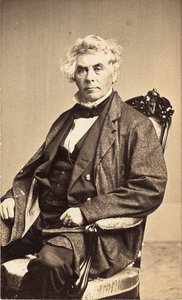
Роберт Уолтер Вейр
1803 - 1889 , США
Основные сведения
- Artistic Movement Or Style: Художественная школа Хадсона
- Artists Or Movements Influenced By This Artist: ['Художественная школа Хадсона']
- Artists Who Influenced This Artist:
- Микеланджело
- Рафаэль
- Date Of Birth: 18 июня 1803 г.
- Full Name: Robert Walter Weir
- Nationality: Американский
- Notable Artworks:
- Отплытие пилигримов
- Прибытие Генриха Худсона
- Вечер распятия
- Place Of Birth: Нью-Йорк, США
Похожие статьи
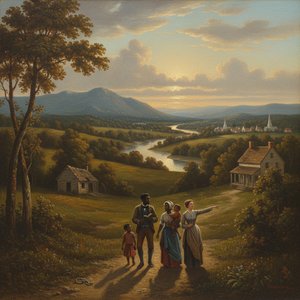
Robert Seldon Duncanson: Landscape, Abolitionism & Shaping American Identity
Discover Robert Seldon Duncanson, the first internationally acclaimed African American landscape artist. Explore his connection to the Hudson River School, abolitionism, and enduring legacy through serene vistas & powerful symbolism.
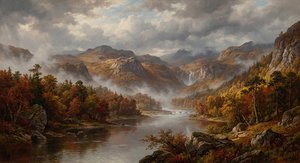
Школа реки Гудзон: 10 шедевров, изменивших американскую живопись | ArtsDot
Погрузитесь в мир Школы реки Гудзон! 10 шедевров Томаса Коула, Фредерика Чёрча и других мастеров американского романтизма. Купите репродукции картин высокого качества для вашего интерьера на ArtsDot.com.

The Sublime Landscape: Exploring the Hudson River School Movement
Explore the captivating world of the Hudson River School! Discover the history, artists, and defining characteristics of this iconic American art movement. Learn about Romanticism's influence & find inspiration for your collection.
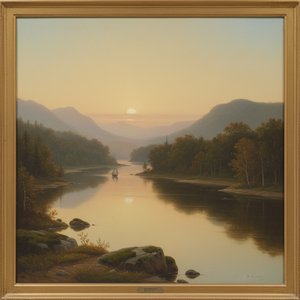
David Johnson: A Luminist Master of the Hudson River School & Beyond
Explore the captivating landscapes of David Johnson, a key figure in the Hudson River School & Luminism movement. Discover his artistic evolution, legacy, and how to collect his works with ArtsDot.
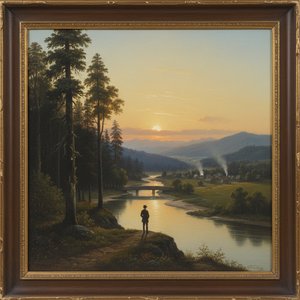
Robert Spencer: Luminism, Narrative & the American Landscape Tradition
Explore the captivating world of Luminism & the Hudson River School with our expert analysis. Discover the history, artists, and enduring beauty of 19th-century American landscape painting. Find museum-quality reproductions at ArtsDot.