


 Предпросмотр
 Поделиться
 Поделиться
 Детали произведения

 Скачать
 Похожие работы
 Рентгенография
 Слайд-шоу
 Статистика
Badge of the Order of Saint Bishop Platon


 Читать далее
Масляная репродукция ручной работы
Картина маслом на холсте в выбранном вами размере и раме, написанная на заказ нашими художниками. ( Перейти к печати Перейти к цифровым изображениям)
































Выберите один из наших стандартных размеров, соответствующих оригинальным пропорциям произведения искусства.

Вы можете указать собственные размеры, чтобы картина идеально вписалась в выбранную раму или пространство. Если выбранный вами размер не соответствует пропорциям оригинала, мы либо обрежем полотно, либо расширим его за счет дополнительных элементов, написанных вручную. Цифровой макет будет отправлен вам на утверждение перед началом производства.
Обратите внимание, что предварительный просмотр на экране не отражает фактическую обрезку или расширение. Только макет точно покажет окончательную композицию.
Хотя доступны индивидуальные размеры, мы рекомендуем выбирать вариант из предопределенного списка, чтобы сохранить исходные пропорции.
После оформления заказа команда ArtsDot.com свяжется с клиентом по электронной почте для уточнения деталей и предоставит предварительный макет
Доставка по всему миру () за 3–4 недели вместо стандартных 5 недель. (15 Сентябрь). Без компромиссов в качестве.

Бесплатная экспресс-доставка по всему миру

Высококачественный льняной холст

Полное страхование доставки

Гарантия возмещения таможенных пошлин

Гарантия точного соответствия цветов

100-дневная политика возврата (только при обнаружении дефектов)

Гарантия возврата 100% средств

Предложение оптовых скидок
 Вариант со стеклом доступен только для размеров менее 110 см

Badge of the Order of Saint Bishop Platon
Техника репродукции
Размер репродукции
-


Итоговая стоимость
$ 263
Похожие произведения







Биография художника
Roman Tavast: Life and Legacy
Early Life and Education
- Born: May 11, 1895, in Tallinn, Estonia.
- Family Background: Roman Tavast came from a humble fisherman’s family, shaping his early understanding of craftsmanship and resilience.
- Education: He began his formal education at Niklasen's 4-year private school. Subsequently, he pursued specialized training in engraving and goldsmithing at E. Treder's workshop.
- Further honing his skills, Tavast worked under the esteemed goldsmith Julius Lossman, mastering the art of gilding. He also attended an art school to broaden his artistic foundation and completed evening high school for a general education.
Artistic Development & Career
- Independent Beginnings: Following the Estonian War of Independence, Tavast embarked on his independent career. In 1920, he equipped himself with a goldsmith’s workbench and, by 1921, added a wire rolling machine to his workshop.
- VMT Roman Tavast: In 1923, at the age of 28, he established VMT Roman Tavast – an independent company specializing in the production of badges, medals, and various honors and awards. This marked a significant milestone in his career.
- Artistic Style: Tavast’s work is often associated with the Art Deco movement, characterized by its elegant geometry, streamlined forms, and sophisticated ornamentation. His designs reflected both Estonian national identity and contemporary artistic trends.
Major Achievements & Notable Works
- Production of Honors: Tavast’s company became renowned for creating high-quality badges, medals, and awards for various Estonian organizations and institutions. These pieces served as symbols of national pride and recognition.
- Badge of the Order of Saint Bishop Platon: One notable example of his work is the Badge of the Order of Saint Bishop Platon, showcasing his meticulous craftsmanship and artistic skill.
- Business Acumen: Tavast demonstrated exceptional entrepreneurial skills in building and managing a successful jewelry factory during a period of economic and political change.
Historical Significance & Tragic Fate
- Soviet Occupation (1940): The occupation of Estonia by the Soviet Union in 1940 dramatically altered Tavast’s life and work. His factory and residential building were nationalized, and Karl Johanson was appointed as the new director.
- Deportation & Execution: Despite continuing to work as a technical manager at his former factory until June 1941, Tavast was deported to the Vorkuta camp system in the Russian North. Tragically, he was sentenced to death and executed in Sosva, Sverdlovsk Oblast, Soviet Union, on August 3, 1942.
- Legacy: Roman Tavast’s story serves as a poignant reminder of the impact of political upheaval on artistic expression and individual lives. His work remains a testament to Estonian craftsmanship and national identity, even amidst adversity.
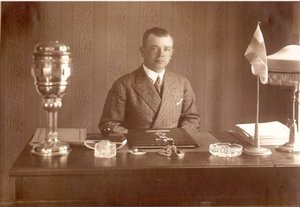
Roman Tavast
1895 - 1942 , Estonia
Основные сведения
- Birth Date: 1895-05-11
- Birth Place: Tallinn, Estonia
- Death Date: 1942-08-03
- Movement: Art Deco
- Name: Roman Tavast
- Nationality: Estonian
- Notable Works: Badge of the Order of Saint Bishop Platon