

 Поделиться
 Поделиться
 Детали произведения

 Скачать
 Похожие работы
 Слайд-шоу
 Статистика
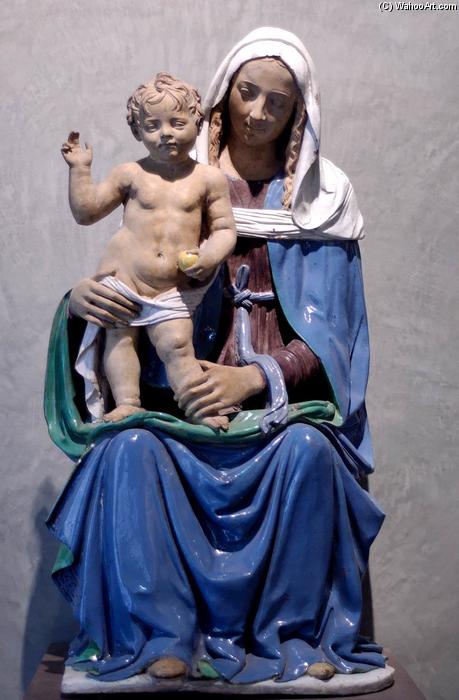
Seated Virgin


 Читать далее
Приобретите цифровое изображение высокого разрешения в улучшенном качестве, которое значительно превосходит онлайн-превью.
Каждый файл тщательно подготавливается нашими специалистами с использованием передовых инструментов и экспертной ручной ретуши. Мы гарантируем исключительную четкость, точную цветопередачу и детальную проработку каждого изображения.
Финальный файл доставляется по электронной почте в течение 72 часов и оптимизирован для немедленного использования в профессиональной среде, при верстке и печати. Это тот же уровень качества, которому доверяют ведущие дизайнерские студии, издательства и галереи.
Цифровое изображение
Скачайте файл высокого разрешения для личного использования, печати и творческих проектов. ( Перейти к печати Купить картину ручной работы)
Включено в каждый заказ цифровых изображений
Гарантия экспертной цифровой доставки
Выбирая ArtsDot.com, вы получаете не просто изображение — вы приобретаете профессионально обработанное цифровое произведение искусства, созданное с безупречной точностью и под защитой гарантии качества. Вот всё, что автоматически входит в ваш заказ:

Мгновенная доставка по e-mail
Ваш цифровой файл в высоком разрешении будет отправлен вам по электронной почте в течение 72 часов после оформления заказа — и сразу станет доступен для использования.

Цифровой файл с ИИ-улучшением
Ваше произведение искусства проходит профессиональную оптимизацию с использованием передовых инструментов ИИ и ручной обработки, что гарантирует максимальную детализацию, четкость и точность цветопередачи.

Бессрочная бесплатная повторная доставка
Случайно удалили или потеряли файл? Не беспокойтесь — мы отправим его вам повторно в любое время и совершенно бесплатно.

Без импортных пошлин — навсегда
Наслаждайтесь вашим произведением искусства мгновенно без таможенных пошлин, сборов или затрат на доставку — цифровые загрузки всегда не облагаются налогом.

Гарантия точности цветопередачи
Мы гарантируем, что ваше цифровое изображение максимально точно передает оригинальные цвета благодаря использованию профессиональных инструментов и систем управления цветом.

Гарантия удовлетворенности 100 дней
Если вы не будете удовлетворены своим цифровым изображением, мы внесем правки или вернем 100% стоимости в течение 100 дней — без лишних вопросов.

100% Гарантия возврата средств
Не удовлетворены покупкой? Получите полный возврат средств в течение 100 дней после получения цифрового файла — без лишних вопросов.

Скидки на оптовые заказы
Купите 3 изображения, сэкономьте 10% — Купите 5, сэкономьте 15% — Купите 10+, сэкономьте 20%. Отличное решение для творческих проектов, галерей и агентств.
A Testament to Grace and Devotion
Santi Buglioni’s “Seated Virgin with the Christ Child,” a terracotta sculpture housed within the Chiesa dei Santi Lorenzo e Ippolito in Castelfiorentino, Italy, is more than just a depiction of Mary and child; it's a profound meditation on motherhood, faith, and the enduring power of human compassion. Created between 1520 and 1530 during the High Renaissance, this work stands as a testament to Buglioni’s exceptional skill in capturing both serene dignity and palpable emotion within the confines of sculpted clay. The sculpture immediately draws the viewer into its intimate scene – a mother cradling her infant son, an image that resonates deeply across cultures and throughout history.
The piece is executed with remarkable attention to detail, characteristic of Buglioni’s workshop. The smooth, polished surface of the terracotta creates a luminous quality, enhanced by the artist's skillful use of glazing – a technique perfected by his predecessors but masterfully employed here to achieve an almost ethereal glow. Note particularly the delicate folds of Mary’s blue cloak, the subtle modeling of her face conveying both tenderness and contemplation, and the youthful innocence of the Christ Child. The way Buglioni has rendered the textures—the soft fabric, the smooth skin—demonstrates a deep understanding of human anatomy and material properties.
The Legacy of Benedetto and Santi Buglioni
To fully appreciate “Seated Virgin,” it’s crucial to understand the context within which it was created. Santi Buglioni was the nephew and collaborator of Benedetto Buglioni, a pivotal figure in Renaissance sculpture. Benedetto, renowned for his work on the façade of Florence Cathedral and his collaborations with Michelangelo, established a workshop that became a significant center for terracotta sculpture. Santi inherited this legacy, building upon his uncle’s techniques while also developing his own distinctive style. The Buglionis were particularly celebrated for their innovative use of glazed terracotta, a technique they refined after learning it from Luca della Robbia, and which allowed them to create sculptures with vibrant colors and remarkable luminosity.
The sculpture's creation coincided with a period of intense artistic patronage in Florence. The Medici family, powerful rulers of the city, were avid collectors of art and commissioned numerous works from leading sculptors. This patronage fueled innovation and experimentation within the Florentine art world, encouraging artists to push the boundaries of their craft. “Seated Virgin” exemplifies this spirit of creativity and ambition, showcasing Buglioni’s ability to synthesize classical ideals with contemporary artistic sensibilities.
Symbolism and Spiritual Resonance
The imagery within “Seated Virgin” is rich in symbolic meaning. The pose itself—a mother cradling her child—is a powerful representation of maternal love, protection, and sacrifice. Mary’s serene expression embodies humility, piety, and acceptance of God's will. The Christ Child, depicted with an innocent gaze, symbolizes hope, redemption, and the promise of salvation. The sculpture can be interpreted as a meditation on the Virgin Mary’s role as the embodiment of grace and compassion – a figure who represents both earthly motherhood and divine connection.
Furthermore, the choice of terracotta—a material associated with earth and fertility—adds another layer of meaning to the work. It connects the image to the natural world and emphasizes the sacredness of life and family. The sculpture’s placement within the Chiesa dei Santi Lorenzo e Ippolito further enhances its spiritual significance, creating a space for contemplation and devotion.
A Timeless Masterpiece
“Seated Virgin” remains a profoundly moving work of art, captivating viewers with its beauty, grace, and emotional depth. It’s a testament to the enduring power of human creativity and the timeless themes explored within Renaissance sculpture. Reproductions of this iconic piece offer an accessible way to experience Buglioni's genius and bring the serenity of this devotional image into any setting. Consider commissioning a high-quality giclée print – a faithful digital reproduction that captures the original’s luminosity and detail—to grace your home or office with this enduring symbol of faith and love.
Похожие произведения
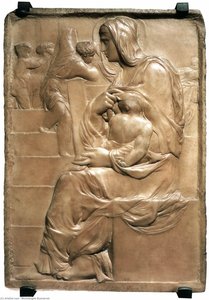
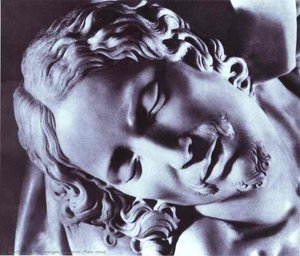
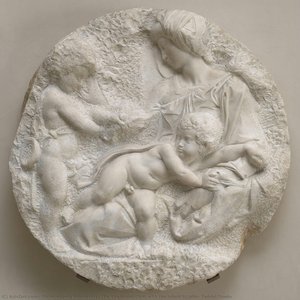
Биография художника
Michelangelo Buonarroti: A Titan of the Renaissance
Michelangelo di Lodovico Buonarroti Simoni, born in Caprese (1494) and died in Rome (1564), stands as arguably the most influential artist of the High Renaissance. More than simply a painter or sculptor, he was a polymath—a master of architecture, poetry, and crucially, human anatomy. His work embodies the ideals of classical beauty and humanist thought, profoundly shaping Western art for centuries to come. Michelangelo’s life was one of intense dedication, often marked by personal struggles and creative conflicts, yet consistently producing masterpieces that continue to inspire awe and debate.
Michelangelo's early years were spent in Florence, where he apprenticed under Domenico Ghirlandaio, a prominent painter. However, his true passion lay in sculpture, and he quickly sought the tutelage of Bertoldo di Giovanni, sculptor to Lorenzo de’ Medici. This period instilled in him a deep understanding of classical forms and a commitment to anatomical accuracy. His early works, such as the *Battle of the Centaurs* (1492-93), already demonstrated his powerful draftsmanship and dramatic flair, foreshadowing the monumental scale and emotional intensity that would characterize his later achievements.
The Sculptor’s Vision: David and Pietà
Michelangelo's reputation as a sculptor solidified with the creation of *David* (1501-04), commissioned for Florence Cathedral. This colossal marble statue, depicting the biblical hero before his battle with Goliath, is a testament to Michelangelo’s mastery of human form—a figure of heroic strength and unwavering resolve. The sheer scale of the sculpture, combined with its remarkably lifelike detail and psychological depth, immediately established it as one of the greatest works of art ever created.
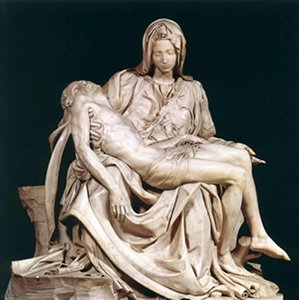
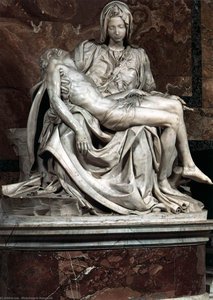
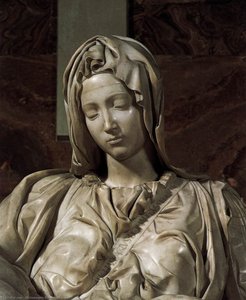
Perhaps even more profoundly moving is the *Pietà* (1498-99), sculpted for St. Peter’s Basilica in Rome. This depiction of Mary cradling the dead Christ is a masterpiece of emotional restraint and exquisite beauty. The figures are rendered with astonishing tenderness, conveying both sorrow and profound dignity. The *Pietà* exemplifies Michelangelo's ability to imbue inanimate stone with an almost palpable sense of humanity—a hallmark of his artistic genius.
Painting and Architecture: A Broadening Palette
While renowned primarily as a sculptor, Michelangelo’s talents extended significantly into the realms of painting and architecture. Pope Julius II commissioned him to paint the ceiling of the Sistine Chapel in Vatican City (1508-12), a project that consumed nearly four years of his life. The frescoes depict scenes from Genesis—the Creation, the Fall of Man, the Flood, and Noah’s Ark—executed with breathtaking scale, dynamism, and anatomical precision. The *Creation of Adam*, arguably the most famous image within the cycle, captures a moment of divine inspiration with unparalleled power.
Following the completion of the Sistine Chapel ceiling, Michelangelo turned his attention to designing the New Sacristy for St. Peter’s Basilica (1536-1541). This architectural masterpiece is characterized by its elegant proportions, intricate detailing, and harmonious integration with the surrounding basilica. The Sacistry showcases Michelangelo's understanding of classical architecture and his ability to create spaces that are both visually stunning and spiritually uplifting.
Mannerism and Legacy
As Michelangelo’s career progressed, his style evolved, reflecting the influence of the burgeoning Mannerist movement. His later works, such as *The Last Judgment* (1536-1541) on the altar wall of the Sistine Chapel and the Tomb of Pope Julius II, exhibit a greater emphasis on dramatic gesture, distorted perspective, and emotional intensity—a departure from the balanced harmony of his earlier work. Despite these stylistic shifts, Michelangelo’s commitment to anatomical accuracy, psychological depth, and expressive power remained unwavering.
Michelangelo's impact on Western art is immeasurable. His mastery of sculpture, painting, and architecture set a new standard for artistic excellence, inspiring generations of artists to strive for greater technical skill, emotional intensity, and intellectual rigor. His works continue to be studied, admired, and debated—a testament to the enduring power and timeless beauty of his genius. He remains not just an artist, but a symbol of human potential and creative achievement.
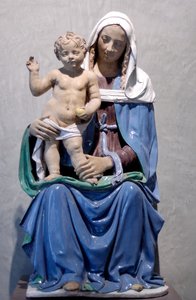
santi buglioni (santi di michele)
1494 - 1576 , Italy
Основные сведения
- Artistic Movement Or Style: High Renaissance, Early Mannerism
- Artists Or Movements Influenced By This Artist:
- Raphael
- Botticelli
- Artists Who Influenced This Artist:
- Donatello
- Leonardo da Vinci
- Date Of Birth: March 6, 1475
- Date Of Death: February 18, 1564
- Full Name: Michelangelo di Lodovico Buonarroti Simoni
- Nationality: Italian
- Notable Artworks:
- David
- Pietà
- The Last Judgment
- Place Of Birth: Caprese Michelangelo, Italy