 Предпросмотр
 Поделиться
 Поделиться
 Детали произведения

 Скачать
 Похожие работы
 Рентгенография
 Слайд-шоу
 Статистика
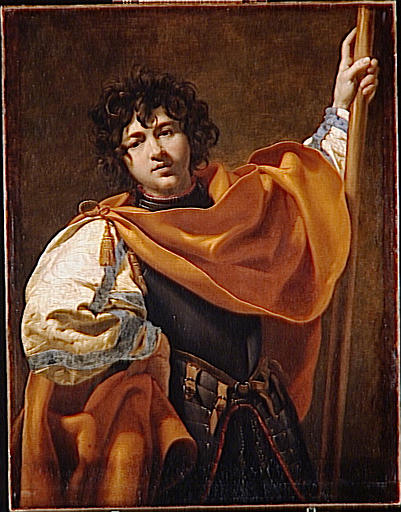
Saint Guillaume d'Aquitaine ( )


 Читать далее
Масляная репродукция ручной работы
Картина маслом на холсте в выбранном вами размере и раме, написанная на заказ нашими художниками. ( Перейти к печати Перейти к цифровым изображениям)




P118B $10

P118H $10

P118W $10

P438Z $10

P508JH $12

P508YH $12

P805H $10

P805Z $10

P919BZ $10

P919G $10

P919XJ $10

P959ZH $10

P968JZ $12

W106C $8

W218G $10

W218JH $8

W218Y $10

W307PJ $10

W316G $10

W316PJ $8

W316Y $10

W398PJ $8

W4111J $10

W500HY $15

W500JH $15

W692G $12

W849H $8

W940BG $15

W953PJ $8




Выберите один из наших стандартных размеров, соответствующих оригинальным пропорциям произведения искусства.

Вы можете указать собственные размеры, чтобы картина идеально вписалась в выбранную раму или пространство. Если выбранный вами размер не соответствует пропорциям оригинала, мы либо обрежем полотно, либо расширим его за счет дополнительных элементов, написанных вручную. Цифровой макет будет отправлен вам на утверждение перед началом производства.
Обратите внимание, что предварительный просмотр на экране не отражает фактическую обрезку или расширение. Только макет точно покажет окончательную композицию.
Хотя доступны индивидуальные размеры, мы рекомендуем выбирать вариант из предопределенного списка, чтобы сохранить исходные пропорции.
После оформления заказа команда ArtsDot.com свяжется с клиентом по электронной почте для уточнения деталей и предоставит предварительный макет
Доставка по всему миру () за 3–4 недели вместо стандартных 5 недель. (10 Сентябрь). Без компромиссов в качестве.

Бесплатная экспресс-доставка по всему миру

Высококачественный льняной холст

Полное страхование доставки

Гарантия возмещения таможенных пошлин

Гарантия точного соответствия цветов

100-дневная политика возврата (только при обнаружении дефектов)

Гарантия возврата 100% средств

Предложение оптовых скидок
 Вариант со стеклом доступен только для размеров менее 110 см

Saint Guillaume d'Aquitaine ( )
Техника репродукции
Размер репродукции
-


Итоговая стоимость
$ 263
A Baroque Vision of Devotion
In the grand tapestry of the seventeenth century, few artists captured the spiritual fervor and theatrical splendor of the French Baroque as masterfully as Simon Vouet. His work Saint Guillaume d'Aquitaine, executed around 1627, serves as a profound window into an era defined by intense emotion and divine reverence. This masterpiece is far more than a mere religious portrait; it is a carefully orchestrated drama of light and shadow that invites the viewer into a moment of quiet, yet powerful, sanctity. As one contemplates the saint’s solemn gaze, there is an immediate sense of being transported to the courtly yet pious atmosphere of Louis XIII’s reign, where art served as both a decorative triumph and a vessel for deep theological reflection.
The composition is anchored by a masterful use of chiaroscuro, a technique that Vouet refined through his exposure to the Italian masters. By directing an unseen light source from the left, the artist sculpts the figure of Saint Guillaume with breathtaking precision. This dramatic illumination catches the contours of his face and the heavy folds of his drapery, while simultaneously casting deep, velvety shadows that lend the work a three-dimensional presence. The saint is positioned in a graceful three-quarter pose, leaning against a vertical staff or column that provides a structural rhythm to the canvas. This interplay between light and dark does not merely create depth; it heightens the emotional stakes of the portrait, imbuing the saint’s expression with a palpable sense of piety and introspective grace.
Color, Texture, and Timeless Elegance
Beyond the structural brilliance of the lighting, the color palette of Saint Guillaume d'Aquitaine is a study in warmth and richness. Vouet employs a sophisticated arrangement of burnt oranges, deep reds, and earthy browns that evoke a sense of ancient tradition and sacred warmth. These opulent tones are strategically contrasted against the somber blacks and muted greys of the background and clothing, ensuring that the viewer's eye remains fixed upon the luminous features of the subject. The texture of the oil paint itself, applied with meticulous layering, suggests a tactile quality that brings the saint’s garments to life, making the artwork feel remarkably present and alive.
For the discerning collector or interior designer, this piece offers an unparalleled opportunity to introduce a sense of historical weight and classical sophistication into a space. The symbolic elements—such as the staff, which may represent a journey of pilgrimage or spiritual authority—add layers of intellectual depth that reward prolonged observation. Whether placed in a curated gallery setting or used as a focal point in a luxurious study, a high-quality reproduction of this work brings with it the prestige of the French Baroque. It is an investment in atmosphere, offering a timeless elegance that speaks to the enduring power of faith, artistry, and the human spirit.
Похожие произведения
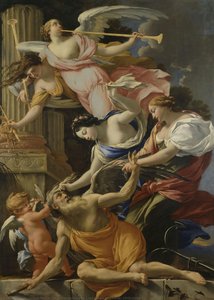
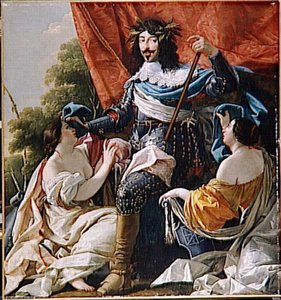
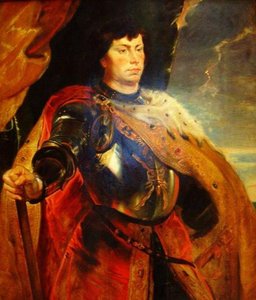
Биография художника
Simon Vouet: A Pioneer of French Baroque Painting
Simon Vouet was a pivotal figure in the transition of French painting from Mannerism to the Baroque style—a transformation that fundamentally reshaped the artistic landscape of France and cemented his place as one of the most important artists of the seventeenth century. Born into an artistic family – Laurent Vouet, his father, was himself a painter – Simon received early training that instilled in him a deep appreciation for artistic innovation and meticulous craftsmanship. His grandson, Ludovico Dorigny, would continue the Vouet lineage’s dedication to art, ensuring the preservation of their distinctive aesthetic vision.Early Career and Italian Influences (1608-1627)
Vouet's artistic journey began in Paris, where he honed his skills as a portraitist—a profession that would define much of his early career. Demonstrating remarkable talent from a young age, he embarked on a formative trip to England in 1608, commissioned to depict a prominent noble family. This experience exposed him to the burgeoning artistic fervor of Northern Europe and solidified his reputation as a rising star. However, Vouet’s ambitions extended beyond national borders; he eagerly embraced opportunities for exploration and learning abroad. His fascination with Italian art culminated in a momentous decision: in 1611, he joined the entourage of Baron de Sancy, France's ambassador to the Ottoman Empire—a journey that transported him to Constantinople and subsequently to Venice in 1612. These travels were not merely expeditions for pleasure; they served as invaluable catalysts for artistic growth. In Venice, Vouet immersed himself in the vibrant atmosphere of the Serenissima Republic, absorbing the stylistic precepts championed by Paolo Veronese and Giovanni Battista Tiepolo—artists who epitomized the grandeur and theatricality of the Venetian Baroque. Rome, from 1614 to 1627, proved to be Vouet’s crucible – a period of intense artistic experimentation and profound intellectual engagement. He resided within the epicenter of Baroque innovation, surrounded by luminaries such as Caravaggio, Guido Reni, Lanfranco, and Domenichino. These masters profoundly influenced Vouet's stylistic sensibilities, prompting him to meticulously analyze their techniques—particularly their masterful use of chiaroscuro (the dramatic interplay of light and shadow)—and to incorporate elements of Mannerism into his compositions. He wasn’t merely imitating; he was synthesizing disparate influences into a singular artistic idiom that would become his hallmark.Development of Vouet’s Distinctive Style
The culmination of Vouet's Italian sojourn arrived in 1624 when he ascended to the presidency of Accademia di San Luca—Rome’s premier art institution—a prestigious honor reflecting both his exceptional skill and the recognition accorded him by fellow artists. This position afforded him unparalleled access to artistic discourse and enabled him to champion innovative approaches to painting. During this time, Vouet perfected a style characterized by its remarkable ability to absorb and transform diverse influences into a cohesive whole. He achieved this feat through painstaking observation of nature—a practice that informed his meticulous rendering of drapery folds and anatomical detail—and by embracing the principles of di sotto in su (foreshortened perspective), pioneered by Veronese, which created an illusion of depth and grandeur.Major Achievements and Legacy
Upon returning to France in 1627, Vouet immediately established himself as a leading figure in Parisian artistic circles—a role he would maintain until his death in 1649. He was appointed *Premier peintre du Roi* (First Painter to the King)—a position of considerable prestige and influence—by Louis XIII—who recognized Vouet’s unparalleled talent and unwavering dedication to artistic excellence. This patronage afforded him access to royal commissions that allowed him to produce monumental paintings adorning Versailles and other palaces, solidifying his reputation as a master of decorative art. Vouet's workshop flourished during his lifetime, nurturing the careers of numerous aspiring artists—among them Charles Le Brun, Valentin de Boulogne, Pierre Mignard, Eustache Le Sueur, Claude Mellan—who would carry Vouet’s stylistic legacy throughout France. His influence extended beyond individual works; he established a distinctively Baroque school of painting that profoundly shaped the artistic sensibilities of subsequent generations. Vouet's enduring contribution to French art lies in his role as a catalyst for stylistic innovation and in his unwavering commitment to upholding the highest standards of artistic craftsmanship—a testament to his place among the titans of seventeenth-century European painting.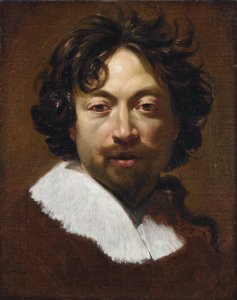
Симон Воюэт
1590 - 1649 , Франция
Основные сведения
- Artistic Movement Or Style: Барокко
- Artists Or Movements Influenced By This Artist: ['Французское барокко']
- Artists Who Influenced This Artist:
- Караваджо
- Паоло Веронезе
- Date Of Birth: Янв 9, 1590
- Date Of Death: Июнь 30, 1649
- Full Name: Simon Vouet
- Nationality: Франция
- Notable Artworks: ['Анотация с Благовещением Святой Маргариты и Святого Ансана']
- Place Of Birth: Париж, Франция
Похожие статьи

Echoes of Time: Exploring the Enduring Appeal & Historical Context of Vintage Art Prints
Explore the captivating world of vintage art prints! Discover their history, collecting tips & enduring appeal. Expert insights on chromolithography and building a legacy collection with ArtsDot.

Барочная драма: Искусство величия в современном интерьере
Погрузитесь в мир роскоши и величия барокко! Узнайте об истории стиля, ключевых элементах интерьера и архитектуре. Вдохновляйтесь с и создайте свой неповторимый дизайн.
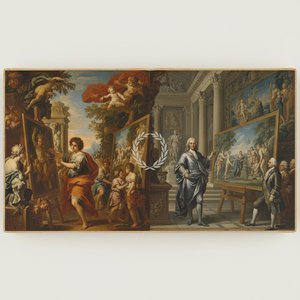
Simon Vouet: A Baroque Master's Journey from Italian Influence to French Classicism
Explore the life & art of Simon Vouet, a pivotal French Baroque painter who introduced Italian styles to France. Discover his masterpieces and lasting influence on 17th-century art.
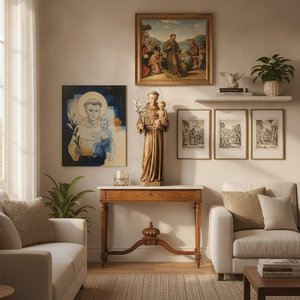
Discover the Divine: Inspiring Saint Anthony Artworks to Elevate Your Home Decor
Transform your home with the profound beauty of Saint Anthony artworks. Explore exquisite Baroque reproductions by Murillo and Zurbarán, hand-painted on 100% cotton canvas to bring divine serenity and timeless elegance to your interior design.

Giclée Prints: Archival Quality & Aesthetic Nuances for the Discerning Collector
Explore the world of giclée prints with ArtsDot. Learn about archival quality, aesthetic nuances & investment potential. Expert guidance for discerning art collectors seeking museum-quality reproductions and lasting value.