

 Предпросмотр
 Поделиться
 Поделиться
 Детали произведения

 Скачать
 Похожие работы
 Рентгенография
 Слайд-шоу
 Статистика
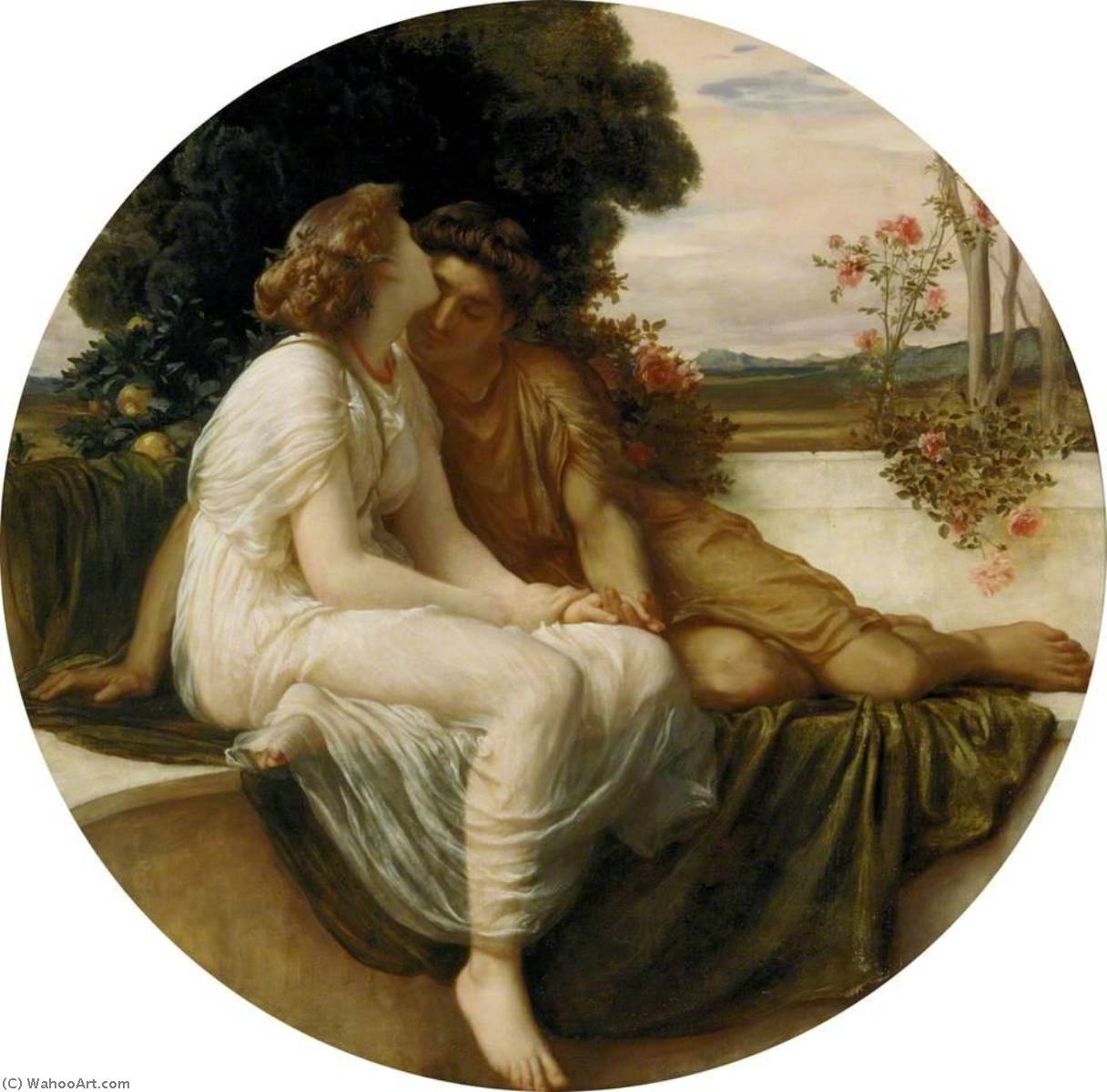
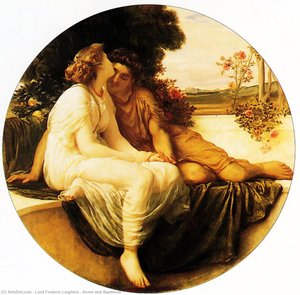
Acme and Septimius


 Читать далее
Приобретите цифровое изображение высокого разрешения в улучшенном качестве, которое значительно превосходит онлайн-превью.
Каждый файл тщательно подготавливается нашими специалистами с использованием передовых инструментов и экспертной ручной ретуши. Мы гарантируем исключительную четкость, точную цветопередачу и детальную проработку каждого изображения.
Финальный файл доставляется по электронной почте в течение 72 часов и оптимизирован для немедленного использования в профессиональной среде, при верстке и печати. Это тот же уровень качества, которому доверяют ведущие дизайнерские студии, издательства и галереи.
Цифровое изображение
Скачайте файл высокого разрешения для личного использования, печати и творческих проектов. ( Перейти к печати Купить картину ручной работы)
Включено в каждый заказ цифровых изображений
Гарантия экспертной цифровой доставки
Выбирая ArtsDot.com, вы получаете не просто изображение — вы приобретаете профессионально обработанное цифровое произведение искусства, созданное с безупречной точностью и под защитой гарантии качества. Вот всё, что автоматически входит в ваш заказ:

Мгновенная доставка по e-mail
Ваш цифровой файл в высоком разрешении будет отправлен вам по электронной почте в течение 72 часов после оформления заказа — и сразу станет доступен для использования.

Цифровой файл с ИИ-улучшением
Ваше произведение искусства проходит профессиональную оптимизацию с использованием передовых инструментов ИИ и ручной обработки, что гарантирует максимальную детализацию, четкость и точность цветопередачи.

Бессрочная бесплатная повторная доставка
Случайно удалили или потеряли файл? Не беспокойтесь — мы отправим его вам повторно в любое время и совершенно бесплатно.

Без импортных пошлин — навсегда
Наслаждайтесь вашим произведением искусства мгновенно без таможенных пошлин, сборов или затрат на доставку — цифровые загрузки всегда не облагаются налогом.

Гарантия точности цветопередачи
Мы гарантируем, что ваше цифровое изображение максимально точно передает оригинальные цвета благодаря использованию профессиональных инструментов и систем управления цветом.

Гарантия удовлетворенности 100 дней
Если вы не будете удовлетворены своим цифровым изображением, мы внесем правки или вернем 100% стоимости в течение 100 дней — без лишних вопросов.

100% Гарантия возврата средств
Не удовлетворены покупкой? Получите полный возврат средств в течение 100 дней после получения цифрового файла — без лишних вопросов.

Скидки на оптовые заказы
Купите 3 изображения, сэкономьте 10% — Купите 5, сэкономьте 15% — Купите 10+, сэкономьте 20%. Отличное решение для творческих проектов, галерей и агентств.
A Vision of Eternal Romance
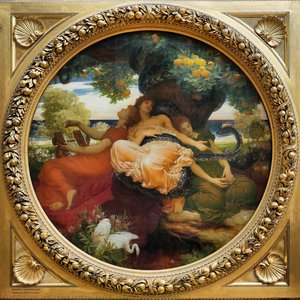
In the soft, golden glow of 1868, Sir Frederic Lord Leighton captured a moment of profound intimacy that transcends the boundaries of time. Acme and Septimius is not merely a painting; it is a window into a dreamlike realm where classical elegance meets the raw emotion of human connection. Rendered in a striking circular format, the composition draws the viewer into a tender embrace between two figures, their bodies forming a gentle, rhythmic curve that anchors the entire piece. This unique tondo-style presentation creates an immersive, almost hypnotic effect, focusing all attention on the central protagonists as they are cradled by a lush, verdant garden. The atmosphere is thick with the scent of imagined roses and the warmth of a fading afternoon, making it a centerpiece that promises to breathe life and soul into any sophisticated interior.
The artistry behind this work showcases Leighton’s mastery of the Academic style, blended seamlessly with the sensuality of the Pre-Raphaelite movement. Through the meticulous application of thin, translucent glazes, the artist achieves a skin tone that appears to glow from within, contrasted beautifully against the rich, heavy textures of flowing drapery. Every petal in the surrounding garden and every leaf in the distant, hazy landscape is rendered with an exacting precision that speaks to his disciplined training. The lighting is masterfully diffused, casting soft shadows that define the musculature and delicate features of the lovers without breaking the dreamlike, ethereal quality of the scene. For the discerning collector, this technique offers a tactile depth that makes a high-quality reproduction feel remarkably alive.
Symbolism and the Classical Ideal
Beyond its surface beauty, Acme and Septimius is steeped in a rich tapestry of symbolism designed to evoke the idyllic splendor of antiquity. The garden setting serves as more than just a backdrop; it is an earthly paradise, a sanctuary of peace far removed from the industrializing world of the late 19th century. The presence of roses—symbols of enduring love and fleeting beauty—intertwines with the figures, suggesting that their passion is both natural and divine. Leighton utilizes atmospheric perspective to suggest a vast, infinite world beyond this intimate circle, where distant trees and pale skies hint at a larger, mythological universe. This sense of depth and scale provides a wonderful balance for interior design, offering a focal point that feels both intimate enough for a private study and grand enough to command a formal living space.
To possess a reproduction of this masterpiece is to invite the spirit of the Victorian Golden Age into one's home. It serves as an evocative conversation piece, reflecting a deep appreciation for classical history, romanticism, and the technical heights of oil painting. Whether placed in a sunlit gallery or a moody, library-style room, the painting’s warm palette and emotive subject matter provide a sense of timeless luxury and emotional tranquility, making it an incomparable choice for those looking to curate a space filled with beauty, history, and grace.
Похожие произведения
Биография художника
A Life Bathed in Light: The World of Sir Frederic Lord Leighton
Sir Frederic Lord Leighton, born in Scarborough, England, in 1830, was a figure whose life and art were inextricably linked to beauty, classical ideals, and the vibrant currents of Victorian society. His early existence, cushioned by his family’s considerable wealth – stemming from his grandfather's distinguished service as physician to the Russian Tsars – afforded him an unparalleled opportunity for artistic development, allowing him to embark on extensive travels across Europe and immerse himself in the artistic traditions of Italy, Germany, and France. These formative years were not merely a period of observation; they were a crucible where Leighton’s distinctive style began to coalesce—a masterful blend of academic precision, Pre-Raphaelite sensuality, and an unwavering reverence for the classical world. A particularly memorable event during his youth occurred at seventeen when he encountered Arthur Schopenhauer in Frankfurt, resulting in the only known full-length portrait of the notoriously reclusive philosopher – a testament to Leighton’s intellectual curiosity and his fascination with exploring the complexities of human experience. This encounter hinted at a deeper artistic intent, one that would consistently inform his work for decades to come.The Painterly Embrace of Myth and History
Leighton's artistic career flourished during an era deeply invested in historical narratives, biblical tales, and the enduring allure of classical mythology. He didn’t simply depict these subjects; he inhabited them, meticulously researching costumes, settings, and the subtle nuances of ancient life to create works that possessed a remarkable sense of authenticity and dramatic power. His paintings weren't mere illustrations—they were immersive experiences, transporting viewers to worlds populated by gods, heroes, and forgotten empires. *Clytie*, perhaps his most celebrated work, exemplifies this approach perfectly. The painting portrays the nymph Clytie, transformed into a sunflower, eternally yearning for Apollo’s gaze. It is not merely a beautiful image; it's a poignant exploration of unrequited love, longing, and the transformative power of nature—rendered with an astonishing level of detail and bathed in a luminous quality that seems to emanate from within the canvas itself. Similarly, *The Daphnephoria*, depicting Apollo’s pursuit of the nymph Daphne as she transforms into a laurel tree, showcases Leighton's mastery of composition, color, and his ability to capture movement and energy with breathtaking skill. He deliberately embraced opulent textures, rich fabrics, and dramatic lighting—elements that contributed significantly to the sheer visual splendor of his paintings. Leighton’s meticulous attention to detail extended beyond mere aesthetics; he sought to evoke a sense of atmosphere and emotion, drawing upon his extensive knowledge of classical art and mythology to create works that resonated deeply with viewers.Beyond the Canvas: Sculpture and Architectural Vision
While primarily recognized as a painter, Leighton's artistic ambitions transcended the limitations of two-dimensional representation. He was a gifted sculptor, and his *Athlete Wrestling with a Python*, created between 1888 and 1891, marked a pivotal moment in British sculpture—often credited with initiating a renaissance in contemporary sculptural practice known as the “New Sculpture.” This monumental work, carved from pristine white marble, embodies both physical power and dramatic tension. The sculpture’s dynamic pose and expressive musculature were revolutionary for its time, demonstrating a newfound emphasis on naturalism and anatomical accuracy. However, Leighton's creative vision extended far beyond sculpture. He was an avid collector of art and artifacts, particularly those originating from the Near East – treasures that he didn’t simply display but integrated into the very fabric of his home, Leighton House in Holland Park, London. Designed by George Aitchison, Leighton House is a masterpiece in its own right—a stunning example of Aestheticism that served as both a residence and a studio. The iconic Arab Hall, with its intricate tilework and soaring arches, stands as a lasting testament to Leighton’s eclectic tastes and his desire to create a total work of art – an environment designed to inspire and nurture his creativity.Legacy and the Echoes of an Era
Leighton's influence on British art was profound and enduring. He served as President of the Royal Academy from 1878 until his death in 1896, a position he held with distinction, championing artistic excellence and fostering a vibrant creative community. His knighted in 1878, made a baronet in 1886, and remarkably, granted a peerage just one day before his passing – a testament to the immense respect he commanded within the art world and beyond. While his work experienced a period of relative obscurity following his death, eclipsed by the rise of modernism, there has been a significant resurgence of interest in Leighton’s art in recent decades. Today, his paintings and sculptures are celebrated for their technical brilliance, their evocative power, and their ability to transport viewers to worlds of beauty and wonder. His legacy is not merely one of aesthetic achievement but also of a life dedicated to the pursuit of beauty, knowledge, and artistic innovation – a truly remarkable figure in the history of British art.- His works continue to inspire artists and captivate audiences around the globe.
- Leighton House Museum stands as a lasting tribute to his artistic vision and remains a vital cultural landmark.
- He represents a fascinating intersection of Victorian ideals, classical influences, and Pre-Raphaelite sensibilities – a unique voice in the history of British art.
Notable Works
- Clytie (1871-1872)
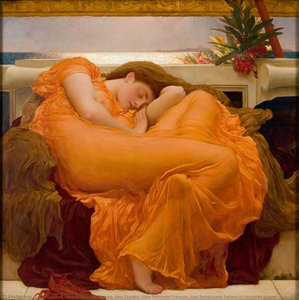
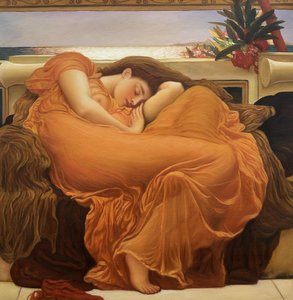
- Flaming June (1875)
- Athlete Wrestling with a Python (1888-1891)
- The Sluggard (1885)
- Daphnephoria (1864)
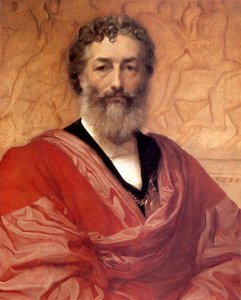
Фредерик Лейтън
1830 - 1896 , Великобритания
Основные сведения
- Artistic Movement Or Style: Академический, Прерафаэлитянин
- Artists Or Movements Influenced By This Artist:
- Новый скульптурный
- Аэстетизм
- Artists Who Influenced This Artist:
- Эдуард фон Штайнель
- Джованни Коста
- Date Of Birth: 3 декабря 1830 г.
- Date Of Death: 25 января 1896 г.
- Full Name: Sir Frederic Lord Leighton
- Nationality: Британский
- Notable Artworks:
- Клития
- Фламмюнь
- Спортмен, борется с питоном
- Place Of Birth: Scarborough, Великобритания