 Предпросмотр
 Поделиться
 Поделиться
 Детали произведения

 Скачать
 Похожие работы
 Рентгенография
 Слайд-шоу
 Статистика
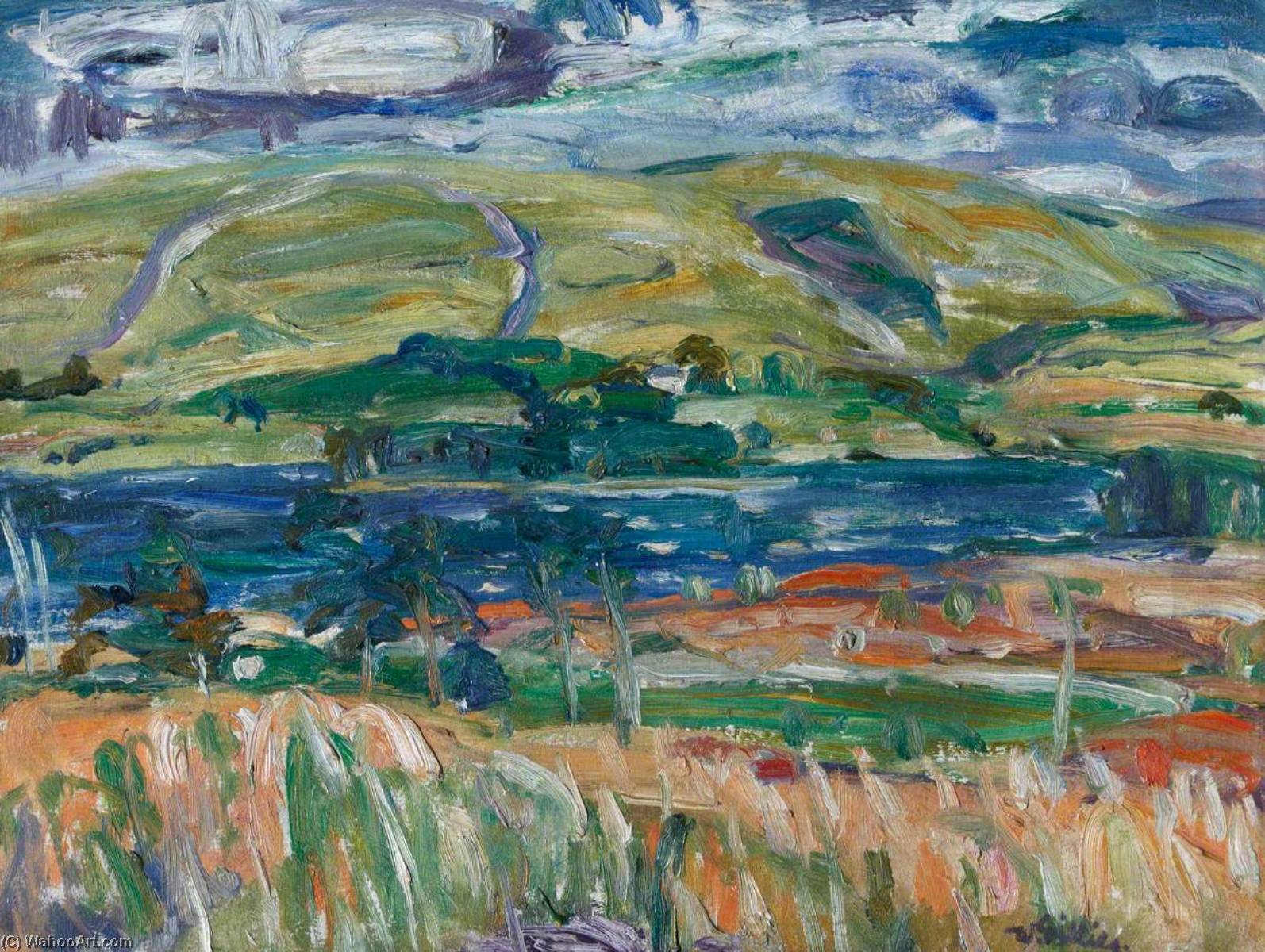
Moorfoot
 Watercolor
- WallArt
- Cubism
 Modern
 39.0 x 51.0 cm
 Royal Scottish Academy of Art - Architecture
 Читать далее
Масляная репродукция ручной работы
Картина маслом на холсте в выбранном вами размере и раме, написанная на заказ нашими художниками. ( Перейти к печати Перейти к цифровым изображениям)




P118B $10

P118H $10

P118W $10

P438Z $10

P508JH $12

P508YH $12

P805H $10

P805Z $10

P919BZ $10

P919G $10

P919XJ $10

P959ZH $10

P968JZ $12

W106C $8

W218G $10

W218JH $8

W218Y $10

W307PJ $10

W316G $10

W316PJ $8

W316Y $10

W398PJ $8

W4111J $10

W500HY $15

W500JH $15

W692G $12

W849H $8

W940BG $15

W953PJ $8




Выберите один из наших стандартных размеров, соответствующих оригинальным пропорциям произведения искусства.

Вы можете указать собственные размеры, чтобы картина идеально вписалась в выбранную раму или пространство. Если выбранный вами размер не соответствует пропорциям оригинала, мы либо обрежем полотно, либо расширим его за счет дополнительных элементов, написанных вручную. Цифровой макет будет отправлен вам на утверждение перед началом производства.
Обратите внимание, что предварительный просмотр на экране не отражает фактическую обрезку или расширение. Только макет точно покажет окончательную композицию.
Хотя доступны индивидуальные размеры, мы рекомендуем выбирать вариант из предопределенного списка, чтобы сохранить исходные пропорции.
После оформления заказа команда ArtsDot.com свяжется с клиентом по электронной почте для уточнения деталей и предоставит предварительный макет
Доставка по всему миру () за 3–4 недели вместо стандартных 5 недель. (12 Сентябрь). Без компромиссов в качестве.

Бесплатная экспресс-доставка по всему миру

Высококачественный льняной холст

Полное страхование доставки

Гарантия возмещения таможенных пошлин

Гарантия точного соответствия цветов

100-дневная политика возврата (только при обнаружении дефектов)

Гарантия возврата 100% средств

Предложение оптовых скидок
 Вариант со стеклом доступен только для размеров менее 110 см

Moorfoot
Техника репродукции
Размер репродукции
-


Итоговая стоимость
$ 263
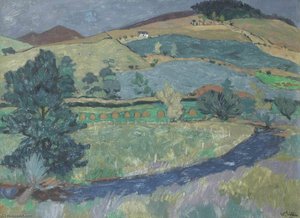
Moorfoot by Sir William George Gillies: A Landscape Reverie
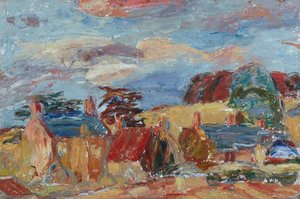
Sir William George Gillies (1898 – 1973), a Scottish landscape painter of considerable renown, gifted us with “March, Moorfoot,” a captivating depiction of the Moorfoot Hills overlooking Edinburgh. Completed in 1951, this watercolour and pencil piece embodies the spirit of the Scottish Colourists movement—a group dedicated to capturing the immediacy and vibrancy of the British countryside.
A Cézanne Echoes Through Impressionism
Gillies’ artistic journey began with a profound engagement with Cubism under André Lhote in Paris, exposing him to the revolutionary ideas circulating at the time. However, his formative influence stemmed from encountering Paul Klee's work—a serendipitous encounter that unlocked Gillies’ ability to infuse his compositions with childlike wonder and imaginative colour palettes. This stylistic fusion is strikingly evident in “March, Moorfoot,” where Cézanne’s geometric simplification subtly informs Gillies’ approach.
Technique and Colour Harmony
Gillies skillfully employs watercolour techniques—layering washes of pigment to achieve luminous tonal gradations—creating a breathtaking panorama. The muted greens and blues dominate the palette, reflecting the prevailing atmospheric conditions of March – capturing not merely what is seen but how it feels. Precise pencil lines delineate key topographical features, grounding the ethereal colours in tangible reality. Notice particularly the delicate rendering of distant trees against the hazy horizon; Gillies’ meticulous attention to detail elevates the painting beyond mere representation.
Symbolism and Emotional Resonance
"March, Moorfoot" transcends a simple landscape portrayal. The Moorfoot Hills themselves hold significance within Scottish folklore—representing resilience and enduring beauty amidst challenging seasons. Gillies' masterful use of colour contributes to an overwhelming sense of tranquility and contemplation. Viewing this artwork evokes memories of crisp mornings, invigorating breezes, and the profound connection between humanity and nature—a timeless theme explored with remarkable sensitivity.
A Legacy of Scottish Art
Gillies’ contribution to Scottish art is undeniable. His unwavering dedication to capturing the essence of the landscape cemented his place among the foremost artists of his era. “March, Moorfoot,” stands as a testament to his artistic vision—a beautiful and enduring reminder of Scotland's breathtaking natural heritage.
Похожие произведения
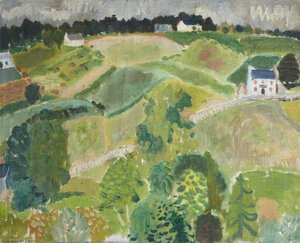
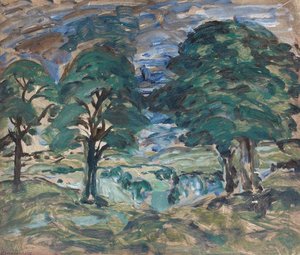
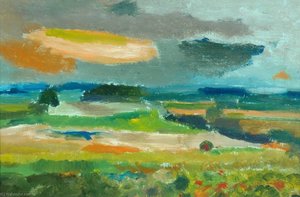
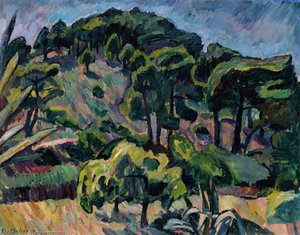
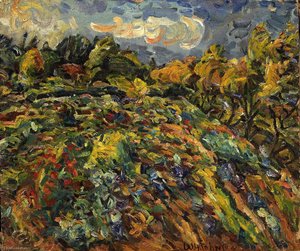
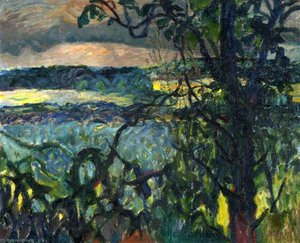
Биография художника
Early Life and Artistic Beginnings
Sir William George Gillies, a name synonymous with the evocative beauty of Scottish landscapes and poignant still lifes, was born in Haddington, East Lothian, in 1898. His early life, steeped in the traditions of his native region, would profoundly shape his artistic vision. Initially enrolled at the Edinburgh College of Art, his studies were abruptly interrupted by the exigencies of World War I, where he served with distinction as a Royal Engineer. This experience, marked by both hardship and camaraderie, undoubtedly left an indelible mark on his psyche – a sensitivity to human experience that would later permeate his art. Following the war’s conclusion, Gillies returned to complete his education at the Edinburgh College of Art, ultimately securing a position as a dedicated teacher there for over four decades, shaping the artistic sensibilities of countless students.A Journey Through Modernism: Influences and Early Works
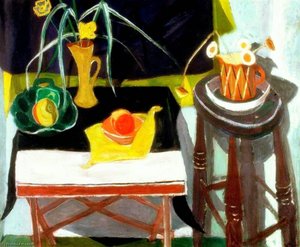
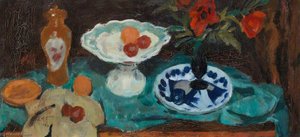
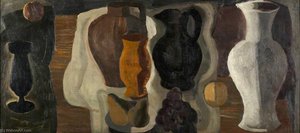
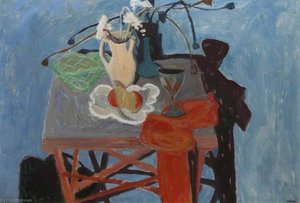
Gillies' artistic trajectory began with an enthusiastic exploration of Cubism following his studies under André Lhote in Paris (1923) and a subsequent journey to Italy (1924). This period exposed him to the radical innovations of European modern art, particularly the works of Picasso and Braque. His early paintings, such as “Two Pots, Saucer and Fruit” (1933), demonstrate this initial influence – a Cézanne-inspired arrangement characterized by carefully constructed compositions and an understated palette. However, a pivotal moment arrived in 1934 with his encounter with the art of Paul Klee. Klee’s imaginative use of color, his playful approach to form, and his embrace of childlike qualities profoundly impacted Gillies' style, leading him to incorporate elements of whimsy and emotional depth into his compositions. This shift marked a departure from strict Cubism, laying the foundation for his distinctive, deeply personal artistic voice rooted in Scottish traditions.The 1922 Group: A Hub of Innovation
In 1922, Gillies played a crucial role in establishing the “1922 Group,” alongside fellow artists including William Crozier, William Geissler, and William MacTaggart. This collective, operating out of the New Gallery in Edinburgh for a decade, served as a vital platform for emerging Scottish artists to showcase their work and foster a sense of community and artistic exchange. The 1922 Group was more than just an exhibition society; it represented a concerted effort to nurture and promote a new generation of Scottish painters, challenging established norms and pushing the boundaries of contemporary art. It’s a testament to Gillies' leadership and vision that he spearheaded this initiative, contributing significantly to the vibrant artistic landscape of Edinburgh at the time.Themes and Subject Matter: A Reflection of Scotland
Gillies’ artistic focus centered primarily on two distinct yet interconnected themes: landscapes and still lifes. His depictions of the Lothian, Fife, and Border regions of Scotland are renowned for their sensitivity and evocative power. He possessed a remarkable ability to capture not just the visual appearance of these areas but also the essence of their character – the rugged beauty of the Highlands, the tranquility of the coastal villages, and the timeless quality of the Scottish countryside. Simultaneously, Gillies developed a profound interest in still life compositions, often featuring ceramics created by his younger sister, Emma Smith Gillies, whose untimely death in 1936 deeply affected him. These poignant still lifes, frequently imbued with a sense of melancholy and remembrance, stand as powerful testaments to the artist’s personal grief and artistic exploration. While he experimented with portraiture early in his career, landscapes and still lifes ultimately became the dominant subjects of his oeuvre.Recognition and Legacy
Throughout his distinguished career, Sir William George Gillies received numerous accolades recognizing his contributions to Scottish art. He was elected a Royal Academician (RA) in 1964, a prestigious honor signifying recognition within the broader British art world. In 1970, he was knighted, further cementing his place as a leading figure in the nation’s artistic heritage. Gillies served as Principal of the Edinburgh College of Art from 1959 until his retirement in 1966, leaving behind a legacy not only through his paintings but also through his influence on generations of students. His works are now held in prominent collections across Scotland and internationally, including the National Galleries of Scotland, demonstrating the enduring appeal and critical acclaim of his art. Sir William George Gillies remains a pivotal figure in 20th-century Scottish art – an artist whose evocative landscapes and poignant still lifes continue to resonate with audiences today.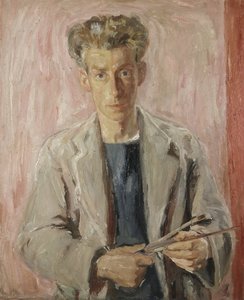
Уильям Джордж Гиллес
1898 - 1973 , Великобритания
Основные сведения
- Artistic Movement Or Style: Кубизм, шотландский колоризм
- Artists Or Movements Influenced By This Artist:
- Paul Klee
- Шотландская школа
- Artists Who Influenced This Artist:
- André Lhote
- Клод Моне
- Пикассо
- Date Of Birth: 1898
- Date Of Death: 1973
- Full Name: Sir William George Gillies
- Nationality: Шотландец
- Notable Artworks:
- Two Pots, Saucer and Fruit
- Mediterranean Landscape
- Place Of Birth: Хаддингтон, Великобритания
Похожие статьи

Ephemeral Visions: Exploring the History & Emotional Resonance of Watercolor Painting
Explore the captivating history of watercolor painting, from ancient techniques to modern masters like Kandinsky & Blake. Discover essential artists, collecting tips & the emotional power of this luminous medium. Expert insights for art enthusiasts.

Ephemeral Visions: Exploring the Artistic Legacy & Contemporary Practice of Watercolor Painting
Explore the captivating world of watercolor painting! Discover its rich history, essential techniques, influential artists & collecting tips. A comprehensive guide for art enthusiasts from ArtsDot.
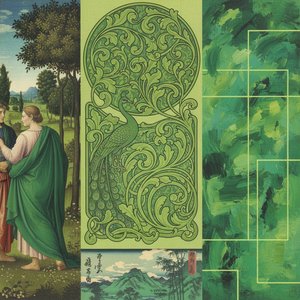
Verdant Visions: Exploring the Symbolism & Aesthetic Impact of Green in Art History
Explore the rich history & symbolism of green in art! Discover iconic paintings, techniques, and how to bring verdant harmony into your home with ArtsDot's expert guide.

Топ-10 легендарных акварелей, изменивших искусство навсегда | ArtsDot
Погрузитесь в мир акварели! Откройте топ-10 легендарных картин Turner, Monet и других великих художников. История искусства, техники живописи и вдохновение для вашего интерьера. Репродукции музейного качества на ArtsDot.com.

Ephemeral Visions: Exploring the Artistic Legacy & Nuances of Watercolor Painting
Explore the captivating world of watercolor painting! Discover its rich history, essential techniques, influential artists & collecting tips from art experts. A comprehensive guide for enthusiasts.