

 Предпросмотр
 Поделиться
 Поделиться
 Детали произведения

 Скачать
 Похожие работы
 Рентгенография
 Слайд-шоу
 Статистика
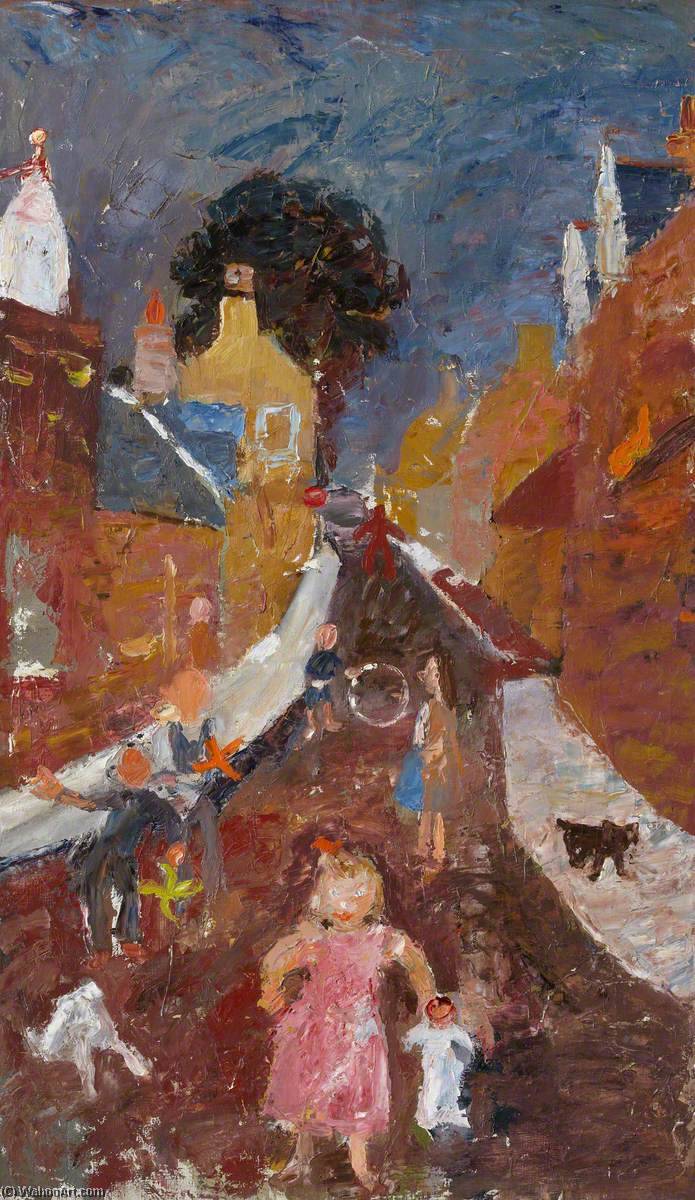
Temple Village, Children Playing
 Oil On Canvas
- WallArt
- Scottish Colourist
 1945
1945 113.0 x 67.0 cm
 Royal Scottish Academy of Art - Architecture
 Читать далее
Приобретите цифровое изображение высокого разрешения в улучшенном качестве, которое значительно превосходит онлайн-превью.
Каждый файл тщательно подготавливается нашими специалистами с использованием передовых инструментов и экспертной ручной ретуши. Мы гарантируем исключительную четкость, точную цветопередачу и детальную проработку каждого изображения.
Финальный файл доставляется по электронной почте в течение 72 часов и оптимизирован для немедленного использования в профессиональной среде, при верстке и печати. Это тот же уровень качества, которому доверяют ведущие дизайнерские студии, издательства и галереи.
Цифровое изображение
Скачайте файл высокого разрешения для личного использования, печати и творческих проектов. ( Перейти к печати Купить картину ручной работы)
Включено в каждый заказ цифровых изображений
Гарантия экспертной цифровой доставки
Выбирая ArtsDot.com, вы получаете не просто изображение — вы приобретаете профессионально обработанное цифровое произведение искусства, созданное с безупречной точностью и под защитой гарантии качества. Вот всё, что автоматически входит в ваш заказ:

Мгновенная доставка по e-mail
Ваш цифровой файл в высоком разрешении будет отправлен вам по электронной почте в течение 72 часов после оформления заказа — и сразу станет доступен для использования.

Цифровой файл с ИИ-улучшением
Ваше произведение искусства проходит профессиональную оптимизацию с использованием передовых инструментов ИИ и ручной обработки, что гарантирует максимальную детализацию, четкость и точность цветопередачи.

Бессрочная бесплатная повторная доставка
Случайно удалили или потеряли файл? Не беспокойтесь — мы отправим его вам повторно в любое время и совершенно бесплатно.

Без импортных пошлин — навсегда
Наслаждайтесь вашим произведением искусства мгновенно без таможенных пошлин, сборов или затрат на доставку — цифровые загрузки всегда не облагаются налогом.

Гарантия точности цветопередачи
Мы гарантируем, что ваше цифровое изображение максимально точно передает оригинальные цвета благодаря использованию профессиональных инструментов и систем управления цветом.

Гарантия удовлетворенности 100 дней
Если вы не будете удовлетворены своим цифровым изображением, мы внесем правки или вернем 100% стоимости в течение 100 дней — без лишних вопросов.

100% Гарантия возврата средств
Не удовлетворены покупкой? Получите полный возврат средств в течение 100 дней после получения цифрового файла — без лишних вопросов.

Скидки на оптовые заказы
Купите 3 изображения, сэкономьте 10% — Купите 5, сэкономьте 15% — Купите 10+, сэкономьте 20%. Отличное решение для творческих проектов, галерей и агентств.
A Moment of Village Life: Gillies’ “Temple Village, Children Playing”
Sir William George Gillies' "Temple Village, Children Playing," painted in 1945, is more than just a depiction of a bustling street scene; it’s a vibrant snapshot of community and joy captured with the artist’s signature blend of observation and evocative color. The painting transports us to a small Japanese village, brimming with life as children engage in games amidst adults going about their daily routines. Gillies, deeply rooted in Scottish landscape painting yet profoundly influenced by European modernism, masterfully balances realism with an underlying sense of dreamlike quality – a hallmark of his distinctive style.
The scene unfolds on a narrow street lined with traditional buildings, their details rendered with careful attention to light and shadow. Gillies’ technique is immediately recognizable: he employs loose, expressive brushstrokes that create a palpable sense of movement and energy. The figures aren't sharply defined; instead, they are suggested through color and form, contributing to the painting’s overall feeling of immediacy. Notice how the warm hues of the children’s clothing contrast with the cooler tones of the buildings, drawing our eye to their playful interactions.
Echoes of Cubism and Klee: Gillies' Artistic Journey
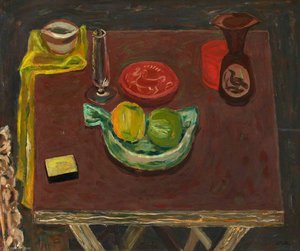
Gillies’ artistic development reveals a fascinating journey through various movements. Initially influenced by the geometric precision of Cubism – particularly evident in works like “Two Pots, Saucer and Fruit” – he later embraced the more emotionally charged approach of Paul Klee. This shift is powerfully reflected in "Temple Village, Children Playing." Klee’s emphasis on color as a primary expressive tool is brilliantly translated here; Gillies uses vibrant reds, yellows, and blues not just to depict reality but to evoke feelings of warmth, happiness, and the simple pleasures of childhood.
His time in Paris during 1923, studying under André Lhote, provided a crucial foundation. However, it was his encounter with Klee’s work in 1934 that truly unlocked Gillies' creative potential. Klee’s use of childlike imagery and simplified forms encouraged Gillies to infuse his paintings with a sense of wonder and spontaneity – qualities that are abundantly present in this captivating scene.
Symbolism and the Essence of Community
Beyond its visual appeal, “Temple Village, Children Playing” is rich in symbolic meaning. The children themselves represent innocence, vitality, and the future; their games suggest a carefree existence untainted by adult concerns. The presence of adults engaged in various activities – selling goods, chatting with neighbors – underscores the importance of community and social connection within this village setting. The inclusion of a dog playfully interacting with one of the children further reinforces this theme of shared joy and companionship.
Furthermore, the temple itself, subtly integrated into the background, hints at the spiritual heart of the village. It serves as a focal point, grounding the scene in tradition and offering a sense of stability amidst the lively activity below. Gillies’ ability to seamlessly blend these elements – everyday life and sacred space – creates a painting that is both deeply personal and universally resonant.
A Timeless Masterpiece: Gillies' Legacy
"Temple Village, Children Playing" stands as a testament to Sir William George Gillies’ artistic genius. It’s a work that captures not just a specific moment in time but also the enduring values of community, joy, and connection. Reproductions of this painting offer a beautiful way to bring a touch of warmth and nostalgia into any space – a reminder of the simple pleasures of life and the importance of cherishing those moments shared with loved ones. The painting’s vibrant colors and dynamic composition continue to captivate viewers today, solidifying Gillies' place as one of Scotland’s most beloved artists.
Похожие произведения
Биография художника
Early Life and Artistic Beginnings
Sir William George Gillies, a name synonymous with the evocative beauty of Scottish landscapes and poignant still lifes, was born in Haddington, East Lothian, in 1898. His early life, steeped in the traditions of his native region, would profoundly shape his artistic vision. Initially enrolled at the Edinburgh College of Art, his studies were abruptly interrupted by the exigencies of World War I, where he served with distinction as a Royal Engineer. This experience, marked by both hardship and camaraderie, undoubtedly left an indelible mark on his psyche – a sensitivity to human experience that would later permeate his art. Following the war’s conclusion, Gillies returned to complete his education at the Edinburgh College of Art, ultimately securing a position as a dedicated teacher there for over four decades, shaping the artistic sensibilities of countless students.A Journey Through Modernism: Influences and Early Works
Gillies' artistic trajectory began with an enthusiastic exploration of Cubism following his studies under André Lhote in Paris (1923) and a subsequent journey to Italy (1924). This period exposed him to the radical innovations of European modern art, particularly the works of Picasso and Braque. His early paintings, such as “Two Pots, Saucer and Fruit” (1933), demonstrate this initial influence – a Cézanne-inspired arrangement characterized by carefully constructed compositions and an understated palette. However, a pivotal moment arrived in 1934 with his encounter with the art of Paul Klee. Klee’s imaginative use of color, his playful approach to form, and his embrace of childlike qualities profoundly impacted Gillies' style, leading him to incorporate elements of whimsy and emotional depth into his compositions. This shift marked a departure from strict Cubism, laying the foundation for his distinctive, deeply personal artistic voice rooted in Scottish traditions.The 1922 Group: A Hub of Innovation
In 1922, Gillies played a crucial role in establishing the “1922 Group,” alongside fellow artists including William Crozier, William Geissler, and William MacTaggart. This collective, operating out of the New Gallery in Edinburgh for a decade, served as a vital platform for emerging Scottish artists to showcase their work and foster a sense of community and artistic exchange. The 1922 Group was more than just an exhibition society; it represented a concerted effort to nurture and promote a new generation of Scottish painters, challenging established norms and pushing the boundaries of contemporary art. It’s a testament to Gillies' leadership and vision that he spearheaded this initiative, contributing significantly to the vibrant artistic landscape of Edinburgh at the time.Themes and Subject Matter: A Reflection of Scotland
Gillies’ artistic focus centered primarily on two distinct yet interconnected themes: landscapes and still lifes. His depictions of the Lothian, Fife, and Border regions of Scotland are renowned for their sensitivity and evocative power. He possessed a remarkable ability to capture not just the visual appearance of these areas but also the essence of their character – the rugged beauty of the Highlands, the tranquility of the coastal villages, and the timeless quality of the Scottish countryside. Simultaneously, Gillies developed a profound interest in still life compositions, often featuring ceramics created by his younger sister, Emma Smith Gillies, whose untimely death in 1936 deeply affected him. These poignant still lifes, frequently imbued with a sense of melancholy and remembrance, stand as powerful testaments to the artist’s personal grief and artistic exploration. While he experimented with portraiture early in his career, landscapes and still lifes ultimately became the dominant subjects of his oeuvre.Recognition and Legacy
Throughout his distinguished career, Sir William George Gillies received numerous accolades recognizing his contributions to Scottish art. He was elected a Royal Academician (RA) in 1964, a prestigious honor signifying recognition within the broader British art world. In 1970, he was knighted, further cementing his place as a leading figure in the nation’s artistic heritage. Gillies served as Principal of the Edinburgh College of Art from 1959 until his retirement in 1966, leaving behind a legacy not only through his paintings but also through his influence on generations of students. His works are now held in prominent collections across Scotland and internationally, including the National Galleries of Scotland, demonstrating the enduring appeal and critical acclaim of his art. Sir William George Gillies remains a pivotal figure in 20th-century Scottish art – an artist whose evocative landscapes and poignant still lifes continue to resonate with audiences today.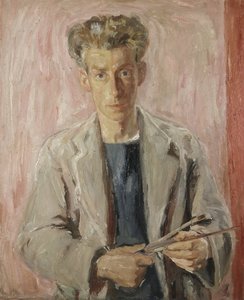
Уильям Джордж Гиллес
1898 - 1973 , Великобритания
Основные сведения
- Artistic Movement Or Style: Кубизм, шотландский колоризм
- Artists Or Movements Influenced By This Artist:
- Paul Klee
- Шотландская школа
- Artists Who Influenced This Artist:
- André Lhote
- Клод Моне
- Пикассо
- Date Of Birth: 1898
- Date Of Death: 1973
- Full Name: Sir William George Gillies
- Nationality: Шотландец
- Notable Artworks:
- Two Pots, Saucer and Fruit
- Mediterranean Landscape
- Place Of Birth: Хаддингтон, Великобритания