

 Поделиться
 Поделиться
 Детали произведения

 Скачать
 Похожие работы
 Слайд-шоу
 Статистика
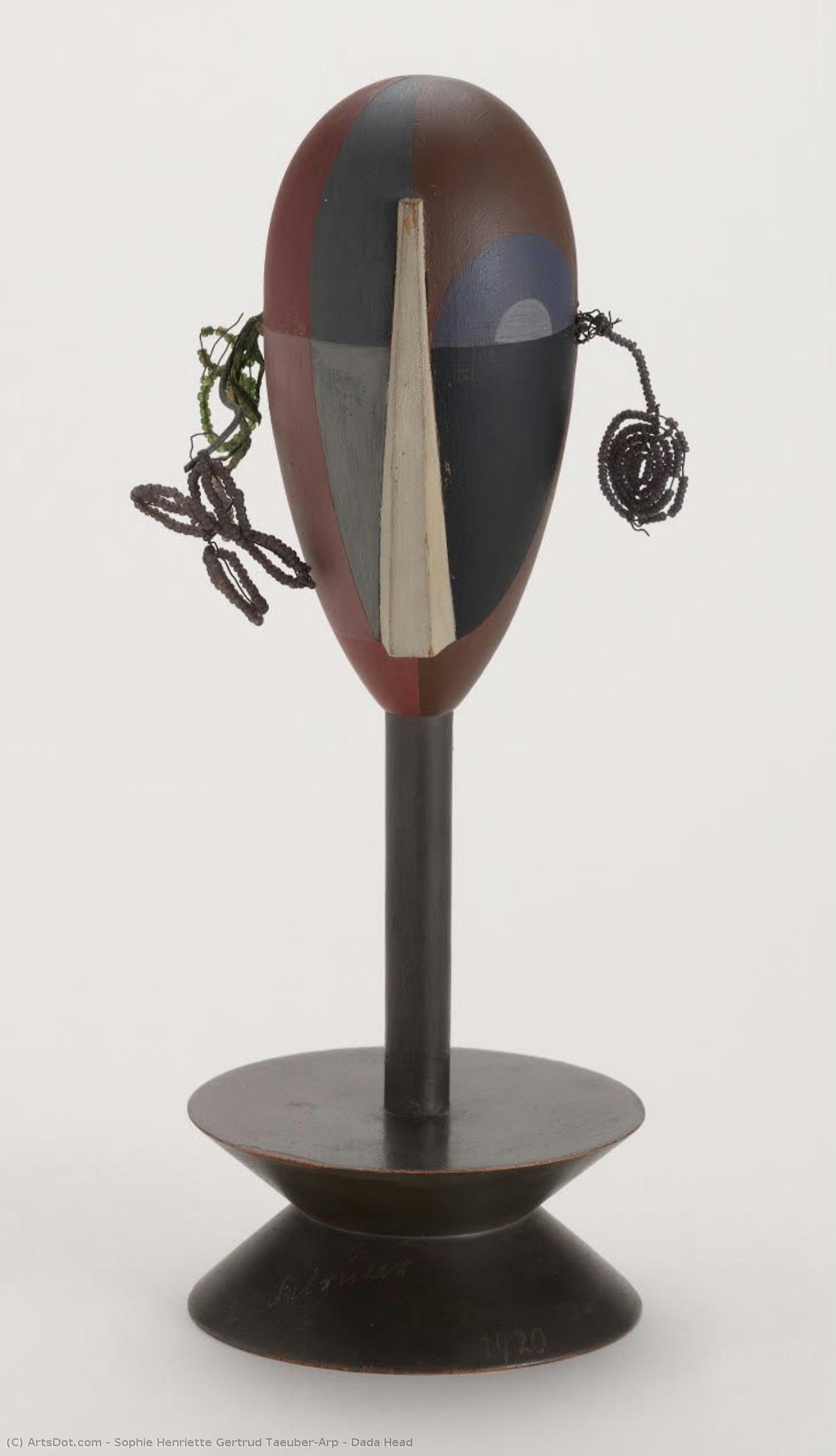
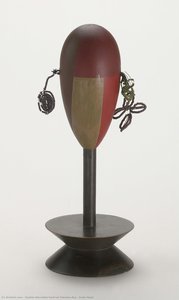
Dada Head


 Читать далее
Приобретите цифровое изображение высокого разрешения в улучшенном качестве, которое значительно превосходит онлайн-превью.
Каждый файл тщательно подготавливается нашими специалистами с использованием передовых инструментов и экспертной ручной ретуши. Мы гарантируем исключительную четкость, точную цветопередачу и детальную проработку каждого изображения.
Финальный файл доставляется по электронной почте в течение 72 часов и оптимизирован для немедленного использования в профессиональной среде, при верстке и печати. Это тот же уровень качества, которому доверяют ведущие дизайнерские студии, издательства и галереи.
Цифровое изображение
Скачайте файл высокого разрешения для личного использования, печати и творческих проектов. ( Перейти к печати Купить картину ручной работы)
Включено в каждый заказ цифровых изображений
Гарантия экспертной цифровой доставки
Выбирая ArtsDot.com, вы получаете не просто изображение — вы приобретаете профессионально обработанное цифровое произведение искусства, созданное с безупречной точностью и под защитой гарантии качества. Вот всё, что автоматически входит в ваш заказ:

Мгновенная доставка по e-mail
Ваш цифровой файл в высоком разрешении будет отправлен вам по электронной почте в течение 72 часов после оформления заказа — и сразу станет доступен для использования.

Цифровой файл с ИИ-улучшением
Ваше произведение искусства проходит профессиональную оптимизацию с использованием передовых инструментов ИИ и ручной обработки, что гарантирует максимальную детализацию, четкость и точность цветопередачи.

Бессрочная бесплатная повторная доставка
Случайно удалили или потеряли файл? Не беспокойтесь — мы отправим его вам повторно в любое время и совершенно бесплатно.

Без импортных пошлин — навсегда
Наслаждайтесь вашим произведением искусства мгновенно без таможенных пошлин, сборов или затрат на доставку — цифровые загрузки всегда не облагаются налогом.

Гарантия точности цветопередачи
Мы гарантируем, что ваше цифровое изображение максимально точно передает оригинальные цвета благодаря использованию профессиональных инструментов и систем управления цветом.

Гарантия удовлетворенности 100 дней
Если вы не будете удовлетворены своим цифровым изображением, мы внесем правки или вернем 100% стоимости в течение 100 дней — без лишних вопросов.

100% Гарантия возврата средств
Не удовлетворены покупкой? Получите полный возврат средств в течение 100 дней после получения цифрового файла — без лишних вопросов.

Скидки на оптовые заказы
Купите 3 изображения, сэкономьте 10% — Купите 5, сэкономьте 15% — Купите 10+, сэкономьте 20%. Отличное решение для творческих проектов, галерей и агентств.
A Bold Statement of Disruption: Unpacking Sophie Taeuber-Arp’s ‘Dada Head’
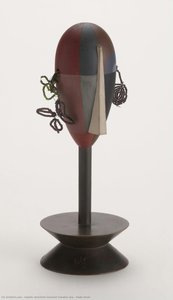
Sophie Taeuber-Arp's “Dada Head,” created in 1920, isn’t merely a sculpture; it’s a potent distillation of the Dada movement’s core tenets – a deliberate rejection of established artistic conventions and an embrace of chance, absurdity, and the questioning of reality. This striking three-dimensional object, rendered against a neutral backdrop, immediately commands attention with its vibrant color palette and geometric abstraction. More than just a representation of a head, it's a fragmented portrait of identity itself, embodying the anxieties and intellectual ferment of post-World War I Europe.
The sculpture’s foundation lies in the Dada ethos – born from the disillusionment of war and a profound skepticism towards traditional values. Taeuber-Arp, deeply involved within this revolutionary movement alongside her husband Jean Arp, sought to dismantle conventional notions of beauty and representation. “Dada Head” achieves this through its deliberate simplification: the human form is reduced to a series of interlocking geometric shapes – circles, rectangles, and elongated forms – arranged in a manner that suggests facial features without ever fully depicting them. This abstraction isn’t simply stylistic; it reflects a deeper desire to expose the underlying structure of perception and challenge our assumptions about what constitutes “art.” The use of bold reds, blues, greens, and blacks creates an energetic visual dialogue, hinting at both chaos and controlled composition.
Constructivism and Geometric Precision: A Synthesis of Form
While firmly rooted in Dada’s anti-art stance, “Dada Head” also reveals Taeuber-Arp's growing interest in Constructivist principles. This movement, emerging concurrently across Europe, emphasized geometric abstraction as a means of creating functional and aesthetically pleasing objects. The sculpture’s strong vertical lines, defining the head’s form and supporting structure, echo the structural clarity of Constructivism. The pedestal itself reinforces this sense of stability, providing a grounding element to the otherwise dynamic composition. However, Taeuber-Arp doesn't adhere rigidly to Constructivist dogma; she infuses her work with a distinctly personal sensibility, evident in the playful arrangement of colors and the subtle suggestion of organic forms within the geometric framework.
The materials used – likely wood combined with fabric for the hair-like elements – contribute significantly to the sculpture’s tactile quality. The smooth surface, achieved through careful craftsmanship, contrasts subtly with the textural hints of the woven material. It's a deliberate juxtaposition that speaks to the movement’s fascination with combining disparate elements and challenging traditional notions of materials and techniques. The choice of wood, often associated with permanence and tradition, is ironically subverted by its incorporation into an entirely abstract and unconventional form.
Symbolism and the Fragmentation of Identity
Beyond its formal qualities, “Dada Head” carries a potent symbolic weight. The abstraction inherent in the piece suggests a detachment from realistic representation, prompting viewers to contemplate the nature of identity itself. The fragmented composition mirrors the psychological fragmentation experienced by many during and after World War I – a sense of loss, disorientation, and the breakdown of established norms. The bold colors could be interpreted as evoking feelings of energy, playfulness, or even anxiety—a reflection of the turbulent times in which the sculpture was created.
Furthermore, the work’s resemblance to Marcel Arp's “Study for a Marionette (Portrait of H.A.)” suggests a personal dialogue between the artists and a shared exploration of form and abstraction. The deliberate ambiguity of the head—its refusal to be definitively identified as male or female, young or old—further reinforces its symbolic power, inviting viewers to project their own interpretations onto this enigmatic figure. “Dada Head” remains a compelling testament to Taeuber-Arp’s innovative spirit and her enduring contribution to the history of modern art.
Похожие произведения


Биография художника
The Architect of Abstraction: The Life and Legacy of Sophie Taeuber-Arp
In the turbulent landscape of early 20th-century modernism, few figures possessed the multidisciplinary vision of Sophie Henriette Gertrud Taeuber-Arp. Born in 1889 in the serene Swiss town of Davos, her journey would eventually lead her to the very heart of the avant-garde revolution. She was not merely a painter or a sculptor; she was a weaver of worlds, an artist who dissolved the boundaries between fine art and functional design. Her life’s work stands as a testament to the power of geometric precision married to the spontaneous energy of the human spirit, creating a visual language that remains strikingly contemporary.
Taeuber-Arp’s artistic foundation was built upon a rigorous dedication to craft. Her early education at the Gewerbeschule in St. Gallen provided her with a profound understanding of textiles and design, a skill set that would later become a cornerstone of her abstract vocabulary. This technical mastery was further refined through her studies at influential German art schools, most notably the Bauhaus. It was here that she absorbed the revolutionary principles of modernism—the idea that art should be integrated into the fabric of daily life. Her marriage to the renowned artist Jean Arp in 1922 did more than unite two souls; it forged a creative partnership that would propel her into the epicenter of the Dada movement.
A Rebellion in Form: Dada and the Geometric Spirit
When the shadows of World War I descended upon Europe, Taeuber-Arp found herself part of the radical Dadaist circle in Cologne. While many associated Dada with chaos and nihilism, Sophie brought a unique structural discipline to its rebellion. She embraced the movement's anti-rationalist ethos, yet she infused it with a meticulous sense of composition. Her iconic “Dada Head” serves as a breathtaking example of this duality; by utilizing assemblage techniques involving geometric shapes and textile fragments, she rejected traditional sculptural norms in favor of a new, fragmented reality that mirrored the fractured world around her.
As her career progressed, her work transitioned from the provocative spontaneity of Dada toward the structured elegance of Constructivism and Concrete Art. This evolution is beautifully captured in her various masterpieces:
- Schematic Composition (1933): A vibrant oil on board that demonstrates her ability to use color and geometry to create a sense of playful, rhythmic movement.
- Composition of Circles and Overlapping Angles (1930): An iconic exploration of how geometric precision can evoke organic, fluid energy within a Constructivist framework.
- Shells and Flowers (1938): A delicate paper cut that showcases her mastery of minimalism, using radial design and stark contrast to find beauty in the simplest of forms.
The Enduring Resonance of a Visionary
The historical significance of Sophie Taeuber-Arp lies in her refusal to be confined by medium or label. She moved seamlessly between the tactile world of textile design, the structural demands of furniture creation, and the ethereal realms of dance and painting. Her ability to blend organic forms with mathematical precision allowed her to bridge the gap between the natural world and the industrial age. She did not just observe the changing tides of modernism; she helped direct them.
Though her life was tragically cut short in 1943, her influence continues to ripple through the history of abstract art. Today, we recognize her as a pioneer who saw the potential for profound beauty in the grid, the circle, and the line. Her legacy is found in every modern design that seeks harmony between function and aesthetic, reminding us that true innovation often requires the courage to break old forms to build entirely new ones.

sophie henriette gertrud taeuber-arp
1889 - 1943 , Switzerland
Основные сведения
- Artistic Movement Or Style: Dada, Constructivism & Concrete Art
- Artists Or Movements Influenced By This Artist: ['Vienna Exhibition']
- Artists Who Influenced This Artist: ['Jean Arp']
- Date Of Birth: 19 January 1889
- Date Of Death: 13 January 1943
- Full Name: Sophie Henriette Gertrud Taeuber-Arp
- Nationality: Swiss
- Notable Artworks:
- Dada Head
- Plate (folio 24)
- Sophie Taeuber-Arp
- Place Of Birth: Davos, Switzerland