

 Предпросмотр
 Поделиться
 Поделиться
 Детали произведения

 Скачать
 Похожие работы
 Рентгенография
 Слайд-шоу
 Статистика
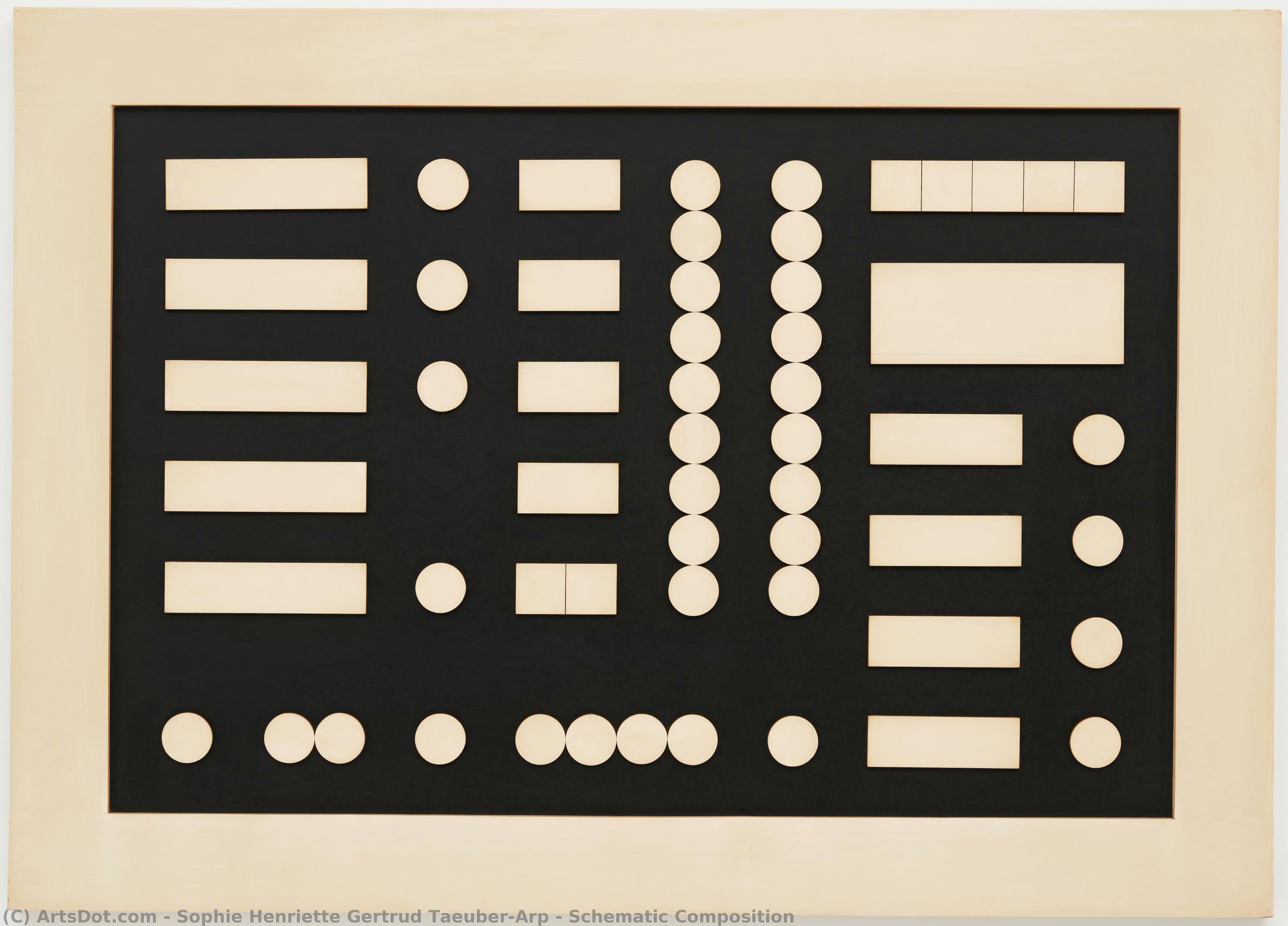
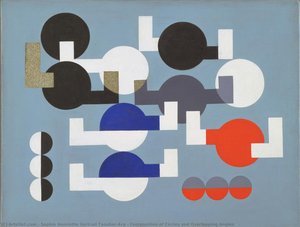
Schematic Composition
 Oil On Board
- Concrete Abstraction
 1933
1933 89.0 x 125.0 cm
 Музей современного искусства (Нью-Йорк)
 Читать далее
Приобретите цифровое изображение высокого разрешения в улучшенном качестве, которое значительно превосходит онлайн-превью.
Каждый файл тщательно подготавливается нашими специалистами с использованием передовых инструментов и экспертной ручной ретуши. Мы гарантируем исключительную четкость, точную цветопередачу и детальную проработку каждого изображения.
Финальный файл доставляется по электронной почте в течение 72 часов и оптимизирован для немедленного использования в профессиональной среде, при верстке и печати. Это тот же уровень качества, которому доверяют ведущие дизайнерские студии, издательства и галереи.
Цифровое изображение
Скачайте файл высокого разрешения для личного использования, печати и творческих проектов. ( Перейти к печати Купить картину ручной работы)
Включено в каждый заказ цифровых изображений
Гарантия экспертной цифровой доставки
Выбирая ArtsDot.com, вы получаете не просто изображение — вы приобретаете профессионально обработанное цифровое произведение искусства, созданное с безупречной точностью и под защитой гарантии качества. Вот всё, что автоматически входит в ваш заказ:

Мгновенная доставка по e-mail
Ваш цифровой файл в высоком разрешении будет отправлен вам по электронной почте в течение 72 часов после оформления заказа — и сразу станет доступен для использования.

Цифровой файл с ИИ-улучшением
Ваше произведение искусства проходит профессиональную оптимизацию с использованием передовых инструментов ИИ и ручной обработки, что гарантирует максимальную детализацию, четкость и точность цветопередачи.

Бессрочная бесплатная повторная доставка
Случайно удалили или потеряли файл? Не беспокойтесь — мы отправим его вам повторно в любое время и совершенно бесплатно.

Без импортных пошлин — навсегда
Наслаждайтесь вашим произведением искусства мгновенно без таможенных пошлин, сборов или затрат на доставку — цифровые загрузки всегда не облагаются налогом.

Гарантия точности цветопередачи
Мы гарантируем, что ваше цифровое изображение максимально точно передает оригинальные цвета благодаря использованию профессиональных инструментов и систем управления цветом.

Гарантия удовлетворенности 100 дней
Если вы не будете удовлетворены своим цифровым изображением, мы внесем правки или вернем 100% стоимости в течение 100 дней — без лишних вопросов.

100% Гарантия возврата средств
Не удовлетворены покупкой? Получите полный возврат средств в течение 100 дней после получения цифрового файла — без лишних вопросов.

Скидки на оптовые заказы
Купите 3 изображения, сэкономьте 10% — Купите 5, сэкономьте 15% — Купите 10+, сэкономьте 20%. Отличное решение для творческих проектов, галерей и агентств.
A Dance of Circles: Unveiling the Geometry of “Schematic Composition”
Sophie Henriette Gertrud Taeuber-Arp’s “Schematic Composition,” painted in 1933, isn't merely a visual exercise; it’s an invitation to contemplate the very nature of order and chance. This striking work, housed within the Museum of Modern Art in New York, immediately captivates with its deceptively simple arrangement – a meticulously crafted grid of circles suspended against a stark background. Yet, beneath this apparent austerity lies a complex interplay of patterns, rhythms, and absences that speaks to Taeuber-Arp’s pioneering role as a key figure in the development of Concrete Art and Constructivism. The painting's genesis during the turbulent years of the early 1930s—a period marked by rising political tensions and shifting artistic landscapes—infuses it with an underlying sense of both dynamism and restraint.
The technique employed is a testament to Taeuber-Arp’s mastery of gouache on board. The flat, matte surface lends the circles a tangible presence, while subtle variations in tone suggest depth and volume. Notice how she deliberately avoids smooth transitions; instead, each circle possesses a distinct character, contributing to the overall visual texture. The absence of certain circles—those strategically left incomplete or ‘cut out’—is not an error but a deliberate element, inviting the viewer to actively participate in completing the composition within their own perception. This technique, characteristic of her work, highlights the interplay between finished form and implied space.
Roots in Dada and Constructivism
To fully appreciate “Schematic Composition,” it’s crucial to understand its lineage. Taeuber-Arp emerged from the vibrant, rebellious milieu of the Zurich Dada movement, a reaction against the horrors of World War I and the perceived decadence of bourgeois society. However, she quickly transcended the movement's initial shock tactics, developing a more rigorously structured aesthetic rooted in Constructivism—a philosophy emphasizing geometric abstraction and functional design. This shift is evident here; while echoes of Dada’s playful irreverence remain, “Schematic Composition” demonstrates a newfound control over form and composition.
The painting's influence extends beyond Dada and Constructivism. Taeuber-Arp was deeply inspired by the principles of Piet Mondrian and Kasimir Malevich, both pioneers of abstract art who sought to distill visual experience into its purest geometric elements. Like them, she believed that art could be a powerful tool for communicating fundamental truths about the universe—a belief reflected in her exploration of rhythm, balance, and proportion.
Symbolism and Emotional Resonance
While seemingly objective in its geometric arrangement, “Schematic Composition” is rich with symbolic potential. The circles themselves can be interpreted as representing wholeness, unity, or even the cyclical nature of time. Their varying sizes and positions suggest a dynamic equilibrium—a tension between order and chaos, structure and spontaneity. The deliberate omissions create a sense of incompleteness, prompting reflection on the inherent limitations of representation and the ongoing process of artistic creation.
Beyond its formal qualities, “Schematic Composition” evokes a profound emotional response. There’s an underlying feeling of serenity and contemplation—a quiet invitation to lose oneself in the beauty of simple forms. The painting's stark simplicity belies its complexity, offering a meditative experience for the viewer. It is a testament to Taeuber-Arp’s ability to create art that is both intellectually stimulating and deeply emotionally resonant.
A Legacy of Geometric Abstraction
Sophie Taeuber-Arp's “Schematic Composition” stands as a pivotal work in the history of 20th-century art. It exemplifies her innovative approach to geometric abstraction, blending influences from Dada, Constructivism, and her own unique artistic vision. Today, this painting continues to inspire artists and designers alike, serving as a reminder of the power of simplicity, precision, and the enduring allure of visual harmony. Reproductions of this iconic piece offer a tangible connection to this remarkable artist’s groundbreaking legacy.
Похожие произведения


Биография художника
The Architect of Abstraction: The Life and Legacy of Sophie Taeuber-Arp
In the turbulent landscape of early 20th-century modernism, few figures possessed the multidisciplinary vision of Sophie Henriette Gertrud Taeuber-Arp. Born in 1889 in the serene Swiss town of Davos, her journey would eventually lead her to the very heart of the avant-garde revolution. She was not merely a painter or a sculptor; she was a weaver of worlds, an artist who dissolved the boundaries between fine art and functional design. Her life’s work stands as a testament to the power of geometric precision married to the spontaneous energy of the human spirit, creating a visual language that remains strikingly contemporary.
Taeuber-Arp’s artistic foundation was built upon a rigorous dedication to craft. Her early education at the Gewerbeschule in St. Gallen provided her with a profound understanding of textiles and design, a skill set that would later become a cornerstone of her abstract vocabulary. This technical mastery was further refined through her studies at influential German art schools, most notably the Bauhaus. It was here that she absorbed the revolutionary principles of modernism—the idea that art should be integrated into the fabric of daily life. Her marriage to the renowned artist Jean Arp in 1922 did more than unite two souls; it forged a creative partnership that would propel her into the epicenter of the Dada movement.
A Rebellion in Form: Dada and the Geometric Spirit
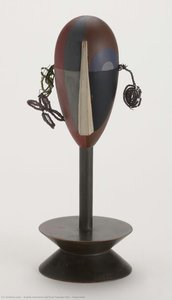
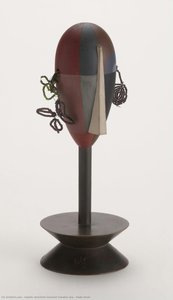
When the shadows of World War I descended upon Europe, Taeuber-Arp found herself part of the radical Dadaist circle in Cologne. While many associated Dada with chaos and nihilism, Sophie brought a unique structural discipline to its rebellion. She embraced the movement's anti-rationalist ethos, yet she infused it with a meticulous sense of composition. Her iconic “Dada Head” serves as a breathtaking example of this duality; by utilizing assemblage techniques involving geometric shapes and textile fragments, she rejected traditional sculptural norms in favor of a new, fragmented reality that mirrored the fractured world around her.
As her career progressed, her work transitioned from the provocative spontaneity of Dada toward the structured elegance of Constructivism and Concrete Art. This evolution is beautifully captured in her various masterpieces:
- Schematic Composition (1933): A vibrant oil on board that demonstrates her ability to use color and geometry to create a sense of playful, rhythmic movement.
- Composition of Circles and Overlapping Angles (1930): An iconic exploration of how geometric precision can evoke organic, fluid energy within a Constructivist framework.
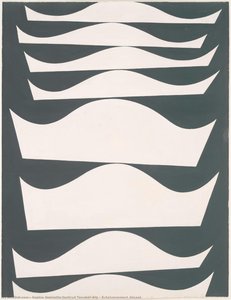
- Shells and Flowers (1938): A delicate paper cut that showcases her mastery of minimalism, using radial design and stark contrast to find beauty in the simplest of forms.
The Enduring Resonance of a Visionary
The historical significance of Sophie Taeuber-Arp lies in her refusal to be confined by medium or label. She moved seamlessly between the tactile world of textile design, the structural demands of furniture creation, and the ethereal realms of dance and painting. Her ability to blend organic forms with mathematical precision allowed her to bridge the gap between the natural world and the industrial age. She did not just observe the changing tides of modernism; she helped direct them.
Though her life was tragically cut short in 1943, her influence continues to ripple through the history of abstract art. Today, we recognize her as a pioneer who saw the potential for profound beauty in the grid, the circle, and the line. Her legacy is found in every modern design that seeks harmony between function and aesthetic, reminding us that true innovation often requires the courage to break old forms to build entirely new ones.

sophie henriette gertrud taeuber-arp
1889 - 1943 , Switzerland
Основные сведения
- Artistic Movement Or Style: Dada, Constructivism & Concrete Art
- Artists Or Movements Influenced By This Artist: ['Vienna Exhibition']
- Artists Who Influenced This Artist: ['Jean Arp']
- Date Of Birth: 19 January 1889
- Date Of Death: 13 January 1943
- Full Name: Sophie Henriette Gertrud Taeuber-Arp
- Nationality: Swiss
- Notable Artworks:
- Dada Head
- Plate (folio 24)
- Sophie Taeuber-Arp
- Place Of Birth: Davos, Switzerland