


 Предпросмотр
 Поделиться
 Поделиться
 Детали произведения

 Скачать
 Похожие работы
 Рентгенография
 Слайд-шоу
 Статистика
Gone Are the Days of Shelter and Martyr


 Читать далее
Масляная репродукция ручной работы
Картина маслом на холсте в выбранном вами размере и раме, написанная на заказ нашими художниками. ( Перейти к печати Перейти к цифровым изображениям)




P118B $10

P118H $10

P118W $10

P438Z $10

P508JH $12

P508YH $12

P805H $10

P805Z $10

P919BZ $10

P919G $10

P919XJ $10

P959ZH $10

P968JZ $12

W106C $8

W218G $10

W218JH $8

W218Y $10

W307PJ $10

W316G $10

W316PJ $8

W316Y $10

W398PJ $8

W4111J $10

W500HY $15

W500JH $15

W692G $12

W849H $8

W940BG $15

W953PJ $8

Выберите один из наших стандартных размеров, соответствующих оригинальным пропорциям произведения искусства.

Вы можете указать собственные размеры, чтобы картина идеально вписалась в выбранную раму или пространство. Если выбранный вами размер не соответствует пропорциям оригинала, мы либо обрежем полотно, либо расширим его за счет дополнительных элементов, написанных вручную. Цифровой макет будет отправлен вам на утверждение перед началом производства.
Обратите внимание, что предварительный просмотр на экране не отражает фактическую обрезку или расширение. Только макет точно покажет окончательную композицию.
Хотя доступны индивидуальные размеры, мы рекомендуем выбирать вариант из предопределенного списка, чтобы сохранить исходные пропорции.
После оформления заказа команда ArtsDot.com свяжется с клиентом по электронной почте для уточнения деталей и предоставит предварительный макет
Доставка по всему миру () за 3–4 недели вместо стандартных 5 недель. (14 Сентябрь). Без компромиссов в качестве.

Бесплатная экспресс-доставка по всему миру

Высококачественный льняной холст

Полное страхование доставки

Гарантия возмещения таможенных пошлин

Гарантия точного соответствия цветов

100-дневная политика возврата (только при обнаружении дефектов)

Гарантия возврата 100% средств

Предложение оптовых скидок
 Вариант со стеклом доступен только для размеров менее 110 см

Gone Are the Days of Shelter and Martyr
Техника репродукции
Размер репродукции
-


Итоговая стоимость
$ 263
The Alchemy of Memory: A Requiem in Concrete
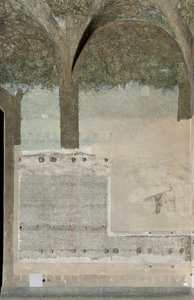
In the profound and evocative installation "Gone Are the Days of Shelter and Martyr," Theaster Gates Jr. invites us into a space where the boundaries between architectural debris and sacred relic dissolve. Created in 2014, this monumental work serves as much more than a sculptural assemblage; it is an embodied meditation on loss, resilience, and the enduring spirit of community. At its heart, the piece responds to the heartbreaking demolition of St. Laurence Catholic Church, a historic pillar of Chicago’s South Side. Through his masterful manipulation of material, Gates does not merely document a disappearance but rather orchestrates a powerful reclamation of space, transforming the literal rubble of a vanishing sanctuary into a permanent monument of spiritual presence.
The visual impact of the work is immediate and arresting, characterized by a raw, industrial materiality that commands the room. The composition features a heavy, textured wall constructed from concrete fragments and bricks salvaged directly from the demolished church. This choice of medium—concrete—is deeply symbolic; historically associated with urban decay and the cold reality of disinvestment, it is here repurposed to carry the weight of history. As one observes the arrangement of the bell perched atop the masonry, alongside structural supports and remnants of the organ, a sense of wabi-sali emerges. This Japanese aesthetic philosophy, which celebrates the beauty found in imperfection, decay, and transience, is woven into the very fabric of the installation, urging the viewer to find sanctity within the discarded.
A Masterclass in Texture and Symbolism
Technically, Gates demonstrates an unparalleled level of craftsmanship, treating industrial detritus with the reverence typically reserved for fine sculpture. The piece utilizes a deliberate, asymmetrical composition that disrupts traditional notions of classical grandeur, opting instead for a rugged, monumental tension. The monochrome palette reinforces a sense of understated solemnity, allowing the viewer to focus entirely on the tactile qualities of the surface—the grit of the concrete, the weathered edges of the bricks, and the heavy, silent presence of the bell. This meticulous layering creates a rhythmic depth that draws the eye through the shadows and highlights of the construction, much like a visual eulogy.
For the discerning collector or interior designer, this artwork offers a profound opportunity to introduce a piece of "social practice" into a curated environment. It is a work that functions as an anchor, providing a sophisticated, contemplative focal point that sparks dialogue about heritage, identity, and the cyclical nature of destruction and rebirth. To possess a high-quality reproduction of such a piece is to bring into one's space not just an aesthetic object, but a vessel of memory—a sculptural testament to the idea that even when the physical structures of our lives are dismantled, the essence of our shared history remains indestructible.
Похожие произведения



Биография художника
The Alchemy of Urban Renewal: The Visionary World of Theaster Gates Jr.
In the heart of Chicago, where the echoes of industrial history meet the pressing realities of modern urban life, the work of Theaster Gates Jr. emerges as a profound dialogue between destruction and rebirth. Born in 1973, Gates did not merely observe the decay of his native city; he integrated its very marrow into his artistic practice. His journey is one of radical transformation, moving from the rhythmic spirituals of Black churches to the disciplined precision of pottery and urban planning. This unique trajectory has allowed him to develop a language where the boundaries between fine art, social activism, and architectural intervention dissolve, creating a singular form of social practice that seeks to heal the fractured landscapes of the American Midwest.
The essence of Gates’s work lies in his ability to find sanctity within the discarded. He operates with the soul of an alchemist, utilizing materials that carry the weight of history—tar, clay, fire hoses, and even the salvaged bricks of demolished structures. These are not merely medium choices; they are vessels of memory. By repurposing the fragments of abandoned buildings, Gates engages in a process of spatial reclamation, turning the debris of disinvestment into sculptural monuments of resilience. His practice is deeply informed by the concept of wabi-sabi—the beauty of imperfection and impermanence—allowing him to honor the scars of urban neglect while simultaneously celebrating the potential for new growth.
Architectural Interventions and the Rebuild Foundation
Beyond the gallery walls, Gates’s most significant contributions are found in the physical revitalization of Chicago’s South Side. Through his non-profit organization, the Rebuild Foundation, he has pioneered a model where art serves as the primary engine for community development. His projects are not merely aesthetic improvements but profound institutional shifts. He has transformed neglected spaces into vibrant cultural hubs, such as the Stony Island Arts Bank, which serves as a sanctuary for Black archives and communal gathering. In these spaces, the distinction between an art installation and a community center vanishes, replaced by a living, breathing ecosystem of cultural preservation.
This commitment to "building" extends to his use of architectural theory to address social justice. Influenced by thinkers like Henri Lefebvre, Gates views space as a political construct that can be reclaimed through intentional use. His work often involves:
- Repurposing Sacred Spaces: Transforming fragments of defunct churches into meditative installations that explore faith and endurance.
- Material Narratives: Using tar and salvaged wood to create "paintings" that function as tactile histories of labor and industry.
- Community Stewardship: Creating permanent infrastructures like the Black Cinema House and Archive House to protect endangered Black histories.
A Legacy of Resilience and Social Progress
The historical significance of Theaster Gates Jr. lies in his refusal to let art remain a passive observer of social struggle. His work embodies a "virtuous circle" where the proceeds from fine art sales are reinvested into the rehabilitation of entire city blocks, effectively turning the art market into a tool for urban planning. This revolutionary approach has earned him international acclaim, including the Smithsonian American Ingenuity Award and the Kurt Schwitters Prize. Yet, despite these accolades, his heart remains rooted in the transformative power of the local.
As a professor and a practitioner, Gates continues to challenge the conventional hierarchies of the art world. He reminds us that the most powerful art is often found not in the pristine white cube of a museum, but in the reclaimed brick of a community center or the soulful resonance of a choral performance by his ensemble, the Black Monks of Mississippi. His legacy is one of profound hope—a testament to the idea that through creativity, we can strip away the layers of neglect to reveal the enduring strength and beauty inherent in our shared human history.

theaster gates jr.
1973 - , United States of America
Основные сведения
- Artistic Movement Or Style: Social practice art; Urban planning
- Artists Or Movements Influenced By This Artist: ['Color field painting']
- Artists Who Influenced This Artist: ['Philip Guston']
- Date Of Birth: 1973
- Full Name: Theaster Gates Jr.
- Nationality: American
- Notable Artworks: ['Gone Are the Days of Shelter and Martyr']
- Place Of Birth: Chicago, United States
Похожие статьи
Непреходящее наследие бронзовой скульптуры: история, техники и современные интерпретации
Узнайте историю бронзовой скульптуры, техники литья и советы по коллекционированию от экспертов. Откройте для себя вечное искусство бронзы!

10 легендарных бронзовых скульптур, изменивших искусство навсегда | ArtsDot
Погрузитесь в мир великих бронзовых скульптур! От Давида Микеланджело до работ Родена – история искусства, техники и вдохновения. Купите репродукции шедевров для вашего интерьера на ArtsDot.com

The Enduring Form: Exploring Themes & Techniques in Sculpture Across Historical Periods
Explore the rich history of sculpture from ancient masterpieces to contemporary innovations. Discover key techniques, influential artists & investment potential for discerning art collectors.

10 легендарных бронзовых шедевров, изменивших искусство | ArtsDot
Погрузитесь в мир великих бронзовых шедевров! От Давида Донателло до Мыслителя Родена – узнайте историю создания, технику и значение легендарных скульптур. Вдохновение для интерьера и музейное качество репродукций на ArtsDot.com.

The Enduring Form: Sculpture Across History, Technique & Emotional Resonance
Explore the rich history of sculpture with ArtsDot. Discover key techniques, influential artists & investment potential for discerning collectors. Expert insights into valuing and collecting timeless masterpieces.