

 Предпросмотр
 Поделиться
 Поделиться
 Детали произведения

 Скачать
 Похожие работы
 Рентгенография
 Слайд-шоу
 Статистика
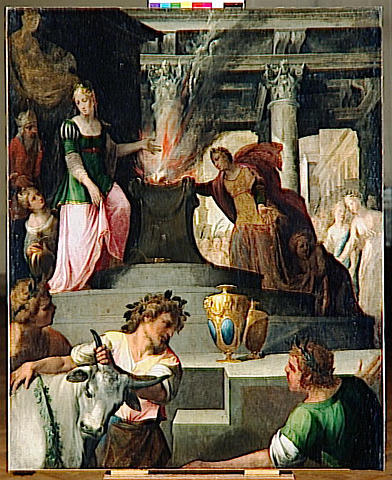
SUJET INCONNU, DIT SACRIFICE ANTIQUE


 Читать далее
Жикле / Арт-принт
Печать (жикле) или холст музейного качества с быстрыми сроками изготовления и широким выбором вариантов отделки. ( Купить картину ручной работы Перейти к цифровым изображениям)




P118B $10

P118H $10

P118W $10

P438Z $10

P508JH $12

P508YH $12

P805H $10

P805Z $10

P919BZ $10

P919G $10

P919XJ $10

P959ZH $10

P968JZ $12

W106C $8

W218G $10

W218JH $8

W218Y $10

W307PJ $10

W316G $10

W316PJ $8

W316Y $10

W398PJ $8

W4111J $10

W500HY $15

W500JH $15

W692G $12

W849H $8

W940BG $15

W953PJ $8




Выберите один из наших стандартных размеров, соответствующих оригинальным пропорциям произведения искусства.

Вы можете указать свои собственные размеры, чтобы репродукция идеально подошла под конкретную раму или пространство. Если выбранный вами размер не будет соответствовать пропорциям оригинала, мы либо обрежем произведение, либо дополним изображение зеркальным отражением краев или однотонной заливкой. Перед началом производства вам будет отправлен цифровой макет для утверждения.
Пожалуйста, обратите внимание, что предварительный просмотр на экране не отображает фактическую обрезку или расширение изображения. Только макет точно покажет финальную композицию.
Несмотря на возможность заказа индивидуальных размеров, мы рекомендуем выбирать размер из предопределенного списка, чтобы сохранить оригинальные пропорции.
Доставка по всему миру () за 2 недели вместо стандартных 4/5 недель. (13 Сентябрь)

Бесплатная экспресс-доставка по всему миру

Высококачественный льняной холст

Полное страхование доставки

Гарантия возмещения таможенных пошлин

Гарантия точного соответствия цветов

100-дневная политика возврата (только при обнаружении дефектов)

Гарантия возврата 100% средств

Предложение оптовых скидок
 Вариант со стеклом доступен только для размеров менее 110 см

SUJET INCONNU, DIT SACRIFICE ANTIQUE
Жикле / Арт-принт
Размер репродукции
-


Итоговая стоимость
$ 62
SUJET INCONNU, DIT SACRIFICE ANTIQUE – Toussaint Dubreuil
Toussaint Dubreuil’s “Ancient Sacrifice” stands as a testament to the Second School of Fontainebleau—a remarkable confluence of Mannerist grandeur and Italian Renaissance influence that captivated the artistic sensibilities of 16th-century France. While often overshadowed by more celebrated contemporaries like François Dubois, Dubreuil's oeuvre possesses an undeniable character defined by elongated figures, undulating draperies, and densely populated compositions mirroring the stylistic explorations championed by artists such as Francesco Primaticcio—a direct reflection of the profound impact Italian artistic ideals had on French painting during his prolific career. The artwork depicts a dramatic scene centered around an altar or pyre where flames ascend, immediately establishing a palpable sense of solemnity and impending ritual. Figures are meticulously arranged around this focal point, creating a dynamic narrative tension that draws the viewer’s eye into the heart of the composition. Dubreuil's masterful use of perspective subtly flattens the space, characteristic of the period, yet skillfully employs overlapping figures and receding architectural elements to convey depth and heighten visual interest. Color plays a crucial role in conveying the artwork’s emotional resonance. The dominant palette leans towards earthy tones—browns, ochres, and muted greens—providing a grounding counterpoint to bursts of vibrant red adorning one figure's drapery and pinks and greens punctuating the clothing of another. Strategic highlights within the flames introduce brilliant yellows and oranges, amplifying their luminosity and emphasizing their symbolic significance as conduits of divine fire. Dubreuil’s technique is characterized by layering colors with painstaking precision and employing loose brushstrokes to achieve a textural richness that captures the flickering effect of the flames. The medium—oil paint on canvas—allowed for nuanced blending and tonal modulation, contributing significantly to the artwork's overall visual impact. Furthermore, the artist’s meticulous attention to detail extends beyond mere representation; it embodies the humanist spirit prevalent during Dubreuil’s time, reflecting a desire to capture not just what is seen but also what is felt. The subject matter delves into themes of mortality and faith, underscored by the presence of a bull—a symbol deeply rooted in pagan religious traditions—further enriching the artwork's narrative complexity. “Ancient Sacrifice” transcends mere visual depiction; it invites contemplation on profound questions concerning human existence and spiritual belief. Dubreuil’s legacy resides not only in his artistic skill but also in his ability to evoke emotion and inspire reflection, cementing his place as a pivotal figure within the Second School of Fontainebleau and a cornerstone of French Renaissance art history.- Artist: Toussaint Dubreuil
- Born Year: 1561
- Death Year: 1602
- Birth City: Paris
- Birth Country: France
- Notable Artworks: Hyante & Climene
- Style & Medium: Mannerist; Oil Paint on Canvas
Похожие произведения
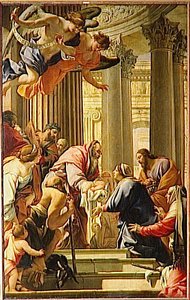
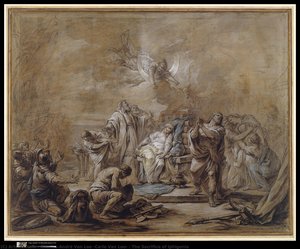

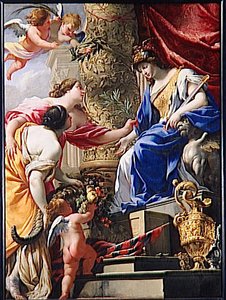
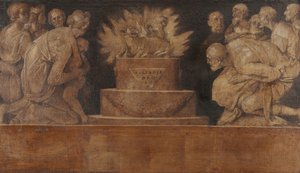
Биография художника
Toussaint Dubreuil: Bridging Mannerism and Italian Influence
Toussaint Dubreuil (c. 1561 – 1602), a French painter born in Paris, stands as a pivotal figure within the Second School of Fontainebleau—a movement that skillfully blended the stylistic grandeur of Mannerism with the vibrant aesthetics of Italian Renaissance art. While relatively obscure compared to contemporaries like François Dubois and Ambroise Guillimaux, Dubreuil’s oeuvre possesses a distinctive character marked by elongated forms, undulating draperies, and densely populated compositions reminiscent of artists such as Francesco Primaticcio, reflecting the profound impact of Italian artistic ideals on French painting during his lifetime. His formative years were spent under the tutelage of Ruggiero de Ruggieri at Fontainebleau, absorbing the principles of classical sculpture and humanist thought that underpinned the royal court’s artistic ambitions. This training instilled in him a meticulous attention to detail and an understanding of idealized beauty—elements which would subsequently permeate his paintings. Dubreuil's early works demonstrate a masterful grasp of Mannerist techniques, characterized by stylized poses and expressive gestures, yet simultaneously infused with subtle nuances of Italian influence. The influence of Primaticcio is palpable in the monumental frescoes adorning Fontainebleau Palace, where Dubreuil’s meticulous execution captures the grandeur of royal patronage while adhering to classical proportions—a testament to the enduring legacy of Renaissance aesthetics. Dubreuil's artistic vision found expression in subjects drawn from mythology and literature, notably tales recounted by Torquato Tasso, Homeric epics, and the poetic explorations of Pierre de Ronsard. These narratives provided fertile ground for exploring themes of heroism, virtue, and divine grace—themes that resonated deeply with the sensibilities of the era. Recurring motifs include depictions of heroic figures engaged in dramatic confrontations, opulent feasts celebrating royal grandeur, and scenes portraying idealized female beauty. “Hyante & Climene Offering a Sacrifice to Venus,” commissioned by Henry IV, exemplifies this thematic richness, presenting a captivating portrayal of mythological allegory imbued with humanist ideals—a cornerstone of Fontainebleau’s artistic program. Among Dubreuil’s most celebrated achievements are monumental frescoes adorning Fontainebleau Palace, showcasing his ability to execute ambitious projects wit remarkable precision and artistic flair. Particularly noteworthy is “Hyante & Climene Offering a Sacrifice to Venus,” a Baroque masterpiece that exemplifies the dynamism of the Second School's style while retaining classical proportions and harmonious color palettes. The painting captures Isaac’s sacrifice—a poignant episode from Genesis—with breathtaking realism, skillfully blending Mannerist elongation with Italian compositional principles. Furthermore, Dubreuil produced numerous portraits, notably those commissioned for Henry IV, demonstrating his talent for capturing psychological depth and conveying aristocratic dignity. His depictions of the king embody a refined elegance and convey an aura of regal authority—characteristics that solidified his reputation as one of Fontainebleau’s foremost portraitists. Although many of Dubreuil's paintings have vanished over time due to fire and neglect, surviving works continue to inspire admiration for their artistic merit and represent invaluable insights into the cultural landscape of 16th-century France. His legacy endures as a testament to the enduring power of Mannerist aesthetics combined with Italian Renaissance ideals—a synthesis that profoundly shaped the trajectory of French art history.
Туссант Дюбрюил
1561 - 1602 , Франция
Основные сведения
- Artistic Movement Or Style: Вторая школа Фонтенблуа; Маньеризм; Итальянское искусство влияния
- Artists Who Influenced This Artist: ['Руджиеро де Руджьери']
- Date Of Birth: ca. 1561
- Date Of Death: 1602
- Full Name: Toussaint Dubreuil
- Nationality: Французский
- Notable Artworks:
- Хианте и Климене
- Неизвестный сюжет, названный Банкет
- СУЖЕТ НЕИЗВЕСТНЫЙ, ДИТ ЛА ТОИЛЕТТЕ ЭТ ЛЭ ЛЕВР Д’ЮНЭ
- Place Of Birth: Paris, Франция
Похожие статьи
Embodying the Polis: Civic Virtue as Subject & Symbol in Western Art
Explore the fascinating history of civic virtue in Western art! From ancient Greece to the French Revolution, discover how artists depicted ideals of citizenship, duty & republicanism. Expert analysis at ArtsDot.
The Enduring Legacy of Classical Style: Form, Narrative & Influence in Art
Explore the enduring legacy of classical art – from ancient Greece & Rome to Neoclassicism. Discover key artists, philosophical roots & build a timeless collection with ArtsDot's expert guidance.
Golden Hour on the Nile: Symbolism & Artistic Legacy of Egyptian Sunsets
Explore the rich symbolism of Egyptian sunset paintings & their artistic legacy. Discover how color, ritual, and landscape shaped ancient beliefs – a guide for discerning collectors.
The Enduring Echo of Antiquity: Classical Ideals in Art from Renaissance to Modernism
Explore the lasting impact of classical ideals on art from the Renaissance to Modernism. Discover key movements, iconic artists & find museum-quality reproductions at ArtsDot.
Jacopo Pontormo: A Bridge Between Renaissance Tradition & Mannerist Emotion
Explore the captivating world of Jacopo Pontormo, a pivotal Italian Mannerist painter. Discover his unique style, influences & masterpieces – and find museum-quality reproductions at ArtsDot.