


 Предпросмотр
 Поделиться
 Поделиться
 Детали произведения

 Скачать
 Похожие работы
 Рентгенография
 Слайд-шоу
 Статистика
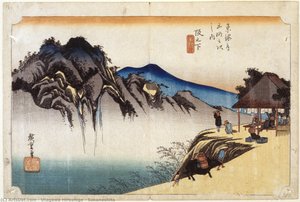
The Totoumi Bank of the Oi River, Kanaya, from the series the Fifty-three Stations of the Tokaido (Hoeido edition)


 Читать далее
Приобретите цифровое изображение высокого разрешения в улучшенном качестве, которое значительно превосходит онлайн-превью.
Каждый файл тщательно подготавливается нашими специалистами с использованием передовых инструментов и экспертной ручной ретуши. Мы гарантируем исключительную четкость, точную цветопередачу и детальную проработку каждого изображения.
Финальный файл доставляется по электронной почте в течение 72 часов и оптимизирован для немедленного использования в профессиональной среде, при верстке и печати. Это тот же уровень качества, которому доверяют ведущие дизайнерские студии, издательства и галереи.
Цифровое изображение
Скачайте файл высокого разрешения для личного использования, печати и творческих проектов. ( Перейти к печати Купить картину ручной работы)
Включено в каждый заказ цифровых изображений
Гарантия экспертной цифровой доставки
Выбирая ArtsDot.com, вы получаете не просто изображение — вы приобретаете профессионально обработанное цифровое произведение искусства, созданное с безупречной точностью и под защитой гарантии качества. Вот всё, что автоматически входит в ваш заказ:

Мгновенная доставка по e-mail
Ваш цифровой файл в высоком разрешении будет отправлен вам по электронной почте в течение 72 часов после оформления заказа — и сразу станет доступен для использования.

Цифровой файл с ИИ-улучшением
Ваше произведение искусства проходит профессиональную оптимизацию с использованием передовых инструментов ИИ и ручной обработки, что гарантирует максимальную детализацию, четкость и точность цветопередачи.

Бессрочная бесплатная повторная доставка
Случайно удалили или потеряли файл? Не беспокойтесь — мы отправим его вам повторно в любое время и совершенно бесплатно.

Без импортных пошлин — навсегда
Наслаждайтесь вашим произведением искусства мгновенно без таможенных пошлин, сборов или затрат на доставку — цифровые загрузки всегда не облагаются налогом.

Гарантия точности цветопередачи
Мы гарантируем, что ваше цифровое изображение максимально точно передает оригинальные цвета благодаря использованию профессиональных инструментов и систем управления цветом.

Гарантия удовлетворенности 100 дней
Если вы не будете удовлетворены своим цифровым изображением, мы внесем правки или вернем 100% стоимости в течение 100 дней — без лишних вопросов.

100% Гарантия возврата средств
Не удовлетворены покупкой? Получите полный возврат средств в течение 100 дней после получения цифрового файла — без лишних вопросов.

Скидки на оптовые заказы
Купите 3 изображения, сэкономьте 10% — Купите 5, сэкономьте 15% — Купите 10+, сэкономьте 20%. Отличное решение для творческих проектов, галерей и агентств.
A Poetic Encounter with the Tokaido
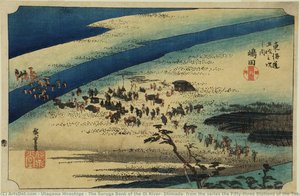
In the delicate dance of lines and colors that defines the ukiyo-e tradition, few works capture the transient beauty of the Japanese landscape as intimately as Utagawa Hiroshige’s The Totoumi Bank of the Oi River, Kanaya. Part of his legendary series, The Fifty-three Stations of the Tokaido, this masterpiece invites the viewer to step into a moment of quietude along one of Japan's most vital travel arteries. The scene unfolds upon the banks of the Oi River, where the rhythmic movement of travelers and the steady presence of nature converge. As we gaze upon the shore, we encounter a small assembly of figures—some gathered near the water's edge, others traversing the path—creating a sense of shared human experience within the vast, sweeping expanse of the landscape. A solitary horse stands poised on the right, adding a touch of rustic vitality to this serene tableau.
Hiroshige’s mastery lies in his ability to transform a specific geographical location into a universal symbol of peace and seasonal transition. The composition is anchored by the distant, soft silhouettes of mountains that rise like silent guardians over the horizon, providing a sense of depth and permanence against the fleeting activities of the people below. Through his expert use of perspective, Hiroshige guides the eye from the immediate textures of the riverbank toward the ethereal atmosphere of the background, where the sky and earth seem to merge in a soft, atmospheric haze. This technique does more than just depict a place; it evokes the very air of the Kanaya station, capturing that specific, breathless quality of a landscape caught between movement and stillness.
The Artistry of the Floating World
Technically, this work is a triumph of the woodblock printing process, showcasing the sophisticated layering of pigments that characterizes the Hoeido edition. The artist utilizes a subtle palette to evoke the natural light of the day, employing soft blues and earthy tones that lend the piece its characteristic tranquility. Each line is deliberate, serving to define the contours of the travelers' garments and the gentle ripples of the water without overwhelming the delicate balance of the composition. For the discerning collector or interior designer, this print offers a profound sense of balance; it possesses enough visual detail to command attention in a gallery setting, yet its harmonious color scheme allows it to integrate seamlessly into a sophisticated living space.
Beyond its aesthetic appeal, the painting serves as a window into the Edo period's social fabric. The presence of the travelers suggests the bustling commerce and cultural exchange that defined the Tokaido road, while the peaceful atmosphere reflects the idealized "floating world" where beauty is found in the ephemeral. To possess a reproduction of this work is to hold a piece of history—a fragment of a lost era of Japanese elegance. It provides an emotional anchor for any room, offering a meditative focal point that inspires contemplation and a deep appreciation for the quiet, enduring rhythms of the natural world.
Похожие произведения
Биография художника
A Poetic Vision of Edo Japan: The Life and Art of Utagawa Hiroshige
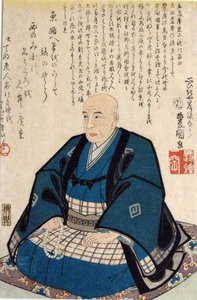
Utagawa Hiroshige, born Andō Tokutarō in 1797 in the bustling city of Edo (modern Tokyo), stands as a pivotal figure in the world of *ukiyo-e*, or “pictures of the floating world.” Though deeply rooted in the traditions of Japanese woodblock printing, Hiroshige transcended mere replication, imbuing his landscapes with a poetic sensibility that resonated profoundly both within Japan and, later, across the Western art world. His life unfolded during a period of relative peace and prosperity under the Tokugawa shogunate, yet also one marked by increasing social change and eventual westernization – forces that would ultimately contribute to the decline of *ukiyo-e* even as they amplified Hiroshige’s enduring legacy. Initially destined for a more conventional path within a samurai family—his father served as a fire warden—Hiroshige's artistic inclinations led him to apprenticeship under Utagawa Toyohiro, a master of the Utagawa school. This proved a crucial turning point, steering him away from the popular depictions of courtesans and actors favored by many *ukiyo-e* artists toward a focus on landscape, a genre he would ultimately redefine.Early Years and Artistic Training
Hiroshige’s early artistic development was shaped by his family background and formal training. Born into a samurai lineage—his grandfather had served as an archery instructor for the Tsugaru clan—he initially seemed destined for a life of bureaucratic service, but his innate talent for art quickly became apparent. At the age of twelve, following the tragic loss of both his parents, he entered the studio of Utagawa Toyohiro, a respected master of the Utagawa school known for his portraits and scenes from daily life. This apprenticeship provided him with a solid foundation in traditional *ukiyo-e* techniques, including woodblock carving, printing, and composition. However, it was during this period that Hiroshige began to develop his own distinctive style, moving beyond the conventional subjects of the school and gravitating towards the burgeoning interest in landscape prints—a genre still considered somewhat niche at the time. He initially adopted the *nom d’artiste* “Hiroshige,” a name that would become synonymous with his artistic identity.The Rise of Landscape Ukiyo-e
The late Edo period witnessed a shift in Japanese art, driven by factors such as increased travel and trade, and a growing appreciation for nature. While traditional *ukiyo-e* continued to thrive on depictions of courtesans, actors, and urban scenes, a new interest emerged in capturing the beauty of the natural world—mountains, rivers, forests, and seasonal landscapes. Hiroshige was at the forefront of this movement, skillfully blending Western artistic principles with Japanese aesthetics. He drew inspiration from Chinese landscape painting, particularly its emphasis on atmospheric perspective and the use of subtle color gradations to convey mood and atmosphere. His early works, such as *Famous Places in the Eastern Capital*, demonstrated his mastery of these techniques, creating images that were both visually stunning and emotionally evocative.Masterpieces: The Fifty-Three Stations and Beyond
Hiroshige’s most celebrated achievement is undoubtedly *The Fifty-three Stations of the Tōkaidō* (1833–1834). This monumental series documented a journey along the main road connecting Edo and Kyoto, not as a straightforward travelogue but as a collection of carefully crafted vignettes—each print capturing a specific moment in time and place. Hiroshige’s approach was revolutionary; he didn't simply depict the stations themselves, but rather the atmosphere surrounding them – rain-swept roads, misty mountains, bustling marketplaces. His use of *bokashi*, or multiple blocks for a single color, created subtle gradations of tone that enhanced the sense of depth and realism. Similarly, his series *One Hundred Famous Views of Edo* (1856–1858) offered intimate glimpses into the life and landscapes of his beloved city, showcasing his ability to capture both the grandeur and the everyday details of Edo’s urban environment. These works are not merely representations of places; they are poetic evocations of mood, atmosphere, and time.Influence and Legacy
Despite the decline of *ukiyo-e* following Hiroshige's death in 1858, his influence on Western art was profound. During the late 19th century, Japanese prints flooded Europe, sparking a phenomenon known as *Japonisme*. Artists such as Édouard Manet, Claude Monet, and Edgar Degas were captivated by the bold compositions, flattened perspectives, and unconventional color schemes of *ukiyo-e*, incorporating these elements into their own work. Vincent van Gogh was particularly enthralled with Hiroshige’s prints, creating copies of several, including “Flowering Plum Tree after Hiroshige,” demonstrating his deep admiration for the Japanese master's use of color and composition. Hiroshige’s legacy extends far beyond painting; it can be seen in architecture, design, and even literature. His serene landscapes continue to inspire awe and contemplation, reminding us of the beauty and transience of the natural world. He remains a pivotal figure in the history of art, bridging East and West through his poetic vision of Japan.Notable Works
- The Fifty-three Stations of the Tōkaidō: Hiroshige’s most famous series, documenting a journey along the main road between Edo and Kyoto.
- One Hundred Famous Views of Edo: A captivating portrayal of life and landscapes in his beloved city.
- Influence on Vincent van Gogh's Japonaiserie Series: Including “Flowering Plum Tree after Hiroshige,” demonstrating Van Gogh’s deep admiration for the Japanese master.
Утагава Хиросиге
1797 - 1858 , Япония
Основные сведения
- Artistic Movement Or Style: *Ukiyo-e*
- Artists Or Movements Influenced By This Artist:
- Manet
- Monet
- Van Gogh
- Artists Who Influenced This Artist: ['Hokusai']
- Date Of Birth: 1797
- Date Of Death: 1858
- Full Name: Utagawa Hiroshige
- Nationality: Японский
- Notable Artworks:
- Пятьдесят три станции Тōkaidō
- Сто знаменитых видов Эдо
- Place Of Birth: Токио, Япония