

 Предпросмотр
 Поделиться
 Поделиться
 Детали произведения

 Скачать
 Похожие работы
 Рентгенография
 Слайд-шоу
 Статистика
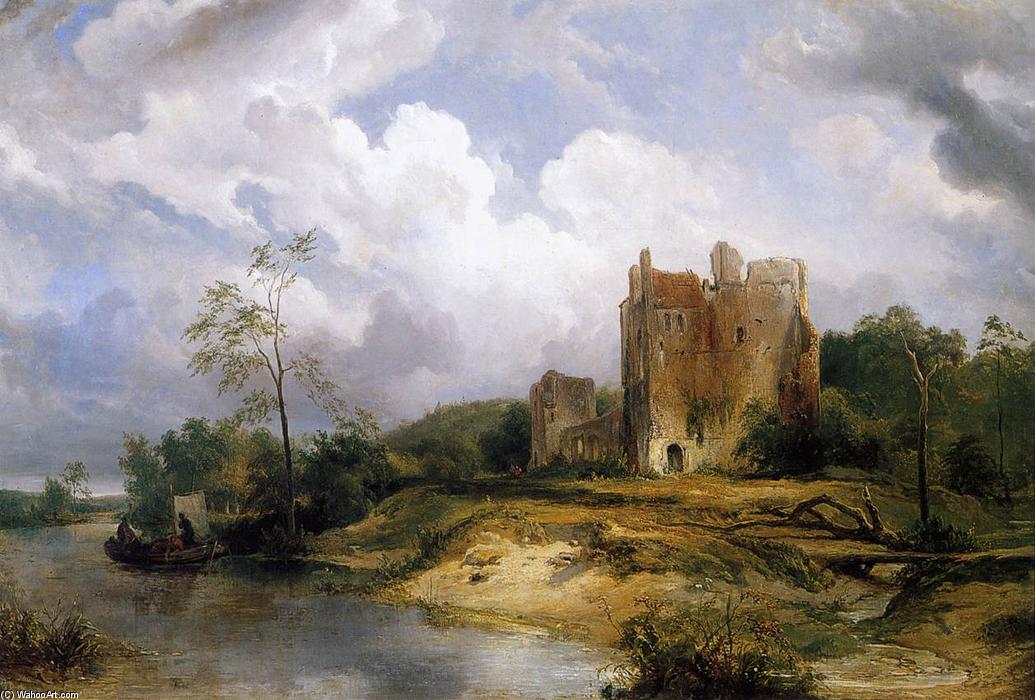
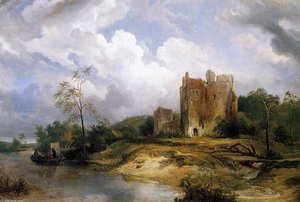
River Landscape with Ruins
 1838
1838 99.0 x 141.0 cm
 Рейксмюзеум
 Читать далее
Жикле / Арт-принт
Печать (жикле) или холст музейного качества с быстрыми сроками изготовления и широким выбором вариантов отделки. ( Купить картину ручной работы Перейти к цифровым изображениям)




































Выберите один из наших стандартных размеров, соответствующих оригинальным пропорциям произведения искусства.

Вы можете указать свои собственные размеры, чтобы репродукция идеально подошла под конкретную раму или пространство. Если выбранный вами размер не будет соответствовать пропорциям оригинала, мы либо обрежем произведение, либо дополним изображение зеркальным отражением краев или однотонной заливкой. Перед началом производства вам будет отправлен цифровой макет для утверждения.
Пожалуйста, обратите внимание, что предварительный просмотр на экране не отображает фактическую обрезку или расширение изображения. Только макет точно покажет финальную композицию.
Несмотря на возможность заказа индивидуальных размеров, мы рекомендуем выбирать размер из предопределенного списка, чтобы сохранить оригинальные пропорции.
Доставка по всему миру () за 2 недели вместо стандартных 4/5 недель. (13 Сентябрь)

Бесплатная экспресс-доставка по всему миру

Высококачественный льняной холст

Полное страхование доставки

Гарантия возмещения таможенных пошлин

Гарантия точного соответствия цветов

100-дневная политика возврата (только при обнаружении дефектов)

Гарантия возврата 100% средств

Предложение оптовых скидок
 Вариант со стеклом доступен только для размеров менее 110 см

River Landscape with Ruins
Жикле / Арт-принт
Размер репродукции
-


Итоговая стоимость
$ 62
Похожие произведения
Биография художника
The Brief, Radiant Flame of Wijnand Nuijen
In the short, intense span of his twenty-six years, Wijnandus Johannes Josephus Nuyen managed to ignite a transformative spark within the landscape traditions of the Netherlands. Born in The Hague in 1813 to a baker who recognized the burgeoning genius in his son, Nuijen emerged not merely as a student of nature, but as a visionary of the Romantic spirit. His life, though tragically brief, was a concentrated burst of artistic evolution, moving from the disciplined precision of Dutch tradition toward a more emotive, atmospheric, and profoundly personal way of seeing the world.
His journey began under the watchful eye of Andreas Schelfhout, one of the most celebrated landscape painters of the era. As an apprentice at just twelve years old, Nuijen absorbed the meticulous attention to detail and the topographical fidelity that defined the Dutch school. This foundation was further solidified at the Hague Tekenacademie under Bartholome_heus J. van Hove, where his technical prowess was honed through rigorous academic study. Yet, even within these structured beginnings, a restless energy was brewing—a desire to move beyond the literal and toward the sublime.
A Voyage Toward the Romantic Sublime
The true metamorphosis of Nuijen’s style occurred when he stepped beyond the borders of his homeland. Traveling through Belgium, Germany, and eventually to the northern French coasts, he encountered a landscape that demanded a new vocabulary of paint. The Normandy coast, with its dramatic harbors and shifting light, became a central protagonist in his oeuvre. Here, influenced by the spontaneous brushwork of Richard Parkes Bonington and the atmospheric depth of Eugène Isabey, Nuijen began to abandon rigid outlines in favor of texture and mood.
His encounters in Paris were particularly pivotal. Witnessing the groundbreaking works of French Romantics like Eugène Delacroix and Théodore Gericault, he discovered the power of color and contrast to evoke deep-seated human emotions. He began to paint not just what was visible to the eye, but the feeling of a storm, the melancholy of a ruin, and the ephemeral quality of light filtering through a forest. This shift toward an expressive, almost tactile use of medium—reminiscent of the watercolor mastery of J.M.W. Turner—marked his departure from the "safe" traditions of his mentors.
Legacy of a Short-Lived Master
Nuijen’s ascent was meteoric, yet it was met with both acclaim and controversy. While he received prestigious honors, such as a medal from the Felix Meritis society in Amsterdam for his forest landscapes, his departure from traditional Dutch realism unsettled many contemporary critics. They viewed his embrace of fantasy and atmospheric ambiguity as a "dangerous" violation of established norms. To these critics, the loss of recognizable topographical detail felt like a betrayal of the Dutch heritage; to Nuijen, it was the liberation of the soul.
Ultimately, the historical significance of Wijnand Nuijen lies in his role as a bridge between eras. He took the sturdy, grounded traditions of the Dutch landscape and infused them with the swirling, emotional currents of European Romanticism. His work remains a testament to the idea that art is not merely a mirror held up to nature, but a window into the artist's internal landscape. Though he passed away in 1839, his ability to capture the ephemeral beauty of the world ensures that his luminous vision continues to resonate with all who seek the sublime in the shadows of the past.
wijnandus johannes josephus nuyen
1813 - 1839 , Netherlands
Основные сведения
- Artistic Movement Or Style: Romantic Dutch Art
- Artists Or Movements Influenced By This Artist:
- Eugène Gudin
- Théodore Rousseau
- Artists Who Influenced This Artist: ['Andreas Schelfhout']
- Date Of Birth: 1813
- Full Name: Wijnandus Johannes Josephus Nuyen
- Nationality: Dutch
- Notable Artworks: ['River Landscape with Ruins']
- Place Of Birth: The Hague, Netherlands