

 Предпросмотр
 Поделиться
 Поделиться
 Детали произведения

 Скачать
 Похожие работы
 Рентгенография
 Слайд-шоу
 Статистика
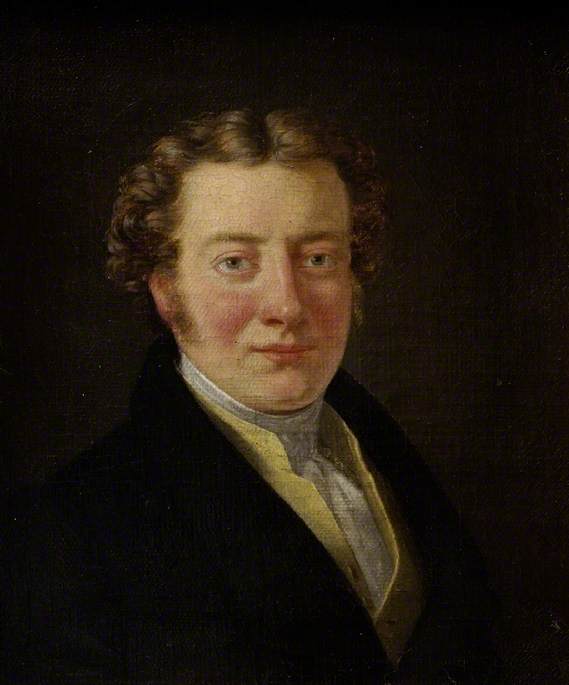
Portrait of a Man
 Oil On Canvas
- WallArt
- Realism
 23.0 x 20.0 cm
 Фитцвильямский колледж
 Читать далее
Жикле / Арт-принт
Печать (жикле) или холст музейного качества с быстрыми сроками изготовления и широким выбором вариантов отделки. ( Купить картину ручной работы Перейти к цифровым изображениям)




P118B $10

P118H $10

P118W $10

P438Z $10

P508JH $12

P508YH $12

P805H $10

P805Z $10

P919BZ $10

P919G $10

P919XJ $10

P959ZH $10

P968JZ $12

W106C $8

W218G $10

W218JH $8

W218Y $10

W307PJ $10

W316G $10

W316PJ $8

W316Y $10

W398PJ $8

W4111J $10

W500HY $15

W500JH $15

W692G $12

W849H $8

W940BG $15

W953PJ $8




Выберите один из наших стандартных размеров, соответствующих оригинальным пропорциям произведения искусства.

Вы можете указать свои собственные размеры, чтобы репродукция идеально подошла под конкретную раму или пространство. Если выбранный вами размер не будет соответствовать пропорциям оригинала, мы либо обрежем произведение, либо дополним изображение зеркальным отражением краев или однотонной заливкой. Перед началом производства вам будет отправлен цифровой макет для утверждения.
Пожалуйста, обратите внимание, что предварительный просмотр на экране не отображает фактическую обрезку или расширение изображения. Только макет точно покажет финальную композицию.
Несмотря на возможность заказа индивидуальных размеров, мы рекомендуем выбирать размер из предопределенного списка, чтобы сохранить оригинальные пропорции.
Доставка по всему миру () за 2 недели вместо стандартных 4/5 недель. (11 Сентябрь)

Бесплатная экспресс-доставка по всему миру

Высококачественный льняной холст

Полное страхование доставки

Гарантия возмещения таможенных пошлин

Гарантия точного соответствия цветов

100-дневная политика возврата (только при обнаружении дефектов)

Гарантия возврата 100% средств

Предложение оптовых скидок
 Вариант со стеклом доступен только для размеров менее 110 см

Portrait of a Man
Жикле / Арт-принт
Размер репродукции
-


Итоговая стоимость
$ 62
A Portrait Steeped in Romantic Sentiment: Wilhelm Ferdinand Bendz’s Masterpiece
Wilhelm Ferdinand Bendz (1804–1832), a Danish artist hailing from Odense, represents a poignant emblem of the Danish Golden Age—a period characterized by artistic flourishing and intellectual curiosity. Though his life tragically ended prematurely in Vicenza, Italian Empire, Bendz left behind an enduring legacy encapsulated in “Portrait of a Man,” a captivating oil painting housed at The Fitzwilliam Museum in Cambridge, England. This artwork transcends mere likeness; it embodies the spirit of Romanticism, skillfully blending realism with emotive expression to convey profound psychological depth.The Artist’s Training and Influences
Bendz began his artistic journey under the tutelage of Christoffer Wilhelm Eckersberg at the Royal Danish Academy of Fine Arts between 1820 and 1825. Eckersberg, a towering figure in Danish painting, instilled in Bendz a commitment to meticulous observation and tonal modulation—techniques that would become hallmarks of his oeuvre. Notably, Bendz absorbed considerable influence from the Munich School, whose artists championed dramatic lighting and expressive brushwork, mirroring stylistic trends prevalent at the time. This exposure undoubtedly shaped Bendz’s artistic sensibilities and contributed to the distinctive character of “Portrait of a Man.”Technical Mastery: Layered Oil Paint and Careful Modeling
The painting's execution demonstrates remarkable technical prowess. Bendz employed a layering technique—applying thin glazes over underpaintings—to build up form and achieve subtle gradations of color. This meticulous approach allowed him to sculpt the face with painstaking detail, capturing the contours of bone structure and muscle tissue. The artist’s masterful use of shading creates an illusion of three-dimensionality, drawing the viewer's eye into the subject’s gaze. Furthermore, visible brushstrokes—particularly in the rendering of hair and facial features—inject texture into the canvas, conveying a sense of immediacy and capturing the ephemeral quality of light.Symbolism and Emotional Resonance
Beyond its technical brilliance, “Portrait of a Man” resonates with symbolic significance. The subject’s attire—a dark jacket adorned with ornate buttons—suggests wealth and social status, reflecting the aspirations of the Danish aristocracy during Bendz's era. However, more powerfully, the portrait captures an expression of quiet contemplation—a gaze directed inward that hints at inner thoughts and emotions. This psychological nuance aligns perfectly with Romantic ideals, prioritizing subjective experience over objective representation. The painting’s subdued palette—dominated by browns, yellows, and creams—contributes to its melancholic atmosphere, inviting viewers to contemplate themes of introspection and human vulnerability.A Legacy Preserved Through Reproduction
Today, “Portrait of a Man” stands as a testament to Bendz's artistic vision and the enduring power of Romantic art. Its meticulous detail, emotive lighting, and symbolic depth continue to inspire admiration among connoisseurs and collectors alike. High-quality reproductions offer an opportunity to appreciate this masterpiece’s beauty and intellectual richness—bringing its evocative spirit into contemporary interiors and enriching our understanding of Danish artistic heritage.Похожие произведения

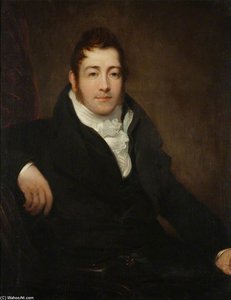
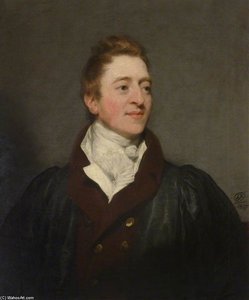
Биография художника
Wilhelm Ferdinand Bendz: A Brief Biography
- Born: March 20, 1804, Odense, Denmark
- Died: November 14, 1832, Vicenza, Austrian Empire (present-day Italy)
- Nationality: Danish
- Movement: Danish Golden Age
Early Life and Artistic Training
- Bendz was born in Odense on the island of Funen. At a young age, he demonstrated artistic talent and was sent to Copenhagen for formal training.
- From 1820 to 1825, he studied at the Royal Danish Academy of Fine Arts under Christoffer Wilhelm Eckersberg, a pivotal figure in Danish painting.
- In 1825, Bendz attempted to win the prestigious gold medal for history painting but was unsuccessful. Subsequently, he focused on portraits and genre scenes.
- He likely absorbed influences from contemporary German painting, particularly the Munich School, which impacted his artistic style.
Career Highlights and Artistic Development
- Following graduation, Bendz exhibited regularly at Charlottenborg, gaining recognition for his works. The Royal Painting Collection acquired several of his paintings, including "Model Class at the Art Academy," "A Young Artist Looking at a Sketch Through a Mirror," and “A Sculptor Working with a Live Model.”
- He served as an assistant in Eckersberg's studio, undertaking tasks like reconstructing historical paintings and creating copies.
- In 1830, Bendz received a travel scholarship that allowed him to journey through Southern Europe. He spent approximately a year in Munich, a vibrant artistic center at the time.
- His most significant work from this period is "Artist in the Evening at Finck's Coffee House in Munich," a group portrait showcasing his evolving style and observational skills.
Artistic Style and Influences
- Influences: Bendz was heavily influenced by Christoffer Wilhelm Eckersberg, adopting his emphasis on direct observation, precise rendering, and clarity of composition. The Munich School also played a role in shaping his artistic vision.
- Style Characteristics: His paintings are characterized by sophisticated lighting, complex compositions, and realistic portrayals of everyday life, particularly scenes involving artists and their colleagues. He excelled at depicting indoor settings with careful attention to light and shadow.
- Technical Virtuosity: Bendz demonstrated technical virtuosity in his depictions of light sources and the resulting shadows, adding depth and realism to his works.
Legacy and Historical Significance
- Despite a relatively short career cut short by his early death at age 28, Wilhelm Ferdinand Bendz is remembered as one of the most talented artists of his generation.
- His paintings offer valuable insights into the artistic circles and daily lives of Danish artists during the Golden Age.
- Bendz’s ability to blend portraiture, genre scenes, and allegorical elements showcases his ambition and artistic versatility.
- Key works like "Artist in the Evening at Finck's Coffee House in Munich" continue to be admired for their technical skill and intimate portrayal of artistic life.
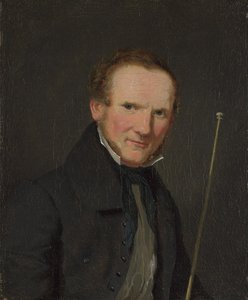
Wilhelm Ferdinand Bendz
1804 - 1832 , Denmark
Основные сведения
- Artistic Movement Or Style: Danish Golden Age
- Artists Who Influenced This Artist: ['Christoffer Wilhelm Eckersberg']
- Date Of Birth: March 20, 1804
- Date Of Death: November 14, 1832
- Full Name: Wilhelm Ferdinand Bendz
- Nationality: Danish
- Notable Artworks:
- A Tobacco Party
- Artist in the Evening at Finck’s
- Model Class at the Art Academy
- Place Of Birth: Odense, Denmark
Похожие статьи

The Enduring Legacy of Oil on Canvas: Technique, History & Aesthetic Impact
Explore the rich history & techniques of oil painting – from Renaissance masters to Impressionism. Discover pigments, layering methods, and why this timeless medium endures. Expert insights for artists & art enthusiasts.

Oil on Canvas: A Historical & Technical Exploration of a Timeless Artistic Medium
Explore the rich history & enduring techniques of oil painting on canvas. Discover the science behind its longevity, conservation practices, and contemporary relevance. Expert insights for art enthusiasts.
The Enduring Legacy of Classicism: Principles, Evolution & Influence in Western Art
Explore the enduring legacy of Classicism in Western art! Discover its historical context, key principles, iconic masterpieces & lasting influence. Learn about Renaissance and Neoclassical movements with ArtsDot.
10 Шедевров Неоклассицизма: Искусство, Определившее Эпоху | ArtsDot
Погрузитесь в мир неоклассицизма! 10 шедевров от Давида, Канновы и других великих художников. Узнайте историю создания культовых картин и вдохновитесь для интерьера. Репродукции музейного качества на ArtsDot.com
Timeless Elegance: The Ultimate Buyer's Guide to Choosing Classical Portraits for Sophisticated Interiors
Discover how to select the perfect classical portrait for your home. Our expert guide explores matching art styles to interiors, choosing between hand-painted oils and Giclée prints, and transforming personal photos into timeless masterpieces with professional artistry.