

 Предпросмотр
 Поделиться
 Поделиться
 Детали произведения

 Скачать
 Похожие работы
 Рентгенография
 Слайд-шоу
 Статистика
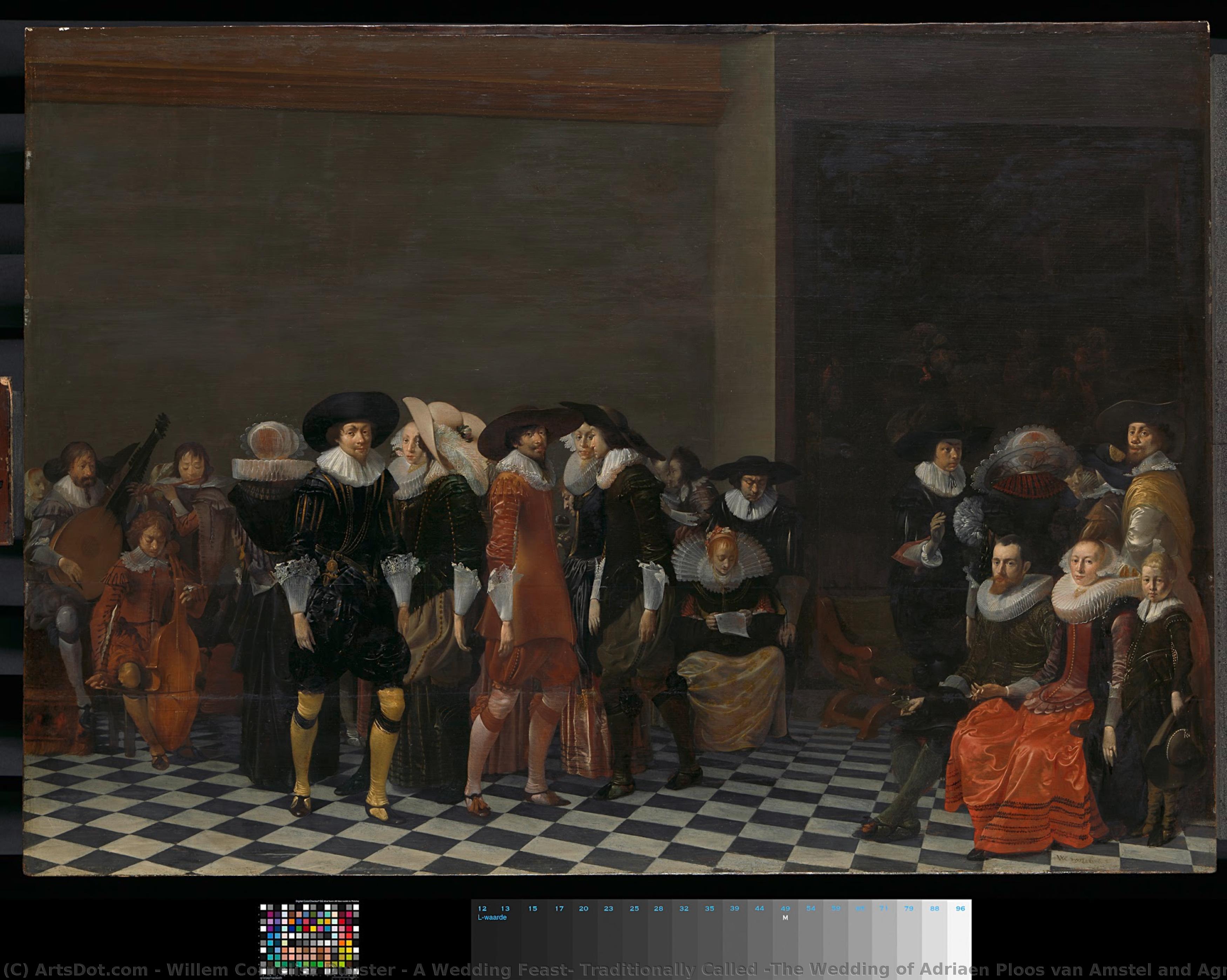
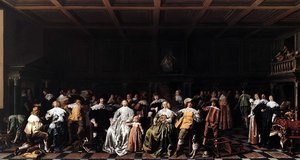
A Wedding Feast, Traditionally Called "The Wedding of Adriaen Ploos van Amstel and Agnes van Bijler", 1616, Willem Cornelisz Duyster, c. 1625
 1625
1625 76.0 x 107.0 cm
 Читать далее
Масляная репродукция ручной работы
Картина маслом на холсте в выбранном вами размере и раме, написанная на заказ нашими художниками. ( Перейти к печати Перейти к цифровым изображениям)




































Выберите один из наших стандартных размеров, соответствующих оригинальным пропорциям произведения искусства.

Вы можете указать собственные размеры, чтобы картина идеально вписалась в выбранную раму или пространство. Если выбранный вами размер не соответствует пропорциям оригинала, мы либо обрежем полотно, либо расширим его за счет дополнительных элементов, написанных вручную. Цифровой макет будет отправлен вам на утверждение перед началом производства.
Обратите внимание, что предварительный просмотр на экране не отражает фактическую обрезку или расширение. Только макет точно покажет окончательную композицию.
Хотя доступны индивидуальные размеры, мы рекомендуем выбирать вариант из предопределенного списка, чтобы сохранить исходные пропорции.
После оформления заказа команда ArtsDot.com свяжется с клиентом по электронной почте для уточнения деталей и предоставит предварительный макет
Доставка по всему миру () за 3–4 недели вместо стандартных 5 недель. (12 Сентябрь). Без компромиссов в качестве.

Бесплатная экспресс-доставка по всему миру

Высококачественный льняной холст

Полное страхование доставки

Гарантия возмещения таможенных пошлин

Гарантия точного соответствия цветов

100-дневная политика возврата (только при обнаружении дефектов)

Гарантия возврата 100% средств

Предложение оптовых скидок
 Вариант со стеклом доступен только для размеров менее 110 см

A Wedding Feast, Traditionally Called "The Wedding of Adriaen Ploos van Amstel and Agnes van Bijler", 1616, Willem Cornelisz Duyster, c. 1625
Техника репродукции
Размер репродукции
-


Итоговая стоимость
$ 263
Похожие произведения




Биография художника
The Quiet Observer of Dutch Military Life
In the vibrant, bustling atmosphere of Amsterdam during the seventeenth century, a period defined by the luminous heights of the Dutch Golden Age, Willem Cornelisz Duyster (1599–1635) emerged as a master of the intimate. While many of his contemporaries sought to capture the sweeping grandeur of historical epics or the stiff formality of aristocratic portraiture, Duyster turned his gaze toward a much more grounded and human subject: the cortegaarddje, or guardroom scenes. He eschewed the thunder of battlefield glory in favor of the quiet, unvarnable realities of military life, finding profound narrative potential in the pauses between conflicts.A Tapestry of Influence and Technical Brilliance
Duyster’s artistic evolution was a sophisticated blend of inherited tradition and personal innovation. His early training as a portraitist provided him with an essential foundation in anatomical precision, but it was his engagement with the works of contemporaries like Jacob Jansz van Velsen and Gerard ter Borch the Younger that truly refined his vision. From Van Velsen, he drew an ability to orchestrate complex social dynamics within domestic settings, while from Ter Borch, he inherited a devotion to psychological realism and an almost obsessive attention to detail. This synthesis allowed him to transform simple genre paintings into deep explorations of character and human interaction.His technical mastery was perhaps most breathtakingly evident in his treatment of texture. Duyster possessed a singular ability to render the tactile world; under his brush, heavy velvets and shimmering silks seemed to catch the light with a convincing, palpable weight. In works such as A Wedding Feast, the fabrics do not merely serve as costume but act as luminous protagonists, their intricate weaves and lustrous surfaces demonstrating an unparalleled command over color and light that remains captivating to the modern eye.
The Human Heart within the Guardroom
What ultimately secures Duyster’s place in the pantheon of Dutch Masters is his refusal to idealize his subjects. His soldiers are not mere symbols of valorous heroism; they are flesh-and-blood individuals, imbued with palpable emotion and complex interpersonal relationships. Through subtle glances, weary postures, and the quiet intimacy of shared moments, Duyster captured the psychological depth of those living within the barracks. He did not merely paint soldiers; he painted the human condition, ensuring that his guardroom scenes remain as poignant and resonant today as they were in the seventeenth century.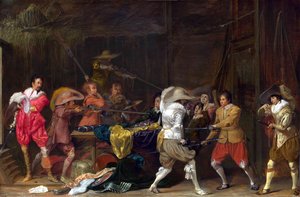
Willem Cornelisz Duyster
1599 - 1635 , Netherlands
Основные сведения
- Artistic Movement Or Style: Dutch Golden Age
- Artists Or Movements Influenced By This Artist: ['Gerard ter Borch the Younger']
- Artists Who Influenced This Artist: ['Jacob Jansz van Velsen']
- Date Of Birth: Amsterdam, Netherlands (1599)
- Date Of Death: 1635
- Full Name: willem cornelisz duyster
- Nationality: Dutch
- Notable Artworks:
- A Wedding Feast...
- Portrait of a Woman...
- Portrait of a Man...
- Place Of Birth: Amsterdam