

 Предпросмотр
 Поделиться
 Поделиться
 Детали произведения

 Скачать
 Похожие работы
 Рентгенография
 Слайд-шоу
 Статистика
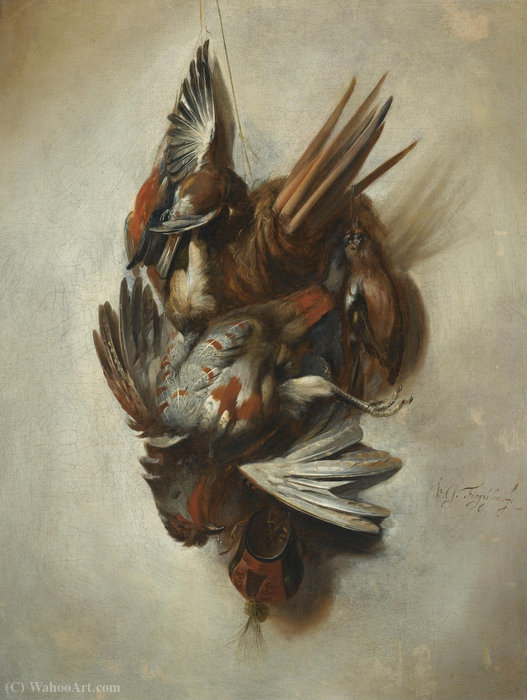
A falconry still life with a dead partridge, songbirds, and hunting attributes hanging on a rope
 Читать далее
Приобретите цифровое изображение высокого разрешения в улучшенном качестве, которое значительно превосходит онлайн-превью.
Каждый файл тщательно подготавливается нашими специалистами с использованием передовых инструментов и экспертной ручной ретуши. Мы гарантируем исключительную четкость, точную цветопередачу и детальную проработку каждого изображения.
Финальный файл доставляется по электронной почте в течение 72 часов и оптимизирован для немедленного использования в профессиональной среде, при верстке и печати. Это тот же уровень качества, которому доверяют ведущие дизайнерские студии, издательства и галереи.
Цифровое изображение
Скачайте файл высокого разрешения для личного использования, печати и творческих проектов. ( Перейти к печати Купить картину ручной работы)
Включено в каждый заказ цифровых изображений
Гарантия экспертной цифровой доставки
Выбирая ArtsDot.com, вы получаете не просто изображение — вы приобретаете профессионально обработанное цифровое произведение искусства, созданное с безупречной точностью и под защитой гарантии качества. Вот всё, что автоматически входит в ваш заказ:

Мгновенная доставка по e-mail
Ваш цифровой файл в высоком разрешении будет отправлен вам по электронной почте в течение 72 часов после оформления заказа — и сразу станет доступен для использования.

Цифровой файл с ИИ-улучшением
Ваше произведение искусства проходит профессиональную оптимизацию с использованием передовых инструментов ИИ и ручной обработки, что гарантирует максимальную детализацию, четкость и точность цветопередачи.

Бессрочная бесплатная повторная доставка
Случайно удалили или потеряли файл? Не беспокойтесь — мы отправим его вам повторно в любое время и совершенно бесплатно.

Без импортных пошлин — навсегда
Наслаждайтесь вашим произведением искусства мгновенно без таможенных пошлин, сборов или затрат на доставку — цифровые загрузки всегда не облагаются налогом.

Гарантия точности цветопередачи
Мы гарантируем, что ваше цифровое изображение максимально точно передает оригинальные цвета благодаря использованию профессиональных инструментов и систем управления цветом.

Гарантия удовлетворенности 100 дней
Если вы не будете удовлетворены своим цифровым изображением, мы внесем правки или вернем 100% стоимости в течение 100 дней — без лишних вопросов.

100% Гарантия возврата средств
Не удовлетворены покупкой? Получите полный возврат средств в течение 100 дней после получения цифрового файла — без лишних вопросов.

Скидки на оптовые заказы
Купите 3 изображения, сэкономьте 10% — Купите 5, сэкономьте 15% — Купите 10+, сэкономьте 20%. Отличное решение для творческих проектов, галерей и агентств.
Похожие произведения
Биография художника
A Life Amongst Stillness: The World of William Gowe Ferguson
William Gouw (or Gow, or Gowe) Ferguson remains a somewhat enigmatic figure in the landscape of 17th-century art, yet his quiet mastery of still life painting secured him a respected place amongst his contemporaries. Born around 1632/3 in Scotland—a nation not particularly renowned for its artistic output at that time—Ferguson’s journey took him far from his homeland and into the heart of European artistic innovation. His early training is believed to have occurred within Scotland itself, but an ambition for greater refinement led him towards France and Italy, formative experiences that would profoundly shape his aesthetic vision. By 1660, Ferguson had established a residence in The Hague, a bustling center of trade and culture, where he entered into an unusual agreement with a house proprietor: the annual creation of a painting as part of his tenancy. This arrangement speaks to both the demand for his work and the practical realities of an artist’s life during this period. He continued to reside there until at least 1668, steadily building a reputation for his evocative depictions of the natural world.The Dutch Influence and Artistic Development
Ferguson's artistic development was deeply intertwined with his time in the Netherlands, particularly within the circles of Utrecht, The Hague, and Amsterdam. It’s here that he absorbed the meticulous detail and realism characteristic of the Dutch Golden Age still life tradition. Artists like Jan Vonck and Willem van Aelst served as significant influences, inspiring Ferguson's precise rendering of textures, light, and form. However, Ferguson wasn’t merely an imitator; he infused his work with a distinctly personal sensibility. While specializing in *dead game*—still lifes featuring meticulously arranged birds, animals, and hunting implements—he also ventured into compositions incorporating classical ruins and sculptural fragments, often bathed in dramatic chiaroscuro lighting. This blending of genres reveals a sophisticated artistic intellect, capable of harmonizing the naturalistic precision of Dutch painting with the more theatrical elements favored by Italianate artists. In 1681, he was betrothed to Sara van Someren of Stockholm while living in Amsterdam’s Batavier Graat, suggesting a degree of social standing and integration within the city's artistic community. Horace Walpole noted his extended sojourn in Italy and France, further emphasizing the breadth of his European experience.Themes of Vanitas and Evocative Realism
Ferguson’s still lifes are not simply exercises in technical skill; they resonate with deeper symbolic meaning. The *dead game* genre, popular throughout the 17th century, often served as a visual meditation on mortality—a reminder of the fleeting nature of life and the inevitability of decay. The meticulously rendered feathers, fur, and flesh, while beautiful in their detail, simultaneously hint at transience. This subtle interplay between beauty and decay aligns with the broader *Vanitas* tradition prevalent during this era. Beyond the symbolic weight, Ferguson’s paintings are remarkable for their evocative realism. He possessed an exceptional ability to capture the textures and colors of his subjects, creating a sense of tangible presence that draws the viewer into the scene. His skillful use of light and shadow further enhances this effect, imbuing his compositions with a dramatic intensity. Examples of his work can be found in prestigious institutions like the Rijksmuseum in Amsterdam and the Berlin State Museums, testaments to his enduring artistic quality.Later Life and Legacy
The details surrounding Ferguson’s later life remain somewhat obscure. His last known dated painting appears in 1689, after which records become scarce. It is believed he returned to London, though some accounts suggest a possible return to Scotland. Intriguingly, twelve of his paintings were sold in Edinburgh between 1692 and 1693, indicating continued artistic activity or the dispersal of earlier works. Despite the lack of definitive biographical information, Ferguson’s legacy as a skilled still life painter is secure. His work has often been favorably compared to that of more celebrated artists, and instances have even occurred where his paintings were mistakenly attributed to Cornelis van Lelienbergh or Jan Weenix—a testament to the quality and stylistic similarities of their respective oeuvres. He occupies a unique position as one of Scotland’s most accomplished 17th-century painters, bridging the gap between native artistic traditions and the innovations of the Dutch Golden Age. His paintings continue to captivate viewers with their exquisite detail, evocative realism, and subtle exploration of themes surrounding life, death, and the beauty of the natural world.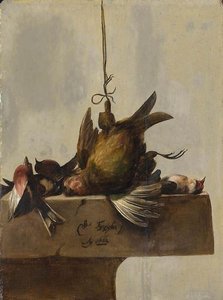
william gowe ferguson
1632 - 1689 , United Kingdom
Основные сведения
- Artistic Movement Or Style: Still life, Baroque
- Artists Who Influenced This Artist:
- Jan Vonck
- Willem van Aelst
- Date Of Birth: 1632/3
- Date Of Death: After 1689
- Full Name: William Gowe Ferguson
- Nationality: Scottish
- Notable Artworks:
- Still Life with Birds
- Dead Game Painting
- Place Of Birth: Scotland