

 Предпросмотр
 Поделиться
 Поделиться
 Детали произведения

 Скачать
 Похожие работы
 Рентгенография
 Слайд-шоу
 Статистика
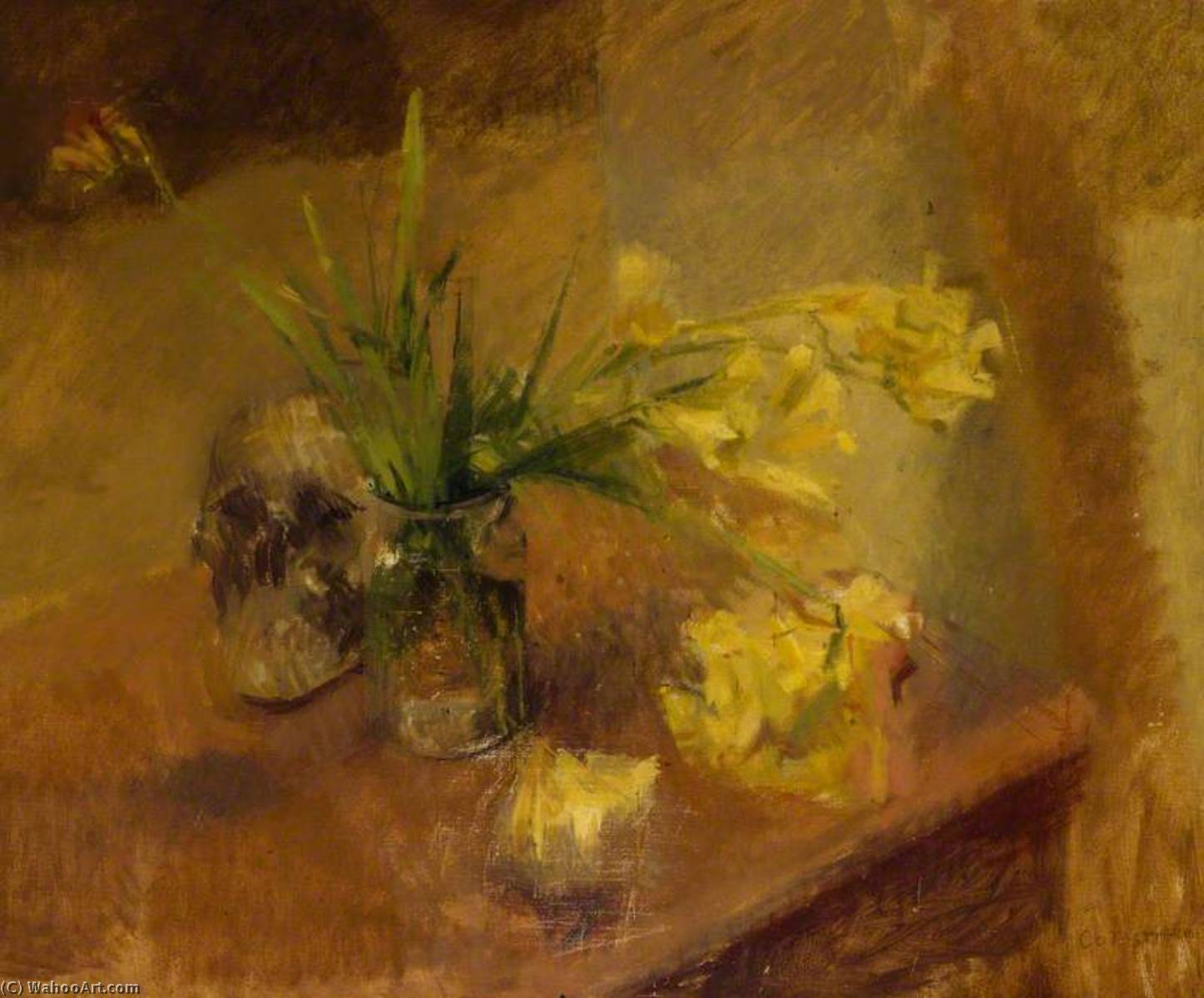
Freesias with a Skull
 Oil On Canvas
- WallArt
- Impressionistic Landscape
 1940
1940 51.0 x 61.0 cm
 Ашмолеанский музей искусств и археологии
 Читать далее
Приобретите цифровое изображение высокого разрешения в улучшенном качестве, которое значительно превосходит онлайн-превью.
Каждый файл тщательно подготавливается нашими специалистами с использованием передовых инструментов и экспертной ручной ретуши. Мы гарантируем исключительную четкость, точную цветопередачу и детальную проработку каждого изображения.
Финальный файл доставляется по электронной почте в течение 72 часов и оптимизирован для немедленного использования в профессиональной среде, при верстке и печати. Это тот же уровень качества, которому доверяют ведущие дизайнерские студии, издательства и галереи.
Цифровое изображение
Скачайте файл высокого разрешения для личного использования, печати и творческих проектов. ( Перейти к печати Купить картину ручной работы)
Включено в каждый заказ цифровых изображений
Гарантия экспертной цифровой доставки
Выбирая ArtsDot.com, вы получаете не просто изображение — вы приобретаете профессионально обработанное цифровое произведение искусства, созданное с безупречной точностью и под защитой гарантии качества. Вот всё, что автоматически входит в ваш заказ:

Мгновенная доставка по e-mail
Ваш цифровой файл в высоком разрешении будет отправлен вам по электронной почте в течение 72 часов после оформления заказа — и сразу станет доступен для использования.

Цифровой файл с ИИ-улучшением
Ваше произведение искусства проходит профессиональную оптимизацию с использованием передовых инструментов ИИ и ручной обработки, что гарантирует максимальную детализацию, четкость и точность цветопередачи.

Бессрочная бесплатная повторная доставка
Случайно удалили или потеряли файл? Не беспокойтесь — мы отправим его вам повторно в любое время и совершенно бесплатно.

Без импортных пошлин — навсегда
Наслаждайтесь вашим произведением искусства мгновенно без таможенных пошлин, сборов или затрат на доставку — цифровые загрузки всегда не облагаются налогом.

Гарантия точности цветопередачи
Мы гарантируем, что ваше цифровое изображение максимально точно передает оригинальные цвета благодаря использованию профессиональных инструментов и систем управления цветом.

Гарантия удовлетворенности 100 дней
Если вы не будете удовлетворены своим цифровым изображением, мы внесем правки или вернем 100% стоимости в течение 100 дней — без лишних вопросов.

100% Гарантия возврата средств
Не удовлетворены покупкой? Получите полный возврат средств в течение 100 дней после получения цифрового файла — без лишних вопросов.

Скидки на оптовые заказы
Купите 3 изображения, сэкономьте 10% — Купите 5, сэкономьте 15% — Купите 10+, сэкономьте 20%. Отличное решение для творческих проектов, галерей и агентств.
Freesias with a Skull – An Exploration of Observation and Mortality
The painting “Freesias with a Skull,” by William Menzies Coldstream, stands as a testament to the artist’s unwavering dedication to meticulous observation—a principle that permeated his entire artistic practice and profoundly influenced British art education. Completed in 1940 amidst the turbulent backdrop of wartime Britain, this deceptively serene still life transcends mere botanical depiction; it embodies a complex dialogue between beauty and decay, inviting contemplation on themes of fragility and permanence.Style and Technique: Impressionistic Realism
Coldstream’s approach defies easy categorization. While rooted in realist principles—evident in the careful rendering of textures and forms—the painting leans heavily into impressionistic techniques. The artist eschewed photographic accuracy, prioritizing instead capturing the fleeting effects of light and atmosphere on the subject matter. Thick impasto brushstrokes dominate the canvas, particularly around the vase and flowers, creating a palpable sense of physicality and immediacy. These textured surfaces absorb and reflect light, contributing to the painting’s luminous quality and enhancing its emotional resonance. The muted palette—primarily yellows, greens, and browns—further reinforces this impressionistic aesthetic, fostering a contemplative mood rather than stimulating visual excitement.Historical Context: Wartime Reflection
The year 1940 marks a pivotal moment in British history – the onset of World War II. Coldstream’s artistic output during this period reflects not only his personal conviction but also the broader cultural anxieties surrounding the conflict. The artist's focus on natural forms—particularly flowers—can be interpreted as an assertion of resilience and beauty amidst adversity, mirroring the nation’s determination to persevere despite immense challenges. Simultaneously, the inclusion of a skull serves as a stark reminder of mortality – a poignant consideration within the context of wartime uncertainty and loss. It compels viewers to confront existential questions about life's brevity and the inevitability of death.Symbolism: Floral Beauty Versus Skeletal Decay
The juxtaposition of vibrant freesias—symbols of joy, purity, and rebirth—with a skull is deliberately unsettling yet profoundly meaningful. This visual paradox encapsulates Coldstream’s artistic philosophy – an insistence on confronting uncomfortable truths while appreciating the splendor of existence. The flowers represent life's transient beauty, capturing a moment of fleeting perfection before succumbing to decay. Conversely, the skull embodies death, representing the inescapable reality that underlies all earthly endeavors. Together, they symbolize the cyclical nature of time and the importance of acknowledging both joy and sorrow as integral components of human experience.Emotional Impact: A Quiet Contemplation
“Freesias with a Skull” achieves its emotional impact not through dramatic gestures or overt sentimentality but rather through subtle nuances of color and texture. The painting invites viewers into a state of quiet contemplation, prompting reflection on themes of mortality, beauty, and resilience. Its luminous quality evokes feelings of serenity and wonder, while the textural richness stimulates tactile engagement—encouraging a deeper connection with the artwork’s visual language. Ultimately, Coldstream's masterpiece transcends its formal elements to communicate a profound understanding of the human condition – a timeless exploration of life’s delicate balance amidst inevitable decline.Похожие произведения
Биография художника
William Menzies Coldstream (1908–1987): Leading English Realist Painter & Influential Art Teacher
Sir William Menzies Coldstream, a pivotal figure in 20th-century British art, wasn’t merely a painter; he was an advocate for seeing—for a rigorous, analytical approach to representing the world around us. Born in the quiet Northumberland village of Belford in 1908, his early life shifted towards the bustling energy of London, where he received a private education before embarking on formal artistic training at the Slade School of Fine Art from 1926 to 1929. This foundational period instilled within him not just technical skill, but a commitment to direct observation that would define his entire career. Coldstream’s path wasn't confined to the easel; it was interwoven with documentary filmmaking, progressive social movements, wartime service, and ultimately, a profound influence on art education in Britain. He embodied a rare combination of artistic dedication and institutional leadership, leaving an indelible mark on the landscape of British art.Early Years & Artistic Foundations
Coldstream’s childhood in Northumberland instilled a deep appreciation for the natural world—a connection that would profoundly inform his later work. Moving to London at a young age provided access to a vibrant cultural scene, exposing him to the works of artists like Cezanne and Sickert, whose emphasis on observation and structure resonated deeply with his developing artistic sensibilities. His studies at the Slade School were marked by a rigorous approach—a commitment to mastering technique alongside an exploration of contemporary art movements. He was particularly influenced by Professor Tonks, a renowned figure in British art education, who encouraged students to develop their own unique voices while maintaining a strong foundation in traditional skills. Crucially, Coldstream’s time at the Slade fostered a critical eye—a desire to understand not just *how* to paint, but *why*. This intellectual curiosity would become a defining characteristic of his artistic practice throughout his career. He began experimenting with various styles, including early explorations of objective abstraction, reflecting the broader trends within British art during this period.The Euston Road School & A Return to Realism
The 1930s proved to be a period of intense exploration for Coldstream. After his time at the Slade, he became involved with various artistic circles, joining both the London Artists' Association in 1931 and the London Group two years later—demonstrating an eagerness to engage with contemporary art discourse. A brief but significant stint with the GPO Film Unit (1934-1937), working alongside luminaries like John Grierson, W. H. Auden, Benjamin Britten, and Barnett Freedman, exposed him to the power of visual storytelling and a broader cultural landscape. This experience undoubtedly informed his later artistic practice, sharpening his eye for detail and composition. However, it was the co-founding of the Euston Road School in 1937 with Graham Bell, Victor Pasmore, and Claude Rogers that truly solidified Coldstream’s artistic direction. Initially flirting with objective abstraction, the school quickly pivoted towards a renewed emphasis on realism—a return to painting directly from life, rejecting the prevailing abstract trends. This commitment is powerfully exemplified in his portrait of Inez Spender (later Inez Pearn), a work requiring an astonishing forty sittings. The resulting canvas isn’t simply a likeness; it's a meticulous study of form and character, lauded as a “masterpiece of analytical realism” for its precision and unwavering dedication to capturing the subject with unflinching honesty. The school’s ethos—a blend of rigorous technique and social engagement—reflected Coldstream’s own values.Wartime Service & The Analytical Eye
The outbreak of World War II dramatically altered Coldstream’s trajectory, as it did for so many artists of his generation. He enlisted in the Royal Artillery before transferring to the Royal Engineers, finding himself employed as a camouflage officer from 1940-1943. This role, while practical, proved surprisingly relevant to his artistic practice. The need for precise observation and representation of form—skills honed through years of dedicated study—were directly applicable to the task of deceiving the enemy. The experience fostered a heightened awareness of spatial relationships and the subtle nuances of light and shadow – elements that would later become integral to his realist paintings. In 1943, he accepted a full-time commission from the War Artists' Advisory Committee (WAAC), taking him to Cairo and Italy. There, he produced portraits of individuals within an Indian transport unit and documented architectural subjects in Capua, Rimini, and Florence. However, Coldstream’s methodical approach meant that his wartime output was relatively small—only nine pictures were completed during this period. This wasn't a matter of lack of effort, but rather a reflection of his unwavering commitment to quality over quantity, to ensuring each work possessed the analytical rigor he demanded of himself.Shaping Future Generations: A Legacy in Art Education
Following the war, Coldstream transitioned into a prominent role in art education, becoming a transformative force in shaping future generations of artists. He served as a visiting teacher at Camberwell School of Arts and Crafts before ascending to the position of Professor there, and then, in 1949, he became Principal and Professor of Fine Art at the Slade School—the very institution that had nurtured his own talent decades earlier. His leadership was marked by an unwavering belief in the importance of direct observation and rigorous training. Perhaps his most significant contribution to art education came as Chairman of the National Advisory Council on Art Education (1958-1971), where he spearheaded the creation of the “Coldstream Report” (1960). This landmark document outlined requirements for a new Diploma in Art and Design (Dip.A.D.), leading to increased recognition and degree status for art school courses—a pivotal moment in elevating the standing of artistic education within Britain. Beyond this, he held significant administrative positions, including Vice Chairman of the Arts Council, director of the Royal Opera House, Covent Garden, and trustee of the National Gallery, further solidifying his influence on the cultural landscape.The Enduring Power of Direct Observation
William Menzies Coldstream’s artistic style was characterized by a relentless pursuit of accuracy and an unwavering commitment to painting directly from life. He famously stated, “I lose interest unless I let myself be ruled by what I see.” His technique involved precise measurement—using a brush held at arm's length to record proportions and spatial relationships—and the meticulous application of paint. The surfaces of his paintings are often marked with small horizontal and vertical markings—coordinates used for verification against reality, demonstrating the scientific rigor underpinning his artistic process. His subjects ranged from still-life and landscapes (often featuring architectural elements) to portraits and the female nude, all approached with a dedication to analytical representation. Coldstream’s legacy rests not only on his own body of work but also on his profound influence as an educator and administrator. He championed a method of seeing—a way of engaging with the world through careful observation and precise rendering—that continues to resonate with artists today. He remains an essential figure for understanding the evolution of both realist painting and art pedagogy in Britain, a testament to the enduring power of dedication, discipline, and a commitment to truthfulness in art.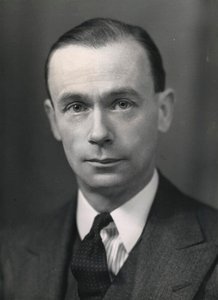
William Menzies Coldstream
1908 - 1987 , Великобритания
Основные сведения
- Artistic Movement Or Style: Реализм
- Artists Or Movements Influenced By This Artist: ['Школа Эстон Роуд']
- Date Of Birth: 1908
- Date Of Death: 1987
- Full Name: William Menzies Coldstream
- Nationality: Британский
- Notable Artworks:
- Портрет Инез Спендер
- Римни, Италия
- Place Of Birth (City And Country): Балфорт, Великобритания