 Предпросмотр
 Поделиться
 Поделиться
 Детали произведения

 Скачать
 Похожие работы
 Рентгенография
 Слайд-шоу
 Статистика
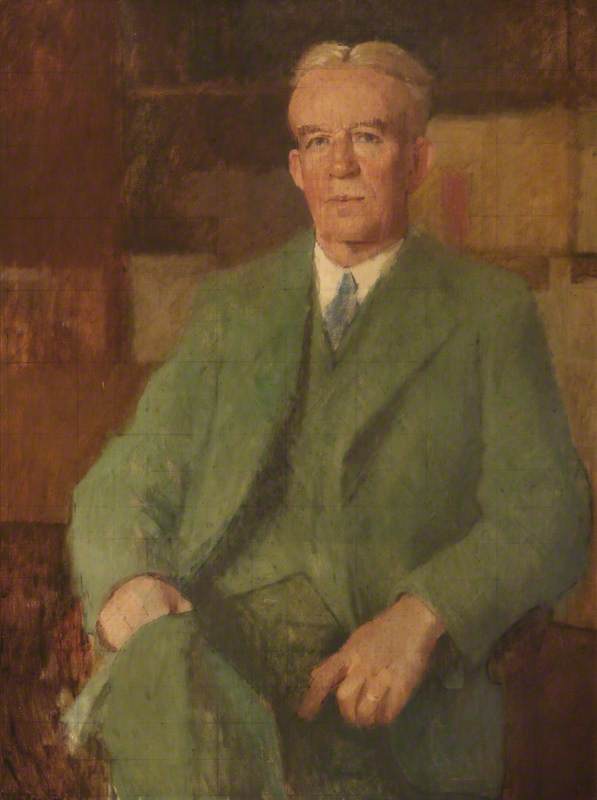
George Stuart Gordon (1881–1942), President (1928–1942)
 Acrylic On Canvas
- WallArt
- Analytical Realism
 90.0 x 70.0 cm
 Колледж Магдален, Оксфорд
 Читать далее
Масляная репродукция ручной работы
Картина маслом на холсте в выбранном вами размере и раме, написанная на заказ нашими художниками. ( Перейти к печати Перейти к цифровым изображениям)




P118B $10

P118H $10

P118W $10

P438Z $10

P508JH $12

P508YH $12

P805H $10

P805Z $10

P919BZ $10

P919G $10

P919XJ $10

P959ZH $10

P968JZ $12

W106C $8

W218G $10

W218JH $8

W218Y $10

W307PJ $10

W316G $10

W316PJ $8

W316Y $10

W398PJ $8

W4111J $10

W500HY $15

W500JH $15

W692G $12

W849H $8

W940BG $15

W953PJ $8




Выберите один из наших стандартных размеров, соответствующих оригинальным пропорциям произведения искусства.

Вы можете указать собственные размеры, чтобы картина идеально вписалась в выбранную раму или пространство. Если выбранный вами размер не соответствует пропорциям оригинала, мы либо обрежем полотно, либо расширим его за счет дополнительных элементов, написанных вручную. Цифровой макет будет отправлен вам на утверждение перед началом производства.
Обратите внимание, что предварительный просмотр на экране не отражает фактическую обрезку или расширение. Только макет точно покажет окончательную композицию.
Хотя доступны индивидуальные размеры, мы рекомендуем выбирать вариант из предопределенного списка, чтобы сохранить исходные пропорции.
После оформления заказа команда ArtsDot.com свяжется с клиентом по электронной почте для уточнения деталей и предоставит предварительный макет
Доставка по всему миру () за 3–4 недели вместо стандартных 5 недель. (13 Сентябрь). Без компромиссов в качестве.

Бесплатная экспресс-доставка по всему миру

Высококачественный льняной холст

Полное страхование доставки

Гарантия возмещения таможенных пошлин

Гарантия точного соответствия цветов

100-дневная политика возврата (только при обнаружении дефектов)

Гарантия возврата 100% средств

Предложение оптовых скидок
 Вариант со стеклом доступен только для размеров менее 110 см

George Stuart Gordon (1881–1942), President (1928–1942)
Техника репродукции
Размер репродукции
-


Итоговая стоимость
$ 263
A Portrait of Quiet Resolve: William Menzies Coldstream’s George Stuart Gordon
William Menzies Coldstream's painting of George Stuart Gordon, completed around 1938, is more than just a likeness; it’s a carefully constructed study in observation and restrained power. The subject, a prominent British literary scholar and President of Magdalen College, Oxford, sits within a deliberately understated interior – a room suggesting both intellectual rigor and a subtle melancholy. Coldstream, a key figure in the Euston Road School, eschewed flamboyant expressionism for a rigorously analytical approach to representation, meticulously dissecting form and light to capture not merely appearance but also character.
The composition is dominated by Gordon’s presence, seated in a simple chair before a wall lined with books. His posture—straight yet relaxed—conveys an air of quiet authority, while his gaze, directed slightly off-camera, hints at both thoughtfulness and perhaps a touch of weariness. The lighting, carefully rendered, casts subtle shadows that accentuate the lines of his face and hands, revealing the texture of his skin and the weight of years spent immersed in scholarship. Coldstream’s masterful use of oil paint creates a remarkable sense of depth and realism, capturing the nuances of fabric, wood grain, and the play of light on surfaces.
The Analytical Realism of the Euston Road School
Coldstream's approach aligns perfectly with the principles of “analytical realism,” a movement he championed alongside artists like Graham Bell and Victor Pasmore. This style prioritized precise observation and detailed rendering, rejecting subjective interpretation in favor of an objective representation of reality. Unlike Impressionists who sought to capture fleeting moments of light and color, Coldstream aimed to build up his images through layers of carefully measured brushstrokes, creating a sense of solidity and permanence. He was deeply influenced by the work of Ingres and Rembrandt, artists known for their meticulous attention to detail and ability to convey psychological depth through subtle gestures and expressions.
The painting’s restraint is deliberate. There are no dramatic flourishes or overtly emotional cues. Instead, Coldstream invites the viewer to engage in a quiet dialogue with the subject, prompting reflection on his life, intellect, and perhaps even his inner world. The books scattered around the room—a collection of classical texts and scholarly works—speak volumes about Gordon’s intellectual pursuits, while their placement suggests a space dedicated to contemplation and learning.
Symbolism and Context
The painting was created during a period of significant social and political upheaval in Britain. The 1930s were marked by the Great Depression, rising unemployment, and growing anxieties about the future. Gordon himself was a prominent intellectual voice, advocating for a more humane and just society through his writings and academic work. His role as President of Magdalen College reflected this commitment to education and social responsibility.
The muted color palette—dominated by browns, grays, and ochres—contributes to the painting’s somber mood. These colors evoke a sense of history, tradition, and perhaps even a hint of melancholy. The carefully chosen details—the worn leather chair, the aged books, the subtle shadows—all contribute to the overall atmosphere of quiet dignity and intellectual contemplation. The portrait serves as a testament to Coldstream’s belief that art could be a powerful tool for understanding ourselves and the world around us.
A Timeless Portrait of Intellectual Strength
Coldstream's George Stuart Gordon is not merely a portrait; it’s a carefully constructed meditation on intellect, character, and the enduring power of knowledge. The painting’s quiet intensity and meticulous realism continue to resonate with viewers today, offering a glimpse into the life and mind of a remarkable scholar. It stands as a poignant reminder of the importance of observation, discipline, and the pursuit of wisdom—qualities that remain relevant in an increasingly complex world.
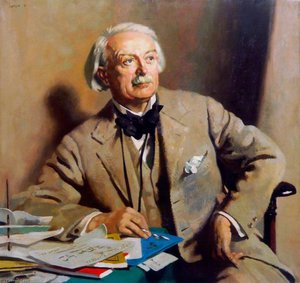
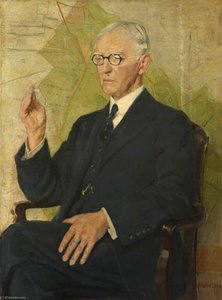
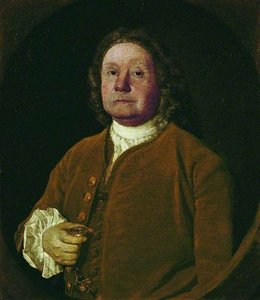
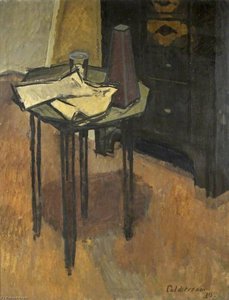
Похожие произведения
Биография художника
William Menzies Coldstream (1908–1987): Leading English Realist Painter & Influential Art Teacher
Sir William Menzies Coldstream, a pivotal figure in 20th-century British art, wasn’t merely a painter; he was an advocate for seeing—for a rigorous, analytical approach to representing the world around us. Born in the quiet Northumberland village of Belford in 1908, his early life shifted towards the bustling energy of London, where he received a private education before embarking on formal artistic training at the Slade School of Fine Art from 1926 to 1929. This foundational period instilled within him not just technical skill, but a commitment to direct observation that would define his entire career. Coldstream’s path wasn't confined to the easel; it was interwoven with documentary filmmaking, progressive social movements, wartime service, and ultimately, a profound influence on art education in Britain. He embodied a rare combination of artistic dedication and institutional leadership, leaving an indelible mark on the landscape of British art.Early Years & Artistic Foundations
Coldstream’s childhood in Northumberland instilled a deep appreciation for the natural world—a connection that would profoundly inform his later work. Moving to London at a young age provided access to a vibrant cultural scene, exposing him to the works of artists like Cezanne and Sickert, whose emphasis on observation and structure resonated deeply with his developing artistic sensibilities. His studies at the Slade School were marked by a rigorous approach—a commitment to mastering technique alongside an exploration of contemporary art movements. He was particularly influenced by Professor Tonks, a renowned figure in British art education, who encouraged students to develop their own unique voices while maintaining a strong foundation in traditional skills. Crucially, Coldstream’s time at the Slade fostered a critical eye—a desire to understand not just *how* to paint, but *why*. This intellectual curiosity would become a defining characteristic of his artistic practice throughout his career. He began experimenting with various styles, including early explorations of objective abstraction, reflecting the broader trends within British art during this period.The Euston Road School & A Return to Realism
The 1930s proved to be a period of intense exploration for Coldstream. After his time at the Slade, he became involved with various artistic circles, joining both the London Artists' Association in 1931 and the London Group two years later—demonstrating an eagerness to engage with contemporary art discourse. A brief but significant stint with the GPO Film Unit (1934-1937), working alongside luminaries like John Grierson, W. H. Auden, Benjamin Britten, and Barnett Freedman, exposed him to the power of visual storytelling and a broader cultural landscape. This experience undoubtedly informed his later artistic practice, sharpening his eye for detail and composition. However, it was the co-founding of the Euston Road School in 1937 with Graham Bell, Victor Pasmore, and Claude Rogers that truly solidified Coldstream’s artistic direction. Initially flirting with objective abstraction, the school quickly pivoted towards a renewed emphasis on realism—a return to painting directly from life, rejecting the prevailing abstract trends. This commitment is powerfully exemplified in his portrait of Inez Spender (later Inez Pearn), a work requiring an astonishing forty sittings. The resulting canvas isn’t simply a likeness; it's a meticulous study of form and character, lauded as a “masterpiece of analytical realism” for its precision and unwavering dedication to capturing the subject with unflinching honesty. The school’s ethos—a blend of rigorous technique and social engagement—reflected Coldstream’s own values.Wartime Service & The Analytical Eye
The outbreak of World War II dramatically altered Coldstream’s trajectory, as it did for so many artists of his generation. He enlisted in the Royal Artillery before transferring to the Royal Engineers, finding himself employed as a camouflage officer from 1940-1943. This role, while practical, proved surprisingly relevant to his artistic practice. The need for precise observation and representation of form—skills honed through years of dedicated study—were directly applicable to the task of deceiving the enemy. The experience fostered a heightened awareness of spatial relationships and the subtle nuances of light and shadow – elements that would later become integral to his realist paintings. In 1943, he accepted a full-time commission from the War Artists' Advisory Committee (WAAC), taking him to Cairo and Italy. There, he produced portraits of individuals within an Indian transport unit and documented architectural subjects in Capua, Rimini, and Florence. However, Coldstream’s methodical approach meant that his wartime output was relatively small—only nine pictures were completed during this period. This wasn't a matter of lack of effort, but rather a reflection of his unwavering commitment to quality over quantity, to ensuring each work possessed the analytical rigor he demanded of himself.Shaping Future Generations: A Legacy in Art Education
Following the war, Coldstream transitioned into a prominent role in art education, becoming a transformative force in shaping future generations of artists. He served as a visiting teacher at Camberwell School of Arts and Crafts before ascending to the position of Professor there, and then, in 1949, he became Principal and Professor of Fine Art at the Slade School—the very institution that had nurtured his own talent decades earlier. His leadership was marked by an unwavering belief in the importance of direct observation and rigorous training. Perhaps his most significant contribution to art education came as Chairman of the National Advisory Council on Art Education (1958-1971), where he spearheaded the creation of the “Coldstream Report” (1960). This landmark document outlined requirements for a new Diploma in Art and Design (Dip.A.D.), leading to increased recognition and degree status for art school courses—a pivotal moment in elevating the standing of artistic education within Britain. Beyond this, he held significant administrative positions, including Vice Chairman of the Arts Council, director of the Royal Opera House, Covent Garden, and trustee of the National Gallery, further solidifying his influence on the cultural landscape.The Enduring Power of Direct Observation
William Menzies Coldstream’s artistic style was characterized by a relentless pursuit of accuracy and an unwavering commitment to painting directly from life. He famously stated, “I lose interest unless I let myself be ruled by what I see.” His technique involved precise measurement—using a brush held at arm's length to record proportions and spatial relationships—and the meticulous application of paint. The surfaces of his paintings are often marked with small horizontal and vertical markings—coordinates used for verification against reality, demonstrating the scientific rigor underpinning his artistic process. His subjects ranged from still-life and landscapes (often featuring architectural elements) to portraits and the female nude, all approached with a dedication to analytical representation. Coldstream’s legacy rests not only on his own body of work but also on his profound influence as an educator and administrator. He championed a method of seeing—a way of engaging with the world through careful observation and precise rendering—that continues to resonate with artists today. He remains an essential figure for understanding the evolution of both realist painting and art pedagogy in Britain, a testament to the enduring power of dedication, discipline, and a commitment to truthfulness in art.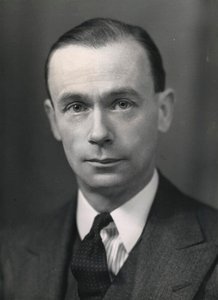
William Menzies Coldstream
1908 - 1987 , Великобритания
Основные сведения
- Artistic Movement Or Style: Реализм
- Artists Or Movements Influenced By This Artist: ['Школа Эстон Роуд']
- Date Of Birth: 1908
- Date Of Death: 1987
- Full Name: William Menzies Coldstream
- Nationality: Британский
- Notable Artworks:
- Портрет Инез Спендер
- Римни, Италия
- Place Of Birth (City And Country): Балфорт, Великобритания
Похожие статьи

Жорж Сёра: 25 шедевров великого мастера пуантилизма | ArtsDot
Откройте для себя 25 шедевров Жоржа Сёра – пионера пуантилизма! Узнайте историю создания культовых картин, технику письма и влияние импрессионизма. Репродукции высокого качества на ArtsDot.com. Искусство для вашего интерьера.
American Realism: Social Commentary & Artistic Representation in Early 20th-Century Painting
Explore the powerful social commentary & artistic representation of American Realism. Discover key artists like Bellows & Sloan, and understand the movement's lasting impact on 20th-century art history.
10 Шедевров Академического Реализма: История Искусства в Вашем Интерьере
Погрузитесь в мир академического реализма! 10 шедевров Бугро, Кабанеля и других великих художников. История искусства, техники живописи и вдохновение для вашего интерьера. Репродукции картин высокого качества на ArtsDot.com.

Romantic Realism's Finest: 10 Masterpieces for Your Home | ArtsDot
Explore 10 defining masterpieces of Romantic Realism! Discover Courbet, Millet & Daumier's powerful paintings—capturing emotion and social realities. Find museum-quality reproductions for your home at ArtsDot.com.

Жорж Брак: 25 шедевров кубизма для ценителей искусства и интерьера
Откройте для себя 25 шедевров Жоржа Брака – пионера кубизма! Узнайте историю создания культовых картин, технику и влияние французского художника на искусство XX века. Репродукции высокого качества для вашего интерьера на ArtsDot.com.