

 Предпросмотр
 Поделиться
 Поделиться
 Детали произведения

 Скачать
 Похожие работы
 Рентгенография
 Слайд-шоу
 Статистика
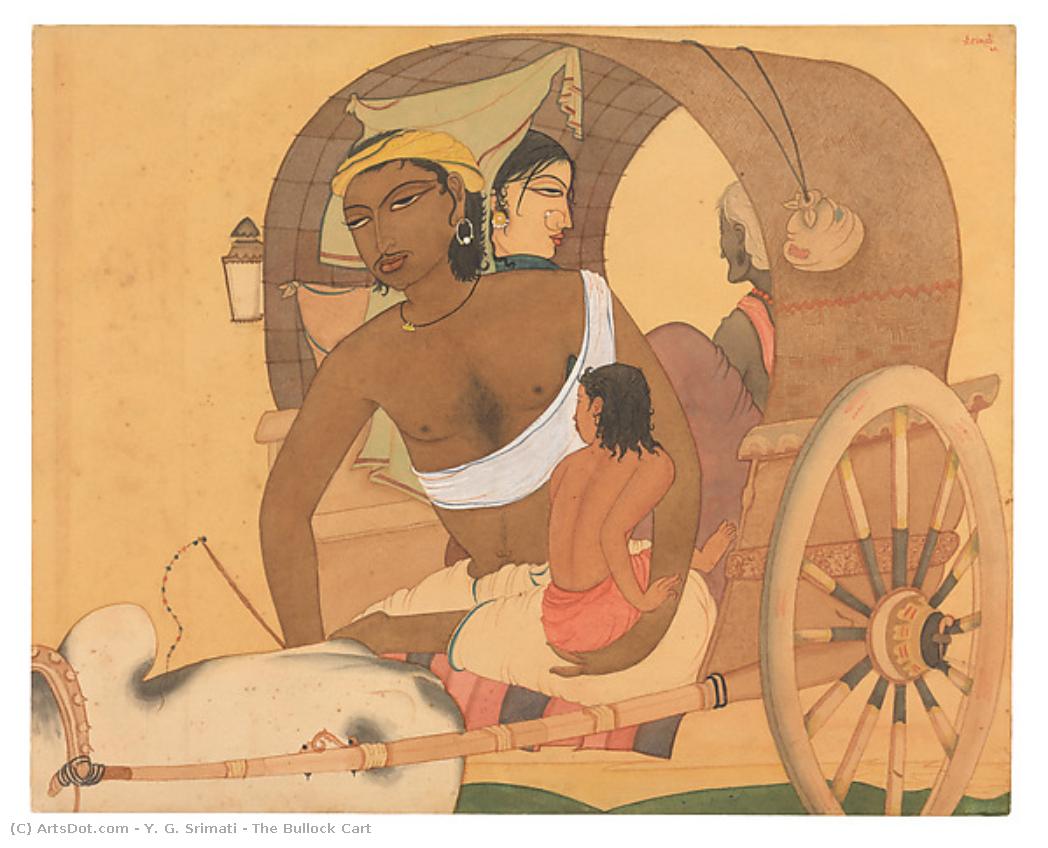
The Bullock Cart
 1950
1950 33.0 x 42.0 cm
 Читать далее
Жикле / Арт-принт
Печать (жикле) или холст музейного качества с быстрыми сроками изготовления и широким выбором вариантов отделки. ( Купить картину ручной работы Перейти к цифровым изображениям)




































Выберите один из наших стандартных размеров, соответствующих оригинальным пропорциям произведения искусства.

Вы можете указать свои собственные размеры, чтобы репродукция идеально подошла под конкретную раму или пространство. Если выбранный вами размер не будет соответствовать пропорциям оригинала, мы либо обрежем произведение, либо дополним изображение зеркальным отражением краев или однотонной заливкой. Перед началом производства вам будет отправлен цифровой макет для утверждения.
Пожалуйста, обратите внимание, что предварительный просмотр на экране не отображает фактическую обрезку или расширение изображения. Только макет точно покажет финальную композицию.
Несмотря на возможность заказа индивидуальных размеров, мы рекомендуем выбирать размер из предопределенного списка, чтобы сохранить оригинальные пропорции.
Доставка по всему миру () за 2 недели вместо стандартных 4/5 недель. (11 Сентябрь)

Бесплатная экспресс-доставка по всему миру

Высококачественный льняной холст

Полное страхование доставки

Гарантия возмещения таможенных пошлин

Гарантия точного соответствия цветов

100-дневная политика возврата (только при обнаружении дефектов)

Гарантия возврата 100% средств

Предложение оптовых скидок
 Вариант со стеклом доступен только для размеров менее 110 см

The Bullock Cart
Жикле / Арт-принт
Размер репродукции
-


Итоговая стоимость
$ 62
Похожие произведения
Биография художника
A Symphony of Color and Devotion: The Life of Y.G. Srimati
Y.G. Srimati stands as a singular figure in twentieth-century Indian art, recognized for her distinctive blend of musical performance, dance, and painting—a testament to the holistic artistic spirit prevalent during her era. Born in Mysuru, India, in 1926, she possessed an innate talent nurtured from childhood through rigorous training in Carnatic music, Bharatanatyam dance, and traditional Indian painting techniques. This multifaceted upbringing profoundly shaped her artistic vision and fueled her unwavering dedication to capturing the essence of Hindu mythology and nationalist ideals within her canvases. Her very name carried a legacy of prestige; the initials Y.G. were an honorific title granted by the Maharaja of Mysore to her grandfather, the chief astrologer of his court.
The tapestry of Srimati’s life was woven with the threads of India's struggle for sovereignty. Raised in the heated climate of the independence movement, she was a young woman deeply moved by the political and spiritual shifts of her nation. As a teenager in the 1940s, she performed devotional songs, or bhajans, at prayer meetings for Mahatma Gandhi during rallies in Chennai. These personal encounters with Gandhi and the profound atmosphere of the independence movement left an indelible mark on her soul, directing her artistic focus toward themes of religious epic literature and rural culture as a conscious expression of nationalist sentiment.
The Evolution of an Indian Aesthetic
From 1952 onwards, Srimati’s career blossomed with a solo exhibition at the Government Museum in Madras, marking a pivotal moment that garnered critical acclaim and solidified her reputation as an emerging talent. Her artistic style was characterized by an innovative approach to spatial representation—a technique heavily influenced by the Bengal School of Art spearheaded by Nandalal Bose and drawing inspiration from the monumental frescoes adorning the Ellora and Ajanta Caves. She sought to create a continuous lineage for an Indian style of painting, one that resisted mere imitation of Western traditions in favor of something deeply rooted in indigenous identity.
Her explorations extended into the burgeoning Indian Space Painting movement, a stylistic trend that merged Persian influences with local traditions to depict space harmoniously. Srimati’s work was not merely decorative; it was an act of devotion. She skillfully employed multiple vanishing points and luminous watercolours to create a dynamic visual experience that transcends conventional perspectives. Her paintings often reflected the sculptural qualities of Indian dance, translating the rhythmic movements of Bharatanatyam into fluid, expressive brushstrokes on paper.
Legacy and Global Resonance
In the early 1960s, Srimati’s journey took her to the United States, where New York became her home for the remainder of her life. Despite the distance from her birthplace, her commitment to her vision remained steadfast. Her later works continued to explore the spiritual dynamics of her chosen subjects, bridging the gap between the ancient traditions of South India and the modern global stage. This culminated in a significant milestone when The Metropolitan Museum of Art in New York mounted a retrospective exhibition of her work, showcasing her mastery of watercolour.
The historical significance of Y.G. Srimati lies in her ability to synthesize disparate art forms into a unified spiritual language. Her achievements can be summarized through the following pillars of her artistry:
- Cultural Synthesis: The seamless integration of Carnatic music, classical dance, and painting into a singular aesthetic vision.
- Nationalist Expression: Using traditional subject matter—from village life to epic legends—to assert Indian identity during and after the independence movement.
- Technical Innovation: The adaptation of ancient fresco techniques and the Bengal School's influence into modern watercolour compositions.
- Spiritual Narrative: A lifelong dedication to portraying Hindu mythology not just as myth, but as a living, breathing spiritual reality.
Through her luminous watercolours, Srimati ensured that the vibrant pulse of Indian tradition would continue to resonate far beyond the borders of her homeland, leaving behind a legacy of profound beauty and cultural pride.
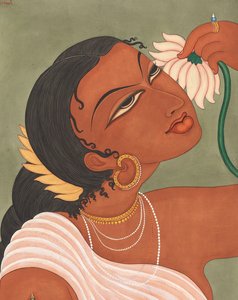
y. g. srimati
1926 - 2007 , India
Основные сведения
- Artistic Movement Or Style: Indian space painting; Bengal School influence
- Artists Or Movements Influenced By This Artist: ['Will Barnet']
- Artists Who Influenced This Artist:
- Nandalal Bose
- Ajanta Caves
- Date Of Birth: Mysuru, India (1926)
- Date Of Death: 2007
- Full Name: y. g. srimati
- Nationality: Indian
- Notable Artworks:
- Mahakali
- Apsara with Harp
- Carudatta Presenting a Pearl Necklace
- Place Of Birth: Mysore, India